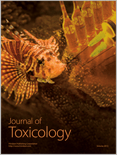
Journal of Toxicology
metrics 2024
Bridging research and regulation in toxicology.
Introduction
Journal of Toxicology, published by HINDAWI LTD, stands as a pivotal open-access journal in the fields of toxicology and pharmacology since its inception in 2009. With an ISSN of 1687-8191 and an E-ISSN of 1687-8205, this journal is dedicated to disseminating high-quality research that critically examines the effects of toxic substances on living organisms. Located in Egypt and operating from their London office, it aims to provide an extensive platform for researchers worldwide to share findings that can inform better practices in safety and regulation. As of 2023, it has achieved significant recognition, holding a Q3 ranking in both the pharmacology and toxicology categories, and is indexed in Scopus with noteworthy percentile rankings (Toxicology: 57th and Pharmacology: 55th). With a focus on innovative studies and emerging areas such as environmental toxicology, biomarker research, and therapeutic interventions, the Journal of Toxicology invites both experienced researchers and students to contribute, thereby enhancing the breadth and depth of toxicological knowledge for the global scientific community.
Metrics 2024
 0.563.404.2047
Metrics History
Rank 2024
Scopus
IF (Web Of Science)
JCI (Web Of Science)
Quartile History
Similar Journals

TOXICOLOGY
Exploring the complexities of toxic substances and their effects.TOXICOLOGY, published by Elsevier Ireland Ltd, is a prestigious peer-reviewed journal specializing in the field of toxicology. With an ISSN of 0300-483X and an E-ISSN of 1879-3185, this journal provides a vital platform for researchers, professionals, and students to disseminate and access groundbreaking studies from 1973 to present, with a convergence set until 2024. Recognized for its high impact, it holds a Q1 ranking in Toxicology category and ranks #18 out of 133 in Scopus's sector of Pharmacology, Toxicology, and Pharmaceutics, placing it in the 86th percentile. While the journal is not open access, it nonetheless offers a rich collection of research articles that enhance the understanding of toxicological science and its applications. The journal's objectives encompass advancing knowledge in the toxicological evaluation of substances, promoting safety in public health, and fostering dialogue among scholars. As a key resource in the field, TOXICOLOGY plays a crucial role in advancing research and informing practices related to toxicological risks and safety assessments.

JOURNAL OF APPLIED TOXICOLOGY
Unveiling the Complexities of Chemical InteractionsJOURNAL OF APPLIED TOXICOLOGY, published by Wiley, stands as a leading platform in the field of toxicology, focusing on the rigorous examination of chemical substances and their effects on biological systems. With an impressive Impact Factor, it ranks in the top quartile (Q2) for toxicology journals, reflecting its esteemed position within the scientific community. The journal, identifiable by its ISSN 0260-437X and E-ISSN 1099-1263, has been an invaluable resource since its inception in 1981, and it continues to serve as a conduit for innovative research and practical applications through 2024. Positioned at the forefront of the field, it garners recognition in the Scopus Rankings, where it ranks #31 out of 133 journals in the toxicology category, placing it in the 77th percentile—a testament to its contribution to the advancement of pharmacology and toxicological sciences. While not an open-access journal, it remains accessible to a wide audience of researchers, professionals, and students eager to explore cutting-edge findings in applied toxicology, making it a pivotal resource for enhancing knowledge and fostering collaboration in the field.
TOXICOLOGY IN VITRO
Pioneering Innovative Toxicology ResearchTOXICOLOGY IN VITRO is a premier journal published by PERGAMON-ELSEVIER SCIENCE LTD, focusing on the latest advancements in the field of toxicology, particularly through in vitro methodologies. With an ISSN of 0887-2333 and an E-ISSN of 1879-3177, this journal serves as a critical platform for researchers aiming to disseminate their findings in toxicology, emphasizing innovative approaches and applications in pharmacology and toxicology. Featuring a commendable impact factor and classified in the second quartile (Q2) for both Medicine (miscellaneous) and Toxicology in 2023, the journal holds a significant position within the academic community, ranking 41st out of 133 in the Toxicology category according to Scopus, representing the 69th percentile. Despite being a subscription-based publication, it continuously attracts submissions from leading scientists worldwide, fostering a vibrant exchange of scientific knowledge. Since its inception in 1987, TOXICOLOGY IN VITRO has consistently aimed to enhance understanding of toxicological challenges, making it an invaluable resource for professionals, students, and researchers dedicated to developing safer pharmaceuticals and understanding the biological pathways influenced by potential toxic agents.
Journal of Toxicologic Pathology
Fostering Global Collaboration in Toxicologic Research.Journal of Toxicologic Pathology is a pivotal resource in the realm of pathology and toxicology, published by the Japanese Society of Toxicologic Pathology. Since its inception in 1988, this esteemed journal has been committed to advancing scholarly discourse through the dissemination of rigorous research and reviews that address the intricacies of toxicologic pathology. With a current impact factor placing it in the Q3 quartile in both Pathology and Forensic Medicine as well as Toxicology categories, it serves as a crucial platform for academics and practitioners to share insights and findings. Situated in Japan, this journal fosters international collaboration, welcoming contributions that span diverse geographical and scientific contexts. Although not open access, it continues to play a significant role in shaping the future of toxicological research and education, and it remains an invaluable asset for those engaged in the study of disease mechanisms, safety assessments, and the impact of toxic substances on biological systems.
CELL BIOLOGY AND TOXICOLOGY
Advancing Knowledge in Cell Biology and ToxicologyCELL BIOLOGY AND TOXICOLOGY, published by SPRINGER, stands as a vital journal within the realms of cell biology and toxicology, boasting an impressive 2023 Q1 ranking in its fields, alongside robust Scopus rankings placing it in the top 11th percentile for Toxicology and the 22nd for Health, Toxicology and Mutagenesis. With an ISSN of 0742-2091 and an E-ISSN of 1573-6822, the journal has been a cornerstone of scientific discourse since its inception in 1984, and will continue to converge innovative research until 2024. The journal focuses on the interplay between cellular mechanisms and toxicological implications, making it an essential resource for researchers, healthcare professionals, and students keen on advancing their understanding of these critical areas. Although it does not offer open access, its high impact and prestigious standing ensure that its publications reach a wide audience dedicated to significant advancements in the life sciences.
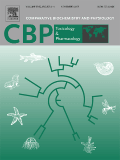
COMPARATIVE BIOCHEMISTRY AND PHYSIOLOGY C-TOXICOLOGY & PHARMACOLOGY
Exploring the Intersections of Biochemistry and PhysiologyComparative Biochemistry and Physiology C-Toxicology & Pharmacology, published by Elsevier Science Inc, stands as a prominent resource in the fields of pharmacology, toxicology, and biochemical research. With its ISSN 1532-0456 and E-ISSN 1878-1659, this journal has carved out a significant niche, focusing on the comparative aspects of biochemical and physiological data across various species. Recognized for its impact in diverse fields, it boasts a Q1 ranking in Animal Science and Zoology, Aquatic Science, Health, Toxicology and Mutagenesis, alongside respectable standings in other related disciplines. Researchers and professionals can leverage this publication to access high-quality, peer-reviewed studies that advance the understanding of biochemical processes and their toxicological implications. The journal aims to bridge the gap between laboratory findings and real-world applications, fostering an environment for interdisciplinary collaboration. For academics seeking to enhance their knowledge or contribute to this impactful field, Comparative Biochemistry and Physiology C-Toxicology & Pharmacology serves as an invaluable platform.
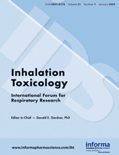
INHALATION TOXICOLOGY
Unraveling the Complexities of Inhalation Toxicology.Inhalation Toxicology, published by Taylor & Francis Ltd, is a premier journal dedicated to advancing the field of toxicology with a particular focus on inhalation exposure and its impact on human health. Established in 1989, this journal provides a vital platform for original research, reviews, and case studies that explore the toxicological effects of inhaled substances, making it essential reading for researchers, health professionals, and regulatory scientists. With an Impact Factor that situates it in the Q3 category in both Health, Toxicology and Mutagenesis, the journal asserts its relevance within the scientific community, particularly emphasizing its contributions as indexed by Scopus rankings in related fields. Although it follows a traditional access model, the journal's commitment to delivering high-quality research continues to foster significant discussions and advancements in understanding inhalation toxicology. For those at the forefront of environmental science and pharmacology, Inhalation Toxicology is an indispensable resource for both current research and future innovations in the discipline.

CHEMICAL RESEARCH IN TOXICOLOGY
Advancing toxicological science through chemical insights.Chemical Research in Toxicology is a premier journal published by the American Chemical Society, dedicated to advancing the understanding of toxicological effects associated with chemical substances. Since its inception in 1988, this esteemed journal has maintained a robust impact factor, ranking in the Q1 quartile for both Medicine (miscellaneous) and Toxicology as of 2023, reflecting its significance and influence in the fields of pharmacology and toxicology. With an impressive Scopus ranking at #16 out of 133 in the Toxicology category, it serves as a vital resource for researchers, professionals, and students seeking cutting-edge insights and scholarly articles that bridge the gap between chemistry and toxicological science. Although not an open-access publication, it continues to provide comprehensive analyses and original research that inform safe chemical practices and regulatory policies, further enhancing its role in public health and safety.
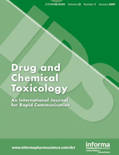
DRUG AND CHEMICAL TOXICOLOGY
Bridging disciplines for safer environments.Drug and Chemical Toxicology is a well-respected journal in the fields of toxicology, pharmacology, and public health, published by Taylor & Francis Ltd. Since its inception in 1978, this journal has diligently explored the effects and mechanisms of chemical exposures on health and the environment, fulfilling a crucial role in advancing scientific understanding and safeguarding public health. The journal is indexed across prestigious databases and features an impressive array of articles categorized within the Q2 and Q3 quartiles across various categories in 2023, reflecting its significance in Chemical Health and Safety as well as Environmental and Occupational Health disciplines. With an extensive reach and a focus on interdisciplinary research, Drug and Chemical Toxicology offers a rich repository of original research, reviews, and methodological advancements, catering to a diverse audience of researchers, professionals, and students dedicated to the betterment of safety and health standards. Although not an open-access publication, its articles are widely accessible to the academic community, ensuring that critical innovations and insights are shared for the greater good.

Toxicological Research
Elevating toxicological research to new heights of understanding.Toxicological Research is a prominent academic journal dedicated to advancing the field of toxicology through rigorous exploration and innovative research. Published by the Korean Society of Toxicology, this journal serves as a vital resource for researchers, professionals, and students engaged in environmental science, pharmacology, and toxicology. With an ISSN of 1976-8257 and an E-ISSN of 2234-2753, Toxicological Research highlights significant findings and discussions in the realm of health, toxicology, and mutagenesis. Although not an open-access journal, it maintains a solid reputation as evidenced by its Q3 ranking in both health-related toxicology and general toxicology categories for 2023. The journal covers a broad spectrum of topics from fundamental research to applied toxicology and provides a unique platform for the dissemination of knowledge in a field that is increasingly relevant in today’s society. With an anticipated convergence period from 2008 to 2024, Toxicological Research continues to contribute vital insights to understanding the implications of toxic substances on health and the environment.