
Jordan Journal of Modern Languages & Literature
Scope & Guideline
Bridging Theory and Practice in Modern Languages
Introduction
Aims and Scopes
- Interdisciplinary Literary Analysis:
The journal publishes research that intersects various literary theories and methodologies, including postcolonial studies, feminist critiques, and modernist perspectives, allowing for a nuanced understanding of literary texts. - Language and Linguistics Research:
A strong emphasis is placed on the study of language, including sociolinguistics, pragmatics, and translation studies, reflecting the journal's commitment to exploring the complexities of language use in different cultural contexts. - Cultural Studies and Social Issues:
The journal frequently addresses contemporary social issues through a literary lens, examining topics such as identity, diaspora, and trauma, thereby contributing to the discourse on cultural representation and social justice. - Translation and Adaptation Studies:
Research focusing on translation practices, adaptations of literary works, and the role of translation in cultural exchange is a key area, highlighting the journal's dedication to understanding the impact of translation on literature and society. - Digital Humanities and Modern Media:
The emergence of digital literature and media is explored through the lens of modern languages, showcasing the journal's interest in how technology influences literary production and reception.
Trending and Emerging
- Postcolonial and Diaspora Studies:
There is a growing focus on postcolonial narratives and the experiences of diasporic communities, highlighting the journal's commitment to exploring themes of identity, migration, and cultural hybridity. - Gender Studies and Feminist Critique:
Recent publications exhibit a marked increase in research analyzing gender dynamics and feminist perspectives, indicating a broader engagement with issues related to gender representation and power structures in literature. - Impact of Technology on Language and Literature:
The intersection of technology with modern languages and literature is gaining prominence, with studies exploring digital narratives, social media discourse, and the role of technology in shaping contemporary literary practices. - Environmental and Ecocritical Literature:
Emerging themes related to environmental concerns and ecocriticism reflect a growing awareness of ecological issues within literary contexts, aligning with global conversations about sustainability and human-nature relationships. - Translation as Cultural Practice:
An increased interest in the cultural implications of translation practices is evident, with research examining how translation shapes cultural narratives and influences cross-cultural understanding.
Declining or Waning
- Traditional Literary Criticism:
There has been a noticeable decrease in the publication of papers employing traditional literary criticism approaches, as the journal increasingly favors innovative and interdisciplinary methodologies. - Historical Linguistics:
Research focused on historical linguistics appears to be waning, with fewer studies investigating the evolution of languages or historical language structures compared to previous years. - Purely Descriptive Studies:
The trend towards analytical and theoretical studies has overshadowed purely descriptive linguistic studies, leading to fewer publications that do not engage with broader theoretical frameworks. - Classical Literature Studies:
Papers centered on classical literature, particularly those that do not connect to contemporary issues or modern interpretations, are witnessing a decline in favor of more current and relevant literary discussions. - Static Language Studies:
Research that does not incorporate sociolinguistic dynamics or changes in language use within specific communities is becoming less prevalent, reflecting a shift towards more dynamic and contextually aware linguistic research.
Similar Journals
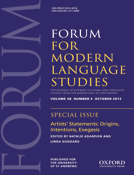
FORUM FOR MODERN LANGUAGE STUDIES
Fostering Scholarly Dialogue on Language and LiteratureFORUM FOR MODERN LANGUAGE STUDIES is a prestigious academic journal published by Oxford University Press that has been serving the fields of literature and linguistics since its inception in 1965. This journal, with an ISSN of 0015-8518 and an E-ISSN of 1471-6860, plays a crucial role in advancing scholarly discourse on modern language studies, including literature and literary theory. With an impactful presence in both the linguistic and literary domains, it has been recognized in 2023 with a category ranking of Q2 in Literature and Literary Theory and Q3 in Linguistics and Language. It stands out in the competitive landscape, holding a notable position within Scopus rankings, including a 70th percentile ranking in Literature & Literary Theory. While the journal currently does not offer open access options, it remains a vital resource for researchers, educators, and students passionate about the transformative power of language and literature. Its commitment to quality research and robust academic discussion underscores its importance, making it a key platform for those aiming to contribute to modern language scholarship.

Studi Slavistici
Cultivating Knowledge Across Slavic DisciplinesStudi Slavistici is an esteemed academic journal published by FIRENZE UNIV PRESS, focusing on the rich and diverse fields of Cultural Studies, Linguistics and Language, and Literature and Literary Theory. Since its initiation in 2004, it operates under an Open Access model, providing unrestricted access to its contents and fostering a wider dissemination of research. Based in Italy, this journal serves as a vital platform for scholars and researchers engaged in Slavic studies and beyond, encouraging interdisciplinary dialogue and innovative approaches. With its current Quartile rankings in the Q4 category across various domains, it plays a significant role in shaping dialogues within the academic community while offering insights into contemporary and historical perspectives. By maintaining an inclusive vision and engaging with critical issues, Studi Slavistici remains dedicated to advancing knowledge and scholarship in these intricate fields.
ROMANCE QUARTERLY
Celebrating the Art of Love Through Academic InquiryROMANCE QUARTERLY is an esteemed journal published by Routledge Journals, Taylor & Francis Ltd, focusing on critical discussions and innovative research in the fields of Cultural Studies and Literature and Literary Theory. With its inception in 1986, this journal has diligently documented the evolving landscape of romance literature, making significant contributions through interdisciplinary approaches that resonate across literature and cultural scholarship. Holding a commendable position in academic rankings, it is classified in the second quartile for Literature and Literary Theory, and in the third quartile for Cultural Studies as of 2023, highlighting its relevance and impact within these domains. While it operates under a traditional access model, the required scholarly discourse and access to contemporary studies make it a crucial resource for researchers, educators, and students alike. ROMANCE QUARTERLY serves not merely as a platform for publishing but as a vibrant hub for the exploration and analysis of romance narratives, offering invaluable insights into their impact on cultural and societal constructs, surely a must-read for anyone passionate about these subjects.

MESTER
Innovating Perspectives in Humanities ResearchMESTER is a distinguished academic journal published by the UCLA College of Humanities, known for its commitment to advancing research in the fields of Cultural Studies, Linguistics and Language, and Literature and Literary Theory. With an ISSN of 0160-2764, this journal serves as a vital platform for scholars and professionals to disseminate innovative research and critical perspectives from diverse theoretical frameworks and cultural contexts. Although currently operating without an Open Access model, MESTER continues to uphold a rigorous peer-review process, ensuring that published articles maintain high academic standards. Recognized for its selective focus, MESTER holds a Q4 categorization in Cultural Studies and Linguistics, and Q3 in Literature and Literary Theory, situating it as a relevant, if emerging, voice within these disciplines. Housed within the significant repository of knowledge at UCLA, the journal beckons researchers, students, and practitioners to engage with its contributions to the humanities and build upon its foundations in cultural discourse.
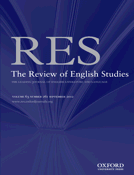
REVIEW OF ENGLISH STUDIES
Fostering Innovative Research in English StudiesREVIEW OF ENGLISH STUDIES, published by Oxford University Press, is a prestigious journal that has been advancing the fields of Literature and Literary Theory as well as Linguistics and Language since its inception in 1925. With an impressive impact factor and a commendable ranking, placing it in the Q1 and Q2 categories across relevant disciplines, the journal serves as a vital platform for researchers, scholars, and students alike. Covering a wide range of topics from classical literature to contemporary linguistic analysis, REVIEW OF ENGLISH STUDIES is committed to fostering scholarly discourse and promoting innovative research methodologies. Although it does not offer open access, the journal is highly regarded for its rigorous peer-review process and high-quality publications, making it an essential resource for anyone engaged in English studies. For researchers seeking to keep abreast of the latest developments in the field, this journal stands as an indispensable guide and repository of knowledge.

Litera-Journal of Language Literature and Culture Studies
Cultivating Scholarly Exchange in Language and LiteratureLitera - Journal of Language Literature and Culture Studies is a pioneering open-access journal published by the esteemed Istanbul University, Faculty of Letters, since 2017, dedicated to the in-depth exploration and critical analysis of language, literature, and cultural studies. With an ISSN of 1304-0057 and an E-ISSN of 2602-2117, the journal aims to foster a diverse discourse within the arts and humanities, particularly in literature and literary theory, linguistics, and cultural studies. Although it currently holds a modest Scopus rank among its peers, it serves as a valuable platform for emerging scholars and seasoned researchers alike, aiming to enhance understanding and appreciation of cultural narratives within the global context. The journal provides a unique opportunity for authors and readers to engage with original research, critical reviews, and creative works that are vital to the advancement of interdisciplinary studies. Based in Istanbul, Turkey, it is positioned at the heart of cultural exchange, making it a significant contributor to scholarly communication in the region and beyond.
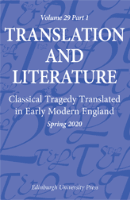
Translation and Literature
Connecting Words, Cultures, and IdeasTranslation and Literature is a leading academic journal published by Edinburgh University Press, focusing on the intricate relationship between language and literature within the realms of translation studies. With an ISSN of 0968-1361 and an E-ISSN of 1750-0214, this journal provides a crucial platform for scholars and practitioners to explore and disseminate research that addresses both the theoretical and practical aspects of translation. Since its inception in 1996, Translation and Literature has established itself as an essential resource, particularly noted for its contributions to the fields of linguistics and literary theory, as indicated by its Q4 ranking in both categories in 2023. The journal's articles are designed to foster dialogue across disciplines, encouraging innovative thinking and collaboration among researchers, professionals, and students alike. Access to this valuable resource is currently available through subscription, ensuring high-quality scholarship reaches a diverse audience dedicated to advancing the understanding of translation's role in literature.

ARCHIV FUR DAS STUDIUM DER NEUEREN SPRACHEN UND LITERATUREN
Connecting Scholars Through Innovative Research and AnalysisARCHIV FUR DAS STUDIUM DER NEUEREN SPRACHEN UND LITERATUREN is a distinguished journal published by Erich Schmidt Verlag, dedicated to the exploration of modern languages and literatures. With an ISSN of 0003-8970 and E-ISSN 1866-5381, this journal serves as a crucial platform for scholars interested in the nuanced intersections of language studies and literary analysis. Although the journal's coverage in Scopus has been discontinued, its contributions remain significant, having ranked within the 25th and 12th percentiles in respective categories of literature, linguistics, and social sciences. Positioned in Berlin, Germany, the journal embraces a diverse international readership, presenting innovative research, critical essays, and reviews that foster deeper understanding and appreciation of linguistic and literary developments. The journal’s rigorous peer-review process and commitment to scholarly excellence make it an essential resource for researchers, professionals, and students alike, aiming to advance their knowledge in the field.

Caplletra
Advancing Open Access Scholarship in LinguisticsCaplletra is a distinguished open-access journal dedicated to the field of linguistics and language studies, published by PUBL ABADIA MONTSERRAT since its inception. Based in Barcelona, Spain, this journal has been a vital resource for researchers, professionals, and students engaged in the intricate explorations of language and its applications since its transition to open access in 2005. Despite its current quartile ranking of Q4 within the Linguistics and Language category as of 2023, Caplletra continues to serve as an inclusive platform, fostering a dialogue that encourages a diverse range of scholarly contributions. Covering an expansive scope in the converged years from 2018 to 2024, it plays a crucial role in disseminating innovative research and insights. With its ISSN 0214-8188 and E-ISSN 2386-7159, Caplletra is committed to making academic work accessible to all, enhancing the landscape of linguistic scholarship and reflecting the evolving nature of language studies.

Prism-Theory and Modern Chinese Literature
Exploring the Nexus of Theory and Modern Chinese LiteraturePrism - Theory and Modern Chinese Literature is a distinguished academic journal published by DUKE UNIVERSITY PRESS, focusing on the intricate intersections of modern Chinese literature and theoretical frameworks. Since its inception in 2019, this journal has expanded its scope and relevance, attracting contributions that delve into linguistic and literary analysis, making it a vital resource for scholars in both Linguistics and Language and Literature and Literary Theory. With a remarkable impact factor and esteemed Scopus ranks, including Q2 status in Linguistics and Language, and Q1 status in Literature and Literary Theory, this publication offers a platform for critical discourse and innovative research that pushes the boundaries of these fields. The journal's commitment to academic excellence is evidenced by its broad international reach, fostering a vibrant community of researchers, professionals, and students. Whether accessed through universities or individual subscriptions, Prism remains a cornerstone for anyone engaged in the study of modern Chinese literature.