KERNTECHNIK
metrics 2024
Innovating nuclear technologies through rigorous research.
Introduction
KERNTECHNIK is a distinguished journal specializing in the fields of Materials Science, Nuclear and High Energy Physics, and Nuclear Energy and Engineering. Published by WALTER DE GRUYTER GMBH, this journal has continuously contributed to advancing knowledge and research in nuclear technologies and related safety measures since its inception in 1969. With an ISSN of 0932-3902 and an E-ISSN of 2195-8580, KERNTECHNIK serves as a vital platform for academics and professionals seeking to delve into both theoretical and practical aspects of nuclear science and technology. Though listed in the Q4 quartile across multiple categories in 2023, the journal's commitment to publishing rigorously peer-reviewed articles ensures that it remains a respected resource, facilitating academic discourse and innovation. It is particularly aligned for those conducting research or working in safety, risk, reliability, and quality within the nuclear sector, and its extensive historical archive allows for in-depth exploration of evolving technologies. Aimed at foster cooperation between researchers, policymakers, and industry experts globally, KERNTECHNIK continues to play an important role in shaping the future of nuclear science.
Metrics 2024
 0.200.400.3020
Metrics History
Rank 2024
Scopus
IF (Web Of Science)
JCI (Web Of Science)
Quartile History
Similar Journals
NUCLEAR ENGINEERING AND DESIGN
Shaping the Future of Nuclear Technology and DesignNUCLEAR ENGINEERING AND DESIGN is a prestigious journal published by Elsevier Science SA, which has been contributing to the field of nuclear science since 1965. With ISSN 0029-5493 and E-ISSN 1872-759X, it serves as a vital platform for researchers, professionals, and students in areas including nuclear energy, safety, mechanical engineering, and waste management. This journal is highly regarded, reflected in its impressive Q1 status in categories such as Nuclear Energy and Engineering and Safety, Risk, Reliability and Quality, as well as its ranking within the top quartiles of other related fields according to the 2023 category quartiles. Though not an open-access journal, it provides comprehensive insights into cutting-edge research and innovative practices in nuclear engineering, making it an essential resource for advancing knowledge and applications in this critical sector. With a forward-looking scope extending to 2024, NUCLEAR ENGINEERING AND DESIGN continues to influence developments in nuclear technology and safety protocols worldwide.
International Journal of Chemical Reactor Engineering
Driving Innovation in Chemical Engineering PracticesInternational Journal of Chemical Reactor Engineering, published by WALTER DE GRUYTER GMBH, serves as a vital platform for advancing knowledge in the field of chemical engineering, specifically focusing on reactor engineering. The journal, recognized by its ISSN 2194-5748 and E-ISSN 1542-6580, has maintained its commitment to quality research since its inception in 2002 and spans converged years through 2024. With a respectable Q3 ranking in the miscellaneous category of Chemical Engineering and a current Scopus rank of 158/273, it represents a significant resource for researchers aiming to publish innovative findings and practical applications. Although it operates under a subscription model, it still attracts attention for its rigorous standards and insightful contributions to the field. The journal’s focus on the interdisciplinary aspects of chemical reactor design, optimization, and safety underscores its importance in driving forward the technical and theoretical boundaries of chemical engineering. Addressed from Genthiner Strasse 13, D-10785 Berlin, Germany, the International Journal of Chemical Reactor Engineering is a must-read for professionals and scholars dedicated to pushing the frontiers of chemical reaction technologies.

Mechanical Engineering Journal
Bridging theory and practice in mechanical engineering excellence.The Mechanical Engineering Journal, published by the Japan Society of Mechanical Engineers, serves as a premier platform for scholarly discourse in the field of mechanical engineering. With an ISSN of 2187-9745 and embracing an Open Access model since 2014, this journal fosters wide dissemination of research findings, ensuring that valuable insights are accessible to a global audience. The journal aims to bridge the gap between theoretical advancements and practical applications in mechanical engineering, making it a vital resource for researchers, industry professionals, and students alike. Located in the heart of Tokyo, Japan, this publication upholds the highest standards of academic integrity and innovation, contributing significantly to advancements in mechanical engineering and related disciplines. Stay abreast of powerful research that pushes the boundaries of technology and engineering applications by exploring the latest issues of this influential journal.
JOURNAL OF ENGINEERING FOR GAS TURBINES AND POWER-TRANSACTIONS OF THE ASME
Powering Innovation in Gas Turbines and BeyondJournal of Engineering for Gas Turbines and Power - Transactions of the ASME, published by the esteemed American Society of Mechanical Engineers (ASME), is a leading interdisciplinary journal dedicated to advancing the fields of energy engineering, aerospace, nuclear energy, and mechanical engineering. With an impressive history dating back to 1960 and continuing its contributions through 2024, this journal boasts a Q2 ranking in multiple engineering categories, reflecting its strong impact on both academia and industry. Although not an open-access journal, it provides invaluable insights and research findings that cater to the needs of professionals, researchers, and students alike. The journal's ISSN is 0742-4795 with an E-ISSN of 1528-8919, ensuring widespread visibility in the global academic community. Indexed in Scopus, it ranks notably within its fields—21st in Nuclear Energy and Engineering and 51st in Aerospace Engineering—underscoring its relevance and contribution to critical technological advancements. Researchers in this domain will find the journal a vital resource for innovative studies, practical applications, and the latest developments related to gas turbines and power generation.
Science and Technology of Nuclear Installations
Transforming Research into Practical Applications in Nuclear TechnologyScience and Technology of Nuclear Installations, published by HINDAWI LTD, is an esteemed scholarly journal specializing in the dynamic field of nuclear energy and engineering, with an ISSN of 1687-6075 and an E-ISSN of 1687-6083. Since transitioning to an Open Access model in 2007, the journal has significantly contributed to the dissemination of innovative research and practical applications in nuclear technology, attracting a global audience from both academia and industry. Based in Egypt, this prominent journal serves as a vital platform for researchers seeking to explore advanced methodologies, cutting-edge technologies, and the sustainable development of nuclear installations. Achieving a commendable Q2 category ranking in Nuclear Energy and Engineering and positioning at #35/77 in Scopus rankings (55th percentile) underscores its influential presence within the scientific community. With a publication horizon extending from 2008 to 2024, the journal remains committed to fostering collaboration and innovation in nuclear science, making it an invaluable resource for researchers, professionals, and students alike.
NUCLEAR TECHNOLOGY
Advancing the Frontiers of Nuclear ScienceNUCLEAR TECHNOLOGY is a leading academic journal published by TAYLOR & FRANCIS INC, dedicated to the expansive field of nuclear science and engineering. With a robust ISSN of 0029-5450 and an E-ISSN of 1943-7471, this journal provides invaluable insights and cutting-edge research from 1971 to 2024. Positioned in the esteemed Q2 category for Condensed Matter Physics, Nuclear and High Energy Physics, and Nuclear Energy and Engineering, it boasts respectable Scopus rankings, underscoring its impact and relevance within the academic community. NUCLEAR TECHNOLOGY serves as a crucial platform for researchers, professionals, and students, fostering an exchange of knowledge that advances the understanding and application of nuclear technologies. While it operates on a subscription model, this journal remains a vital resource for those aiming to contribute to or stay at the forefront of developments in nuclear technology.
EPJ Nuclear Sciences & Technologies
Empowering Global Collaboration in Nuclear ResearchEPJ Nuclear Sciences & Technologies is a prominent Open Access journal published by EDP Sciences S A, focusing on the vital fields of Nuclear and High Energy Physics, Nuclear Energy and Engineering, and Energy Engineering and Power Technology. Launched in 2015, this journal provides a platform for researchers, students, and professionals to disseminate cutting-edge research and innovations that address the challenges and opportunities in nuclear sciences, a field of critical importance in today’s energy landscape. With an ISSN of 2491-9292 and an evolving impact reflected in its 2023 Q3 quartile rankings across several relevant categories, EPJ Nuclear Sciences & Technologies is committed to promoting high-quality, peer-reviewed research accessible to a global audience. Its dedicated focus on enhancing knowledge transfer and international collaboration makes it an essential resource for anyone engaged in nuclear sciences and technologies.
JOURNAL OF ENERGY ENGINEERING
Pioneering Insights for a Greener FutureJOURNAL OF ENERGY ENGINEERING, published by the ASCE-Amer Soc Civil Engineers, serves as a pivotal resource in the fields of civil and structural engineering, energy engineering, and nuclear energy research. With an ISSN of 0733-9402 and an E-ISSN of 1943-7897, this esteemed journal demonstrates a consistent commitment to advancing knowledge in energy systems, sustainability, and waste management. Ranking within the second quartile in several categories—including Civil and Structural Engineering and Energy Engineering and Power Technology—this journal maintains a strong reputation, underscored by its Scopus rankings that place it in the top tiers of its discipline. Accessible from 1982 through 2024, the journal provides researchers and professionals meaningful insights through rigorously peer-reviewed articles, critical reviews, and case studies that address contemporary challenges in energy utilization and infrastructure development. Without open access options, it ensures the integrity and credibility of published work, showcasing influential research that contributes to sustainable solutions in energy and environmental frameworks. Researchers, professionals, and students alike will find the JOURNAL OF ENERGY ENGINEERING an indispensable platform for exploration and dissemination of innovative ideas within the realm of energy and engineering.
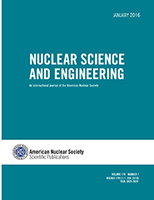
NUCLEAR SCIENCE AND ENGINEERING
Exploring the Future of Nuclear ScienceNUCLEAR SCIENCE AND ENGINEERING, published by Taylor & Francis Inc, is a leading journal in the field of nuclear energy and engineering, providing a vital platform for disseminating cutting-edge research and advancements from both academia and industry. With an ISSN of 0029-5639 and an E-ISSN of 1943-748X, the journal boasts a notable impact factor and is categorized in the Q2 quartile for 2023, reflecting its influence and quality in the field. Covering a comprehensive scope from the inception of nuclear technology in 1969 to contemporary advancements forecasted for 2024, it ranks #38 out of 77 in the Scopus Energy – Nuclear Energy and Engineering category, placing it in the 51st percentile. Although the journal is not open access, it remains essential for researchers, professionals, and students seeking to stay abreast of the latest developments and innovations in nuclear science. Located in the heart of Philadelphia, NUCLEAR SCIENCE AND ENGINEERING contributes significantly to the advancement of nuclear engineering knowledge and practice, making it a crucial resource for anyone involved in this dynamic field.
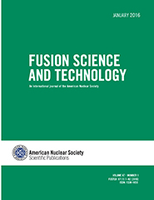
FUSION SCIENCE AND TECHNOLOGY
Pioneering breakthroughs in fusion technology for a brighter tomorrow.FUSION SCIENCE AND TECHNOLOGY is a leading peer-reviewed journal published by Taylor & Francis Inc., dedicated to the advancement of knowledge in the fields of nuclear science, engineering, and fusion technology. With an impact factor that reflects its growing significance, this journal provides a platform for innovative research that addresses the challenges and opportunities within Civil and Structural Engineering, Materials Science, Mechanical Engineering, and Nuclear Energy and Engineering. Its open access option facilitates wider dissemination of groundbreaking research, enhancing visibility and accessibility for researchers, professionals, and students alike. As a member of the Q2 and Q3 Quartiles across various categories—demonstrating its reputable standing among peers—the journal plays a crucial role in fostering collaboration and sharing the latest scientific discoveries in fusion and related technologies from 2001 until 2024. This makes it an essential resource for anyone engaged in the multidisciplinary aspects of fusion science, contributing to the development of sustainable energy solutions.