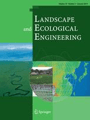
Landscape and Ecological Engineering
metrics 2024
Redefining environmental practices with cutting-edge research.
Introduction
Landscape and Ecological Engineering, published by SPRINGER JAPAN KK, is a vital journal that serves as a platform for the dissemination of innovative research and methodologies in the fields of landscape ecology and environmental engineering. With an ISSN of 1860-1871 and E-ISSN 1860-188X, this journal showcases articles that address the dynamic interplay between ecological processes and engineering designs in both natural and urban environments. As a significant publication since its inception in 2006, it is recognized in the Q2 quartile for Ecology and Nature and Landscape Conservation, alongside its placement in the Q3 quartile for Management, Monitoring, Policy, and Law, ensuring its relevance across multiple dimensions of environmental studies. The journal's presence in prominent databases, reflected in its Scopus rankings, highlights its commitment to high-quality, impactful research that guides conservation strategies and landscape management practices. Engaging with Landscape and Ecological Engineering provides researchers, professionals, and students with critical insights and developments, promoting sustainable solutions for ecological challenges. This journal is an essential resource for anyone seeking to enhance their understanding of ecological engineering approaches and landscape conservation efforts.
Metrics 2024
 0.441.702.0034
Metrics History
Rank 2024
Scopus
IF (Web Of Science)
JCI (Web Of Science)
Quartile History
Similar Journals
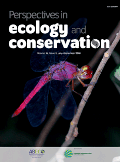
Perspectives in Ecology and Conservation
Championing open access to empower conservation efforts worldwide.Perspectives in Ecology and Conservation, published by Elsevier Science Ltd, is a leading academic journal dedicated to advancing the fields of ecology, conservation, and environmental management. With a Q1 ranking in multiple categories, including Ecology, Management, Monitoring, Policy and Law, and Nature and Landscape Conservation, this journal boasts an impressive standing among its peers, making it essential reading for researchers and professionals. Since its inception in 2017 and running through 2024, it aims to provide innovative perspectives and critical analyses that enhance our understanding and practices in conservation science. The journal is accessible through open access options, facilitating broader dissemination of knowledge. Its commitment to addressing contemporary ecological challenges reinforces its importance in the academic community, promoting sustainable practices and informed policy-making in the face of urgent environmental issues.
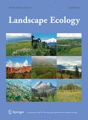
LANDSCAPE ECOLOGY
Transforming Our Understanding of Landscape ManagementLANDSCAPE ECOLOGY, published by SPRINGER, is a premier journal dedicated to the field of landscape ecology, bringing together innovative research that intersects ecology, geography, and conservation. With a prestigious history since its inception in 1987, this journal showcases high-impact studies reflected in its impressive 2023 rankings in the first quartile of Ecology, Geography, Planning and Development, and Nature and Landscape Conservation categories. Operating from the Netherlands, LANDSCAPE ECOLOGY serves as a critical platform for scholars and practitioners aiming to advance their understanding of spatial analysis, environmental challenges, and landscape management. While the journal operates on a traditional access model, the quality and rigor of published research ensure it remains a vital resource for the academic community, inspiring a deeper exploration of our dynamic natural environments and the socio-ecological interactions within them.

Anthropocene Coasts
Exploring Sustainable Solutions for Coastal ResilienceAnthropocene Coasts is a pivotal peer-reviewed journal published by SpringerNature, dedicated to advancing the interdisciplinary understanding of coastal systems in the context of the Anthropocene epoch. Since its inception in 2018, the journal has focused on critical issues at the intersection of Nature and Landscape Conservation, Ocean Engineering, Oceanography, and Waste Management and Disposal, achieving an impressive Q2 ranking in all these categories as of 2023. With a country of origin in Canada, this journal not only addresses significant environmental challenges, but also promotes innovative solutions and sustainable practices that resonate globally. Researchers, professionals, and students engaged in marine science, environmental studies, and engineering will find valuable insights and cutting-edge research disseminated through this open-access platform. By fostering collaboration and knowledge-sharing, Anthropocene Coasts empowers its audience to contribute to the sustainable management of coastal environments in an era of rapid change.
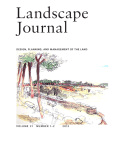
Landscape Journal
Bridging Environmental Science and ArchitectureWelcome to the Landscape Journal, a prominent publication in the field of Nature and Landscape Conservation, proudly brought to you by University of Wisconsin Press. Since its inception, this journal has strived to underpin the critical interplay between environmental science and landscape architecture, providing a platform for innovative research and comprehensive insights. With an ISSN of 0277-2426 and an E-ISSN of 1553-2704, the Landscape Journal is indexed in leading academic databases and recognized with a 2023 Scopus Rank of #167, placing it in the 21st percentile among its peers. The journal operates from the heart of the United States, featuring converged years from 2009 to 2019 and again from 2021 to 2024, making it a reliable resource for ongoing dialogue in landscape studies. Although it currently does not offer open access, the Landscape Journal remains an essential resource for researchers, professionals, and students dedicated to understanding and enhancing our natural environments. As a Q3 category journal, it invites contributions that push the boundaries of landscape research while fostering environmental stewardship.
LANDSCAPE AND URBAN PLANNING
Shaping resilient cities through innovative research.Landscape and Urban Planning is a premier academic journal published by Elsevier, dedicated to the interdisciplinary study of urban environments and landscape management. With a strong focus on ecological, managerial, and policy-driven aspects of urban and landscape planning, this journal has achieved a remarkable recognition within its field, boasting a Q1 classification in multiple categories, including Ecology, Urban Studies, and Nature and Landscape Conservation, as evidenced by its impressive Scopus rankings. Researchers can access state-of-the-art studies and innovative methodologies that address contemporary challenges in urbanization and environmental sustainability. Since its inception in 1986, the journal has been instrumental in shaping the discourse on landscape and urban planning, making it an essential resource for academics, professionals, and students alike who seek to contribute to the sustainable development of urban areas. The journal's accessible content, backed by a strong editorial board and rigorous peer-review process, ensures that published findings remain at the forefront of research in these critical disciplines.
Current Forestry Reports
Navigating the future of forestry with groundbreaking findings.Current Forestry Reports, published by Springer International Publishing AG, stands at the forefront of forestry and ecological research, boasting an impressive array of quartile rankings in 2023 such as Q1 in Ecology and Forestry. With an ISSN of 2198-6436, this journal has emerged as a pivotal platform for disseminating innovative research findings and insights critical to the sustainable management of forest ecosystems. Operating out of Switzerland, it covers a broad scope that spans from ecological theory to practical forestry applications and landscape conservation. Notably, it ranks #3 out of 174 in Agricultural and Biological Sciences: Forestry and #4 out of 211 in Environmental Science: Nature and Landscape Conservation, reflecting its high impact and relevance in the field, placing it in the top percentiles in multiple categories. This open-access journal endeavors to provide a comprehensive understanding of contemporary issues, trends, and methodologies in forestry and related disciplines, making it an indispensable resource for researchers, practitioners, and students who are dedicated to advancing knowledge and practices in forest science.
BASIC AND APPLIED ECOLOGY
Elevating the discourse in ecology, evolution, and behavior.BASIC AND APPLIED ECOLOGY, published by Elsevier GmbH in Germany, stands out as a premier journal in the field of ecology, evolution, behavior, and systematics. With its ISSN 1439-1791 and E-ISSN 1618-0089, the journal enjoys a distinguished reputation, evidenced by its classification in the Q1 category for Ecology in 2023 and impressively ranking #89 out of 721 in this domain according to Scopus. Since its inception in 2000, it has served as a vital platform for disseminating high-quality research that bridges theoretical insights and practical applications in ecology. Researchers, professionals, and students alike can look forward to the latest findings that not only foster a deeper understanding of ecological processes but also inform sustainable practices crucial for our environment. As the journal continues its journey through to 2024, it remains committed to advancing ecological knowledge and supporting innovative research in an ever-evolving field.
PHYSICAL GEOGRAPHY
Fostering Collaboration in Geographic ResearchPHYSICAL GEOGRAPHY is a prominent academic journal published by Taylor & Francis Ltd, focusing on a wide array of topics within the realm of physical geography, including atmospheric science, earth sciences, and environmental science. With an esteemed history since its inception in 1975 and covering research up to 2024, this journal holds significant relevance in academia, evidenced by its ranking in the Q2 category for both Earth and Planetary Sciences and Environmental Science, as well as its Q3 standing in Atmospheric Science for 2023. This journal serves as a vital platform for scholars and practitioners alike, fostering the dissemination of innovative research findings and interdisciplinary collaboration. Although it is not an Open Access journal, it remains highly regarded, with Scopus rankings placing it within the top percentile of its categories. Researchers, professionals, and students seeking to contribute to or keep abreast of critical developments in the field will find PHYSICAL GEOGRAPHY an indispensable resource for advancing their knowledge and understanding of physical geographic phenomena.
Land is a premier open-access journal published by MDPI since 2012, dedicated to the interdisciplinary study of land use, management, and conservation. Based in Switzerland, this journal has rapidly established itself as a vital resource in the field, achieving impressive rankings in its categories: Q1 in Ecology and Nature and Landscape Conservation, and Q3 in Global and Planetary Change, reflecting its high impact in relevant scientific discourse. With an E-ISSN of 2073-445X, Land not only contributes to the advancement of knowledge but also fosters international collaboration among researchers, practitioners, and policymakers. The journal publishes high-quality peer-reviewed articles, offering a platform for innovative research and timely discussions surrounding land issues, ensuring accessibility and visibility through its open-access model. As it continues to converge from 2012 to 2024, Land is poised to play an influential role in shaping sustainable land practices and informing global environmental policies.
ECOLOGICAL MANAGEMENT & RESTORATION
Fostering sustainable ecosystems through rigorous research.Ecological Management & Restoration is a premier international journal published by Wiley, dedicated to advancing the fields of ecology, environmental management, conservation, and restoration practices. With an impact factor that positions it in the Q2 category across various ecological and management domains, this journal serves as a critical platform for researchers and professionals seeking to address contemporary issues related to ecosystem health, biodiversity, and sustainable management. Covering a wide range of topics from ecological restoration techniques to policy impacts on nature conservation, the journal caters to a diverse audience and contributes to the scientific community's understanding of environmental challenges. Importantly, the journal provides significant visibility, ranking in the top percentiles within key ecological research arenas such as Nature and Landscape Conservation, reinforcing its value for researchers aiming to influence both scientific thought and practical applications in ecology and management. The journal's commitment to disseminating high-quality research makes it an essential resource for students, researchers, and practitioners dedicated to fostering a sustainable future.