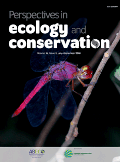
Perspectives in Ecology and Conservation
metrics 2024
Transforming conservation science through rigorous analysis.
Introduction
Perspectives in Ecology and Conservation, published by Elsevier Science Ltd, is a leading academic journal dedicated to advancing the fields of ecology, conservation, and environmental management. With a Q1 ranking in multiple categories, including Ecology, Management, Monitoring, Policy and Law, and Nature and Landscape Conservation, this journal boasts an impressive standing among its peers, making it essential reading for researchers and professionals. Since its inception in 2017 and running through 2024, it aims to provide innovative perspectives and critical analyses that enhance our understanding and practices in conservation science. The journal is accessible through open access options, facilitating broader dissemination of knowledge. Its commitment to addressing contemporary ecological challenges reinforces its importance in the academic community, promoting sustainable practices and informed policy-making in the face of urgent environmental issues.
Metrics 2024
 1.294.004.6044
Metrics History
Rank 2024
Scopus
IF (Web Of Science)
JCI (Web Of Science)
Quartile History
Similar Journals
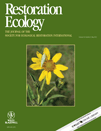
RESTORATION ECOLOGY
Empowering Restoration through Innovative ResearchRESTORATION ECOLOGY is a leading international journal dedicated to the science and practice of ecological restoration, published by WILEY. With an ISSN of 1061-2971 and a robust E-ISSN of 1526-100X, this journal has successfully positioned itself within the top quartiles (Q1) in significant categories such as Ecology, Evolution, Behavior and Systematics, and Nature and Landscape Conservation, showcasing its high-impact contributions to these vital fields. RESTORATION ECOLOGY has been actively disseminating critical research since 1993 and continues to thrive as it converges toward 2024. Ranked impressively within Scopus, it stands at #98 out of 721 in Agricultural and Biological Sciences and #30 out of 211 in Environmental Science, emphasizing its substantial influence and reach. While the journal operates under traditional access guidelines, it serves as an invaluable resource for researchers, professionals, and students alike, aiming to advance knowledge and practical solutions for biodiversity conservation and ecosystem rehabilitation globally. For those interested in the intersection of ecological theory and practical restoration applications, RESTORATION ECOLOGY is a key outlet for fostering dialogue and collaboration.

Ecosistemas
Fostering biodiversity insights and ecological innovation.Ecosistemas is a prominent Open Access journal published by the ASOCIACION ESPANOLA ECOLOGIA TERRESTRE, specializing in the field of ecology. Since its inception in 2001, it has dedicated itself to advancing ecological knowledge and research, fostering an inclusive platform for the dissemination of cutting-edge studies that span ecological interactions, sustainability, and biodiversity. The journal, based in Spain, has established its reputation with notable rankings such as Q3 in the field of Ecology and Q4 in Ecology, Evolution, Behavior, and Systematics, reflecting its commitment to quality research. With a Scopus Ranks position placing it in the 40th and 37th percentiles for its categories, Ecosistemas is integral to the academic community, serving researchers, professionals, and students alike. It provides a vital resource for those seeking to understand ecological dynamics and environmental challenges, facilitating open access to important findings and discussions that shape the future of our ecosystems.
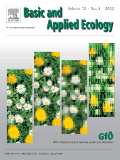
BASIC AND APPLIED ECOLOGY
Exploring the intricate connections of nature and science.BASIC AND APPLIED ECOLOGY, published by Elsevier GmbH in Germany, stands out as a premier journal in the field of ecology, evolution, behavior, and systematics. With its ISSN 1439-1791 and E-ISSN 1618-0089, the journal enjoys a distinguished reputation, evidenced by its classification in the Q1 category for Ecology in 2023 and impressively ranking #89 out of 721 in this domain according to Scopus. Since its inception in 2000, it has served as a vital platform for disseminating high-quality research that bridges theoretical insights and practical applications in ecology. Researchers, professionals, and students alike can look forward to the latest findings that not only foster a deeper understanding of ecological processes but also inform sustainable practices crucial for our environment. As the journal continues its journey through to 2024, it remains committed to advancing ecological knowledge and supporting innovative research in an ever-evolving field.
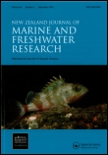
NEW ZEALAND JOURNAL OF MARINE AND FRESHWATER RESEARCH
Exploring the Depths of Aquatic ScienceNEW ZEALAND JOURNAL OF MARINE AND FRESHWATER RESEARCH, published by Taylor & Francis Ltd, stands as a distinguished platform for the dissemination of innovative research in the realms of aquatic science and ecology. With an ISSN of 0028-8330 and E-ISSN 1175-8805, this journal has been curating significant scientific contributions since its inception in 1967, continuing through to 2024. Recognized in the Q2 category across multiple relevant fields—including Aquatic Science, Ecology, and Water Science—this journal ranks notably in Scopus, with a 74th percentile for Ecology, Evolution, Behavior and Systematics, highlighting its impact and relevance within the scientific community. Though not an open-access publication, its rigorous peer-reviewed articles offer insights that resonate with researchers, professionals, and students who are passionate about advancing our understanding of freshwater and marine ecosystems. By fostering a collaborative space for ecological and environmental inquiries, the NEW ZEALAND JOURNAL OF MARINE AND FRESHWATER RESEARCH is essential for those aiming to contribute to the vital conversations around biodiversity, conservation, and sustainable management of aquatic resources.

TROPICAL ECOLOGY
Innovating Conservation Strategies in Tropical RegionsTropical Ecology is a distinguished journal published by SpringerNature that has been at the forefront of advancing the field of ecology since its inception. With a focus on tropical ecosystems, it addresses critical areas such as conservation biology, systematics, and environmental science. The journal is indexed within leading databases and enjoys a respectable impact factor, ranking in the second quartile (Q2) in Ecology as well as in Plant Science, and third quartile (Q3) in Ecology, Evolution, Behavior and Systematics for 2023. Its insightful research contributions place it among the top-tier publications in Agricultural and Biological Sciences, specifically in rankings such as #185 in Plant Science and #178 in Ecology. While it currently operates under subscription access, it remains an essential resource for researchers, professionals, and students interested in the dynamics of tropical environments, fostering a greater understanding of ecological principles and practices that are pivotal for sustainable development. The journal operates with continuous publication from 1976 to 2024, ensuring timely dissemination of impactful research findings that contribute to the global body of knowledge.
Nature Conservation-Bulgaria
Exploring the intricate web of biodiversity and conservation.Nature Conservation-Bulgaria is a distinguished peer-reviewed journal published by PENSOFT PUBLISHERS, dedicated to advancing the field of conservation through a comprehensive exploration of ecological and environmental issues. Since its inception in 2012, this Open Access journal has cemented its position as an essential resource for researchers, professionals, and students interested in the complex dynamics of ecosystems and biodiversity conservation. With an impressive Q2 ranking in both the Ecology, Evolution, Behavior and Systematics and Nature and Landscape Conservation categories, the journal showcases significant contributions to ecological scholarship, reflecting its commitment to vibrant and impactful research. The journal's coverage extends from 2012 to 2024, and it is indexed in Scopus, where it ranks in the 63rd percentile for key areas within Agricultural and Biological Sciences. With its base in Bulgaria, the journal also aims to highlight regional conservation efforts while maintaining global relevance, making it an indispensable platform for disseminating vital knowledge and fostering collaboration across the scientific community.
AFRICAN JOURNAL OF ECOLOGY
Illuminating Ecological Dynamics Across the ContinentThe African Journal of Ecology, published by Wiley, is a leading academic journal in the field of Ecology, Evolution, Behavior, and Systematics. Established in 1963 and continuing its vital contributions to the field until 2024, this journal serves as a premier platform for researchers and scholars to share groundbreaking studies that explore the intricate relationships within ecosystems, particularly in the African context. With an impressive Scopus Rank of #423 out of 721 and a Q3 Quartile ranking, it stands as a credible source of scholarly information, gaining recognition among peers for its rigorous peer-review process and impactful publications. While the journal is not open access, it remains influential in driving advancements in ecological research and providing insights vital for conservation efforts and biodiversity studies. Authors and readers alike will find that the African Journal of Ecology not only promotes scientific inquiry but also fosters a deeper understanding of ecological dynamics that affect our world.

Conservation Science and Practice
Empowering ecological solutions for a sustainable tomorrow.Conservation Science and Practice, published by WILEY, is a leading open access journal dedicated to advancing research and practice within the fields of ecology, environmental science, and conservation. Since its inception in 2019, this prestigious journal has quickly established itself as a vital resource for scholars and practitioners alike, holding impressive Quartile rankings in Ecology (Q1), Environmental Science (miscellaneous) (Q1), Global and Planetary Change (Q2), and Nature and Landscape Conservation (Q1) as of 2023. With a strong commitment to disseminating high-quality, peer-reviewed research, it serves as a platform for innovative solutions to the complex challenges faced in conservation today. The journal is accessible to a global audience, promoting the dissemination of critical findings that inform policy and practice in diverse settings. Researchers, professionals, and students looking to stay at the forefront of conservation science will find invaluable insights and developments within its pages. Join the conversation in shaping sustainable futures through cutting-edge research in Conservation Science and Practice.
WETLANDS
Championing the Science of Wetlands for TomorrowWETLANDS is a prestigious academic journal dedicated to advancing the understanding of wetland ecosystems, published by SPRINGER and based in the Netherlands. Established in 1981, this journal has consistently offered high-quality research on ecological dynamics, environmental chemistry, and broader environmental science topics, as indicated by its notable rankings in the 2023 category quartiles: Q2 in Ecology and Environmental Science (miscellaneous) and Q3 in Environmental Chemistry. The journal impacts the scientific community significantly, as reflected in its Scopus rankings, which place it within the top percentiles of its field. This makes WETLANDS an essential resource for researchers, professionals, and students aiming to stay at the forefront of wetland research and conservation efforts. With continual contributions from experts worldwide, it not only disseminates critical findings but also fosters collaboration and innovation within this vital area of environmental science.
Ecological Solutions and Evidence
Innovative solutions for a sustainable future.Ecological Solutions and Evidence, published by WILEY, stands as a leading platform in the field of ecology, environmental science, and sustainability, with a commendable reputation starting from its inception in 2020. Operating under rigorous academic standards, this journal has achieved notable distinctions by securing a Q1 category ranking in Ecology, Management, Monitoring, Policy and Law, and Nature and Landscape Conservation, making it an invaluable resource for researchers seeking to address pressing environmental challenges. With a current impact factor reflective of its influential articles, the journal features an international scope, focusing on innovative solutions derived from empirical evidence. Accessible to a global audience, the journal encourages open discourse in the field, further supporting researchers, professionals, and students striving to foster ecological sustainability and informed policy-making. Published in the United Kingdom, it aims to bridge the gap between science and application in real-world contexts, promoting actionable insights and interdisciplinary collaboration.