LANGUAGE & COMMUNICATION
Scope & Guideline
Connecting minds through the study of language and communication.
Introduction
Aims and Scopes
- Sociolinguistic Analysis:
The journal frequently publishes research that examines how language varies and functions within different social contexts, highlighting the impact of factors such as identity, culture, and power dynamics. - Interactional Communication:
A core focus is on the micro-level analysis of conversations and interactions, exploring how language is used in real-time communication and how it facilitates social connection and understanding. - Multimodal Communication:
The journal recognizes the importance of non-verbal cues and other communicative modes, publishing work that investigates how visual, auditory, and gestural elements interact with spoken and written language. - Language and Identity:
Research often delves into how language reflects and constructs identity, examining aspects like ethnicity, nationality, gender, and social class in various communicative contexts. - Cultural and Political Discourse:
The journal includes studies that analyze the role of language in shaping cultural narratives and political discourse, emphasizing the power of language in societal issues. - Language in Digital Contexts:
With the rise of digital communication, the journal features research on language use in online environments, including social media interactions and digital discourse.
Trending and Emerging
- Digital Communication and Social Media:
There is a growing emphasis on the study of language within digital platforms, particularly how social media shapes communication styles, identity, and community dynamics. - Language and Climate Activism:
Recent publications indicate an increasing focus on the intersection of language and environmental issues, exploring how discourse around climate change is constructed and communicated. - Multilingualism and Language Ideologies:
Research is trending towards understanding multilingual practices and the ideologies that shape language use in diverse communities, reflecting global migration and cultural exchange. - Emotional and Affective Communication:
Emerging themes are focusing on the role of emotions in communication, particularly how affect influences interactions and the construction of meaning in various contexts. - Interdisciplinary Approaches:
There is a marked trend towards interdisciplinary research that integrates insights from various fields, such as anthropology, psychology, and media studies, to provide a more holistic understanding of language use.
Declining or Waning
- Traditional Linguistic Structures:
There seems to be a decline in research focused solely on traditional grammatical or syntactic analyses, as the journal increasingly emphasizes the contextual and interactive aspects of language. - Static Language Policies:
Studies that approach language policy from a static or prescriptive viewpoint are less common, as the journal shifts towards examining dynamic and participatory language practices in various communities. - Historical Linguistic Analysis:
Research focusing on historical linguistics or diachronic studies appears to be waning, with a stronger emphasis now on contemporary language use and its immediate social implications. - Linguistic Universals:
There is a noticeable decrease in the exploration of linguistic universals or theories that attempt to apply a one-size-fits-all approach to language, in favor of more context-specific analyses. - Psycholinguistic Approaches:
While still relevant, psycholinguistic studies that focus on cognitive processes in isolation seem to be less prevalent, as the journal favors research that integrates cognitive aspects with social interaction.
Similar Journals

Iberica
Connecting scholars to elevate the discourse in linguistics.Iberica, an esteemed journal published by AELFE, serves as a vital platform for scholarly discourse in the fields of linguistics and language studies. With its inception as an Open Access publication in 1999, Iberica has democratized access to high-quality research, fostering an environment of collaboration and innovation among researchers and professionals alike. Based in Spain at UNIV JAUME I, the journal has witnessed a remarkable ascent in the 2023 category quartiles, achieving a Q1 ranking in Linguistics and Language. Furthermore, its impressive Scopus rankings place it in the top 25% within both the Arts and Humanities and Social Sciences disciplines. Covering a diverse range of topics from theoretical linguistics to applied language studies, Iberica offers a compelling opportunity for academics seeking to contribute to and engage with contemporary issues in the linguistic landscape. As it converges in its publishing years from 2008 to 2024, it continues to set the standard for excellence within its field, making it an essential resource for students, researchers, and language professionals.

Lengua y Habla
Unveiling the Nuances of Language DynamicsLengua y Habla is a distinguished academic journal published by UNIV LOS ANDES in Venezuela, recognized for its contribution to the field of linguistics and language studies. With an ISSN of 2244-811X and a commitment to scholarly excellence, this journal has established itself as an important resource for researchers and practitioners alike since its inception in 2013. As of 2023, it is categorized in the Q3 quartile of linguistics and language, reflecting its significant presence in the broader academic community. The journal's Scopus rankings highlight its relevance, placing it in the 52nd percentile in Arts and Humanities and the 48th percentile in Social Sciences. Although it operates under a non-open access model, it provides valuable insights and innovative research aimed at advancing the understanding of language dynamics. With an address situated in the picturesque region of Merida, Venezuela, Lengua y Habla demonstrates a dedicated mission to promote rigorous academic discourse and foster engagement among students, researchers, and language professionals across the globe.
Journal of Multicultural Discourses
Bridging Cultures Through Rigorous Academic InquiryThe Journal of Multicultural Discourses, published by Routledge Journals, Taylor & Francis Ltd, is a leading academic platform dedicated to exploring the complexities and dynamics of multiculturalism in today’s interconnected world. Since its inception in 2006, the journal has carved a distinct niche in the fields of Communication, Cultural Studies, and Linguistics, currently ranking in the Q2 quartile for Communication and achieving Q1 status in both Cultural Studies and Linguistics for the year 2023. It serves as a crucial resource for researchers, professionals, and students interested in the intersections of culture, language, and identity. Although it does not offer open-access options, the journal remains committed to advancing scholarly discourse by publishing high-quality, peer-reviewed articles, and critical reviews that shed light on pressing multicultural issues. With its esteemed reputation and significant impact within its academic domains, the Journal of Multicultural Discourses plays an essential role in fostering dialogue and understanding among diverse cultural perspectives, thereby enriching the global academic community.

Slovo a Slovesnost
Illuminating the Path of Linguistic DiscoverySlovo a Slovesnost is a prominent academic journal dedicated to the field of linguistics and language studies, published by the Czech Language Institute of the Czech Academy of Sciences. With an ISSN of 0037-7031, the journal has established itself as a significant resource for researchers and professionals within the linguistic community. Its rigorous selection process and impactful contributions have earned it a commendable Q2 ranking in Linguistics and Language as of 2023, as well as Scopus rankings in the 58th percentile for Language and Linguistics. Offering insights into both theoretical and applied linguistics, Slovo a Slovesnost serves as an essential platform for cutting-edge research, fostering dialogue among scholars, and enriching the study of language within the Czech Republic and beyond. Although it does not provide open access, the journal supports a subscription model that ensures high-quality dissemination of knowledge to a dedicated audience of linguists, educators, and linguistic scholars. With coverage converging from 2004 to 2024, it continues to thrive as a vital corner of linguistic scholarship.

Fachsprache-Journal of Professional and Scientific Communication
Unveiling Insights into Professional Language UseFachsprache - Journal of Professional and Scientific Communication, published by FACULTAS VERLAGS & BUCHHANDELS AG in Austria, is a pivotal resource in the realm of linguistics and communication studies, focusing on the intricacies of professional and scientific discourse. With an ISSN of 1017-3285 and E-ISSN of 2523-9201, this journal holds a respectable position in its field, categorized as Q2 in Linguistics and Language for 2023, indicating its significance in academic research as evidenced by its Scopus ranks in both Arts and Humanities and Social Sciences. From its inception in 2011, the journal has been dedicated to enriching the understanding of language use in professional contexts, providing a platform for innovative research and discussions that intersect theory and practice. This comprehensive journal not only serves as a critical avenue for scholars and practitioners to share their findings but also champions open access to knowledge wherever possible, fostering an inclusive academic community. Researchers, professionals, and students alike will find invaluable insights and contributions that push the boundaries of conventional linguistic studies.
Pragmatics & Cognition
Illuminating the Nuances of Pragmatic InteractionPragmatics & Cognition, published by John Benjamins Publishing Co, is an esteemed journal that serves as a cross-disciplinary platform for the study of language, cognition, and context-dependent communication. With its ISSN 0929-0907 and E-ISSN 1569-9943, the journal has established a notable reputation since its inception in 1993, although its coverage spans various fields from behavioral neuroscience to linguistics and philosophy. Recognized for its scholarly contributions, it holds impressive Scopus rankings, significantly within Linguistics and Language, where it ranks in the 63rd percentile among peers. Although it currently maintains a Q4 designation in Behavioral Neuroscience and a Q1 in Linguistics and Language as of 2023, the journal appeals to a diverse audience addressing the intricate relationships between language use and cognitive processes. As researchers and academics navigate this evolving landscape, Pragmatics & Cognition remains pivotal in fostering essential dialogues and advancing knowledge in the interdisciplinary field, providing rich content that is both insightful and relevant.

GEMA Online Journal of Language Studies
Navigating the Rich Tapestry of Language Dynamics.GEMA Online Journal of Language Studies, published by Penerbit Universiti Kebangsaan Malaysia, is a prominent open-access journal dedicated to advancing research in the fields of Linguistics, Language, and Literature. Since its inception in 2001, the journal has been committed to providing a platform for scholarly articles that push the boundaries of knowledge and foster dialogue among professionals, researchers, and students alike. With its impressive impact reflected in the 2023 Q1 category rankings in both Linguistics and Language as well as Literature and Literary Theory, GEMA has established itself as a leading authority, achieving a notable rank of #17/1106 in its fields on Scopus, reflecting its high percentile of 98. The journal spans an extensive range of topics relevant to language studies, emphasizing integration and innovation from 2009 to 2024. Researchers looking to disseminate their findings or keep abreast of the latest developments will find GEMA an invaluable resource in the pursuit of academic excellence and a deeper understanding of language dynamics.
International Review of Pragmatics
Fostering Interdisciplinary Insights in PragmaticsInternational Review of Pragmatics is a leading scholarly journal published by BRILL, renowned for its contribution to the fields of Communication, Linguistics and Language, and Psychology. With an ISSN of 1877-3095 and an E-ISSN of 1877-3109, this journal offers a rigorous platform for high-quality research and theoretical contributions that explore the complexities of pragmatics across various domains. Situated in the Netherlands, the journal is currently ranked in the Q2 quartile for both Communication and Linguistics, reflecting its substantial influence and academic excellence. The Scopus rankings further emphasize its importance, with percentile rankings in the 55th to 78th range across several relevant categories. Since its inception in 2014, the journal has consistently pursued the objective of fostering interdisciplinary dialogue and advancing scholarly discourse in pragmatics. Although the journal does not currently offer open access options, it remains committed to accessibility in academia through various channels. Researchers, professionals, and students alike will find valuable insights and contemporary discussions that propel the field forward, making International Review of Pragmatics an essential resource for those dedicated to understanding the intricacies of human communication.

Circulo de Linguistica Aplicada a la Comunicacion
Exploring the Intersection of Language and CommunicationCirculo de Linguistica Aplicada a la Comunicacion is a premier open-access journal published by UNIV COMPLUTENSE MADRID, SERVICIO PUBLICACIONES, since 2000, that serves as a vital resource for researchers, professionals, and students in the fields of linguistics and language studies. With an ISSN of 1576-4737, this journal is recognized for its rigorous scholarship and has achieved a notable Q1 quartile ranking in Linguistics and Language as of 2023. The journal's impact extends across diverse domains, holding significant positions in both the Arts and Humanities and Social Sciences categories, ranking #354/1088 and #419/1167 in Scopus, respectively. It features a rich array of research articles that delve into applied linguistics, communication theories, and language pedagogy, creating a comprehensive platform for academic discourse. By fostering collaboration and innovation in language research, Circulo de Linguistica Aplicada a la Comunicacion remains a crucial contributor to the enrichment of knowledge and understanding within the global linguistic community.
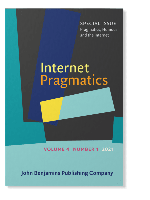
Internet Pragmatics
Decoding the Language of the InternetInternet Pragmatics, published by John Benjamins Publishing Company, stands as an essential journal within the fields of Computer Networks and Communications and Linguistics and Language. With an ISSN of 2542-3851 and an E-ISSN of 2542-386X, it has been dedicated to exploring the nuanced interactions and societal implications enabled by the internet since its inception in 2019. The journal has quickly gained a strong academic reputation, achieving a Q3 ranking in its Computer Networks and Communications category and a prestigious Q1 ranking in Linguistics and Language for 2023, showcasing its vital contribution to interdisciplinary discourse. Researchers and professionals alike can benefit from its robust collection of articles that delve into the intersection of technology and communication, making it a pivotal resource for those keen on understanding the evolving landscape of digital interaction. Although currently available through traditional access options, the journal endeavors to broaden access, ensuring that valuable insights in this rapidly advancing field reach a wider audience.