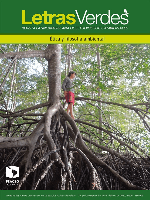
Letras Verdes
metrics 2024
Cultivating Knowledge at the Intersection of Nature and Narrative
Introduction
Letras Verdes, published by the FAC Latinoamericana Ciencias Sociales (FLACSO) in Ecuador, is a distinguished academic journal that focuses on environmental humanities and literature's intersection with ecological issues. With an ISSN of 1390-6631 and an E-ISSN of 1390-6631, this Open Access journal has been disseminating knowledge since 2008, encouraging wide accessibility to research findings. Although currently without an H-Index, Letras Verdes plays a vital role in promoting interdisciplinary dialogue among scholars, professionals, and students interested in sustainability, environmental ethics, and cultural studies. Its commitment to open access not only enhances visibility but also fosters a global exchange of ideas, making it an essential platform for those seeking to explore the complex narratives surrounding environmental challenges.
Metrics 2024
 -0.300.40-
Metrics History
Rank 2024
IF (Web Of Science)
JCI (Web Of Science)
Quartile History
Similar Journals

Inner Asia
Cultivating Insight into Overlooked RegionsInner Asia, a distinguished journal published by BRILL, serves as a vital platform for scholarly discourse in the interdisciplinary fields of Anthropology, Arts and Humanities, Development, and Geography, Planning and Development. Since its inception in 1999, this peer-reviewed journal has facilitated in-depth research and analysis of the diverse cultures, histories, and socio-economic issues pertaining to Inner Asia, contributing significantly to the comprehension of this often-overlooked region. Although it currently operates without open access, the journal is committed to rigorous academic standards, as evidenced by its recent rankings—placing within the Q3 and Q4 categories across multiple relevant disciplines, denoting its solid reputation among global academic circles. Researchers, professionals, and students alike rely on its comprehensive studies to inform their work and expand their understanding of the complexities of Inner Asia, ultimately fostering greater interdisciplinary dialogue and collaboration.

ENVIRONMENTAL VALUES
Illuminating the Ethical Pathways in Environmental StudiesENVIRONMENTAL VALUES is a distinguished journal dedicated to exploring the intricate intersections of environmental studies and philosophical discourse. Published by SAGE Publications Inc, this journal has made a significant mark within its fields, featuring a robust impact factor and making it an esteemed Q2 journal in Environmental Science and a prominent Q1 journal in Philosophy as of 2023. With an ISSN of 0963-2719 and an E-ISSN of 1752-7015, ENVIRONMENTAL VALUES provides a scholarly platform for rigorous research, theoretical exploration, and critical dialogue that spans across disciplines, thereby compellingly addressing the ethical dimensions of environmental issues. Its impressive Scopus rankings place it within the top percentile of both the Philosophy and General Environmental Science categories, underlining its relevance and influence. Researchers, professionals, and students are encouraged to engage with the journal to contribute to and learn from cutting-edge discussions that shape our understanding of environmental ethics and values as we move towards 2024 and beyond.

Rupkatha Journal on Interdisciplinary Studies in Humanities
Cultivating Critical Thought in Human StudiesRupkatha Journal on Interdisciplinary Studies in Humanities, published by Aesthetics Media Services - AesthetixMS, is a pioneering open-access journal that has been enriching the fields of arts and humanities since its inception in 2009. With an ISSN of 0975-2935, this journal provides a platform for scholarly articles, research, and critical discussions that transcend disciplinary boundaries, fostering a holistic understanding of human culture and creativity. Although it has discontinued its coverage in Scopus, it maintains a commendable rank of #75 out of 163 in the general arts and humanities category, placing it in the 54th percentile—a testament to its contributions to the academic community. Situated in West Bengal, India, Rupkatha is committed to accessibility and the dissemination of knowledge, inviting researchers, professionals, and students alike to engage with its rich content. With its focus on interdisciplinary approaches, the journal plays a vital role in fostering dialogue and innovation within the humanities, making it an essential resource for anyone interested in exploring the complexities of human expression.

Territorios
Charting New Territories in Geography and Urban ResearchTerritorios, an esteemed Open Access journal published by UNIV ROSARIO in Colombia since 1999, serves as a critical platform for the dissemination of knowledge in the fields of Geography, Urban Studies, and Development Planning. With an ISSN of 0123-8418 and an E-ISSN of 2215-7484, the journal has been recognized for its commitment to promoting rigorous research and innovative practices within its scope. In the 2023 evaluation, it achieved notable rankings, placing in the Q4 category in Geography, Planning and Development, and Q3 in Urban Studies, reflecting its growing impact in the social sciences. Although currently positioned in the lower percentiles, the journal plays an important role in amplifying diverse voices and perspectives, encouraging scholarly dialogue in an ever-evolving urban landscape. The address of the journal's home is found at PROGRAMA PSICOLOGIA, FAC MED, CARRERA 24 63 C-69 QUINTA DE MUTIS, BOGOTA, COLOMBIA. Researchers, professionals, and students seeking a comprehensive understanding of contemporary geographical issues and urban development trends will find Territorios to be an invaluable resource.
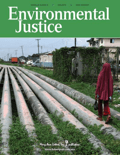
Environmental Justice
Illuminating the path to equitable environmental solutions.Environmental Justice is a leading interdisciplinary journal published by MARY ANN LIEBERT, INC that provides a vital platform for the exploration of environmental issues through the lens of social equity and justice. With a strong focus on the intersection of geography, health, and policy, this journal spans topics from spatial inequality to public health implications related to environmental risks. Since its inception in 2008, the journal has gained recognition, achieving a Q1 ranking in Geography, Planning, and Development and a Q2 ranking in both Health, Toxicology, and Mutagenesis as well as Management, Monitoring, Policy, and Law. The journal is an essential resource for researchers, policymakers, and practitioners alike, reflecting the increasing importance of environmental justice in addressing global challenges. Although it does not operate under an open-access model, the comprehensive insights published in Environmental Justice are instrumental for advancing scholarly discourse and practical applications in the field.

Australian Humanities Review
Championing Rigorous Inquiry in Literature and HistoryAustralian Humanities Review is a premier journal dedicated to advancing the field of humanities research, published by the Australian National University, School of Humanities. With its ISSN 1835-8063 and E-ISSN 1325-8338, this journal serves as a key platform for scholarly discourse, featuring a variety of articles that explore diverse aspects of the humanities encompassing literature, history, philosophy, and cultural studies. Although it operates on a subscription basis, this journal is known for its rigorous peer-review process, ensuring high-quality contributions that significantly impact the academic community. The Australian Humanities Review aims to foster critical engagement and innovative thinking among researchers, professionals, and students alike, making it an invaluable resource for anyone invested in the evolving landscape of humanities scholarship. Located in Canberra, Australia, the journal reflects not only local scholarship but also global perspectives, enriching the dialogue within the field.

Trumpeter-Journal of Ecosophy
Unveiling Insights for a Resilient Ecological LandscapeTrumpeter-Journal of Ecosophy, published by Athabasca University Press, is a distinguished journal dedicated to the interdisciplinary study of ecological and philosophical concepts. With its ISSN of 0832-6193, this journal fosters scholarly discourse on issues such as environmental ethics, sustainability, and the interconnections between human societies and the natural world. Although it does not operate under an open-access model, the journal aims to benefit researchers, professionals, and students alike, providing insights and critical perspectives that are vital in a rapidly evolving ecological landscape. Trumpeter embraces a unique role in the field of ecosophy, challenging contributors to explore fresh ideas and innovative solutions to pressing ecological dilemmas, and thus establishing itself as an essential resource for advancing knowledge in this important area of study.
Worldviews-Global Religions Culture and Ecology
Navigating the Complexities of Culture, Belief, and NatureWorldviews: Global Religions, Culture and Ecology, published by BRILL in the Netherlands, stands as a vital academic journal that explores the intricate interplay between religion, culture, and ecology. With an ISSN of 1363-5247 and an E-ISSN of 1568-5357, this journal serves as an essential resource for researchers, professionals, and students who seek to understand contemporary global issues through a multidisciplinary lens. The journal has achieved notable rankings in its field, including Q2 in Religious Studies and Q3 in Cultural Studies for 2023, showcasing its relevance and impact. Although not currently open access, its commitment to advancing knowledge and fostering dialogue about the ethical and ecological challenges faced in a rapidly changing world makes it indispensable. By converging insights from various academic disciplines, Worldviews plays a crucial role in enriching the understanding of how cultural and religious narratives shape perceptions of environmental responsibility and sustainability.
Nature + Culture
Connecting Cultural Narratives with Environmental RealitiesNature + Culture, published by BERGHAHN JOURNALS, focuses on the interdisciplinary exploration of cultural and environmental relationships, bridging the gap between the social sciences and ecological studies. With its ISSN 1558-6073 and E-ISSN 1558-5468, this journal has established itself as a key platform for scholars aiming to advance discussions in an era of rapid environmental change and cultural transformation. Operating from the United States, specifically at 20 Jay St, Suite 512, Brooklyn, NY 11201, it holds a respectable position within the academic community, evidenced by its Q3 ranking in Social Sciences (miscellaneous) for 2023 and its Scopus rank of #132 out of 275 in General Social Sciences. While currently not an Open Access journal, Nature + Culture provides vital insights that address the pressing issues of our time, making it an essential resource for researchers, professionals, and students committed to understanding the intersection of nature and human culture from 2008 through its converging years into 2024.

Entorno Geografico
Innovating Solutions for Environmental ChallengesEntorno Geográfico is a premier open-access journal published by University of Valle, dedicated to the field of geography and environmental studies. Since its inception in 2002, this journal has provided a dynamic platform for researchers, professionals, and students to disseminate innovative findings and engage in critical discussions regarding geographical phenomena and environmental challenges. With an ISSN of 1692-0074 and an E-ISSN of 2382-3518, it is recognized for its commitment to high-quality peer-reviewed content that reflects cutting-edge research trends within the discipline. The journal aims to enhance understanding of socio-environmental processes and contribute to the formulation of sustainable solutions to pressing geographical issues. By fostering an open-access model, Entorno Geográfico ensures that valuable knowledge is widely accessible, encouraging collaboration and advancing education in the field. Located in Cali, Colombia, the journal reflects a strong regional focus while embracing a global perspective, making it an essential resource for the international geography community.