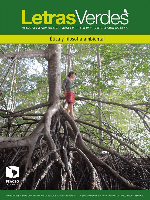
Letras Verdes
Scope & Guideline
Advancing Conversations in Environmental Humanities
Introduction
Aims and Scopes
- Environmental Philosophy and Ethics:
The journal frequently addresses philosophical inquiries into environmental ethics, drawing on the contributions of notable thinkers to explore the moral implications of ecological issues. - Sustainable Development and Governance:
Letras Verdes emphasizes sustainable development frameworks, particularly in the context of Latin American governance, examining policies and practices that promote ecological integrity while addressing social inequalities. - Community Engagement and Participatory Approaches:
A significant focus is placed on community-led initiatives and participatory governance models that empower local populations in ecological restoration and sustainable practices. - Cultural Perspectives on Environmental Issues:
The journal highlights cultural narratives and artistic expressions related to environmental conservation, including ecofeminism, indigenous perspectives, and the role of art in environmental activism. - Impact of Extractivism and Resource Management:
Research often critiques extractivist practices and their socio-environmental impacts, advocating for alternative models that prioritize ecological and social resilience.
Trending and Emerging
- Ecofeminism and Cultural Resistance:
There is a growing interest in ecofeminist perspectives, particularly the intersection of gender, culture, and environmental activism, as seen in the analysis of Andean ecofeminist rap, showcasing how cultural expressions can mobilize resistance. - Urban Metabolism and Sustainability:
Research exploring urban metabolic impacts and sustainability practices in metropolitan areas is on the rise, reflecting a critical examination of urbanization and its ecological consequences. - Intercultural Approaches to Environmental Management:
The journal is increasingly highlighting intercultural frameworks for managing environmental issues, emphasizing the importance of diverse cultural perspectives in addressing ecological challenges. - Social Capital in Ecological Initiatives:
Emerging studies focus on the role of social capital in community-based ecological restoration projects, underscoring the importance of social networks and trust in fostering effective environmental governance. - Climate Justice and Human Rights Perspectives:
A notable trend towards integrating human rights frameworks with environmental issues, particularly regarding energy access and housing, reflects a broader commitment to social justice in environmental discourse.
Declining or Waning
- Traditional Environmental Education Models:
There is a noticeable decrease in publications dedicated to conventional environmental education approaches, suggesting a shift towards more innovative and participatory educational frameworks that engage communities more directly. - Historical Analysis of Environmental Policies:
Research focusing on the historical context of environmental policies has become less prominent, possibly indicating a preference for contemporary case studies and current governance challenges over retrospective analyses. - Technological Solutions to Environmental Problems:
Themes centered around technological solutions alone for environmental issues, such as biotechnology applications, are appearing less frequently, possibly in favor of more holistic and integrative approaches that consider socio-political dimensions.
Similar Journals

Entorno Geografico
Fostering Collaboration in Geography and Environmental StudiesEntorno Geográfico is a premier open-access journal published by University of Valle, dedicated to the field of geography and environmental studies. Since its inception in 2002, this journal has provided a dynamic platform for researchers, professionals, and students to disseminate innovative findings and engage in critical discussions regarding geographical phenomena and environmental challenges. With an ISSN of 1692-0074 and an E-ISSN of 2382-3518, it is recognized for its commitment to high-quality peer-reviewed content that reflects cutting-edge research trends within the discipline. The journal aims to enhance understanding of socio-environmental processes and contribute to the formulation of sustainable solutions to pressing geographical issues. By fostering an open-access model, Entorno Geográfico ensures that valuable knowledge is widely accessible, encouraging collaboration and advancing education in the field. Located in Cali, Colombia, the journal reflects a strong regional focus while embracing a global perspective, making it an essential resource for the international geography community.
Anthropocene Review
Pioneering Research for a Sustainable FutureAnthropocene Review is a prominent academic journal published by SAGE Publications Inc. that focuses on the interdisciplinary study of the Anthropocene—a term used to describe the significant global changes resulting from human activity. Launched in 2014 and forming part of its converged years until 2024, this journal has quickly established itself as an essential resource for researchers and professionals in the fields of Ecology, Geology, and Global and Planetary Change, as evidenced by its notable Q2 and Q3 rankings in these categories. With a solid Scopus ranking placing it within the top tiers of Earth and Planetary Sciences and Environmental Science disciplines, the Anthropocene Review aims to shed light on the complex interactions between human actions and the environment, fostering a deeper understanding of sustainability and ecological impacts. While currently not an open-access journal, it provides crucial research findings and theoretical advancements that appeal to students and academics alike, shaping the discourse on our planet's future.
Ethics Policy & Environment
Exploring Sustainable Solutions through Ethical DiscourseEthics Policy & Environment is a prominent interdisciplinary journal published by Routledge Journals, Taylor & Francis Ltd, focusing on the complex interplay between ethical considerations, policy-making, and environmental issues. With an ISSN of 2155-0085 and an E-ISSN of 2155-0093, this journal serves as a critical platform for researchers, professionals, and students engaged in the fields of geography, policy, and philosophy. Highlighting the latest research and theoretical advances, it occupies a strong position within academic discourse, evidenced by its Q2 status in Geography, Planning and Development and Q1 in Philosophy for 2023. The journal has established itself as a key resource for understanding the ethical dimensions of environmental policy, making it essential for stakeholders navigating the challenges of sustainable development. With its coverage from 2011 to 2024, it is a timely source of knowledge that invites contributions that advance the conversation on ethics and the environment.

Caravelle
Connecting Scholars to Contemporary Cultural IssuesCaravelle, an esteemed journal published by PRESSES UNIV MIDI-PUM, serves as a vital platform for scholarly discourse within the fields of Arts and Humanities, specifically focusing on Cultural Studies. Established in 1999 and embracing open access since 2012, this French journal has made significant strides in ensuring that its research is readily available to a global audience, fostering inquiry and innovation among researchers, professionals, and students. With a current impact factor placing it in the Q3 quartile across its core disciplines, Caravelle has positioned itself as an essential resource within the academic community, offering insights that are both relevant and transformative. The journal's commitment to quality and engagement with contemporary cultural issues is reflected in its diverse range of articles, making it an attractive avenue for those seeking to enhance their understanding and contribute to discussions surrounding cultural phenomena.
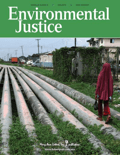
Environmental Justice
Championing social justice in the face of environmental challenges.Environmental Justice is a leading interdisciplinary journal published by MARY ANN LIEBERT, INC that provides a vital platform for the exploration of environmental issues through the lens of social equity and justice. With a strong focus on the intersection of geography, health, and policy, this journal spans topics from spatial inequality to public health implications related to environmental risks. Since its inception in 2008, the journal has gained recognition, achieving a Q1 ranking in Geography, Planning, and Development and a Q2 ranking in both Health, Toxicology, and Mutagenesis as well as Management, Monitoring, Policy, and Law. The journal is an essential resource for researchers, policymakers, and practitioners alike, reflecting the increasing importance of environmental justice in addressing global challenges. Although it does not operate under an open-access model, the comprehensive insights published in Environmental Justice are instrumental for advancing scholarly discourse and practical applications in the field.
FEMINIST STUDIES
Fostering inclusive dialogue on feminist theories.Feminist Studies, published by Feminist Studies Inc., is a pivotal journal in the field of Gender Studies and Arts and Humanities. With a rich history dating back to 1975, this journal has consistently provided a platform for scholarly engagement and critical discourse surrounding feminist theories and practices. Feminist Studies holds an impressive ranking in the Q2 category for both Arts and Humanities (miscellaneous) and Gender Studies, indicating its significant impact and relevance in these fields. The journal is indexed within the Scopus database, holding a ranking of #178 out of 552 in Arts and Humanities and #84 out of 213 in Social Sciences, reflecting its critical role in advancing feminist scholarship. Although not an open access journal, it aims to enrich academic dialogue and foster inclusive understanding through intellectually stimulating articles. Researchers, professionals, and students alike are encouraged to contribute to and engage with the robust content that Feminist Studies offers, making it an essential resource for anyone dedicated to the exploration of feminist issues and gender equity.

Rupkatha Journal on Interdisciplinary Studies in Humanities
Advancing Knowledge Across Artistic FrontiersRupkatha Journal on Interdisciplinary Studies in Humanities, published by Aesthetics Media Services - AesthetixMS, is a pioneering open-access journal that has been enriching the fields of arts and humanities since its inception in 2009. With an ISSN of 0975-2935, this journal provides a platform for scholarly articles, research, and critical discussions that transcend disciplinary boundaries, fostering a holistic understanding of human culture and creativity. Although it has discontinued its coverage in Scopus, it maintains a commendable rank of #75 out of 163 in the general arts and humanities category, placing it in the 54th percentile—a testament to its contributions to the academic community. Situated in West Bengal, India, Rupkatha is committed to accessibility and the dissemination of knowledge, inviting researchers, professionals, and students alike to engage with its rich content. With its focus on interdisciplinary approaches, the journal plays a vital role in fostering dialogue and innovation within the humanities, making it an essential resource for anyone interested in exploring the complexities of human expression.
Environmental Humanities
Cultivating a Deep Understanding of Human-Environment InteractionsEnvironmental Humanities, published by DUKE UNIVERSITY PRESS, is a premier journal that has established itself as a leading platform for interdisciplinary scholarship at the intersection of the environment and the humanities. With its open access framework since 2012, the journal fosters widespread dissemination of critical research that integrates perspectives from Anthropology, Ecology, and the Social Sciences. Currently holding impressive Q1 rankings in both Anthropology and Social Sciences for 2023, along with notable Q2 standings in Environmental Science fields, this journal provides a vital forum for innovative explorations of how human culture shapes and is shaped by environmental challenges. Situated in the United States, the journal encourages authors and thinkers to contribute to ongoing discussions about sustainability, ethics, and the cultural dimensions of environmental issues, making it an essential resource for researchers, professionals, and students alike. With a commitment to high-quality scholarship, Environmental Humanities plays a crucial role in advancing knowledge and understanding in a rapidly evolving field.
Worldviews-Global Religions Culture and Ecology
Exploring the Nexus of Faith, Culture, and NatureWorldviews: Global Religions, Culture and Ecology, published by BRILL in the Netherlands, stands as a vital academic journal that explores the intricate interplay between religion, culture, and ecology. With an ISSN of 1363-5247 and an E-ISSN of 1568-5357, this journal serves as an essential resource for researchers, professionals, and students who seek to understand contemporary global issues through a multidisciplinary lens. The journal has achieved notable rankings in its field, including Q2 in Religious Studies and Q3 in Cultural Studies for 2023, showcasing its relevance and impact. Although not currently open access, its commitment to advancing knowledge and fostering dialogue about the ethical and ecological challenges faced in a rapidly changing world makes it indispensable. By converging insights from various academic disciplines, Worldviews plays a crucial role in enriching the understanding of how cultural and religious narratives shape perceptions of environmental responsibility and sustainability.

Bitacora Urbano Territorial
Advancing Urban Knowledge for a Transformative TomorrowBitacora Urbano Territorial is an esteemed open-access journal published by Universidad Nacional de Colombia, dedicated to advancing research in the intricate fields of urban studies, geography, and the arts and humanities. Since its inception in 2009, this journal has become a vital platform for academics, practitioners, and students alike in analyzing and addressing the multifaceted dimensions of urbanization, spatial planning, and territorial development. With an evolving focus and a commitment to fostering scholarly dialogue, Bitacora Urbano Territorial proudly holds a Q2 ranking in Arts and Humanities (miscellaneous) and Q3 rankings in both Geography, Planning and Development and Urban Studies, reflecting its growing impact within the academic community. The journal welcomes contributions that explore innovative research, case studies, and theoretical advancements, providing a comprehensive reflection of urban transformations in Latin America and beyond. Emphasizing accessibility, the journal has embraced an open access model since 2016, ensuring that critical knowledge is disseminated widely to enhance understanding and promote collaboration across disciplines.