
LINKS Rivista di letteratura e cultura tedesca
Scope & Guideline
Illuminating the Rich Tapestry of German Cultural Heritage
Introduction
Aims and Scopes
- Interdisciplinary Literary Studies:
The journal fosters research that bridges literature with other disciplines, including history, philosophy, and cultural studies, thus allowing for a comprehensive understanding of texts within their socio-political contexts. - Focus on 20th and 21st Century Literature:
There is a consistent emphasis on modern and contemporary literature, particularly post-war and contemporary German literature, showcasing works and themes that reflect current societal and cultural issues. - Critical Engagement with Historical Narratives:
The journal often critiques historical narratives and their representations in literature, particularly concerning significant events such as the World Wars and their aftermath. - Exploration of Literary Theory and Criticism:
It includes discussions on various literary theories and methodologies, contributing to the ongoing dialogue in literary criticism and theory, especially in relation to German literature. - Cultural and Political Contexts:
Themes often intersect with cultural and political discourses, exploring how literature responds to and shapes societal values, identities, and conflicts.
Trending and Emerging
- Ecocriticism and Environmental Literature:
There is an increasing focus on ecological themes and the representation of nature in literature, as seen in the analysis of 'eco-fiction' and the interconnections between humans and the natural world. - Empathy and Subjectivity in Literature:
Recent studies emphasize the modeling of empathic subjectivity, highlighting how literature can foster connections between individuals and diverse perspectives, particularly in contemporary poetry. - Intertextuality and Cultural Translation:
The exploration of intertextuality and the cultural translation of literary works has gained prominence, indicating a growing interest in how texts resonate across different cultural contexts. - Political Theology and Ethical Discourse:
There is a notable increase in discussions surrounding political theology and ethical considerations in literature, reflecting the ongoing debates about morality and governance in contemporary society. - Gender and Identity Studies:
Emerging themes related to gender and identity, particularly in the context of modern literature, are becoming more significant, showcasing diverse voices and experiences within German literature.
Declining or Waning
- Romanticism and Early Modern Literature:
There seems to be a declining focus on earlier literary periods such as Romanticism, with fewer studies addressing its influence or legacy in contemporary works. - Traditional Historical Narratives:
Research that strictly adheres to linear historical narratives or traditional literary histories appears to be less prevalent, suggesting a shift towards more fragmented and complex interpretations of history. - National Identity Studies:
Themes centered around national identity and its representation in literature are becoming less prominent, possibly reflecting a broader shift towards transnational and global perspectives in literary studies.
Similar Journals

CAMBRIDGE QUARTERLY
Fostering Innovative Research in Literary StudiesCAMBRIDGE QUARTERLY, published by Oxford University Press, stands as a dedicated outlet for scholarly discourse in the realm of Literature and Literary Theory. Since its inception in 1965, this journal has fostered a rich landscape for academic inquiry and discussion, with a commitment to exploring the intricate dynamics of literary studies up to 2024 and beyond. With an ISSN of 0008-199X and an E-ISSN of 1471-6836, CAMBRIDGE QUARTERLY offers a platform for innovative research, although it currently does not provide open access options. The journal is noted for its scholarly contributions, ranking in the Q4 quartile within its category based on the 2023 metrics, and holds the 635th rank in Scopus for Arts and Humanities specifically focused on Literature and Literary Theory, placing it in the 42nd percentile. As such, it appeals to researchers, professionals, and students alike, seeking to deepen their understanding of literary discourse and theoretical frameworks.
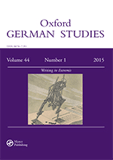
OXFORD GERMAN STUDIES
Fostering Critical Discourse in German LiteratureOXFORD GERMAN STUDIES, published by Routledge Journals, Taylor & Francis Ltd, is an esteemed academic journal dedicated to the exploration and scholarly examination of German literature and linguistics. With an ISSN of 0078-7191 and E-ISSN of 1745-9214, this journal has been in circulation since 1966, offering researchers a unique platform for critical discourse, innovative research, and interdisciplinary dialogue. It holds a significant position in the academic landscape, being categorized in the Q4 quartile for Linguistics and Language and Q3 for Literature and Literary Theory as of 2023. Despite lacking open-access options, the journal thrives in providing invaluable insights, aiming to bridge historical contexts with contemporary perspectives on German studies. It serves as an essential resource for scholars, professionals, and students eager to deepen their understanding of Germanic languages and literature. Located in Abingdon, United Kingdom, the journal continues to uphold its mission of advancing knowledge and fostering scholarly discussions in the rich field of German studies.
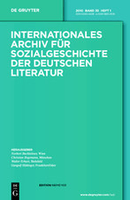
INTERNATIONALES ARCHIV FUR SOZIALGESCHICHTE DER DEUTSCHEN LITERATUR
Illuminating the Social Forces Behind German LiteratureINTERNATIONALES ARCHIV FÜR SOZIALGESCHICHTE DER DEUTSCHEN LITERATUR is a distinguished academic journal published by Walter de Gruyter GmbH in Germany, dedicated to the exploration of the social history of German literature. With an ISSN of 0340-4528 and an E-ISSN of 1865-9128, the journal has been a valuable resource since its inception in 1976. The journal aims to provide a platform for scholarly discourse, offering insights into the historical contexts that shape literary production and theory. Despite its current quartile rankings of Q4 in both History and Literature and Literary Theory, the journal remains committed to fostering rigorous academic discussion and attracting contributions that stimulate critical engagement within the field. While not currently available as an Open Access publication, it serves as an essential repository of research for historians, literary scholars, and students interested in the nuanced intersection of social history and literature. Located at Genthiner Strasse 13, D-10785 Berlin, Germany, this journal is an indispensable source for anyone seeking to broaden their understanding of German literary scholarship.

PAMIETNIK LITERACKI
Fostering Critical Dialogue in LiteraturePAMIETNIK LITERACKI is a distinguished peer-reviewed journal dedicated to advancing the fields of Literature and Literary Theory, published by WYDAWNICTWO PAN, INST BADAN LITERACKICH PAN in Poland. With an ISSN of 0031-0514 and E-ISSN of 0031-0514, this journal has been operating under an Open Access model since 2012, ensuring wide accessibility and dissemination of scholarly work. The journal has undergone a journey through various categories, currently positioned in the Q4 quartile according to the 2023 category rankings in Literature and Literary Theory, with a Scopus rank of #1009/1106 placing it in the 8th percentile. PAMIETNIK LITERACKI serves as a critical platform for scholars, providing a venue for innovative research, discussions, and reviews that shape the literary discourse in Poland and beyond. For those passionate about literary studies, this journal represents a vital resource for both established researchers and emerging voices in the field.
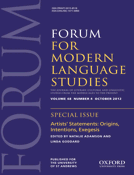
FORUM FOR MODERN LANGUAGE STUDIES
Fostering Scholarly Dialogue on Language and LiteratureFORUM FOR MODERN LANGUAGE STUDIES is a prestigious academic journal published by Oxford University Press that has been serving the fields of literature and linguistics since its inception in 1965. This journal, with an ISSN of 0015-8518 and an E-ISSN of 1471-6860, plays a crucial role in advancing scholarly discourse on modern language studies, including literature and literary theory. With an impactful presence in both the linguistic and literary domains, it has been recognized in 2023 with a category ranking of Q2 in Literature and Literary Theory and Q3 in Linguistics and Language. It stands out in the competitive landscape, holding a notable position within Scopus rankings, including a 70th percentile ranking in Literature & Literary Theory. While the journal currently does not offer open access options, it remains a vital resource for researchers, educators, and students passionate about the transformative power of language and literature. Its commitment to quality research and robust academic discussion underscores its importance, making it a key platform for those aiming to contribute to modern language scholarship.
GERMANIC REVIEW
Redefining Boundaries in the Study of Germanic Languages and CulturesGERMANIC REVIEW, published by Routledge Journals, Taylor & Francis Ltd, stands as a prominent academic journal dedicated to the study of Germanic languages, literature, and cultural studies. With an ISSN of 0016-8890 and an E-ISSN of 1930-6962, this journal has been a valuable resource for researchers and scholars since its inception, encompassing a wide range of topics within its field. Despite its Q4 ranking in Cultural Studies and Q3 ranking in Literature and Literary Theory, the journal has grown steadily in reputation, with Scopus ranks placing it within the competitive landscape of Arts and Humanities. The journal publishes contributions that delve into historical and contemporary issues, fostering a deeper understanding of Germanic cultures. By bridging literary analysis with cultural discourse, GERMANIC REVIEW invites academics, professionals, and students alike to engage with critical themes and methodologies that redefine the boundaries of Germanic studies. As a subscription-based journal, it remains dedicated to promoting scholarly communication and advancing knowledge in the humanities.

Studia Theodisca
Unlocking New Perspectives in LiteratureStudia Theodisca is a distinguished academic journal published by Milano University Press that has been contributing to the fields of Cultural Studies and Literature and Literary Theory since its inception. With an ISSN of 1593-2478 and E-ISSN 2385-2917, this Open Access journal, available since 1994, ensures that research is freely accessible, fostering a global exchange of ideas. Located in Milan, Italy, the journal has gained traction within the academic community, reflected in its rankings: Q4 in Cultural Studies and Q3 in Literature and Literary Theory as of 2023. Despite its relatively new presence in Scopus, being placed in the ranks of 733 out of 1106 for Literature and Literary Theory and 1092 out of 1304 for Cultural Studies, it remains committed to advancing scholarly dialogue and exploring diverse narratives. Studia Theodisca serves as a vital platform for researchers, professionals, and students seeking to engage with innovative contributions and contemporary thought in these dynamic areas of study.
MILTON QUARTERLY
Exploring the Depths of Miltonic InfluenceMILTON QUARTERLY, published by Wiley, is a premier academic journal in the field of Literature and Literary Theory. Since its inception in 1967, it has become a leading platform for scholarly discourse, focusing on the works and influence of John Milton and extending to broader themes in literary studies. With an impressive Q1 ranking in its category, the journal is recognized for its high-quality peer-reviewed articles and contribution to advancing literary scholarship. Although it currently does not offer open access options, its impact in the academic community is undeniable, boasting publications that resonate well beyond its pages. The journal is an invaluable resource for researchers, professionals, and students alike, keen on exploring the intersections of literary theory, history, and criticism, making significant contributions to the understanding of literature throughout the centuries.
RUSSIAN LITERATURE
Unveiling the Complexity of Russian Literary TheoryRUSSIAN LITERATURE is a premier academic journal published by ELSEVIER, dedicated to advancing the study of Russian literary traditions, critical theory, and cultural contexts. With an ISSN of 0304-3479 and an E-ISSN of 1878-3678, this journal has firmly established itself as a vital resource in the field, achieving a commendable Q1 ranking in Literature and Literary Theory as of 2023. The journal benefits from a strong impact factor and ranks #178 out of 1106 in the Scopus database, placing it in the 83rd percentile of arts and humanities research. RUSSIAN LITERATURE covers an extensive timeline, converging years from 1971 to 1974 and from 1976 to 2023, reflecting its rich academic lineage. Although not an open-access publication, the journal remains influential among scholars, professionals, and students seeking in-depth analyses and critical insights into Russian literature and literary theory. Its commitment to scholarly rigor makes it an essential read for anyone engaging with the complexities of literary studies.
MNEMOSYNE
Connecting scholars through innovative insights.MNEMOSYNE is a prestigious academic journal published by BRILL, specializing in the fields of Archeology, Classics, History, Linguistics and Language, and Literature and Literary Theory. With a remarkable history dating back to its inception in 1948, this journal continues to be a crucial resource for scholars and researchers, spanning its publication years that extend to 2024. The journal boasts high rankings in multiple categories according to Scopus, including Q1 status in Classics and History, reflecting its impact and relevance in the academic community. Although it is not an Open Access journal, its selection of peer-reviewed articles ensures rigorous scholarship that contributes to ongoing discussions and discoveries in the humanities. By providing a platform for innovative research and critical discourse, MNEMOSYNE plays an integral role in advancing the understanding of cultural and historical contexts, making it an essential read for both seasoned academics and emerging scholars alike.