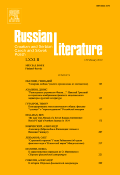
RUSSIAN LITERATURE
Scope & Guideline
Connecting Past and Present in Russian Literary Discourse
Introduction
Aims and Scopes
- Exploration of Russian Literary History:
The journal emphasizes the historical evolution of Russian literature, examining key authors, movements, and periods, as well as their cultural and political implications. - Interdisciplinary Approaches:
It promotes interdisciplinary research that intersects literature with other fields such as philosophy, sociology, history, and cultural studies, enhancing the understanding of literary texts in broader contexts. - Contemporary Russian Literature:
The journal features analyses of modern and contemporary Russian literature, including discussions on emerging authors, themes, and the impact of socio-political changes on literary expression. - Theoretical Perspectives:
It encourages the application of various literary theories and methodologies, including formalism, structuralism, post-colonialism, and gender studies, to enrich the analysis of Russian literary texts. - Cultural and Political Contexts:
The journal highlights the relationship between literature and cultural/political contexts, focusing on how literature reflects, critiques, and shapes societal values and historical narratives.
Trending and Emerging
- Cultural Biopolitics:
An increasing focus on cultural biopolitics explores how literature interacts with concepts of power, identity, and the state, particularly in the context of contemporary Russian society. - Pandemic Narratives and Contagion:
The emergence of themes related to pandemic narratives and contagion reflects a timely response to global issues, highlighting how these motifs are represented in recent Russian literature. - New Masculinities and Gender Studies:
There is a growing interest in the exploration of masculinities within contemporary Russian poetry and literature, examining how societal changes are influencing gender representations. - Digital Humanities and Distant Reading:
The integration of digital humanities methods, particularly distant reading, indicates a trend towards using quantitative analyses to enrich literary studies, showcasing the journal's engagement with modern research methodologies. - Transmediality and Adaptation:
Themes surrounding transmediality and the adaptation of literary works into various media forms are gaining traction, reflecting the evolving nature of literary consumption and interpretation in the digital age.
Declining or Waning
- Focus on Early Twentieth Century Literature:
There has been a noticeable reduction in articles dedicated specifically to early twentieth-century literature, suggesting a shift in focus towards more contemporary works and issues. - Traditional Historical Narratives:
Research centered around traditional historical narratives of Russian literature appears to be waning, as scholars increasingly seek to challenge or expand these narratives through more diverse and inclusive perspectives. - Exploration of Classical Texts:
The examination of classical Russian texts, while still significant, has become less frequent, indicating a potential move towards contemporary literature and modern relevance rather than historical canonization.
Similar Journals
Critical Survey
Advancing Critical Perspectives in Arts and HumanitiesCritical Survey, published by BERGHAHN JOURNALS, is a distinguished academic journal that focuses on the dynamic intersections of Cultural Studies and Literature and Literary Theory within the arts and humanities landscape. With an ISSN of 0011-1570 and E-ISSN 1752-2293, this journal serves as a crucial platform for scholars, offering original research and critical essays that delve into contemporary cultural and literary debates. Based in the United Kingdom, it enjoys a solid reputation as evidenced by its 2023 Scopus rankings, placing it in the Q3 category for Cultural Studies and Q2 for Literature and Literary Theory. While it does not currently offer open access options, the journal is committed to maintaining high academic standards and fostering intellectual exchange through its published content, inclusive of articles that span a range of topics relevant to critical survey methodologies. As it continues to converge from 2012 to 2024, Critical Survey remains an invaluable resource for researchers, professionals, and students engaged in the evolving discourse of cultural and literary analysis.

Quaestio Rossica
Navigating the Humanities with Precision and InsightQuaestio Rossica is a prestigious academic journal published by URAL FEDERAL UNIVERSITY that focuses on a broad spectrum of the humanities, encompassing cultural studies, history, linguistics, literature and literary theory, as well as visual and performing arts. With an Open Access model since 2021, it provides unrestricted access to high-quality research articles, fostering a more inclusive platform for scholarly discourse. The journal has notably achieved Q1 rankings in key categories such as Cultural Studies and Literature and Literary Theory, highlighting its impact and relevance. With a commitment to advancing interdisciplinary dialogue, Quaestio Rossica serves as an essential resource for researchers, professionals, and students interested in exploring the rich complexities of human culture and expression. Based in the Russian Federation, it aims to bridge gaps in knowledge across various linguistic and cultural contexts, making its contribution invaluable in today's increasingly globalized academic landscape.
FORUM FOR MODERN LANGUAGE STUDIES
Nurturing Innovation in Language ScholarshipFORUM FOR MODERN LANGUAGE STUDIES is a prestigious academic journal published by Oxford University Press that has been serving the fields of literature and linguistics since its inception in 1965. This journal, with an ISSN of 0015-8518 and an E-ISSN of 1471-6860, plays a crucial role in advancing scholarly discourse on modern language studies, including literature and literary theory. With an impactful presence in both the linguistic and literary domains, it has been recognized in 2023 with a category ranking of Q2 in Literature and Literary Theory and Q3 in Linguistics and Language. It stands out in the competitive landscape, holding a notable position within Scopus rankings, including a 70th percentile ranking in Literature & Literary Theory. While the journal currently does not offer open access options, it remains a vital resource for researchers, educators, and students passionate about the transformative power of language and literature. Its commitment to quality research and robust academic discussion underscores its importance, making it a key platform for those aiming to contribute to modern language scholarship.

Eixo e a Roda-Revista de Literatura Brasileira
Exploring the Depths of Brazilian Literary HeritageEixo e a Roda-Revista de Literatura Brasileira is a pioneering academic journal dedicated to the exploration and dissemination of Brazilian literature, published by the Federal University of Minas Gerais, Faculty of Letters. Since its inception in 1982, this Open Access journal has provided a vital platform for researchers, educators, and enthusiasts to share innovative ideas and critical analyses related to Brazilian literary studies. With its ISSN 0102-4809 and E-ISSN 2358-9787, the journal attracts a diverse readership and invites submissions that contribute to the richness of Brazilian cultural discourse. Located in Belo Horizonte, Brazil, the journal plays a critical role in advancing scholarly dialogue and promoting accessibility in literature research, fostering an inclusive environment for academic exchange.
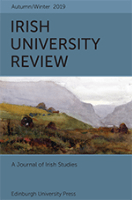
IRISH UNIVERSITY REVIEW
Nurturing Academic Excellence in Literary Theory and CriticismIRISH UNIVERSITY REVIEW is a distinguished academic journal published by Edinburgh University Press, specializing in the fields of Literature and Literary Theory. With an ISSN of 0021-1427 and an E-ISSN of 2047-2153, this journal serves as a vital platform for scholarly discourse on contemporary and historical literary studies related to Ireland and its cultural contexts. Located in the United Kingdom, the journal has achieved an impressive Q2 ranking in the 2023 category of Literature and Literary Theory, placing it in the 81st percentile among peer-reviewed arts and humanities journals globally, as per Scopus rankings. IRISH UNIVERSITY REVIEW is committed to fostering academic excellence and offers a range of access options for its readers, promoting both traditional and digital scholarship. With a publication timeline extending from 2002 to 2024, the journal is dedicated to enhancing understanding and appreciation of Irish literature through critical essays, reviews, and innovative research, making it an essential resource for researchers, professionals, and students alike.
REVUE D HISTOIRE LITTERAIRE DE LA FRANCE
Illuminating the Path of French Literary ThoughtREVUE D'HISTOIRE LITTERAIRE DE LA FRANCE, published by Classiques Garnier, is a distinguished academic journal dedicated to the exploration and analysis of French literary history and theory. With an ISSN of 0035-2411 and an E-ISSN of 2105-2689, this journal serves as an essential resource for researchers, professionals, and students in the fields of literature and the humanities. Though it does not currently offer open access, its rigorous scholarship contributes significantly to the understanding of historical literary movements and their cultural contexts. Despite its discontinuation in Scopus after 2016, the journal has a notable academic pedigree, providing critical perspectives on literature from the past to the contemporary era. Situated at 6 Rue de la Sorbonne, Paris 75005, France, the journal aims to enrich the discourse surrounding literary theory and history, highlighting its enduring relevance in today's scholarly landscape.

TWENTIETH CENTURY LITERATURE
Connecting Past Insights with Future DiscoveriesTWENTIETH CENTURY LITERATURE is a renowned journal published by Hofstra University Press, dedicated to the exploration and analysis of literature and literary theory from the twentieth century. With a focus on both established and emerging voices in the field, this journal serves as an essential resource for researchers, professionals, and students who seek to deepen their understanding of significant literary movements and trends. The journal holds an impressive Q2 category ranking in Literature and Literary Theory as of 2023, showcasing its impact and relevance in the academic community. Though not an open access journal, it provides valuable insights and scholarly discussions that contribute to ongoing debates in literature studies. Covering a converged period from 2002 to 2014 and continuing from 2016 to 2024, TWENTIETH CENTURY LITERATURE positions itself as a pivotal platform for thought-provoking literature critique and scholarly inquiry, making it an indispensable addition to any academic library or personal collection.

RLC-REVUE DE LITTERATURE COMPAREE
Illuminating Intercultural Narratives in LiteratureRLC-REVUE DE LITTERATURE COMPAREE, published by DIDIER-ERUDITION, is a prominent French journal focused on comparative literature and literary theory, holding an ISSN of 0035-1466. Established in 2001, the journal aims to foster scholarly exchange and critical analysis in the field of literature, examining texts across cultures and disciplines. With its current categorization in the Q4 quartile for literature and literary theory as of 2023 and holding a Scopus rank of #880 out of 1106, RLC remains an accessible resource for researchers, professionals, and students alike. While it operates under a traditional access model, it continuously strives to contribute to the academic discourse within its scope, enhancing the understanding of literary complexities and intercultural exchanges. Based in the heart of Paris, at 6 RUE DE LA SORBONNE, the journal invites contributions that explore innovative perspectives and methodologies in literary studies through its ongoing commitment to scholarly excellence.

RUSSKAIA LITERATURA
Advancing Scholarship in the Realm of Russian LiteratureRUSSKAIA LITERATURA, published by the esteemed Russian Academy of Sciences and the State Academy of Humanities (GAUGN), is a prominent journal dedicated to the exploration and analysis of Russian literature and literary theory. Since its inception in 2013, the journal has established itself within the academic community as a valuable resource for scholars and students alike, aiming to elevate discourse and critical thought in the field. Although currently categorized in Q4 of Literature and Literary Theory by Scopus, it plays a significant role in fostering a deeper understanding of Russian literary heritage. The journal's commitment to rigor and quality is underscored by its inclusion in internationally recognized databases, making it a relevant venue for contemporary literary scholarship. Researchers and practitioners in the field will find RUSSKAIA LITERATURA an indispensable tool to access vital knowledge and contribute to discussions that resonate within and beyond the Russian context.

RIVISTA DI LETTERATURA ITALIANA
Fostering Scholarly Discourse in Italian Literary StudiesRIVISTA DI LETTERATURA ITALIANA, published by Fabrizio Serra Editore, stands as a prestigious journal in the field of Italian literature, with a focus on critical analysis and the exploration of literary themes, movements, and historical contexts within Italian literary traditions. With an ISSN of 0392-825X and an E-ISSN of 1724-0638, the journal serves as a valuable resource for scholars, professionals, and students seeking to deepen their understanding of Italian literary works and authors. Although it does not currently offer open access, its rigorous peer-review process ensures that all published articles meet high academic standards, contributing to ongoing scholarly discourse. Operating from its base in Pisa, Italy, RIVISTA DI LETTERATURA ITALIANA aims to provide readers with insightful research, fostering a greater appreciation for the rich tapestry of Italian literature.