LITHOLOGY AND MINERAL RESOURCES
Scope & Guideline
Cultivating Awareness of Lithological Impacts on Resources
Introduction
Aims and Scopes
- Geological Research and Analysis:
The journal emphasizes comprehensive geological studies, including sedimentological, stratigraphic, and paleogeographic research, to understand the formation and evolution of geological structures. - Mineralogical and Geochemical Investigations:
A core area of focus is the detailed analysis of mineral compositions and geochemical processes, including the study of rare earth elements and other economically significant minerals. - Paleoenvironmental and Paleoecological Studies:
It covers research that reconstructs past environmental conditions and ecological systems through lithological and geochemical evidence, contributing to the understanding of historical climate changes. - Resource Exploration and Assessment:
The journal publishes findings related to the exploration, assessment, and sustainable management of mineral resources, particularly those with industrial and economic importance. - Interdisciplinary Approaches:
Research often integrates various scientific disciplines, such as geophysics, geochemistry, and hydrogeology, to provide a holistic understanding of geological phenomena.
Trending and Emerging
- Rare Earth Elements and Critical Minerals:
There is a significant increase in research focused on rare earth elements and other critical minerals, driven by their importance in modern technology and renewable energy applications. - Environmental Geochemistry and Pollution Studies:
Papers addressing environmental impacts of mining, pollution in sedimentary systems, and the geochemical cycling of elements in ecosystems are on the rise, reflecting growing environmental awareness. - Hydrothermal Systems and Marine Geology:
Research related to hydrothermal systems, including mineralization processes and sediment characteristics in marine environments, is emerging as a key area of study, aligning with global interests in oceanic resources. - Geochemical Modeling and Data Integration:
The trend towards using advanced geochemical modeling and data integration techniques to analyze complex geological systems is becoming more prevalent, enhancing the predictive capabilities of geological research. - Climate Change and Sedimentary Processes:
Investigations into the effects of climate change on sedimentary processes and geological formations are emerging, indicating a responsiveness to global environmental changes.
Declining or Waning
- Historical Geology and Paleoecology:
Research on historical geological events and paleoecological reconstructions has seen a reduction in focus, possibly due to the increasing emphasis on contemporary geological processes and resource management. - Conventional Hydrocarbon Studies:
Traditional studies focused on hydrocarbon reservoirs and their geological characteristics are becoming less frequent, as new methodologies and technologies shift attention towards unconventional resources and alternative energy sources. - Basic Mineralogy without Application:
There is a noticeable decline in papers solely dedicated to basic mineralogical descriptions without direct applications to resource exploration or environmental impact, reflecting a trend towards more applied research.
Similar Journals

Mineralogical Journal-Ukraine
Illuminating the path to understanding geochemical processes.Mineralogical Journal-Ukraine is a key academic publication dedicated to advancing the field of mineralogy and geochemistry, under the esteemed auspices of the M.P. Semenenko Institute of Geochemistry, Mineralogy & Ore Formation of NAS Ukraine. Since its inception in 2019, this journal has established itself as an essential resource for researchers and professionals engaged in the study of energy, fuel technology, and the earth sciences, despite its present rankings reflecting a developing impact within these specific categories on Scopus. Published in Ukrainian and available in both print and online formats, the journal not only aims to disseminate high-quality research but also encourages inclusive access to vital findings in mineral exploration, petrology, and geochemical processes. With a commitment to excellence and an expanding scope of research, Mineralogical Journal-Ukraine stands as a pivotal platform for innovation and collaboration among scientists striving to understand the complexities of mineral formation and ore deposits.
GEOLOGICA CARPATHICA
Fostering Innovation in Geological ResearchGEOLOGICA CARPATHICA, with ISSN 1335-0552 and E-ISSN 1336-8052, is a distinguished open access journal published by the Slovak Academy of Sciences Geological Institute, serving as a pivotal platform for the dissemination of research in the field of Geology. Established in 1991 and continuing through 2024, the journal is recognized for its significant contributions to Earth and Planetary Sciences, evidenced by its 2023 Scopus ranking placing it in the second quartile (Q2) within Geology. With an H-index that showcases its impactful publications, GEOLOGICA CARPATHICA is committed to fostering scholarly communication while promoting accessible research, having adopted an open access model since 2009. Located in beautiful Bratislava, Slovakia, this journal aims to engage a global audience of researchers, professionals, and students interested in ecological, geological, and environmental studies, making it a prominent resource for enriching the scientific community's understanding of the Carpathian region and beyond.
INTERNATIONAL GEOLOGY REVIEW
Connecting researchers to the forefront of geological innovation.INTERNATIONAL GEOLOGY REVIEW, published by Taylor & Francis Inc, is a premier journal dedicated to advancing the field of geology since its inception in 1959. With its Q1 ranking in the field of Geology for 2023, this journal is a significant platform for researchers, professionals, and students exploring the intricacies of Earth and planetary sciences. The journal has been rated in the 81st percentile within Scopus rankings, reflecting its influence and the high quality of articles published. Although it does not offer Open Access options, the journal maintains a rigorous peer-review process to ensure the publication of original and impactful research. With an extensive archive projected to continue until 2024, INTERNATIONAL GEOLOGY REVIEW serves as an essential resource for those seeking to deepen their understanding of geological phenomena, making it a vital contributor to the global scientific community.
Acta Geochimica
Exploring the Earth's Secrets, One Element at a Time.Acta Geochimica is a prominent academic journal published by SPRINGER INT PUBL AG, focusing on the dynamic fields of Geochemistry and Petrology. Established in 2016, this peer-reviewed publication has quickly gained recognition within the scientific community, currently holding a category quartile ranking of Q3 in Geochemistry and Petrology as of 2023. With its ISSN 2096-0956 and E-ISSN 2365-7499, the journal offers a platform for researchers and professionals to disseminate and discuss significant advancements in the study of the chemical composition of the Earth and other celestial bodies. While it is not an open-access journal, Acta Geochimica plays a vital role in fostering collaboration and innovation among scientists, contributing to a deeper understanding of geochemical processes. Located in Switzerland at Gewerbestrasse 11, Cham CH-6330, Switzerland, this journal is a critical resource for students, researchers, and professionals seeking to push the boundaries of knowledge in Earth sciences.
ACTA GEOLOGICA SINICA-ENGLISH EDITION
Innovating Geological Research for a Sustainable FutureACTA GEOLOGICA SINICA-ENGLISH EDITION is a distinguished academic journal published by Wiley, providing a platform for cutting-edge research in the field of geology. With an ISSN of 1000-9515 and E-ISSN 1755-6724, this journal has been a pivotal resource since its inception in 1988, catering to scholars and professionals until 2024. The journal is recognized for its high-quality articles, achieving a Q2 ranking in the field of Geology according to the 2023 category quartiles, and ranks #122 out of 321 in the Scopus Earth and Planetary Sciences sector, placing it within the 62nd percentile among its peers. Although currently not available as an open access publication, it remains a significant repository of knowledge that supports ongoing geological research and exploration. For researchers, students, and professionals looking to deepen their understanding of geological sciences, ACTA GEOLOGICA SINICA-ENGLISH EDITION stands as an essential journal, promoting collaboration and innovation in the earth sciences.
APPLIED GEOCHEMISTRY
Exploring the Nexus of Geochemistry and Environmental ScienceApplied Geochemistry is an esteemed peer-reviewed journal published by Pergamon-Elsevier Science Ltd, dedicated to advancing the field of geochemistry by exploring the intricate relationships between geological processes and environmental chemistry. With a significant impact factor and prestigious standing in various categories, including Environmental Chemistry, Geochemistry and Petrology, and Pollution, Applied Geochemistry is classified within the Q2 quartile, reflecting its influence and recognition in the scientific community. The journal spans research contributions from 1986 to the present, focusing on critical issues such as the impact of geochemical processes on the environment, the evaluation of pollution sources, and innovative methodologies in geochemical analysis. Through its rigorous publication standards, Applied Geochemistry serves as a vital resource for researchers, professionals, and students seeking to enrich their understanding of geochemical phenomena and their implications for environmental health. Please note that access to the journal is not open; therefore, institutional or individual subscriptions may be required for full-text viewing.
MINERALIUM DEPOSITA
Fostering Global Dialogue in Geological SciencesMINERALIUM DEPOSITA is a premier journal in the fields of Economic Geology, Geochemistry, and Petrology, published by Springer. With an impressive 2023 impact factor and designated as Q1 in its category, this journal stands out in the academic landscape, showcasing the latest research and developments from 1966 to 2024. With a prominent rank in Scopus, holding the 3rd position in both Geophysics and Geochemistry and Petrology, it represents an invaluable resource for researchers and professionals alike. Although open access options may not be available, the journal's comprehensive coverage of mineral deposits promotes the global exchange of knowledge and advances in our understanding of the geological sciences. Positioned in Germany, MINERALIUM DEPOSITA serves as a crucial platform for innovative discussions, making it essential reading for students, professionals, and academics dedicated to exploring the complexities of earth sciences.
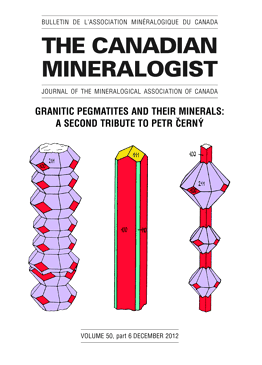
CANADIAN MINERALOGIST
Advancing Geochemistry and Petrology ResearchCANADIAN MINERALOGIST is a prestigious academic journal published by the Mineralogical Association of Canada, primarily focusing on the fields of Geochemistry and Petrology. Established in 1980, this journal has fostered a rich tradition of scholarly communication, offering a platform for researchers from around the world to share significant advancements and findings related to mineral science. With an impact factor that reflects its relevance within the scientific community, the journal occupies a notable position, ranked in the Q3 quartile within its category according to the 2023 assessments. The E-ISSN 1499-1276 ensures that online access is readily available, making it easier for readers to engage with cutting-edge research. With its headquarters in Quebec, Canada, CANADIAN MINERALOGIST not only contributes to the academic landscape in North America but also plays a vital role globally in advancing the understanding of mineralogy. Its commitment to high-quality publishing supports both the dissemination of knowledge and the nurturing of a vibrant scientific community.
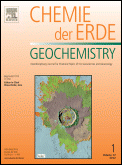
Geochemistry
Illuminating the Path of Geochemical DiscoveryGeochemistry is a distinguished academic journal published by Elsevier GmbH, focusing on the intricate study of geochemical processes across earth systems. With its ISSN 0009-2819 and E-ISSN 1611-5864, this journal serves as a crucial platform for scholars and researchers eager to disseminate their latest findings in geochemistry, petrology, and geophysics. The journal has established itself within the scientific community, achieving a Q2 ranking in both Geochemistry and Petrology as well as Geophysics, showcasing its significant impact and relevance—ranking 18th out of 165 in Geophysics and 26th out of 154 in Geochemistry and Petrology according to Scopus. From its inception in 1978 to its ongoing contributions through 2024, Geochemistry remains a vital resource for academic discourse and innovation in earth sciences. As an open-access title, it allows for broader dissemination of knowledge, promoting accessibility for researchers, students, and professionals. Whether you are engaged in theoretical research or applied studies, Geochemistry provides the insights necessary to advance our understanding of the planet's chemical complexity.
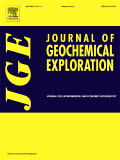
JOURNAL OF GEOCHEMICAL EXPLORATION
Pioneering Research for a Sustainable FutureJOURNAL OF GEOCHEMICAL EXPLORATION, published by Elsevier, is a leading journal in the fields of Geochemistry and Economic Geology, with a notable Impact Factor and a commendable performance demonstrated by its Scopus ranking, where it holds the 22nd position out of 154 in Geochemistry and Petrology and 11th out of 43 in Economic Geology. Founded in 1972 and set to converged through 2024, the journal serves as a vital platform for disseminating high-quality research, providing insights into the complex relationships between geological processes and geochemical phenomena. Its articles contribute significantly to the understanding of natural resource exploration and environmental geochemistry, making it an essential resource for researchers, industry professionals, and students alike. Although not an open-access journal, it offers a wealth of knowledge aimed at advancing the field's boundaries and fostering innovative research initiatives. As an established outlet for the latest findings and methodologies, the journal's contributions ensure it remains at the forefront of geochemical exploration.