Lithosphere
metrics 2024
Unveiling the Mysteries of Our Planet's Lithosphere.
Introduction
Lithosphere, published by GEOSCIENCEWORLD, is a premier open access journal that has been at the forefront of geological research since its inception. With the ISSN 1941-8264 and the E-ISSN 1947-4253, this journal serves as a vital resource for researchers, professionals, and students interested in Earth and planetary sciences, particularly in the field of geology. Its impressive ranking of Q2 in the 2023 category indicates its vital role in disseminating high-quality, impactful research. The journal’s commitment to open access since 2018 enhances its reach, providing global accessibility to cutting-edge studies that span a diverse range of geoscientific topics, from tectonics to sedimentology. With Scopus Rank #88 out of 321 in Earth and Planetary Sciences, it offers a strong platform for scholars to share their findings and engage with the latest advancements in the discipline. As the journal continues its convergence from 2009 to 2024, Lithosphere remains a crucial publication for those striving to deepen their understanding of Earth's systems.
Metrics 2024
 0.491.802.0056
Metrics History
Rank 2024
Scopus
IF (Web Of Science)
JCI (Web Of Science)
Quartile History
Similar Journals

Geosfernye Issledovaniya-Geosphere Research
Empowering Early-Career Scholars in GeosciencesGeosfernye Issledovaniya-Geosphere Research, published by TOMSK STATE UNIVERSITY, is a significant addition to the scholarly discourse within the fields of Earth and Planetary Sciences, Ecology, and Geography. With a focus on innovative research and insights that span a broad spectrum of environmental and geographical studies, this journal aims to provide a platform for researchers and students alike to disseminate their findings and discuss pressing issues facing our planet. Though classified in the Q4 quartile for its 2023 metrics, it serves as an important venue for early-career scientists and scholars from the Russian Federation and beyond to contribute to the global dialogue surrounding geosciences. The journal operates with various access options, making it accessible to a diverse audience. It encourages submissions that inspire robust discussion and exploration of topics vital to our understanding of the geosphere and its intricate dynamics. Covering the pivotal years from 2019 to 2024, Geosfernye Issledovaniya-Geosphere Research is poised to enhance its relevancy and impact within the academic community.
TERRA NOVA
Connecting Disciplines for a Deeper Understanding of EarthTERRA NOVA, published by WILEY, is a leading journal in the field of Geology, with a remarkable impact within the academic community. With the ISSN 0954-4879 and E-ISSN 1365-3121, the journal has been a pivotal platform for innovative research since its inception in 1989 and will continue its influence through to 2024. Ranked in the top tier (Q1) of its category for 2023, TERRA NOVA holds an esteemed position with a Scopus ranking of 67 out of 321 in Earth and Planetary Sciences, showcasing its dedication to high-quality, impactful scientific discourse. The journal covers a diverse range of topics within geology, providing valuable insights for environmental scientists, geologists, and industry professionals. By fostering an interdisciplinary approach, TERRA NOVA remains committed to advancing the understanding of geological processes and their implications for society. With a dedicated readership of researchers, professionals, and students, this journal is essential for those looking to stay abreast of the latest developments and trends in the field.
TURKISH JOURNAL OF EARTH SCIENCES
Fostering Excellence in Earth and Planetary InvestigationsTURKISH JOURNAL OF EARTH SCIENCES, published by the Tubitak Scientific & Technological Research Council Turkey, is a premier platform dedicated to advancing the field of Earth and Planetary Sciences. With an ISSN of 1300-0985, this journal has been a significant contributor to the international scientific community since its inception in 2002, and is set to continue publishing groundbreaking research through 2024. As a recognized journal in the Q2 quartile of Earth and Planetary Sciences, it ranks #98 out of 195 in its category according to Scopus metrics, positioning it within the 50th percentile of its field. The journal emphasizes peer-reviewed research, providing invaluable insights that facilitate scholarly discourse and promote rigorous investigation into various aspects of the Earth sciences. Although it does not currently offer open access, the journal remains a vital resource for academics, professionals, and students seeking to deepen their understanding of geological phenomena and contribute to the advancement of this essential discipline.
GEOLOGICA CARPATHICA
Pioneering Research in Earth and Planetary SciencesGEOLOGICA CARPATHICA, with ISSN 1335-0552 and E-ISSN 1336-8052, is a distinguished open access journal published by the Slovak Academy of Sciences Geological Institute, serving as a pivotal platform for the dissemination of research in the field of Geology. Established in 1991 and continuing through 2024, the journal is recognized for its significant contributions to Earth and Planetary Sciences, evidenced by its 2023 Scopus ranking placing it in the second quartile (Q2) within Geology. With an H-index that showcases its impactful publications, GEOLOGICA CARPATHICA is committed to fostering scholarly communication while promoting accessible research, having adopted an open access model since 2009. Located in beautiful Bratislava, Slovakia, this journal aims to engage a global audience of researchers, professionals, and students interested in ecological, geological, and environmental studies, making it a prominent resource for enriching the scientific community's understanding of the Carpathian region and beyond.
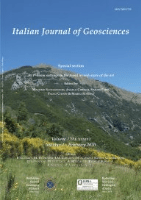
Italian Journal of Geosciences
Exploring Earth's Mysteries: Unveiling the Science BeneathItalian Journal of Geosciences, published by the Società Geologica Italiana, is a distinguished platform for the dissemination of research in the fields of Earth and Planetary Sciences and Geology. With an impressive impact factor reflected in its 2023 rankings, where it placed in the Q3 category across its related fields, this journal serves as a vital resource for academics, practitioners, and students. Established in 2010 and poised to continue until 2024, the journal showcases critical advancements and interdisciplinary studies that deepen our understanding of geological processes and Earth systems. Operating under open access options, it offers robust accessibility to a broad audience, facilitating wider dissemination of knowledge. The journal's affiliation with Università degli Studi La Sapienza in Rome, Italy, further underscores its commitment to academic excellence and innovation in geosciences.

Journal of Geosciences
Empowering Minds through Cutting-edge Geoscientific ResearchJournal of Geosciences is a distinguished peer-reviewed journal published by CESKA GEOLOGICKA SPOLECNOST, based in the Czech Republic, that serves as a vital platform for the dissemination of innovative research in the field of Earth and Planetary Sciences. With an ISSN of 1802-6222 and E-ISSN of 1803-1943, this journal has established its significance within the academic community, evidenced by its Q3 ranking in both Earth and Planetary Sciences and Geology. The journal covers a broad array of topics, making it an essential resource for researchers, professionals, and students interested in geoscientific advancements and discoveries. The Journal of Geosciences reflects a commitment to high-quality scholarship, embracing a variety of methodologies and interdisciplinary approaches, and provides open access to its content, thereby encouraging global collaboration and knowledge sharing among geoscientists. With a publication history converging from 2007 to 2024, it continues to be a prominent venue for critical conversations and developments in the ever-evolving field of geosciences.
Russian Journal of Pacific Geology
Exploring the Depths of Pacific GeologyThe Russian Journal of Pacific Geology is a pivotal resource in the realm of Earth sciences, published by PLEIADES PUBLISHING INC. With an ISSN of 1819-7140 and an E-ISSN of 1819-7159, this journal has established itself as a significant publication for researchers, professionals, and students who explore the intricate geology of the Pacific region. Covering a wide array of topics including Geochemistry, Petrology, Geology, Geophysics, Oceanography, Paleontology, and Stratigraphy, the journal's relevance is underscored by its categorization within Q3 quartile rankings across multiple disciplines in the 2023 metrics. Operating from the United States, its influential publications span from 2007 to 2024, attracting a diverse audience dedicated to advancing the geological sciences. Although not an open access journal, it serves as a valuable repository of knowledge, presenting original research, reviews, and critical discussions that enhance scholarly discourse. The journal is recognized within the global scientific community, addressing significant geological challenges while fostering collaboration and innovation among scholars in the Earth and Planetary Sciences.
DOKLADY EARTH SCIENCES
Fostering Collaboration in Earth and Planetary DiscoveriesDOKLADY EARTH SCIENCES is a reputable journal published by MAIK NAUKA/INTERPERIODICA/SPRINGER, focusing on the dynamic field of Earth and Planetary Sciences. With an ISSN of 1028-334X and E-ISSN 1531-8354, this journal offers a platform for researchers to disseminate their findings and insights that contribute to our understanding of Earth systems over a continuous publishing span from 1998 to 2024. It currently holds a Q3 quartile ranking in the Earth and Planetary Sciences category, reflecting an emerging yet significant impact within its field, evidenced by its Scopus ranks where it stands at 123rd in general Earth sciences and 113th in miscellaneous Earth sciences. DOKLADY EARTH SCIENCES aims to bridge research gaps and foster collaboration among a diverse audience including researchers, professionals, and students committed to advancing knowledge in geoscience. The journal stands as a vital resource for those seeking to explore contemporary challenges and innovations within the realm of Earth sciences.

JOURNAL OF IBERIAN GEOLOGY
Advancing geological knowledge of the Iberian Peninsula.JOURNAL OF IBERIAN GEOLOGY, published by Springer International Publishing AG, is a pivotal platform dedicated to advancing the field of geology and stratigraphy. With an ISSN of 1698-6180 and E-ISSN of 1886-7995, this journal has earned its reputation in the academic community, holding a commendable Q2 ranking in both Geology and Stratigraphy for 2023, reflecting its contributions to contemporary geological research. Spanning from 2007 to 2024, it provides a comprehensive forum for scholars and practitioners from around the globe to disseminate their findings pertaining to the Iberian Peninsula, enhancing the understanding of regional geological phenomena. The journal has carved out a significant niche within the Earth and Planetary Sciences, ranking #137 out of 321 in Geology and #24 out of 55 in Stratigraphy, indicating its wide-reaching impact and scholarly engagement. The Journal of Iberian Geology serves as an indispensable resource for those interested in the complexities of geological structures, stratigraphic sequences, and the broader implications of geological research, making it a vital reference for researchers, professionals, and students alike.
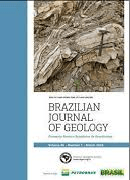
Brazilian Journal of Geology
Connecting Research and Real-World ApplicationsBrazilian Journal of Geology, the flagship publication of the SOC BRASILEIRA GEOLOGIA, has been a beacon of geoscientific research since its inception in 2013. With an ISSN of 2317-4889 and an E-ISSN of 2317-4692, this open-access journal has facilitated the dissemination of high-quality research across various branches of geosciences, making it freely accessible to a global audience since 2014. Hailing from Brazil, the journal proudly holds a Q2 ranking in Earth and Planetary Sciences as of 2023, and ranks #73 out of 195 in Scopus, indicating its growing impact and relevance in the field. The Brazilian Journal of Geology aims to bridge diverse geological studies with interdisciplinary approaches, promoting the understanding and application of geology in addressing contemporary scientific challenges. As it converges research from 2013 to 2024, the journal not only enriches the academic landscape but also serves as a vital resource for researchers, professionals, and students eager to explore the complexities of the Earth and its processes.