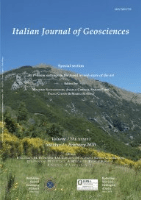
Italian Journal of Geosciences
metrics 2024
Innovative Research: Illuminating the Path of Geological Understanding
Introduction
Italian Journal of Geosciences, published by the Società Geologica Italiana, is a distinguished platform for the dissemination of research in the fields of Earth and Planetary Sciences and Geology. With an impressive impact factor reflected in its 2023 rankings, where it placed in the Q3 category across its related fields, this journal serves as a vital resource for academics, practitioners, and students. Established in 2010 and poised to continue until 2024, the journal showcases critical advancements and interdisciplinary studies that deepen our understanding of geological processes and Earth systems. Operating under open access options, it offers robust accessibility to a broad audience, facilitating wider dissemination of knowledge. The journal's affiliation with Università degli Studi La Sapienza in Rome, Italy, further underscores its commitment to academic excellence and innovation in geosciences.
Metrics 2024
 0.351.001.3044
Metrics History
Rank 2024
Scopus
IF (Web Of Science)
JCI (Web Of Science)
Quartile History
Similar Journals
ACTA GEOLOGICA POLONICA
Transforming geological discussions into impactful knowledge.ACTA GEOLOGICA POLONICA is a distinguished journal published by the Polska Akademia Nauk, in collaboration with the University of Warsaw's Geology Department. Since its inception, it has served as a vital platform for disseminating innovative research in the field of Geology, reflecting a commitment to advancing scientific knowledge in Earth and planetary sciences. With an ISSN of 0001-5709 and an E-ISSN of 2300-1887, this journal provides a rigorous review process and is classified in the Q3 quartile for Geology as of 2023, indicating its growing influence in the discipline. Despite not being open access, the journal facilitates meaningful contributions that span a range of geological topics from fundamental research to applied sciences, thereby enriching the academic landscape. Researchers, professionals, and students alike are encouraged to engage with the valuable findings and discussions contained within its pages, which continue to shape the future of geological inquiry.
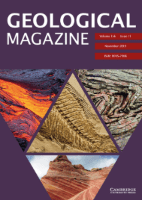
GEOLOGICAL MAGAZINE
Pioneering Discoveries in Earth and Planetary SciencesGEOLOGICAL MAGAZINE, published by Cambridge University Press, is a premier journal in the field of geology, renowned for its rich legacy since 1864 and ongoing contributions to Earth and Planetary Sciences. With an impressive Q1 ranking in Geology and a Scopus rank of #70 out of 321 journals, it holds a significant position within the academic community, appealing to researchers, professionals, and students alike. The journal covers a wide array of topics, ensuring a comprehensive platform for the dissemination of cutting-edge geological research. Although it does not offer open access, it remains a vital resource for those seeking to stay abreast of advancements in the field. With an enduring commitment to quality, GEOLOGICAL MAGAZINE stands as an essential outlet for scholarly communication and serves as a catalyst for academic discourse within the geological sciences.
Brazilian Journal of Geology
Exploring the Depths of Earth ScienceBrazilian Journal of Geology, the flagship publication of the SOC BRASILEIRA GEOLOGIA, has been a beacon of geoscientific research since its inception in 2013. With an ISSN of 2317-4889 and an E-ISSN of 2317-4692, this open-access journal has facilitated the dissemination of high-quality research across various branches of geosciences, making it freely accessible to a global audience since 2014. Hailing from Brazil, the journal proudly holds a Q2 ranking in Earth and Planetary Sciences as of 2023, and ranks #73 out of 195 in Scopus, indicating its growing impact and relevance in the field. The Brazilian Journal of Geology aims to bridge diverse geological studies with interdisciplinary approaches, promoting the understanding and application of geology in addressing contemporary scientific challenges. As it converges research from 2013 to 2024, the journal not only enriches the academic landscape but also serves as a vital resource for researchers, professionals, and students eager to explore the complexities of the Earth and its processes.
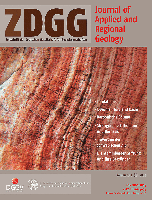
Zeitschrift der Deutschen Gesellschaft fur Geowissenschaften
Exploring Geological Frontiers: Your Gateway to Earth ResearchZeitschrift der Deutschen Gesellschaft für Geowissenschaften is a prominent academic journal published by E Schweizerbart’sche Verlagsbuchhandlung, dedicated to advancing research in the field of Earth and Planetary Sciences. With its ISSN 1860-1804 and E-ISSN 1861-4094, this journal provides a platform for researchers to disseminate high-quality scientific articles and insights that contribute to our understanding of geological and environmental phenomena. Over the years, it has established itself as a reputable source within its category, holding a Q3 ranking among the Earth and Planetary Sciences (miscellaneous) journals in 2023, and achieving an impressive 85/195 rank in Scopus, placing it in the 56th percentile. The journal is published from Germany, specifically at Johannesstraße 3A, D 70176 Stuttgart, where it fosters a collaborative environment for scholars, professionals, and students alike. Although currently not an Open Access journal, it offers critical insights into various geoscience topics, making it an essential resource for those engaged in geological research and education. With its converged years stretching from 2008 to 2024, Zeitschrift der Deutschen Gesellschaft für Geowissenschaften is poised to continue its impactful role in the geosciences community.
GEOTECTONICS
Connecting Theory and Practice in Geology's Frontiers.GEOTECTONICS is a distinguished academic journal published by PLEIADES PUBLISHING INC, focusing on key developments in the field of geology. Established in 1978, the journal has dedicated itself to exploring the intricate processes and phenomena associated with Earth's tectonic systems, making substantial contributions to Earth and Planetary Sciences. With an impressive impact factor reflected in its Q2 ranking within the Scopus category of Geology, GEOTECTONICS stands out as a valuable resource for researchers, professionals, and students alike. The journal offers a platform for rigorous peer-reviewed research that spans both fundamental theories and practical applications in geosciences, affirming its significance in fostering academic discourse and advancing geological knowledge. Although it currently does not offer open access, the journal's accessible format and continued publication through to 2024 ensures that it remains at the forefront of geoscientific inquiry.

BULLETIN OF GEOSCIENCES
Illuminating the Intersections of Geology and EnvironmentBULLETIN OF GEOSCIENCES, published by the prestigious Czech Geological Survey, stands as a pivotal resource in the fields of Earth and Planetary Sciences and Environmental Science. Since its inception in 2003, the journal has been committed to advancing knowledge through high-quality research, currently holding a commendable Q2 ranking in both disciplines. With its focus on diverse and innovative topics, BULLETIN OF GEOSCIENCES provides an essential platform for researchers, professionals, and students aiming to disseminate and access impactful studies. The journal is indexed in Scopus, ranking #78/195 in General Earth and Planetary Sciences and #110/233 in General Environmental Science, reflecting its significant contribution to academia. Publishing from Prague, Czech Republic, this journal invites contributions that illuminate the interactions between geological processes and environmental phenomena, ensuring an inclusive and accessible approach to crucial global issues.
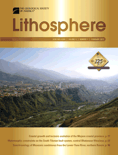
Lithosphere
Diving Deep into the Dynamics of Earth and Beyond.Lithosphere, published by GEOSCIENCEWORLD, is a premier open access journal that has been at the forefront of geological research since its inception. With the ISSN 1941-8264 and the E-ISSN 1947-4253, this journal serves as a vital resource for researchers, professionals, and students interested in Earth and planetary sciences, particularly in the field of geology. Its impressive ranking of Q2 in the 2023 category indicates its vital role in disseminating high-quality, impactful research. The journal’s commitment to open access since 2018 enhances its reach, providing global accessibility to cutting-edge studies that span a diverse range of geoscientific topics, from tectonics to sedimentology. With Scopus Rank #88 out of 321 in Earth and Planetary Sciences, it offers a strong platform for scholars to share their findings and engage with the latest advancements in the discipline. As the journal continues its convergence from 2009 to 2024, Lithosphere remains a crucial publication for those striving to deepen their understanding of Earth's systems.
Swiss Journal of Geosciences
Exploring the Depths of Geoscientific KnowledgeSwiss Journal of Geosciences is a prestigious academic journal dedicated to advancing the field of geosciences, published by SPRINGER INTERNATIONAL PUBLISHING AG. Since its inception in 2007, the journal has established itself as a leading platform for disseminating high-quality research findings in various domains related to Earth and planetary sciences, achieving a notable Q1 ranking in Geology as of 2023. With a solid reputation reflected in its Scopus ranking of Rank #72/321, the journal stands in the 77th percentile within its category. Based in Switzerland, the Swiss Journal of Geosciences embraces an open access model, making it easier for researchers, professionals, and students worldwide to access vital geological research without barriers. The journal’s objectives include promoting interdisciplinary research and fostering insights that address both fundamental and applied geoscientific problems, ensuring it remains a crucial resource for those seeking to understand our planet’s dynamics. Engage with pioneering research and contribute to the vibrant community of geoscientists by exploring the impactful articles published within its pages.
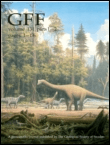
GFF
Innovative Discoveries in Geology and Paleontology Await.GFF is a prestigious academic journal dedicated to advancing research in the fields of Geology and Paleontology. Published by Taylor & Francis Ltd in the United Kingdom, GFF serves as a vital platform for disseminating innovative findings and fostering discussions among researchers, professionals, and students alike. With a noteworthy impact factor reflecting its significance in the scientific community, GFF has achieved Q2 ranking in both Geology and Paleontology, underscoring its commitment to high-quality scholarship. The journal has been operational since 1872, accumulating a rich history of contributing to our understanding of earth sciences. It currently ranks #133 out of 321 in Earth and Planetary Sciences - Geology, and #50 out of 113 in Paleontology according to Scopus rankings. Although it does not offer an open access option, GFF remains accessible through various academic databases, ensuring that cutting-edge research reaches a wide audience. Its comprehensive scope aims to explore critical advancements in geological and paleontological sciences, making it an essential resource for those committed to exploring the intricacies of our planet’s past and present.
JOURNAL OF GEOLOGY
Charting New Territories in Geological Research.The JOURNAL OF GEOLOGY, published by University of Chicago Press, serves as a premier platform for disseminating groundbreaking research in the field of geology. Established in 1973, this esteemed journal has consistently ranked in the Q2 category in geology, further solidified by its Scopus ranking, where it is positioned at 99 out of 321 in Earth and Planetary Sciences, marking it in the 69th percentile of its category. With an emphasis on innovative and interdisciplinary studies, the journal features peer-reviewed articles that contribute to the understanding of geological processes, earth materials, and environmental interactions. Although it does not currently offer open access, it facilitates broad access through academic institutions to reach a global audience of researchers, professionals, and students striving to advance the knowledge of Earth's history and dynamics. As a vital resource for the geology community, the JOURNAL OF GEOLOGY plays an essential role in fostering scholarly dialogue and advancing both academic inquiry and practical applications in geology.