
Logos-Anales del Seminario de Metafisica
Scope & Guideline
Connecting Scholars through Open Access Insights
Introduction
Aims and Scopes
- Metaphysical Inquiry:
The journal consistently explores metaphysical themes, focusing on the nature of reality, existence, and the fundamental principles that govern the universe. It examines various philosophical traditions and perspectives to contribute to ongoing debates in metaphysics. - Epistemological Exploration:
A significant emphasis is placed on epistemology, particularly concerning the nature and scope of knowledge. The journal publishes works that investigate concepts such as virtue epistemology, skepticism, and the relationship between knowledge and ethics. - Historical Philosophical Analysis:
The journal often engages with historical figures and movements, analyzing their contributions to modern thought. This includes discussions around philosophers such as Hegel, Nietzsche, and Aristotle, contextualizing their ideas within contemporary philosophical discourse. - Interdisciplinary Approaches:
'Logos' promotes interdisciplinary research, integrating insights from fields such as politics, ethics, and education with philosophical inquiry. This approach broadens the scope of discussions and encourages innovative perspectives. - Ethics and Political Philosophy:
Ethical considerations, particularly in relation to political philosophy, are central to the journal's focus. It examines how philosophical ideas inform political structures, moral obligations, and societal norms.
Trending and Emerging
- Political Epistemology:
There is a growing focus on political epistemology, examining the interplay between knowledge and political structures. This theme addresses how epistemic frameworks shape political discourse and decision-making processes, reflecting the relevance of philosophy in contemporary political contexts. - Posthumanism and Feminism:
Emerging discussions around posthumanism and feminist philosophy indicate a shift toward examining identity, ethics, and the implications of technology on human experience. This trend highlights the journal's engagement with current social issues and the evolving landscape of philosophical thought. - Philosophy of Education:
Recent publications emphasize the role of philosophy in education, exploring themes such as the purpose of education, the role of educators, and the ethical implications of pedagogical practices. This trend suggests a renewed interest in the philosophical foundations of educational theory and practice. - Mysticism and Inner Experience:
The exploration of mysticism and inner experience is gaining traction, with papers addressing the philosophical implications of mystical practices and their relevance to contemporary life. This theme reflects an interest in integrating spiritual dimensions into philosophical discourse. - Environmental Philosophy:
An emerging focus on environmental philosophy indicates a growing concern with ethical considerations related to nature and human interaction with the environment. This trend aligns with global discussions on sustainability and ecological responsibility, highlighting the journal's responsiveness to contemporary challenges.
Declining or Waning
- Traditional Metaphysical Systems:
There is a noticeable decrease in discussions surrounding classical metaphysical systems, such as those of Aristotle or classical theism. This shift may indicate a move toward more contemporary or alternative metaphysical frameworks that resonate with current philosophical challenges. - Analytical Philosophy:
The journal has seen a reduction in the publication of papers focused on analytical philosophy, particularly in areas like logic and language analysis. This decline may suggest a preference for more hermeneutical and existential approaches to philosophical problems. - Romanticism and Aesthetic Philosophy:
The exploration of Romantic philosophical themes, particularly those related to aesthetics and the sublime, has diminished. This may reflect a broader trend in philosophical inquiry that prioritizes more pragmatic or socially engaged themes over purely aesthetic considerations.
Similar Journals
PHILOSOPHICAL QUARTERLY
Advancing the Frontiers of Philosophical ThoughtPHILOSOPHICAL QUARTERLY, a leading journal in the field of philosophy, is published by Oxford University Press, recognized for its commitment to advancing scholarly discourse since its inception in 1950. With an ISSN of 0031-8094 and an E-ISSN of 1467-9213, this prestigious journal is situated in the United Kingdom, reflecting a rich tradition of philosophical inquiry. The 2023 Category Quartiles rank it in the Q1 tier, demonstrating its substantial impact within the philosophy domain, supported by a Scopus rank of 130/806, placing it in the 83rd percentile of arts and humanities. While it does not currently offer open access, the journal remains a vital resource for researchers, professionals, and students seeking to engage with contemporary philosophical issues and theories. As it continues to publish insightful articles and critical discussions, the PHILOSOPHICAL QUARTERLY stands as a testament to the ongoing evolution and relevance of philosophical scholarship.

Filosofiya-Philosophy
Advancing Philosophical Discourse GloballyWelcome to Filosofiya-Philosophy, an esteemed academic journal dedicated to advancing the field of philosophical inquiry. Published by NATSIONALNO IZDATELSTVO AZ BUKI, this journal aims to foster scholarly exchange and promote critical discussions on various philosophical themes and issues, including but not limited to metaphysics, ethics, logic, and epistemology. With its commitment to rigorous research and thought-provoking analyses, Filosofiya-Philosophy seeks to engage researchers, professionals, and students alike, enriching the discourse surrounding philosophical studies. Although currently not an open-access journal, it provides valuable insights that are crucial for the continuous exploration of philosophical ideas. Based in Sofia, Bulgaria, it plays a vital role in the dissemination of philosophical knowledge, inviting submissions from around the globe to enhance its academic community and further its impact in the realm of philosophy.
PHILOSOPHICAL STUDIES
Advancing the Frontiers of Philosophical ThoughtPhilosophical Studies, published by Springer, is a prestigious peer-reviewed journal that stands at the forefront of philosophical discourse since its inception in 1950. With ISSN 0031-8116 and E-ISSN 1573-0883, this journal has firmly established itself as a critical platform for disseminating high-quality research in philosophy, positioned in the Q1 category for Philosophy with an impressive Scopus rank of #73 out of 806, placing it in the 90th percentile of its field. Although it does not offer Open Access, the journal’s rigorous selection process ensures that only the most relevant and impactful studies are published, making it an invaluable resource for philosophers, academics, and students alike. With a commitment to advancing philosophical inquiry and fostering a vibrant scholarly community, Philosophical Studies continues to attract contributions that challenge prevailing paradigms and explore new dimensions in philosophical thought. The journal's scope encompasses a wide array of topics within philosophy, encouraging interdisciplinary engagement and dialogue.
ARCHIV FUR GESCHICHTE DER PHILOSOPHIE
Exploring the Evolution of Philosophical ThoughtARCHIV FUR GESCHICHTE DER PHILOSOPHIE, published by WALTER DE GRUYTER GMBH, is an esteemed journal that delves into the rich historical landscape of philosophy, tracing conceptual evolution from 1888 through to the present day. With an impact factor reflective of its significance in the field, this journal has achieved a commendable Q2 ranking in Philosophy according to the latest bibliometric assessments. By offering insights into philosophical discourses ranging from the late 19th century to contemporary analysis, the journal serves as an essential resource for scholars, students, and professionals alike. While the journal is not currently Open Access, it remains a critical platform for fostering dialogue and disseminating research in philosophical history, solidifying its reputation as a pivotal source in the humanities. Explore its volumes to gain valuable perspectives on the evolution of philosophical thought and to contribute to an ongoing discourse that spans generations.
IDEALISTIC STUDIES
Cultivating Insights in Idealistic ThoughtIDEALISTIC STUDIES, published by the Philosophy Documentation Center, is a distinguished academic journal that has significantly contributed to the field of philosophy since its inception in 1996. Recognized in the Q3 category of Philosophy for 2023 and holding a Scopus rank of #333 out of 806 in the Arts and Humanities - Philosophy category, IDEALISTIC STUDIES serves as a platform for scholars to explore and debate the principles of idealism and its relevance in contemporary philosophical discourse. The journal's commitment to advancing philosophical inquiry manifests in its diverse range of articles, critical reviews, and thought-provoking essays that engage with both historical and modern perspectives. Although it operates under a traditional access model, its influence persists among researchers and students alike, cultivating a deeper understanding of philosophical ideals and their impact on society. With a steady publication record continuing through 2024, IDEALISTIC STUDIES remains an essential resource for those dedicated to academic excellence in philosophy.

Plato Journal
Igniting Philosophical Dialogue WorldwidePlato Journal, published by COIMBRA UNIV PRESS, serves as a significant platform for the dissemination of research in the field of philosophy. Since its establishment as an Open Access journal in 2013, it has actively contributed to the accessibility of philosophical discourse, allowing researchers, professionals, and students from around the globe to engage with contemporary philosophical debates. Operating from Coimbra, Portugal, the journal is now classified in the Q3 quartile in the field of philosophy, and ranks 463rd out of 806 in Scopus's Arts and Humanities category, reflecting its growing academic influence. With a focus on promoting high-quality research, the Plato Journal encourages submissions that explore diverse philosophical themes, aiming to spark dialogue and foster intellectual connections. As it converges its powerful array of contributions from 2019 to 2023, this journal continues to embody the spirit of philosophical inquiry essential for scholars striving to understand the complexities of thought and existence.
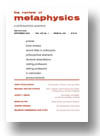
REVIEW OF METAPHYSICS
Cultivating scholarly dialogue in the realm of metaphysics.REVIEW OF METAPHYSICS is a distinguished journal published by PHILOSOPHY EDUCATION SOC, INC, dedicated to advancing scholarly discourse in the field of philosophy. With an ISSN of 0034-6632 and an E-ISSN of 2154-1302, this journal has been a crucial platform for philosophical inquiry since its inception in 1975, converging its rich content from 1992 and continuously serving the academic community up to 2022. Based in the United States, specifically at 223 Aquinas Hall, Catholic University America, Washington, DC, it has secured a reputation for quality, reflected in its placement within the Q3 category of the 2023 Philosophy rankings, and a Scopus rank of 367 out of 806 in Arts and Humanities, placing it in the 54th percentile. Although it does not offer open access options, the REVIEW OF METAPHYSICS remains an essential resource for philosophers and students alike, fostering critical perspectives on metaphysical issues, and thereby contributing significantly to the advancement of philosophical studies.

HEGEL-STUDIEN
Illuminating Hegel's Impact on Contemporary ThoughtHEGEL-STUDIEN, published by FELIX MEINER VERLAG, is an esteemed journal dedicated to the field of Hegelian studies, primarily focusing on the philosophical, historical, and theoretical implications of the works of Georg Wilhelm Friedrich Hegel. With an ISSN of 0073-1587, this journal serves as a crucial platform for scholars, researchers, and students interested in delving deeper into Hegel’s impact on contemporary philosophy and its myriad interpretations. Although it does not offer open access, HEGEL-STUDIEN is recognized for its rigorous peer-reviewed articles and insightful contributions, facilitating academic discourse and the advancement of Hegelian thought. Covering the years from 2002 to 2006 and from 2009 to 2010, the journal has established itself as a significant resource in the philosophical community, even though its coverage is currently discontinued in Scopus. Its unique status and specialized content ensure it remains an important reference point for anyone engaging with Hegel's work and its relevance in modern philosophical debates.
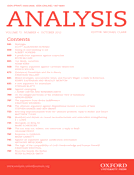
ANALYSIS
Exploring the Depths of Philosophical InquiryANALYSIS, an esteemed journal published by Oxford University Press, ranks in the top quartile (Q1) within the field of Philosophy, showcasing its significance in disseminating cutting-edge research and critical studies since its inception in 1933. With an ISSN of 0003-2638 and an E-ISSN of 1467-8284, the journal has maintained a dedicated readership across various converged publications from 1933 to the present. Based in the United Kingdom, ANALYSIS is committed to exploring foundational philosophical questions and advancing theoretical dialogue in both traditional and contemporary contexts. The journal is recognized for its rigorous peer-review process and is indexed in Scopus, reflecting its solid standing at rank #178/806 in the Arts and Humanities domain, encompassing the 77th percentile of its category. Although currently not available as an open-access journal, ANALYSIS provides invaluable insights and a platform for philosophical discourse that appeals to scholars, professionals, and students alike, fostering a deeper understanding of the complexities in the world of philosophy.

Epistemology & Philosophy of Science-Epistemologiya i Filosofiya Nauki
Connecting Minds: Where Philosophy Meets ScienceEpistemology & Philosophy of Science-Epistemologiya i Filosofiya Nauki is a prestigious journal published by the Russian Academy of Sciences - Institute of Philosophy, dedicated to advancing the discourse in the fields of epistemology, philosophy of science, and related disciplines. With a distinguished presence in academia, this journal is recognized for its exceptional contributions, evident through its categorization as a Q2 journal in Arts and Humanities and Philosophy, and a Q1 journal in Cultural Studies. Covering an expansive scope from 2017 to 2023, it facilitates a vital dialogue among scholars and professionals aiming to explore the intersections of knowledge, culture, and education. Although currently not open access, the rigorous peer-review process ensures that only high-quality research is published, enriching the intellectual landscape. The journal's commendable rankings in Scopus, particularly in Arts and Humanities and History and Philosophy of Science, reflect its commitment to scholarly excellence. For researchers, educators, and students, Epistemology & Philosophy of Science serves as an essential resource for understanding and contributing to the ongoing philosophical dialogues that shape our comprehension of scientific inquiry.