Macroheterocycles
metrics 2024
Illuminating the Path of Chemical Innovation
Introduction
Macroheterocycles is a premier academic journal dedicated to the exploration and advancement of Analytical Chemistry and Organic Chemistry, published by the esteemed Ivanovo State University of Chemical Technology. Since its inception in 2008, this open-access journal has focused on providing a platform for innovative research and breakthrough discoveries in the field of heterocyclic compounds. With its current ranking in the Q3 quartile for Analytical Chemistry and Q4 quartile for Organic Chemistry, Macroheterocycles is rapidly establishing itself as a valuable resource for scientists, researchers, and students seeking to enrich their understanding of complex chemical structures and analytical techniques. Its comprehensive publication model ensures that the latest findings are accessible to a global audience, fostering collaboration and discourse in the scientific community. With ongoing contributions aimed at addressing contemporary challenges in chemistry, this journal is poised to make significant impacts in the field while encouraging the dissemination of knowledge within and beyond Russia.
Metrics 2024
 0.241.001.1021
Metrics History
Rank 2024
Scopus
IF (Web Of Science)
JCI (Web Of Science)
Quartile History
Similar Journals
ORGANIC SYNTHESES
Connecting Researchers through Organic Synthesis InsightsORGANIC SYNTHESES is a prestigious journal dedicated to the field of organic chemistry, published by ORGANIC SYNTHESES INC. Since its inception in 1946, the journal has served as a vital platform for researchers, educators, and practitioners in chemistry, showcasing significant findings and methodologies that advance the discipline. Although it currently does not offer open access, it is recognized for its rigorous peer-review process and its contribution to standardizing organic synthesis methods. With an ISSN of 0078-6209 and an E-ISSN of 2333-3553, the journal's impact reflects its quality, with a current Scopus ranking placing it in the fourth quartile in both Organic Chemistry and Physical and Theoretical Chemistry. This positioning underscores its critical role in fostering knowledge and innovation within these fields. Researchers and students alike will find ORGANIC SYNTHESES an essential resource for staying informed on contemporary practices and discoveries in organic synthesis.
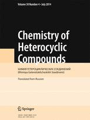
Chemistry of Heterocyclic Compounds
Fostering Innovation in Pharmaceutical and Material SciencesChemistry of Heterocyclic Compounds, a prominent journal in the field of organic chemistry published by Springer, has been a critical resource for researchers and professionals since its inception in 1965. With its ISSN 0009-3122 and E-ISSN 1573-8353, the journal aims to disseminate cutting-edge research on heterocyclic compounds, essential for advancements in pharmaceuticals, agrochemicals, and materials science. Although categorized in the Q4 quartile of Organic Chemistry as of 2023, this journal serves as an invaluable platform for emerging research, positioning itself within the 146th rank in the Scopus database out of 211 journals, highlighting its niche yet impactful contributions. The journal emphasizes rigorous peer-review and strives to cultivate a comprehensive understanding of heterocyclic chemistry through insightful articles and reviews. While not an open-access publication, it continues to engage a global audience interested in the complexities and applications of this pivotal area of organic chemistry. Scholars and students alike will find relevance in its discourse, as it fosters an environment of knowledge exchange crucial for the continual evolution of chemical sciences.
INDIAN JOURNAL OF HETEROCYCLIC CHEMISTRY
Empowering Scientific Dialogue in Heterocyclic ChemistryINDIAN JOURNAL OF HETEROCYCLIC CHEMISTRY, published by CONNECT JOURNALS, is a vital resource in the fields of organic chemistry and biochemistry, aiming to advance research and promote innovation within the realm of heterocyclic compounds. Established in 1996, this journal has successfully converged into an influential publication with a commitment to disseminating high-quality, peer-reviewed research articles that enhance the understanding of heterocyclic chemistry applications. Although it currently holds a Q4 quartile ranking in both biochemistry and organic chemistry according to the 2023 categorizations, its broader contributions to the scientific community should not be underestimated, as it seeks to support the ongoing dialogue among researchers, professionals, and students. The journal operates from Ghaziabad, India, providing open access to its publications, thereby fostering a collaborative and informative environment for its international readership. With an ISSN of 0971-1627 and a special focus on contemporary challenges and developments in the field, the INDIAN JOURNAL OF HETEROCYCLIC CHEMISTRY is poised to make a significant impact as it continues to evolve through 2024 and beyond.
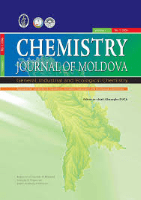
Chemistry Journal of Moldova
Connecting Ideas: Where Chemistry Meets Practical SolutionsChemistry Journal of Moldova is a pioneering open-access journal dedicated to fostering the dissemination of significant research in the diverse fields of chemistry, including Environmental Chemistry, Process Chemistry and Technology, and more. Published by the esteemed Academia Sciences Moldova, Institute of Chemistry, this journal has been at the forefront of scientific inquiry since its establishment in 2006. With an ISSN of 1857-1727 and a digital presence through its E-ISSN of 2345-1688, it provides an accessible platform for researchers, students, and professionals to share and engage with cutting-edge findings. Although currently ranked in the Q4 quartile in several chemistry categories, the journal is committed to improving its impact within the academic community and aims to highlight emerging trends and technologies in the chemistry domain. The journal's office is located at 3 Academiei Str, Chisinau MD-2028, Moldova. As it converges its publication years from 2016 to 2024, the Chemistry Journal of Moldova invites all contributors and readers to explore its rich repository of research that bridges innovative ideas to practical applications.
SYNTHETIC COMMUNICATIONS
Catalyzing Collaboration in Organic Chemistry ResearchSynthetic Communications, published by Taylor & Francis Inc, stands as a pivotal resource in the field of organic chemistry since its inception in 1971. With an ISSN of 0039-7911 and an E-ISSN of 1532-2432, this journal has established a commendable reputation, holding a Q3 ranking in organic chemistry by 2023, reflecting its contributions to the discipline and positioning it within the 50th percentile according to Scopus rankings. Targeted towards researchers, professionals, and students alike, Synthetic Communications aims to disseminate significant advancements in synthetic methodologies and reactions, facilitating the exchange of innovative ideas and enhancing collaborative efforts in the scientific community. Although not an open-access journal, it offers a wealth of valuable research content that is crucial for anyone dedicated to pushing the boundaries of organic chemistry.
Bulletin of the University of Karaganda-Chemistry
Advancing Chemistry Knowledge for Tomorrow's InnovatorsBulletin of the University of Karaganda-Chemistry is an esteemed academic journal published by KARAGANDA STATE UNIVERSITY, focusing on the field of chemistry and related disciplines. With an ISSN of 2518-718X and an E-ISSN of 2663-4872, this journal aims to disseminate high-quality research articles, reviews, and scholarly discussions that contribute to the advancement of knowledge in chemistry. Although it has experienced a transition in its coverage from 2021 to 2022, the journal remains a significant platform for researchers and students alike, promoting open access to its valuable content. Despite its current Scopus rank of #379/407 in the general chemistry category, the Bulletin of the University of Karaganda-Chemistry serves as a vital resource for the academic community in Kazakhstan and beyond, fostering collaboration and innovation in various chemical research domains. Researchers, professionals, and students are encouraged to engage with the journal as it continues to evolve and contribute to significant scientific discussions.
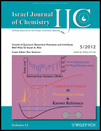
ISRAEL JOURNAL OF CHEMISTRY
Your Gateway to High-Quality Chemistry ResearchIsrael Journal of Chemistry is a leading international journal published by Wiley-VCH Verlag GmbH, dedicated to advancing the field of chemistry through high-quality research publications. With an impressive Q1 ranking in the Chemistry (Miscellaneous) category of the 2023 Scopus rankings and a solid percentile standing of 73rd, this journal plays a vital role in disseminating significant findings to a global audience. Established in 1963, it has maintained a legacy of excellence in chemistry until 2024, covering a wide range of topics including organic, inorganic, physical, and analytical chemistry. While not offering open access, the journal remains a crucial resource for researchers, professionals, and students seeking to enhance their knowledge and contribute to the field. With its rigorous peer-review process and commitment to scientific integrity, the Israel Journal of Chemistry continues to be a beacon of innovation and scholarship in the ever-evolving landscape of chemical research.
POLYHEDRON
Advancing Knowledge in Polyhedral Structures and Beyond.POLYHEDRON is a prestigious academic journal published by Pergamon-Elsevier Science Ltd, specializing in the fields of Inorganic Chemistry, Materials Chemistry, and Physical and Theoretical Chemistry. With its ISSN 0277-5387 and E-ISSN 1873-3719, the journal has been a significant outlet for groundbreaking research since its inception in 1982 and continues to be influential for scholars and practitioners. As of 2023, it holds a Q3 quartile ranking across its categorization, underscoring its impact within the scientific community with respectable Scopus Rankings that place it in the top percentiles of relevant fields. Situated in the United Kingdom, POLYHEDRON aims to foster the exchange of innovative ideas and findings related to polyhedral molecules and structures, making it an essential resource for researchers seeking to expand their knowledge and contribute to these dynamic areas of study. While currently not an Open Access journal, it remains committed to advancing education and research by providing quality content that serves both academic and practical applications.
Heterocyclic Letters
Showcasing Breakthroughs in Heterocyclic CompoundsHeterocyclic Letters is an esteemed journal in the field of synthetic organic chemistry, published by RAMAN PUBL. With ISSN 2231-3087 and E-ISSN 2230-9632, this journal aims to disseminate original research and innovative findings related to heterocyclic compounds, which play a crucial role in medicinal chemistry, material science, and agricultural chemistry. Heterocyclic Letters provides a platform for researchers, professionals, and students to share their insights and advancements, thus fostering academic collaboration and knowledge transfer. The journal is dedicated to maintaining high-quality standards in research publication, making it an essential resource for anyone focused on the latest developments in heterocyclic chemistry. Although it does not currently offer Open Access options, the journal’s rigorous peer-review process ensures that only the most credible and impactful studies are published, contributing significantly to the advancement of the field.
New Materials Compounds and Applications
Bridging Theory and Practice in Materials ChemistryNew Materials Compounds and Applications is a pioneering journal published by JOMARD PUBLISHING, focusing on the latest advancements in materials science, particularly in the realms of analytical, inorganic, and organic chemistry. Since its inception in 2019, this journal has quickly established itself as a valuable resource for researchers and professionals seeking to explore innovative compounds and their applications across various fields. With an ISSN of 2521-7194 and an E-ISSN of 2523-4773, New Materials Compounds and Applications is indexed in Scopus, demonstrating its scholarly impact, albeit currently positioned in the Q3 and Q4 quartiles for several chemistry categories. The journal serves as a platform for disseminating research findings and fostering collaboration among scientists in Azerbaijan and beyond. Although it operates under a traditional access model, the journal aims to bridge the gap between theoretical studies and practical applications, making it essential reading for students and professionals looking to stay updated in the dynamic landscape of materials chemistry.