
MASTER DRAWINGS
Scope & Guideline
Celebrating the Timeless Art of Master Drawings
Introduction
Aims and Scopes
- Historical Analysis of Drawings:
The journal focuses on the historical context and significance of drawings, examining works from various periods, particularly the Renaissance and Baroque eras. - Cataloging and Archival Research:
A core aim is to catalog and document drawings from notable collections, providing comprehensive resources for scholars and art historians. - Technical and Material Studies:
The journal includes studies on the techniques and materials used in drawing, contributing to the understanding of artistic practices over time. - Artist Profiles and Biographies:
It highlights detailed biographies and profiles of artists, shedding light on their contributions to the field of drawing. - Comparative Studies:
The journal often features comparative analyses between different artists or styles, exploring influences and artistic exchanges.
Trending and Emerging
- Rediscovery of Historical Drawings:
There is a growing trend in the rediscovery and reattribution of historical drawings, highlighting the importance of archival research and new findings in previously overlooked collections. - Focus on Specific Artists and Movements:
Recent issues reflect an increasing emphasis on specific artists and their contributions, such as detailed studies on figures like Giambattista Tiepolo and Hogarth, indicating a deeper dive into individual artistic legacies. - Cultural Contexts of Drawings:
There is a rising interest in exploring the cultural contexts surrounding drawings, including socio-political influences and the role of drawings in historical narratives. - Methodological Innovations in Art History:
Emerging methodologies in art historical research, such as technical analysis and material studies, are becoming more prominent, showcasing advancements in understanding drawing techniques. - Drawings in Relation to Other Art Forms:
There is an increasing trend of examining drawings in relation to other artistic disciplines, such as painting and printmaking, emphasizing interconnections and influences.
Declining or Waning
- Contemporary Drawing Practices:
There has been a noticeable decrease in the focus on contemporary drawing practices, with fewer publications addressing modern techniques and artists compared to historical analysis. - Digital and Mixed Media Drawings:
The exploration of digital drawing and mixed media has diminished, indicating a shift back towards traditional methods and historical contexts. - Thematic Exhibitions and Reviews:
There is a waning interest in thematic exhibition reviews related to drawing, suggesting a move towards more scholarly articles rather than exhibition-centric content. - Interdisciplinary Approaches:
The integration of interdisciplinary approaches, such as the connections between drawing and other art forms, has become less frequent in recent issues.
Similar Journals
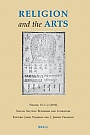
Religion and the Arts
Advancing Interdisciplinary Dialogues on Religion and Artistic ExpressionReligion and the Arts is a distinguished scholarly journal published by BRILL, based in the Netherlands, with a dedicated focus on the interdisciplinary exploration of religion and its interplay with various artistic expressions from historical and contemporary perspectives. Established in 1996, this journal serves as a vital platform for researchers, professionals, and students interested in Cultural Studies, History, Religious Studies, and the Visual and Performing Arts. Despite its current classification in the Q4 category across multiple fields, it remains committed to advancing academic discourse and fostering innovative approaches to understanding the complex relationships between spirituality and artistic creation. With its ISSN 1079-9265 and E-ISSN 1568-5292, the journal invites submissions that contribute to enriching this dynamic field, ensuring that a diverse range of voices and perspectives are represented. Although not an Open Access publication, the journal’s content continues to be pivotal for scholarly engagement and is essential reading for those dedicated to the study of art's profound connections with religious traditions.
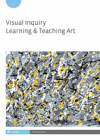
Visual Inquiry-Learning & Teaching Art
Elevating Visual Literacy in EducationVisual Inquiry: Learning & Teaching Art is a premier journal published by Intellect Ltd, dedicated to exploring innovative methods and practices in art education. With its ISSN 2045-5879 and E-ISSN 2045-5887, the journal provides a vital platform for researchers, educators, and practitioners to share their findings and insights into the pedagogy of visual arts. Although currently not open access, its influence in the field of art education is underscored by the quality of contributions from both established and emerging scholars. As the dialogue surrounding visual literacy and creative methodologies evolves, this journal remains essential for those invested in improving teaching strategies and fostering artistic expression. Its commitment to advancing knowledge in art education makes it a critical resource for anyone looking to enhance their understanding of how art can effectively be taught and learned.

Boletin del Museo Chileno de Arte Precolombino
Celebrating the Diversity of Pre-Columbian Artistic ExpressionBoletin del Museo Chileno de Arte Precolombino is a premier multidisciplinary journal published by the MUSEO CHILENO ARTE PRECOLOMBINO in Chile, dedicated to exploring the rich tapestry of pre-Columbian art and culture. With both ISSN 0716-1530 and E-ISSN 0718-6894, this Open Access journal has been providing free and immediate access to its scholarly content since 2016, making it a vital resource for researchers, professionals, and students alike. Covering diverse areas within anthropology, archaeology, and the visual arts, the journal consistently ranks in the Q1 category across multiple disciplines, illustrating its significance in fostering academic community dialogue and advances in understanding ancient cultures. As it converges from 2014 to 2024, the journal is poised to further enhance its impact, maintaining an esteemed position within Scopus rankings and reinforcing its commitment to high-quality research and scholarship in the humanities.

Artnodes
Innovating Dialogues Across Creative DisciplinesArtnodes is a prominent academic journal published by UNIV OBERTA CATALUNYA, making significant contributions to the interdisciplinary fields of Arts and Humanities, Cultural Studies, and Computer Science. With an ISSN of 1695-5951 and an E-ISSN of 1695-5951, this Open Access journal has been accessible to the global community since 2002, encouraging the dissemination of innovative research and artistic exploration. Distributed from its headquarters in Barcelona, Spain, Artnodes has established itself as a vital resource, particularly in the domains categorized under Visual Arts, Performing Arts, and Literature, boasting a Q1 ranking in several areas for 2023. The journal is also noted for its impact in computer graphics and design, highlighting the integration of technology and art. With an impressive Scopus rank of #134 in Visual Arts and Performing Arts, this journal remains a critical forum for scholars and practitioners alike, facilitating dialogue and advancing knowledge across disciplines.

Quiroga-Revista de Patrimonio Iberoamericano
Exploring the Rich Tapestry of Ibero-American Arts and ConservationQuiroga-Revista de Patrimonio Iberoamericano, published by UNIV GRANADA, is a distinguished open-access journal dedicated to the fields of conservation, museology, and the visual and performing arts. Since its inception in 2012, the journal has provided a platform for scholars and practitioners to disseminate innovative research and critical discussions pertinent to Ibero-American heritage. With a growing impact, evidenced by its category quartiles ranking—Q3 in Conservation and Q2 in both Museology and Visual Arts and Performing Arts—as well as its Scopus rankings, Quiroga serves as an essential resource for researchers, professionals, and students who engage with the complexities of cultural preservation and artistic expression. The journal’s commitment to open access ensures the widespread availability of knowledge, fostering academic dialogue and collaboration within the global community. For inquiries, the journal can be reached at their offices located in Granada, Spain.
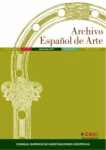
ARCHIVO ESPANOL DE ARTE
Illuminating Artistic Phenomena for AllARCHIVO ESPANOL DE ARTE is a distinguished journal dedicated to the exploration and dissemination of research in the fields of visual arts and performing arts. Published by CONSEJO SUPERIOR INVESTIGACIONES CIENTIFICAS-CSIC in Spain, this journal has been an open access publication since 1996, facilitating unrestricted access to valuable scholarly content for researchers, professionals, and students alike. With an E-ISSN of 1988-8511 and a commitment to covering a range of artistic phenomena, it plays a significant role in advancing the understanding and appreciation of art within both academic and cultural contexts. Although currently categorized in the Q4 quartile within its discipline, its ranking within Scopus—at #400/667, placing it in the 40th percentile—reflects its contributions to the broader discourse in art research. The journal's suite of open access offerings ensures that cutting-edge research remains accessible, fostering collaboration and innovation in the ever-evolving landscape of the arts.

Boletin de Arte
Advancing Knowledge in Visual ArtsBoletin de Arte is a distinguished academic journal dedicated to the field of visual arts, published by the Universidad Nacional de La Plata, Facultad de Bellas Artes. With its inception in 2013, this Open Access journal aims to foster scholarly communication and collaboration among researchers, artists, and students by providing a platform for high-quality peer-reviewed articles that explore various dimensions of artistic expression and cultural dialogue. The journal's commitment to accessibility ensures that emerging insights and innovative artistic practices reach a broad audience, while its evolving repository of research contributes significantly to the advancement of knowledge in the arts. Situated in the vibrant academic environment of La Plata, Argentina, Boletin de Arte is an essential resource for those involved in the creative arts, offering insights that enhance both academic scholarship and practical application in the field.

GESTA-INTERNATIONAL CENTER OF MEDIEVAL ART
Bridging Past and Present through Medieval Art ResearchGESTA-INTERNATIONAL CENTER OF MEDIEVAL ART is a distinguished journal published by University of Chicago Press, focusing on the intricate and rich tapestry of medieval art. With the ISSN 0016-920X and E-ISSN 2169-3099, it serves as a vital resource for scholars and enthusiasts alike, examining the evolution and influence of visual arts during the medieval period. This journal is indexed in Scopus, showcasing its ranking of #188 out of 667 in the field of Arts and Humanities, placing it within the 71st percentile. Moreover, it holds a notable Q3 categorization in Visual Arts and Performing Arts as of 2023, reflecting its significant contribution to academic discourse. Although it is not an open-access journal, GESTA provides invaluable insights and critical analyses that engage a broad audience including researchers, professionals, and students dedicated to medieval studies. With publication converging from 2002 to 2006 and continuing from 2008 to 2024, GESTA is committed to promoting a deeper understanding of art's historical contexts, making it an essential addition to any academic library.

ART IN AMERICA
Connecting Scholars and Creatives in ArtART IN AMERICA is a prominent journal dedicated to the exploration and critique of contemporary visual arts and practices within the United States and beyond. Published by BRANT PUBL, INC, the journal serves as an authoritative platform for scholars, artists, and enthusiasts alike, fostering vibrant dialogue and insightful analysis in the field of art. With an ISSN of 0004-3214 and a legacy dating back to 1979, ART IN AMERICA has established itself within the Q4 category of Visual Arts and Performing Arts according to the 2023 category quartiles. Although the journal currently does not offer Open Access options, it remains accessible to a diverse readership through its distribution across libraries and institutions. The journal's significance is underscored by its ability to spotlight emerging trends, critique canonical works, and promote diverse artistic voices amidst a constantly evolving cultural landscape. Researchers, professionals, and students will find ART IN AMERICA not only a valuable resource for scholarly discourse but also an essential guide to understanding the complexities and intricacies of the American art scene.

Anales de Historia del Arte
Enhancing Understanding of Artistic DevelopmentsAnales de Historia del Arte is a distinguished open-access journal published by Univ Complutense De Madrid, focusing on the diverse fields of art history, visual arts, and performing arts. Since its inception in 2005, this journal has provided a platform for scholars and researchers to disseminate original research, critical reviews, and theoretical discussions that enhance the understanding of artistic developments throughout history. Located in Madrid, Spain, and embracing a global perspective, it plays a crucial role in fostering dialogue within the arts and humanities sectors. The journal is currently categorized in the Q4 quartiles of its respective fields according to Scopus metrics, ranking among approximately 15-25% of publications within the arts and humanities domains as of 2023. Researchers and academics can take advantage of the open-access model, allowing for wider dissemination of knowledge and enhancing the accessibility of critical discourse in art history. Explore Anales de Historia del Arte for its significant contributions to emerging trends and established research in the arts.