
Molecular Systems Design & Engineering
metrics 2024
Advancing the Frontier of Molecular Innovation
Introduction
Molecular Systems Design & Engineering, published by the esteemed Royal Society of Chemistry, stands at the forefront of interdisciplinary research focused on the integration of molecular systems and engineering principles. With its ISSN 2058-9689 and a robust impact within various scientific domains, this journal not only facilitates the advancement of knowledge in fields such as Biomedical Engineering, Chemical Engineering, and Materials Chemistry, but also fosters collaborative innovations that address contemporary challenges in energy and manufacturing processes. Its recent rankings, including Q1 categorization in Critical areas of Chemical Engineering and Materials Chemistry, underscore its significance and influence within the scientific community, making it a vital resource for researchers, professionals, and students alike. Access options are available to meet diverse reader needs, encouraging wider dissemination of groundbreaking findings and methodologies that enhance the design and application of molecular systems.
Metrics 2024
 0.783.203.6041
Metrics History
Rank 2024
Scopus
IF (Web Of Science)
JCI (Web Of Science)
Quartile History
Similar Journals

Aggregate
Unlocking the potential of materials science.Aggregate, published by WILEY, is a premier open-access journal established in 2020, dedicated to advancing the fields of Chemistry, Materials Chemistry, Materials Science, and Molecular Biology. Based in the United States, this rapidly rising journal (Q1 in various categories as of 2023) has quickly made its mark as a valuable resource, evidenced by its impressive Scopus rankings—ranking #6 in Chemistry (miscellaneous) and #13 in Materials Science (miscellaneous) among others—place it firmly in the top percentiles of these disciplines. With an emphasis on rigorous peer-reviewed research, Aggregate provides an essential platform for researchers to disseminate groundbreaking findings and innovative methodologies that propel the scientific community forward. As an open-access journal, it ensures that cutting-edge research is accessible to a global audience, thereby enriching the dialogue among professionals, researchers, and students alike. Explore the latest advancements and contribute to the vibrant discourse in these critical areas of science by publishing with Aggregate.
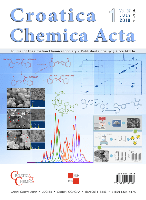
CROATICA CHEMICA ACTA
Innovating Chemistry: Where Ideas Meet DiscoveryCROATICA CHEMICA ACTA, published by the Croatian Chemical Society, is a prominent open-access journal dedicated to fostering the dissemination of research in the diverse field of chemistry. With an ISSN of 0011-1643 and an E-ISSN of 1334-417X, this journal has been a vital platform for scientists since its inception, providing unrestricted access to groundbreaking findings since 1990. Located in Zagreb, Croatia, the journal covers a wide array of topics within general chemistry and strives to contribute significantly to the body of knowledge in the discipline. Although currently positioned in the Q4 quartile of the Scopus ranking within Chemistry (miscellaneous), and ranking #366 out of 408 journals, CROATICA CHEMICA ACTA plays a crucial role in promoting emerging research and innovative methodologies. As a valuable resource for researchers, professionals, and students, the journal encourages the exchange of scientific insights, with an eye towards fostering collaboration and advancing chemical sciences.
TURKISH JOURNAL OF CHEMISTRY
Advancing Chemistry Through Collaborative ResearchTURKISH JOURNAL OF CHEMISTRY, published by the Tubitak Scientific & Technological Research Council Turkey, serves as a significant platform for the dissemination of research in the diverse field of chemistry. Since its inception in 1996, this peer-reviewed journal has made substantial contributions to the body of knowledge within the field, currently holding a respectable Q3 ranking in the category of Chemistry (miscellaneous) as of 2023. Researchers and professionals alike rely on this journal for its wide-ranging discussions, innovative methodologies, and noteworthy findings pertinent to both fundamental and applied chemistry. With an ISSN of 1300-0527 and a commitment to promoting scientific progress, the journal is accessible to a global audience and encourages the open sharing of insights that drive advancements in chemistry. The extended timeframe of convergence until 2024 highlights the journal's dedication to fostering ongoing research and collaboration within the scientific community. As a valuable resource for researchers, professionals, and students, the Turkish Journal of Chemistry aims to inspire new discoveries and facilitate knowledge transfer in a dynamic and evolving discipline.
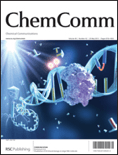
CHEMICAL COMMUNICATIONS
Unveiling the complexities of chemical interactions.Chemical Communications, published by the esteemed Royal Society of Chemistry, is a prominent journal within the field of chemical science, focusing on the dissemination of cutting-edge research in a variety of sub-disciplines including catalysis, materials chemistry, and electronic materials. Operating without an open access model, this journal provides critical insights from contributors around the globe, enhancing our understanding of complex chemical interactions and innovative applications. Ranked in the top quartile for several categories such as Ceramics and Composites, and Metals and Alloys, Chemical Communications boasts impressive Scopus rankings, securing strong positions across multiple fields and showcasing its influence within the scientific community. The journal is committed to advancing knowledge and fostering collaboration among researchers, professionals, and students, making it an invaluable resource for those looking to stay abreast of the latest advancements in chemistry and materials science. With a publication history dating back to 1965 and continuing into 2024, its rich archive serves as a vital repository of chemical research and development.
Virtual and Physical Prototyping
Transforming Ideas into Reality with Scholarly InsightVirtual and Physical Prototyping is a premier scholarly journal published by Taylor & Francis Ltd, which has established itself as a leading platform for innovative research in the fields of Computer Graphics, Computer-Aided Design, Industrial and Manufacturing Engineering, Modeling and Simulation, and Signal Processing. Since its inception in 2006, the journal has gained significant recognition, currently ranked in the Q1 quartile in multiple categories, reflecting its high impact and rigorous standards of scholarship. Now an Open Access journal as of 2023, it provides a unique opportunity for researchers, professionals, and students to share their work widely and engage with a global audience. With its strategic emphasis on the convergence of virtual and physical prototyping technologies, this journal contributes vital knowledge and insights that drive innovation and development in manufacturing processes and design methodologies. Located in the United Kingdom, its comprehensive approach to both theoretical and practical aspects of prototyping ensures that it remains an essential resource for advancing the respective fields it represents.
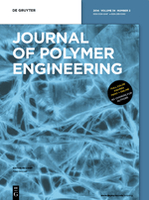
JOURNAL OF POLYMER ENGINEERING
Elevating Knowledge in Chemical Engineering.JOURNAL OF POLYMER ENGINEERING, published by Walter de Gruyter GmbH, stands as a pivotal platform in the field of polymer science and engineering. With an ISSN of 0334-6447 and an E-ISSN of 2191-0340, this journal has been a vital contributor to the academic landscape since its inception, spanning publications from 1981 to 2024. As a recognized entity in the realms of Chemical Engineering, Materials Chemistry, and Polymers and Plastics, it holds a respectable position in Q3 quartile rankings according to the latest assessments. The journal is positioned to promote the exchange of cutting-edge research findings, technological advancements, and critical reviews that address the complexities of polymer application and innovation. Researchers and professionals will find a wealth of information, from experimental methodologies to theoretical analyses, all designed to inspire and elevate the current understanding of polymer engineering. By fostering collaboration and dissemination of knowledge, the JOURNAL OF POLYMER ENGINEERING remains crucial for advancing research and education in its specialized domains.

Peptide Science
Innovative insights into the world of peptide chemistry.Peptide Science, published by Wiley, is an esteemed journal dedicated to advancing the understanding of peptide chemistry and its applications across various scientific disciplines, including biochemistry, biophysics, and organic chemistry. Since its inception in 2018 and continuing through 2024, this journal has provided an essential platform for the dissemination of innovative research, engaging articles, and critical reviews. With an impressive Q3 ranking in the fields of Biochemistry and Biomaterials, and a Q2 status in Biophysics and Organic Chemistry as of 2023, Peptide Science acknowledges its integral role in addressing significant scientific challenges. This open-access journal ensures that findings are readily available to a global audience, fostering collaboration and knowledge sharing among researchers, professionals, and students alike. The journal exemplifies excellence in scholarly communication, making it an essential resource for anyone interested in the intricate world of peptide research.
CHEMBIOCHEM
Fostering innovation in molecular science.CHEMBIOCHEM is a premier interdisciplinary journal published by WILEY-V C H VERLAG GMBH, dedicated to advancing knowledge in the fields of Biochemistry, Molecular Biology, Molecular Medicine, and Organic Chemistry. With an impactful presence since its inception in 2000 and a convergence through to 2024, the journal has established itself as a vital resource for researchers, professionals, and students alike, evidenced by its notable quartile rankings in 2023—Q2 in Biochemistry, Molecular Biology, and Molecular Medicine, and Q1 in Organic Chemistry. While it does not currently offer Open Access options, CHEMBIOCHEM remains a respected platform for disseminating high-quality research, reflected in its Scopus rankings, where it holds a credible position in various chemistry categories. By fostering innovative studies and discussions, CHEMBIOCHEM aims to contribute to the understanding and advancement of biochemical and molecular principles critical to contemporary science and healthcare.
MACROMOLECULAR MATERIALS AND ENGINEERING
Connecting Researchers in the World of Polymer EngineeringMACROMOLECULAR MATERIALS AND ENGINEERING, published by Wiley-VCH Verlag GmbH, is a distinguished open-access journal that since its inception in 1989 has been at the forefront of research in the fields of Chemical Engineering, Materials Chemistry, and Polymer Science. Recognized with a top-tier Q1 ranking in multiple categories for 2023, including Chemical Engineering and Organic Chemistry, this journal facilitates cutting-edge discoveries and advancements by providing a platform for authors to share innovative findings. With an impressive Scopus ranking, positioned within the top percentiles in several interdisciplinary categories, MACROMOLECULAR MATERIALS AND ENGINEERING is an essential resource for researchers, professionals, and students who are engaged in the development and application of macromolecular materials. As an open-access journal since 2023, it enhances accessibility and fosters collaboration within the global scientific community. The journal, headquartered in Germany, aims to publish high-quality, peer-reviewed articles that drive the scientific dialogue forward in the rapidly evolving fields of materials science and engineering.
Wiley Interdisciplinary Reviews-Computational Molecular Science
Fostering Innovation at the Intersection of Science and ComputationWiley Interdisciplinary Reviews: Computational Molecular Science is a premier journal published by WILEY, dedicated to the intersection of computational techniques and molecular science. Boasting an impressive impact factor and consistently ranking in the Q1 category across several key disciplines including Biochemistry, Computational Mathematics, Computer Science Applications, Materials Chemistry, and Physical and Theoretical Chemistry, this journal plays a crucial role in disseminating high-quality research that bridges multiple fields. With its focus on providing a platform for interdisciplinary dialogue and innovative computational solutions, it serves as an essential resource for researchers, professionals, and students eager to push the boundaries of molecular science. While the journal does not currently offer open access, it remains a vital conduit for scholarly communication, fostering advancements in understanding molecular interactions through computational methods. The journal is based in the United States, contributing to its global outreach and impact in the scientific community.