Moroccan Journal of Chemistry
metrics 2024
Empowering Chemists with Cutting-Edge Discoveries.
Introduction
Moroccan Journal of Chemistry, published by the University Mohammed Premier Oujda, serves as a pivotal platform for researchers and professionals in the field of chemistry, particularly focusing on diverse and emerging areas within the discipline. Established in 2018, this open-access journal facilitates widespread dissemination of scholarly articles, ensuring that cutting-edge research reaches a global audience. With an ISSN of 2351-812X and categorized in the Q3 quartile for miscellaneous chemistry in 2023, the journal maintains rigorous peer-review standards while fostering an inclusive environment for scientific dialogue. Located in Morocco, it aims to bridge local and international research communities, contributing to the advancement of knowledge in chemistry. As it continues to grow, the Moroccan Journal of Chemistry remains an essential resource for students, educators, and professionals eager to stay abreast of the latest developments in the field.
Metrics 2024
 0.382.401.5015
Metrics History
Rank 2024
Scopus
IF (Web Of Science)
JCI (Web Of Science)
Quartile History
Similar Journals
Makara Journal of Science
Championing quality research for a sustainable future.Makara Journal of Science, published by UNIV INDONESIA, is an esteemed open-access journal that has been contributing to the field of scientific research since 2007. With an ISSN of 2339-1995 and E-ISSN of 2356-0851, this journal plays a crucial role in disseminating knowledge across various disciplines including Agricultural and Biological Sciences, Biochemistry, Genetics and Molecular Biology, Chemistry, Materials Science, and Physics and Astronomy. The journal operates out of Depok, Indonesia, and aims to foster international collaboration and bridge the gap between theory and practice through high-quality research publications. As of 2023, it holds a Q3 ranking in Agricultural and Biological Sciences and Q4 in several other categories, reflecting its steady growth and dedication to quality. Researchers, students, and professionals can access a wealth of pioneering studies that not only deepen understanding in their respective fields but also broaden interdisciplinary dialogue within the global scientific community. Join your peers and contribute to the ongoing discourse in this vital area of scientific exploration.
JOURNAL OF THE CHINESE CHEMICAL SOCIETY
Advancing Chemistry Through Innovative ResearchJOURNAL OF THE CHINESE CHEMICAL SOCIETY, published by WILEY-V C H VERLAG GMBH, is a vital resource in the field of chemistry, focusing on a broad array of topics pertinent to general chemistry and its advancing sub-disciplines. Established in 1954 and running through 2024, this journal serves as a significant platform for the dissemination of high-quality research, showcasing innovative findings and developments within the chemical sciences. With its Q3 category ranking and positioning at Rank #203 in General Chemistry per Scopus, it reflects the journal's commitment to research excellence and impact. While not an open-access publication, it ensures accessibility to a global audience, making it an essential tool for researchers, professionals, and students alike seeking to stay informed and engaged in the evolving landscape of chemistry.
Bulletin of the University of Karaganda-Chemistry
Fostering Collaboration in Chemical Research ExcellenceBulletin of the University of Karaganda-Chemistry is an esteemed academic journal published by KARAGANDA STATE UNIVERSITY, focusing on the field of chemistry and related disciplines. With an ISSN of 2518-718X and an E-ISSN of 2663-4872, this journal aims to disseminate high-quality research articles, reviews, and scholarly discussions that contribute to the advancement of knowledge in chemistry. Although it has experienced a transition in its coverage from 2021 to 2022, the journal remains a significant platform for researchers and students alike, promoting open access to its valuable content. Despite its current Scopus rank of #379/407 in the general chemistry category, the Bulletin of the University of Karaganda-Chemistry serves as a vital resource for the academic community in Kazakhstan and beyond, fostering collaboration and innovation in various chemical research domains. Researchers, professionals, and students are encouraged to engage with the journal as it continues to evolve and contribute to significant scientific discussions.
JOURNAL OF THE CHILEAN CHEMICAL SOCIETY
Unveiling the Future of Chemistry, One Article at a Time.The Journal of the Chilean Chemical Society, published by the Sociedad Chilena de Química, serves as a premier platform for disseminating significant research findings in the field of Chemistry. With an ISSN of 0717-9707, this journal has established its presence since 2003, providing open access to a diverse range of studies and advancements in this vital scientific domain. It currently holds a Q3 category ranking in Chemistry (miscellaneous) and ranks 196 out of 408 in the general chemistry category on Scopus, indicating its valuable contributions to the field. Through the journal, researchers, professionals, and students are encouraged to engage with cutting-edge research and foster collaboration among the scientific community in Chile and beyond. The society's commitment to excellence ensures that articles published reflect high-quality research, underpinning the journal’s role in shaping knowledge and innovation in chemistry.
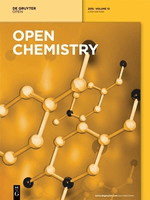
Open Chemistry
Fostering Collaboration in the World of ChemistryOpen Chemistry, published by DE GRUYTER POLAND SP Z O O, is a distinguished peer-reviewed journal that has been serving the global chemistry community since its inception. With an ISSN of 2391-5420 and an E-ISSN also of 2391-5420, this open-access journal has been accessible to researchers and practitioners alike since 2015, ensuring a wide dissemination of high-quality research findings. Located in Germany, specifically at BOGUMILA ZUGA 32A STR, 01-811 WARSAW, MAZOVIA, POLAND, Open Chemistry aims to publish innovative research across various chemical disciplines, with special attention to miscellaneous chemistry and materials chemistry. It is currently ranked in the Q3 category for both fields as of 2023, reflecting its solid standing within the academic community, with specific ranks of 187/408 in General Chemistry and 153/317 in Materials Chemistry, corresponding to respective percentiles of 54 and 51. Open Chemistry not only enhances the accessibility of cutting-edge research but also serves as a vital resource for students, professionals, and scholars seeking to advance their knowledge in the rapidly evolving landscape of chemical sciences.
Journal of Chemistry
Shaping the Future of Chemical ScienceJournal of Chemistry, published by Hindawi Ltd, serves as a critical platform for advancing knowledge in the field of chemistry, particularly in its miscellaneous sub-disciplines. With an impressive 2023 Scopus Rank of #123 out of 408 and positioned in the Q2 quartile, this journal exemplifies a robust academic rigor that appeals to researchers, professionals, and students alike. It features articles related to innovative chemical research and developments, catering to a diverse audience eager to contribute to the growing body of literature in the chemical sciences. The journal has been operational from 2013 to 2024, and its Open Access model ensures that findings are easily accessible to a global audience, fostering collaboration and knowledge sharing. With a commitment to quality and relevance, the Journal of Chemistry continues to play a significant role in shaping contemporary chemical research and education.
ACTA CHIMICA SLOVENICA
Your Gateway to Cutting-Edge Chemical ResearchACTA CHIMICA SLOVENICA is a distinguished peer-reviewed journal dedicated to advancing the field of chemistry, published by the SLOVENSKO KEMIJSKO DRUSTVO. With an ISSN of 1318-0207 and E-ISSN 1580-3155, this journal has been an essential resource for researchers and professionals since its inception in 1996. Recognized for its commitment to open access since 1998, it fosters global collaboration by making research widely available. Based in Slovenia, the journal operates with a focus on various domains within chemistry, achieving a respectable Q3 ranking in 2023 within the miscellaneous chemistry category on Scopus, showcasing its impact and relevance. This journal serves as a vital platform for innovative research, reviews, and discoveries, aiming to enhance knowledge and ignite curiosity in a diverse readership, including students and emerging scholars in the field.
JOURNAL OF THE INDIAN CHEMICAL SOCIETY
Illuminating India's Contributions to Global Chemical ResearchJournal of the Indian Chemical Society, published by Elsevier, stands as a cornerstone in the field of chemistry, particularly representing the rich chemical research emanating from India.
With a significant history dating back to its establishment, this journal encompasses diverse disciplines including Drug Discovery, Electrochemistry, Inorganic Chemistry, Organic Chemistry, and Physical and Theoretical Chemistry, reflecting the evolving landscape of chemical sciences.
Despite being positioned in the Q3 category across multiple quarters, the journal demonstrates promising rankings in various chemistries, highlighting its commitment to advancing the knowledge and application of chemical sciences. While currently not available as an open access journal, the Journal of the Indian Chemical Society is dedicated to providing a platform for high-quality research that fosters innovation and collaboration among researchers, professionals, and students worldwide.
With its continuous publication from 1973 to the present, it serves as an essential repository for cutting-edge findings and developments in chemistry, striving to connect academia with industry and practice.
Canadian Journal of Chemistry
Uniting Scholars for a Brighter Chemical FutureWelcome to the Canadian Journal of Chemistry, a prominent publication dedicated to advancing the study of chemistry through original research and critical reviews. Published by Canadian Science Publishing, this journal has been a cornerstone of chemical research since its inception, covering a broad spectrum of topics within the field, including catalysis, organic chemistry, and general chemistry. With an ISSN of 0008-4042 and E-ISSN of 1480-3291, it provides a vital platform for researchers, professionals, and students to disseminate their findings and engage in scholarly discourse. Impact Factor is currently in development, with the journal classified in the Q4 category for catalysis and Q3 for miscellaneous chemistry fields, signifying its evolving contributions to the scientific community. The journal operates without an open access model, which ensures a rigorous peer-review process while maintaining subscription access for institutions and libraries. Located in Ottawa, Canada, the Canadian Journal of Chemistry continues to provide an invaluable resource for those dedicated to the scientific pursuit of chemistry, making significant strides in fostering interdisciplinary approaches and innovative research methodologies.
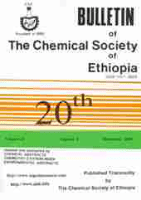
BULLETIN OF THE CHEMICAL SOCIETY OF ETHIOPIA
Unleashing the Potential of Chemistry in Ethiopia and BeyondBULLETIN OF THE CHEMICAL SOCIETY OF ETHIOPIA (ISSN: 1011-3924; E-ISSN: 1726-801X), published by the Chemical Society of Ethiopia, serves as a pivotal platform for the dissemination of innovative research and developments within the field of chemistry. Since its inception in 1996 and now an open access journal since 2012, it has provided researchers, academics, and students with unrestricted access to critical studies and findings, thus fostering collaboration and the advancement of knowledge in the discipline. The journal's current standing in the Q3 quartile in the 2023 Chemistry category underlines its commitment to maintaining high academic standards, while its Scopus ranking, positioned at #250 out of 408 in general chemistry, showcases its growing influence and contribution to the scientific community. Hailing from Ethiopia and targeted toward a global readership, the journal aims to highlight local and international research, engaging scholars and practitioners alike in discussions that propel the science of chemistry forward.