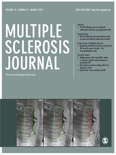
Multiple Sclerosis Journal
Scope & Guideline
Unveiling the Science Behind Multiple Sclerosis
Introduction
Aims and Scopes
- Clinical Management of Multiple Sclerosis:
Focuses on the latest advancements in the management and treatment of MS, including the effectiveness of disease-modifying therapies (DMTs), patient adherence, and the impact of comorbidities on treatment outcomes. - Neuroimaging and Biomarkers:
Explores the role of advanced imaging techniques and biomarkers in diagnosing and monitoring MS progression, including studies on MRI, optical coherence tomography, and serum biomarkers such as neurofilament light chain. - Pathophysiology and Immunology:
Investigates the underlying biological mechanisms of MS, including immune responses, neuroinflammation, and the role of various immune cell populations in disease progression. - Cognitive and Psychological Aspects:
Examines the cognitive impairments associated with MS, their impact on quality of life, and the effectiveness of cognitive rehabilitation strategies. - Socioeconomic and Global Health Perspectives:
Addresses the disparities in healthcare access, treatment outcomes, and the social determinants affecting individuals with MS across different populations. - Patient-Centered Research:
Emphasizes the importance of patient-reported outcomes and experiences in shaping treatment approaches and healthcare policies.
Trending and Emerging
- Digital Health and Remote Monitoring:
Research on the use of digital technologies, including telemedicine and mobile health applications, has surged as a response to the COVID-19 pandemic and the need for continuous patient monitoring. - Immunotherapy and Novel Therapeutics:
There is an increasing focus on newer immunotherapies, including BTK inhibitors and monoclonal antibodies, as well as personalized treatment approaches based on genetic and immunological profiling. - Longitudinal Studies and Real-World Evidence:
A growing emphasis on longitudinal studies and the collection of real-world data to better understand treatment effects and disease progression in diverse patient populations. - Cognitive Rehabilitation and Quality of Life:
Research targeting cognitive rehabilitation strategies and their impact on the quality of life for MS patients has gained momentum, reflecting a broader focus on patient-centered care. - Environmental and Lifestyle Factors:
An emerging interest in how lifestyle factors, including diet and physical activity, influence MS outcomes, alongside research into the gut-brain axis and microbiome interactions.
Declining or Waning
- Traditional Pharmacological Approaches:
Studies focusing on older, less effective pharmacological treatments for MS, such as first-generation DMTs, have decreased as the field moves towards more innovative therapies and personalized medicine. - Epidemiological Studies:
While important, the frequency of general epidemiological studies on MS prevalence and incidence has waned as more specific and targeted research questions have emerged. - Basic Science Research:
Research focused solely on basic science without direct clinical implications has become less prominent, as the journal increasingly prioritizes translational research that connects laboratory findings to clinical practice.
Similar Journals
Neurodegenerative Disease Management
Innovating Strategies for Neurodegenerative ChallengesNeurodegenerative Disease Management is a distinguished journal published by FUTURE MEDICINE LTD, focusing on the pivotal issues surrounding the management of neurodegenerative diseases. Since its inception in 2014, this journal has emerged as a significant resource within the fields of medicine and neurology, currently holding a respected position with a Q2 category ranking in Medicine (miscellaneous) and Q3 in Neurology (clinical) for 2023. With an ISSN of 1758-2024 and E-ISSN 1758-2032, the journal provides a platform for the dissemination of innovative research, clinical practices, and advancements in treatment strategies for conditions such as Alzheimer's, Parkinson's, and multiple sclerosis. The journal is particularly committed to enhancing knowledge sharing among researchers, health professionals, and students, contributing to the collective effort in combatting neurodegenerative diseases. Though not open access, its articles are meticulously curated to ensure high-quality, impactful contributions to the field, making it an essential reference for those engaged in neurology and related disciplines.
LANCET NEUROLOGY
Pioneering Research for Clinical ExcellenceThe Lancet Neurology is a premier academic journal published by Elsevier Science Inc, specializing in the field of neurology. With a robust impact factor that signifies its authoritative presence, it consistently ranks in the Q1 category for clinical neurology according to the 2023 standards, positioning itself as the leading journal in its domain, ranking #1 out of 400 in Scopus' neurology rankings and placing in the 99th percentile. Since its establishment in 2002, it has provided a vital platform for disseminating innovative research and clinical advances related to neurological disorders. The journal’s precise focus includes cutting-edge studies on neurodegenerative diseases, stroke, epilepsy, and neuroimaging, which are essential for advancing clinical practice and improving patient outcomes. While it does not offer open access, readers can find high-impact research published monthly, making it indispensable for practitioners, researchers, and students eager to stay at the forefront of neurological science.
Journal of Neurologic Physical Therapy
Pioneering Knowledge in Neurologic RehabilitationJournal of Neurologic Physical Therapy, published by Lippincott Williams & Wilkins, stands as a premier resource in the field of physical therapy with a specific focus on neurology. With an ISSN of 1557-0576 and an E-ISSN of 1557-0584, this journal serves as a vital platform for researchers, practitioners, and students from 2004 to 2024, illustrating its commitment to advancing knowledge in neurologic rehabilitation. It holds a prestigious Q1 ranking in categories such as Physical Therapy, Sports Therapy, and Rehabilitation and Rehabilitation, alongside Q2 rankings in Geriatrics and Gerontology, Medicine (Miscellaneous), and Neurology (Clinical). With an impact factor that reflects its significance, the journal hosts comprehensive studies and clinical insights that propel practice and innovation in neurologic physical therapy. The content is designed to enhance understanding and skills, making it an indispensable resource for those dedicated to improving patient care and outcomes in this critical area of health.

ACTA NEUROLOGICA BELGICA
Exploring the Depths of Neurological Research.ACTA NEUROLOGICA BELGICA is a leading academic journal published by Springer Heidelberg, dedicated to advancing the field of neurology and medicine. With an ISSN of 0300-9009 and E-ISSN 2240-2993, this journal has been a vital resource since its inception, contributing significantly to neurological research and clinical practice. It holds a respectable impact factor with categories spanning from Q2 in Medicine (miscellaneous) to Q3 in Neurology (clinical) as of 2023, indicating its prominence in the scientific community. The journal's extensive coverage since 1959 enhances its historical relevance, while its ongoing publication until 2024 ensures the latest developments are readily accessible. Researchers and practitioners can benefit from its rigorous peer-reviewed articles, which are crucial for staying current in this rapidly evolving discipline. As a scholarly platform, ACTA NEUROLOGICA BELGICA plays a pivotal role in disseminating knowledge and fostering innovation in neurology, making it a must-read for professionals, students, and anyone involved in the field.

Multiple Sclerosis Journal-Experimental Translational and Clinical
Innovating Insights in Neurology and NeuroscienceMultiple Sclerosis Journal-Experimental Translational and Clinical, published by SAGE Publications, Inc., is an essential open-access platform since 2015 dedicated to advancing research in the field of multiple sclerosis and related neurological disorders. With an ISSN of N/A and an E-ISSN of 2055-2173, the journal aims to bridge the gap between experimental studies and clinical applications, offering valuable insights into cellular and molecular neuroscience as well as clinical neurology. The journal holds a reputable Q3 ranking in Cellular and Molecular Neuroscience and a Q2 ranking in Neurology (Clinical) for 2023, indicating its significant contribution to these fields. Positioned at the intersection of scientific discovery and clinical practice, the Multiple Sclerosis Journal serves as an indispensable resource for researchers, clinicians, and students dedicated to improving outcomes for individuals affected by multiple sclerosis and related disorders. With a Scopus ranking of #163/400 in Medicine - Neurology and #67/97 in Neuroscience, this journal continues to play a pivotal role in shaping the future of neurological research and therapy.
ACTA NEUROLOGICA SCANDINAVICA
Transforming Neurological Research into PracticeACTA NEUROLOGICA SCANDINAVICA is a prestigious journal published by Wiley that has significantly contributed to the field of neurology and neuroscience since its inception in 1961. With a broad scope encompassing clinical and experimental research, this journal is esteemed for its rigorous peer-review process and high-quality publications. Located in the United Kingdom, it is recognized in the 2023 category quartiles as Q1 in Medicine (miscellaneous) and Q2 in both Neurology and Clinical Neurology, indicating its strong influence and relevance within the medical community. With an H-index demonstrating consistent citation impact, ACTA NEUROLOGICA SCANDINAVICA holds a Scopus rank of #86 out of 400 in Clinical Neurology, reflecting its contribution to advancing current knowledge and practice. Researchers, professionals, and students alike will find in this journal a valuable resource for the latest findings, discussions, and developments in understanding neurological disorders and treatments, furthering educational and clinical endeavors alike.
NEUROLOGY
Elevating standards in clinical neurology.NEUROLOGY, published by Lippincott Williams & Wilkins, stands as a premier journal in the field of neurology, holding an esteemed Q1 category ranking in clinical neurology as of 2023. Established in 1951, this journal has been a critical resource for the dissemination of cutting-edge research and clinical advancements, with an impressive Scopus rank of 24 out of 400, placing it in the 94th percentile among its peers. NEUROLOGY serves as a vital platform for neurologists, researchers, and medical professionals seeking to stay abreast of the latest findings and innovations in the treatment and understanding of neurological disorders. With its rigorous peer-review process and commitment to excellence, NEUROLOGY remains essential reading for all individuals dedicated to advancing the science and practice of neurology, contributing significantly to the ongoing dialogue in this vital area of medicine.

Current Journal of Neurology
Empowering knowledge in the realm of neurological disorders.Current Journal of Neurology, published by Tehran University of Medical Sciences, is an esteemed Open Access journal dedicated to advancing the field of neurology. Since its inception in 2011, the journal has provided a platform for innovative research and critical discourse in neurology and clinical neurology, with a focus on the latest advancements and methodologies. Although the journal currently holds a Q4 quartile ranking in both neurology and clinical neurology, its goal is to foster the global dissemination of knowledge and ideas relevant to the complexities of neurological disorders. Researchers, professionals, and students exploring this dynamic field will find valuable insights, as the journal aims to bridge the gap between emerging research and clinical application. Based in Tehran, Iran, the Current Journal of Neurology welcomes contributions that enhance understanding and treatment of neurological conditions, thereby promoting evidence-based practices across the globe.
NEUROLOGIST
Empowering Neurology Through Cutting-Edge ResearchNEUROLOGIST, an esteemed journal published by Lippincott Williams & Wilkins, serves as a vital resource in the fields of Neurology and Medicine. With an ISSN of 1074-7931 and an E-ISSN of 2331-2637, this journal has been dedicated to advancing the understanding of neurological disorders since its inception in 1996, with continual contributions through 2024. Achieving a respectable Q3 rank in both Medicine (miscellaneous) and Neurology (clinical), it provides an essential platform for disseminating innovative research and clinical studies. Although it is not an open-access publication, NEUROLOGIST promotes a rich exchange of ideas and findings for researchers, healthcare professionals, and students alike, helping to bridge the gaps in neurological research and practice. The journal is recognized for its commitment to enhancing clinical practice and research methodology, making it a valuable asset for anyone engaged in the dynamic field of neurology.
NEUROIMAGING CLINICS OF NORTH AMERICA
Exploring the Frontiers of Neuroimaging PracticeNEUROIMAGING CLINICS OF NORTH AMERICA is a premier peer-reviewed journal published by W B SAUNDERS CO-ELSEVIER INC, focusing on the evolving field of neuroimaging and its applications in clinical practice. Established in 1993, this journal has become a pivotal resource for researchers, professionals, and students alike, providing in-depth articles, reviews, and case studies that address both cutting-edge advancements and standard practices in neuroimaging. With its impressive credentials, ranking in the top quartiles of various medical categories—including Q2 in Medicine (Miscellaneous) and Q2 in Radiology, Nuclear Medicine, and Imaging—the journal is vital for advancing knowledge and clinical applications in the disciplines of neurology and radiology. Although it does not offer open access, the journal maintains a robust reputation with a broad readership, embodying a commitment to excellence in medical literature. The ISSN number is 1052-5149 and the E-ISSN number is 1557-9867, ensuring the accessibility and dissemination of high-quality neuroimaging research.