Museon
Scope & Guideline
Exploring the Intersections of Thought and Culture
Introduction
Aims and Scopes
- Historical Analysis of Eastern Christianity:
The journal focuses on the historical development of Eastern Christian communities, including their literature, theological contributions, and interactions with other cultures and religions. - Linguistic Studies and Manuscript Traditions:
It emphasizes the importance of linguistic analysis and the study of manuscript traditions, particularly in languages such as Syriac, Armenian, and Greek, contributing to the understanding of their historical contexts. - Interdisciplinary Research:
Museon promotes interdisciplinary approaches, combining history, theology, philology, and art history, to provide a comprehensive understanding of Eastern Christian heritage. - Critical Editions and Translations:
The journal frequently publishes critical editions and translations of ancient texts, thereby preserving and making accessible important historical documents. - Art and Iconography of Eastern Christianity:
An area of focus includes the study of the art and iconography associated with Eastern Christian traditions, examining how these reflect theological concepts and cultural exchanges.
Trending and Emerging
- Digital Humanities and Textual Studies:
There is a growing trend toward using digital humanities methodologies, including the creation of digital editions and online databases of manuscripts, to enhance access to Eastern Christian texts. - Interfaith Dialogue and Historical Perspectives:
Recent publications increasingly address themes of interfaith dialogue, particularly in historical contexts, examining how Eastern Christian communities interacted with Jewish and Islamic traditions. - Focus on Specific Figures and Texts:
There is an emerging focus on specific historical figures, such as Ignatius of Antioch, and their writings, which are being revisited with fresh critical insights and methodologies. - Art Historical Research:
An increase in art historical research related to Eastern Christian iconography and its cultural significance indicates a rising interest in visual culture within the journal's scope. - Multilingual Studies of Christian Texts:
The journal is seeing more studies that explore the multilingual nature of early Christian texts, reflecting the diverse linguistic landscape of Eastern Christianity and its manuscripts.
Declining or Waning
- General Christian Apologetics:
The journal has seen a decline in papers focused on general Christian apologetics, particularly those addressing contemporary issues related to Islam, suggesting a shift towards more specialized historical and textual studies. - Broader Historical Contexts:
There is a noticeable reduction in the exploration of broader historical contexts of Christianity outside of the Eastern tradition, indicating a narrowing of focus towards more specific cultural and linguistic studies. - Contemporary Applications of Historical Texts:
Research applying ancient texts to contemporary issues has diminished, possibly due to a preference for strictly historical analysis rather than interdisciplinary applications. - Studies on Non-Eastern Christian Traditions:
There is a waning interest in comparative studies involving non-Eastern Christian traditions, reflecting a more insular focus on Eastern Christianity itself.
Similar Journals

Biblical Annals
Exploring the Depths of Faith and ScholarshipBiblical Annals is an esteemed peer-reviewed journal published by the John Paul II Catholic University of Lublin, specializing in the field of Religious Studies. With a significant impact factor and an impressive Q1 ranking in the 2023 quartiles, this journal has established itself as a leading platform for scholarly discourse and research. Since its transition to Open Access in 2011, it has broadened its reach and accessibility, allowing researchers and academics to engage with its rich content without barriers. The journal's focus encompasses critical analysis, interdisciplinary studies, and contemporary issues relating to biblical texts and traditions, making it a vital resource for students, professionals, and researchers alike. Located in Lublin, Poland, Biblical Annals serves as a bridge connecting global perspectives on faith, culture, and spirituality, fostering an ongoing dialogue that enriches the understanding of religious phenomena.

BIBLICA
Illuminating Ancient Texts for Modern MindsBIBLICA is a prestigious academic journal devoted to the study of biblical texts, their historical contexts, and theological implications. Published by PEETERS in Italy, this journal has made significant contributions to the field of Religious Studies since its inception, achieving a commendable Q3 rank in the current category quartiles for 2023. With an ISSN of 0006-0887, BIBLICA engages a diverse readership, providing a platform for scholarly articles that address both contemporary and historical issues related to biblical literature. Although it does not offer open access, its reputation and rigorous peer-review process ensure that each publication is of high scholarly merit. With convergence spanning from 2002 to 2023 and Scopus rankings placing it at #341 out of 644 in Arts and Humanities, BIBLICA serves as an essential resource for researchers, professionals, and students seeking insights into biblical studies and its myriad implications in the modern world.
ZEITSCHRIFT FUR DIE ALTTESTAMENTLICHE WISSENSCHAFT
Illuminating Ancient Texts for Modern MindsZEITSCHRIFT FUR DIE ALTTESTAMENTLICHE WISSENSCHAFT, published by WALTER DE GRUYTER GMBH, stands as a premier platform in the fields of Religious Studies and History, with distinguished rankings of Q1 in Religious Studies and Q2 in History. Established in Germany and active since 1881, this journal has a storied legacy of advancing scholarly dialogue pertaining to the Old Testament and its historical context. With an ISSN of 0044-2526 and an E-ISSN of 1613-0103, it serves as a crucial resource for researchers, professionals, and students, fostering a robust understanding of ancient texts and their significance in contemporary society. Though it does not currently offer open access, its merit is reflected in its Scopus rankings, placing it in the 65th percentile for Religious Studies and the 63rd percentile for History. As this journal continues its publication journey through 2024, it remains dedicated to enriching the academic landscape by publishing original research, critical reviews, and comprehensive studies that illuminate the complexities and nuances of Old Testament scholarship.

Jahrbuch der Oesterreichischen Byzantinistik
Exploring the depths of Byzantine culture and history.Jahrbuch der Oesterreichischen Byzantinistik, published by the esteemed Österreichische Akademie der Wissenschaften, is a vital academic journal dedicated to advancing the study of Byzantine studies, history, and related fields. Situated in Austria, this journal serves as a critical platform for scholars and researchers, offering a rich collection of articles that reflect the diverse aspects of Byzantine culture, literature, and archaeological findings. Despite its recent categorization in the Q4 quartile in areas such as Archaeology, History, and Literary Theory, it commands impressive rankings within Scopus, particularly in Literature and Literary Theory at the 87th percentile, highlighting its growing impact in the arts and humanities. Researchers and professionals can access comprehensive studies that span from 2010 to 2018 and continue from 2020 to 2023, paving the way for interdisciplinary dialogue and exploration within the Byzantine field. As a continually evolving resource, the Jahrbuch is essential for those committed to deepening their understanding of this historically rich domain.
SEFARAD
Pioneering Research on Jewish Culture and HistorySEFARAD, published by the CONSEJO SUPERIOR INVESTIGACIONES CIENTIFICAS-CSIC, is a renowned open-access journal that has been a pivotal platform for scholarly communication since its inception in 1996. Based in Spain, it caters to a diverse readership across multiple disciplines, including Cultural Studies, History, Literature and Literary Theory, Religious Studies, and Linguistics and Language. The journal has successfully established itself within respected academic circles, achieving Q2 rankings in both History and Literature and Literary Theory as per the 2023 category quartiles, emphasizing its significance in these fields. With a commitment to fostering interdisciplinary dialogue and enhancing understanding of the Jewish heritage and culture in the Iberian Peninsula, SEFARAD presents original research articles, comprehensive reviews, and critical essays that inspire further scholarly inquiry. Researchers, professionals, and students alike will find this journal an invaluable resource for contemporary studies in its vibrant subject areas.
Symbolae Osloenses
Celebrating a Century of Classical InquirySymbolae Osloenses, published by TAYLOR & FRANCIS LTD, is a distinguished journal in the field of Classics, with a rich history dating back to its inception in 1922. This UK-based journal has continuously contributed to the scholarly discourse surrounding ancient cultures, languages, and literature, making it a crucial resource for researchers, educators, and students alike. Though it operates under a subscription model, its impact on the academic community is underscored by its recent inclusion in the 2023 Scopus rankings, where it holds a respectable position in the 65th percentile among its peers. With decades of published research spanning from 1924 to 2023, Symbolae Osloenses remains committed to fostering robust academic dialogue and advancing knowledge in the Classics, catering to a diverse readership seeking to explore the nuances of classical studies.
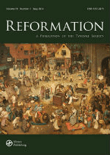
Reformation
Navigating the Complexities of the Reformation EraReformation is an esteemed journal published by ROUTLEDGE JOURNALS, TAYLOR & FRANCIS LTD, dedicated to the field of Religious Studies. With its ISSN of 1357-4175 and E-ISSN 1752-0738, the journal serves as a vital platform for comprehensive research and scholarly discussions surrounding the Reformation period and its enduring impact on contemporary society. Although the journal currently holds a Q4 classification in the 2023 quartiles, it offers a unique opportunity for emerging voices and seasoned scholars alike to contribute to a richer understanding of religious transformations. With a Scopus ranking of #412 out of 644 in the Arts and Humanities category for Religious Studies, this journal is positioned to attract a diverse audience of researchers, professionals, and students. The journal has converged over the years from 2013 to 2024, providing a consistent outlet for innovative research while fostering robust academic discourse. Although open access options are not available, its rigorous editorial process ensures that published works maintain high academic integrity and contribute valuable insights to the field.
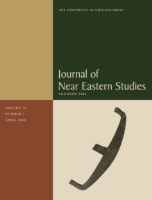
JOURNAL OF NEAR EASTERN STUDIES
Connecting Cultures through Rigorous Scholarly DiscourseJournal of Near Eastern Studies (ISSN: 0022-2968; E-ISSN: 1545-6978), published by University of Chicago Press, stands as a cornerstone of academic discourse in the fields of Archaeology, Cultural Studies, and Linguistics and Language. With a prestigious track record that has evolved since its inception and spanning converged publication years from 1968 to 2024, this journal holds an impressive Q1 ranking in Cultural Studies and Linguistics and Language, and a solid Q2 ranking in Archaeology and Arts and Humanities as of 2023. Despite not offering open access, it is widely regarded for its rigorous peer-reviewed articles that contribute significantly to the understanding of Near Eastern history, culture, and languages. The journal's sustained recognition in Scopus rankings, including a notable 30th rank out of 173 in Arts and Humanities, ensures it remains an essential resource for researchers, academics, and students dedicated to exploring the rich tapestry of the Near East. With its base in Chicago, USA, the Journal of Near Eastern Studies continues to foster interdisciplinary collaboration and scholarly excellence.

Rivista di Filologia e di Istruzione Classica
Unveiling the Rich Tapestry of Classical TextsRivista di Filologia e di Istruzione Classica is a distinguished academic journal published by LOESCHER EDITORE, dedicated to advancing the fields of Classics and Linguistics. Based in Italy, this journal serves as a vital platform for original research, critical analysis, and scholarly discussions that enrich our understanding of classical texts and educational methodologies in the humanities. With its unique focus on the intricate relationship between classical literature and language, the journal aims to facilitate discourse among researchers, educators, and students alike. Although categorized in the fourth quartile in both Classics and Linguistics, it provides an essential venue for scholars seeking to disseminate their findings and engage with contemporary academic debates. The journal is indexed in various databases, though recent coverage in Scopus has been discontinued. Researchers interested in exploring the complex layers of classical philology and instructional practices are encouraged to contribute to and engage with the innovative scholarship presented in this journal.

Magnificat Cultura i Literatura Medievals
Connecting Scholars through Open Access InsightsMagnificat Cultura i Literatura Medievals, published by UNIV VALENCIA, SERVICIO PUBLICACIONS, is an esteemed academic journal that has been at the forefront of medieval studies since its inception in 2014. With its Open Access model, this journal ensures that cutting-edge research is readily available to scholars and enthusiasts alike, fostering an inclusive academic environment. Based in Spain, it boasts impressive rankings with a Q2 designation in History and a Q1 in Literature and Literary Theory for 2023, indicating its significant contribution to these fields. The journal is indexed by Scopus, achieving top-tier rankings in both Literature and History, and is recognized in the 87th and 72nd percentiles of their respective categories. With a focus on the complexities of medieval culture and literature, Magnificat serves as a vital resource for researchers, professionals, and students dedicated to exploring the rich tapestry of medieval scholarship.