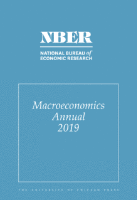
NBER Macroeconomics Annual
Scope & Guideline
Unveiling the Dynamics of Global Economies
Introduction
Aims and Scopes
- Macroeconomic Theory Development:
The journal emphasizes the development of new macroeconomic theories that explain economic phenomena, especially in the context of policy implications and practical applications. - Empirical Analysis of Economic Data:
A significant focus is placed on empirical research that utilizes data to test macroeconomic theories and models, providing insights into economic behavior and outcomes. - Interdisciplinary Approaches:
The journal encourages interdisciplinary research that intersects economics with other fields, such as finance, sociology, and environmental studies, to enrich macroeconomic discourse. - Policy Relevance and Recommendations:
Research published in the journal often aims to inform policymakers, providing evidence-based recommendations for managing economic challenges and crises. - Exploration of Labor Markets and Employment Dynamics:
Another core area is the examination of labor market dynamics, including issues like monopsony power, wage determination, and employment trends across different demographics.
Trending and Emerging
- Impact of Monetary Policy on Expectations:
A growing focus on how monetary policy influences economic expectations and behavior, particularly in light of recent economic uncertainties and inflationary pressures. - Sectoral Imbalances and Productivity:
Research on sectoral imbalances, such as bottlenecks in supply chains and their implications for overall productivity, has gained prominence as economies recover from disruptions. - Effects of Import Competition on Labor Markets:
The role of import competition in shaping labor markets and inflation dynamics is increasingly recognized, especially in the context of globalization and economic resilience. - Wealth Inequality and Economic Disparities:
There is a rising interest in the examination of wealth inequality, drawing attention to systemic issues that perpetuate economic disparities across different demographics. - Climate Change and Macroeconomic Interactions:
Emerging studies are beginning to explore the interactions between climate change and macroeconomic variables, underlining the importance of sustainability in economic models.
Declining or Waning
- Gender Composition Studies:
Research focusing on gender composition and its impacts on earnings, while still relevant, has seen a decline in the number of dedicated studies, suggesting a shift towards broader economic dynamics. - Longitudinal Studies on Employment Trends:
While historically significant, the frequency of longitudinal studies examining employment trends, particularly among older individuals and gender-specific employment issues, has diminished. - Static Models of Economic Behavior:
There appears to be a waning interest in purely static models that do not incorporate dynamic elements or real-world complexities, as researchers increasingly favor models that account for changing economic conditions.
Similar Journals
Series-Journal of the Spanish Economic Association
Fostering Innovation and Collaboration in Economic ScholarshipSeries-Journal of the Spanish Economic Association, published by SPRINGER HEIDELBERG, stands at the forefront of economic research, specifically focusing on the diverse and evolving landscape of economics, econometrics, and finance. Since its transition to Open Access in 2010, the journal has provided a platform for innovative research and thought leadership, fostering accessibility and collaboration within the academic community. With an impressive impact reflected in its Q1 classification in the Economics, Econometrics and Finance category, the journal has gained recognition for its commitment to high-quality, rigorous scholarship, as evidenced by its Scopus rank of #98 out of 288, placing it in the 66th percentile. Its purview encompasses a broad range of topics, making it an essential resource for researchers, professionals, and students looking to keep abreast of the latest developments and trends in economics. With its dedication to advancing knowledge from 2010 to 2024, the journal remains a pivotal contributor to the global economic discourse, seeking to bridge empirical research with practical applications.
JOURNAL OF MACROECONOMICS
Transforming Data into Economic InsightsJOURNAL OF MACROECONOMICS, published by Elsevier, stands as a significant platform for scholarly discourse in the field of economics and econometrics. With an ISSN of 0164-0704 and an E-ISSN of 1873-152X, this journal has been actively contributing to the academic community since 1979 and continues to publish impactful research through 2024. It is recognized within the Q2 category for Economics and Econometrics in its 2023 quartile rankings, and it holds a respectable Scopus ranking of #353 out of 716 in its field, placing it in the 50th percentile. Despite not being an open-access journal, it provides valuable insights into macroeconomic theories, empirical assessments, and policy implications, making it an essential resource for researchers, professionals, and students aiming to deepen their understanding of macroeconomic dynamics. To access a breadth of contemporary research and enhance your academic pursuits, consider diving into the latest issues of this esteemed journal, conveniently located in Amsterdam, Netherlands, at RADARWEG 29, 1043 NX.
JOURNAL OF INTERNATIONAL ECONOMICS
Innovating the discourse on global finance.JOURNAL OF INTERNATIONAL ECONOMICS, published by ELSEVIER, stands at the forefront of advancing knowledge in the fields of economics and finance. With an esteemed Q1 ranking in both Economics and Econometrics and Finance categories, this journal has established itself as a premier platform for disseminating innovative research. Since its inception in 1971, the journal has provided critical insights into the dynamics of international economic interactions, making it essential reading for researchers, professionals, and students seeking to understand complex global economic issues. With access to high-quality, peer-reviewed articles, readers can stay abreast of the latest trends, methodologies, and empirical findings shaping the economic landscape. Based in the Netherlands, the journal continues to attract contributions from leading experts worldwide, with its rigorous selection process ensuring that only the most impactful research is published, further enhancing its significance in the academic community.
JOURNAL OF INTERNATIONAL MONEY AND FINANCE
Shaping the future of economics and finance research.JOURNAL OF INTERNATIONAL MONEY AND FINANCE is a premier scholarly publication dedicated to advancing the understanding of international finance and monetary economics. Published by Elsevier Science Ltd, this esteemed journal has been disseminating critical research since its inception in 1982 and will continue to contribute to the field through 2024. With a strong international presence and headquarters in the United Kingdom, the journal boasts an impressive collection of articles that explore significant trends, challenges, and innovations in the areas of economics and finance. Recognized for its impact, it ranks in the top quartile (Q1) in both the Economics and Econometrics and Finance categories as of 2023, signifying its influence and relevance among peers. Researchers, professionals, and students in these disciplines can benefit from the journal's rigorous peer-review process, ensuring high-quality scholarly outputs. Though not currently an open-access journal, it provides various subscription options to foster access to groundbreaking research in the financial ecosystem.
Metroeconomica
Exploring the Frontiers of Economics and Econometrics.Metroeconomica is a prestigious journal published by WILEY, focusing on the dynamic fields of Economics and Econometrics. Known for its rigorous peer-review process, this journal prides itself on disseminating high-quality research that informs and inspires scholars and practitioners alike. With an impact factor reflective of its significance in the discipline, Metroeconomica is categorized in the Q2 quartile for 2023, representing its competitive standing among influential economics publications. Since its inception in 1949 and continuing through a converged publication period until 2024, it has contributed significantly to advancing theoretical and empirical knowledge in economics. Researchers can access its content through traditional avenues, encouraging a wide readership among academics and industry experts. As the journal continues to evolve with the changing landscape of economic research, it remains a vital resource for those seeking to explore contemporary economic issues and foster impactful discussions within the field.
Journal of the European Economic Association
Unveiling the Dynamics of Economics for a Better TomorrowThe Journal of the European Economic Association, published by Oxford University Press, stands as a cornerstone in the field of economics, boasting a strong impact factor that reflects its high citation rates and significance among peers. With an impressive Scopus ranking of 12 out of 288 in general economics, encompassing a remarkable 96th percentile, this journal is recognized for its rigorous peer-reviewed research contributions that advance the understanding of economic theory and policy. Dedicated to publishing innovative studies and theoretical advancements since its inception in 2003, it continues to engage scholars worldwide, providing vital insights applicable to both academia and industry. Although it does not follow an open-access model, the journal's extensive reach and commitment to excellence make it an essential resource for researchers, professionals, and students seeking to deepen their understanding of contemporary economic issues. Based in the United States, the journal reflects a European perspective on global economic challenges, making it indispensable for those at the forefront of economic research.

Quantitative Finance and Economics
Championing Open Access to Vital Economic InsightsQuantitative Finance and Economics, published by the American Institute of Mathematical Sciences (AIMS), is a pioneering open-access journal committed to advancing the fields of finance and economics. Established to disseminate high-quality research, this journal has been an open-access platform since 2017, promoting wider accessibility to vital academic findings. It serves as a crucial resource for researchers and professionals alike, offering valuable insights through rigorous studies in quantitative methods that influence financial and economic decision-making. Although current Scopus rankings indicate emerging challenges, with a rank in the lower percentiles across various categories, Quantitative Finance and Economics strives to gain recognition by bridging theoretical frameworks with practical applications. The journal invites contributions that explore innovative quantitative techniques and their implications in contemporary economic scenarios, thus underscoring its role in shaping discourse and research in this critical sector.
INTERNATIONAL ECONOMIC REVIEW
Pioneering insights that shape policy and practice.INTERNATIONAL ECONOMIC REVIEW is a prestigious journal dedicated to advancing knowledge in the fields of economics and econometrics. Published by Wiley in the United Kingdom, this journal boasts an impressive Q1 ranking in the 2023 category of Economics and Econometrics, reflecting its significant impact in the academic community. With a continued publication since its inception in 1979, it offers a platform for rigorous scholarly articles that address contemporary issues, theoretical developments, and empirical findings in economics. Although it does not currently offer open access options, the journal maintains broad accessibility through institutional subscriptions. Researchers, professionals, and students are encouraged to contribute to and engage with this leading publication to foster knowledge exchange and stimulate scholarly dialogue in economic research. With its commitment to high-quality scholarship, the INTERNATIONAL ECONOMIC REVIEW remains a vital resource for developing insights that inform both policy and practice.
REVIEW OF ECONOMIC STUDIES
Exploring the Frontiers of Economic Theory and PracticeREVIEW OF ECONOMIC STUDIES, published by OXFORD UNIVERSITY PRESS, stands as a premier academic journal in the field of Economics and Econometrics. Established in 1933, it has maintained a strong tradition of scholarly excellence, evidenced by its prestigious Q1 category ranking and its position in the top 93rd percentile among its peers, with a remarkable Scopus rank of #49 out of 716 related journals. This reputable journal aims to publish high-quality research that advances theoretical understanding and empirical knowledge in economics, fostering a dynamic dialogue among researchers, professionals, and students alike. Despite not being an open access journal, the REVIEW OF ECONOMIC STUDIES provides invaluable insights and impactful findings that shape the discourse in the economics community, making it a vital resource for those engaging in rigorous economic analysis and policy-making.

International Journal of Economic Policy Studies
Driving Critical Conversations on Policy Analysis.The International Journal of Economic Policy Studies is a premier academic journal published by SPRINGERNATURE, dedicated to advancing research in the fields of economics, political science, and sociology. With an ISSN of 2524-4892 and an E-ISSN of 1881-4387, this journal is recognized for its commitment to open access, fostering global dissemination of knowledge while promoting rigorous peer-reviewed scholarship. Based in Japan and operating from CAMPUS, 4 CRINAN ST, LONDON N1 9XW, ENGLAND, it has successfully established itself as a valuable resource for researchers and professionals alike. The journal's impact is reflected in its respectable Q3 status across major categories, including Economics and Econometrics and Political Science, complemented by its Scopus rankings that showcase its significance in the academic community. Spanning the years from 2019 to 2024, the International Journal of Economic Policy Studies serves as an essential platform for critical discussions and innovative policy analysis, making it a must-read for scholars looking to explore contemporary issues and foster informed decision-making.