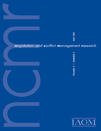
Negotiation and Conflict Management Research
Scope & Guideline
Bridging Theory and Practice in Conflict Management.
Introduction
Aims and Scopes
- Negotiation Processes:
Explores the dynamics of negotiation, including strategies, styles, and the psychological factors influencing negotiators' behavior. - Conflict Management Strategies:
Examines various approaches to managing and resolving conflicts, focusing on both interpersonal and intergroup contexts. - Impact of Emotions and Psychology:
Investigates how emotions, psychological traits, and interpersonal dynamics affect conflict situations and negotiation outcomes. - Cultural and Contextual Influences:
Analyzes how cultural backgrounds and situational contexts shape negotiation practices and conflict management. - Interdisciplinary Perspectives:
Integrates insights from psychology, sociology, political science, and organizational studies to enrich the understanding of negotiation and conflict.
Trending and Emerging
- Workplace Conflict Management:
An increasing number of studies focus on conflict behaviors and management strategies within workplace environments, highlighting the relevance of negotiation skills in organizational settings. - Role of Emotions in Negotiation:
There is a growing emphasis on the impact of emotions, such as anger and empathy, on negotiation processes, indicating a deeper exploration of psychological factors. - Cultural Dynamics in Negotiation:
Research is increasingly addressing the influence of cultural differences on negotiation tactics and outcomes, reflecting globalization's impact on conflict management. - Technology in Negotiation:
Emerging themes include the role of technology and communication media in negotiations, especially relevant in the context of virtual interactions post-pandemic. - Social Justice and Conflict Resolution:
Topics related to social justice, including restorative justice and equity in negotiation contexts, are becoming more prominent, indicating a broader societal focus.
Declining or Waning
- Traditional Conflict Resolution Models:
Focus on classic models of negotiation and conflict resolution, such as distributive bargaining, have seen a decrease as newer, more dynamic frameworks emerge. - Overemphasis on Quantitative Methods:
There appears to be a waning of purely quantitative studies, with a growing preference for qualitative and mixed-method approaches that capture the complexities of negotiation. - Stability of Negotiation Outcomes:
Research on the stability of agreements post-negotiation has decreased, possibly overshadowed by a focus on negotiation processes and immediate outcomes. - Negotiation in Stable Environments:
Topics related to negotiation in stable, non-crisis environments are less prominent, as recent publications have shifted towards negotiation in high-stakes or volatile contexts.
Similar Journals
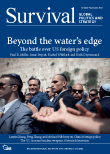
SURVIVAL
Championing Rigorous Research for a Resilient FutureSURVIVAL is a leading academic journal published by Routledge Journals, Taylor & Francis Ltd, focusing on the critical intersection of political science, international relations, and sociology. Since its inception in 1959, this esteemed journal has provided a platform for rigorous research and insightful discussions that address pressing global challenges. With an impressive impact factor and a Q2 ranking in both Political Science and Sociology categories, SURVIVAL is recognized for its high-quality, peer-reviewed articles that appeal to researchers, professionals, and students alike. The journal strives to promote interdisciplinary dialogue and foster a deeper understanding of survival in contemporary societies, making it indispensable for those who seek to navigate and influence the complex political landscapes of our time.

Llengua Societat i Comunicacio
Illuminating the Dynamics of Communication and SocietyLlengua Societat i Comunicacio, published by Universitat de Barcelona, Servei Publicacions, is a foremost open-access journal that has been dedicated to the exploration of the intricate relationships between language, society, and communication since its inception in 2004. Known for its interdisciplinary approach, the journal encompasses a wide range of topics including sociolinguistics, communication theory, and cultural studies, making it an essential resource for researchers, professionals, and students alike. With an ISSN of 1697-5928, it aims to foster a deeper understanding of how language operates within social contexts and impacts communication processes. Although it currently does not have an H-Index or specific Scopus rankings, its commitment to high-quality research dissemination contributes significantly to the academic community, particularly for those engaged in language studies and social communication. Authors and readers can benefit from its open-access model, which ensures that research is accessible to a global audience, promoting the free exchange of knowledge and insights.
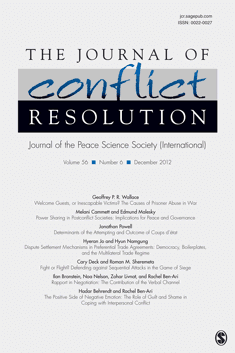
JOURNAL OF CONFLICT RESOLUTION
Exploring the intricacies of conflict and resolution.JOURNAL OF CONFLICT RESOLUTION, published by SAGE PUBLICATIONS INC, is a premier academic journal that has been instrumental in advancing the understanding of conflict dynamics since its inception in 1957. With a notable Q1 ranking in the fields of Business, Management and Accounting, Political Science and International Relations, and Sociology, this journal stands out as an essential resource for researchers, practitioners, and students alike, fostering a deeper exploration into the intricacies of conflicts and their resolutions. The journal is indexed under ISSN 0022-0027 and has an E-ISSN of 1552-8766. Continually updated with cutting-edge research, it boasts impressive Scopus rankings, holding the 53rd position out of 706 in Political Science and International Relations and 169th out of 1466 in Sociology and Political Science. The JOURNAL OF CONFLICT RESOLUTION is vital for anyone engaged in the study of conflict management and resolution strategies, offering pivotal insights and evidentiary support to drive forward debate and policy-making in this ever-evolving field.
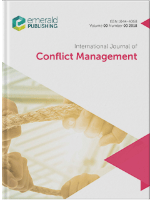
INTERNATIONAL JOURNAL OF CONFLICT MANAGEMENT
Empowering Researchers to Transform Conflict Management PracticesWelcome to the International Journal of Conflict Management, a leading peer-reviewed publication that delves into the complexities of conflict and its resolution within various organizational contexts. Published by Emerald Group Publishing Ltd, this journal serves as an essential resource for researchers, professionals, and students engaged in the fields of communication, management of technology and innovation, and strategic management. With a robust impact factor and a commendable ranking in Q1 and Q2 quartiles, it provides critical insights and fosters innovative discussions aimed at enhancing understanding and practices related to conflict management. As of 2023, it ranks in the top 15% in Communication and holds significant positions in the Management of Technology and Innovation and Strategy and Management categories, making it a vital platform for advancing scholarly dialogue and practical applications. Although the journal is not open access, its rich content from 1990 to 2024 is accessible to contributing members of these dynamic fields, ensuring you stay at the forefront of contemporary research. This journal not only nurtures academic inquiry but also serves as a bridge between theory and practice in conflict resolutions, fostering collaboration across disciplines.

Vestnik Sankt-Peterburgskogo Universiteta-Filosofiya i Konfliktologiya
Bridging Disciplines: Where Philosophy Meets Conflict StudiesVestnik Sankt-Peterburgskogo Universiteta-Filosofiya i Konfliktologiya is a prestigious academic journal published by ST PETERSBURG UNIV PRESS, focusing on the interdisciplinary exploration of philosophy, conflict studies, cultural studies, and religious studies. With its ISSN 2542-2278 and E-ISSN 2541-9382, this journal serves as a vital platform for researchers and scholars looking to disseminate their findings in these dynamic fields. The journal has shown impressive rankings in 2023, achieving Q1 status in Cultural Studies and Religious Studies, alongside Q2 in Philosophy and Q3 in Sociology and Political Science. This positioning, alongside its diverse publication scope since its convergence in 2017, underscores the journal's critical role in advancing scholarly dialogue and research. Though it operates under a closed access policy, the journal remains integral for professionals and students seeking rigorous academic discourse and insights into contemporary issues affecting philosophy and conflictology within a cultural context. Its influence and reach in the academic community contribute significantly to ongoing debates and studies, establishing it as an essential resource for anyone engaged in these disciplines.
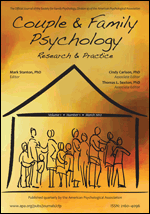
Couple and Family Psychology-Research and Practice
Exploring the Dynamics of RelationshipsCouple and Family Psychology: Research and Practice is a prominent peer-reviewed journal published by the Educational Publishing Foundation of the American Psychological Association, focusing on the intricate dynamics of couple and family relationships within the fields of psychology. Established in 2016, this journal has swiftly gained recognition, achieving a commendable impact factor and securing a Q2 classification in both Clinical Psychology and Social Psychology as of 2023. With its rankings placing it in the top half of both categories, it serves as a vital resource for researchers, practitioners, and students alike, providing a platform for studies that address contemporary issues in relationship dynamics and mental health. Although it is not open access, the journal’s rigorous editorial standards ensure the dissemination of high-quality research that contributes to the understanding of couple and family psychology. By exploring empirical findings, theoretical advancements, and practical applications, Couple and Family Psychology plays a crucial role in bridging research and practice, ultimately enriching both the academic community and the professionals who utilize its insights.
Nationalism and Ethnic Politics
Navigating the Nuances of Ethnic Politics in a National ContextNationalism and Ethnic Politics is an esteemed academic journal published by Routledge Journals, Taylor & Francis Ltd, specializing in the intricate dynamics of nationalism and ethnic relations within the field of Political Science and Geography. With an ISSN of 1353-7113 and E-ISSN of 1557-2986, the journal has carved a niche since its inception in 1995, continually producing valuable insights that enhance our understanding of the socio-political landscape. Notably, it holds notable rankings within Scopus, boasting a Q2 classification in Political Science and International Relations and a Q3 in Geography, Planning and Development for 2023, highlighting its scholarly impact. Positioned in the United Kingdom, this journal aims to address critical issues and contemporary debates on the role of nationalism and ethnic politics worldwide. Researchers, professionals, and students alike benefit from its rigorous research outputs, making it a vital resource for anyone engaged in these pivotal areas of study.
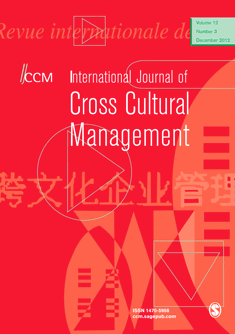
International Journal of Cross Cultural Management
Transforming Theory into Practice Across Borders.International Journal of Cross Cultural Management, published by SAGE Publications Inc, is a premier academic journal dedicated to the exploration of cross-cultural management practices and their implications in today's globalized economy. With an ISSN of 1470-5958 and an E-ISSN of 1741-2838, this journal aims to foster interdisciplinary research that spans the fields of Arts and Humanities, Business and International Management, Cultural Studies, and Organizational Behavior and Human Resource Management. Remarkably, in 2023, it achieved Q1 rankings in Arts and Humanities and Cultural Studies, underscoring its critical role in shaping contemporary discourse within these domains. The journal publishes high-quality research that not only advances theoretical frameworks but also provides practical insights for professionals and organizations operating across diverse cultural landscapes. Although it is not an open-access journal, its rigorous peer-review process ensures that each article contributes meaningfully to the field. With a dedicated readership comprising researchers, industry leaders, and students, the International Journal of Cross Cultural Management is an essential resource for anyone interested in understanding the complexities and nuances of cultural interplay in management practices.
GROUP DECISION AND NEGOTIATION
Advancing Insights in Group Dynamics and NegotiationGROUP DECISION AND NEGOTIATION, published by Springer, is a leading academic journal that fosters the exploration of the dynamics inherent in group decision-making and negotiation processes. With an ISSN of 0926-2644 and an E-ISSN of 1572-9907, this journal, based in the Netherlands, has significantly contributed to its field since its inception in 1992 and will continue to do so through 2024. Renowned for its rigorous peer-reviewed content, GROUP DECISION AND NEGOTIATION holds prestigious quartile rankings across various categories, including Q1 in Arts and Humanities and Social Sciences, and Q2 in Decision Sciences and Management of Technology and Innovation as of 2023. Its impressive Scopus rankings reflect its substantial influence, with a high percentile standing in multiple disciplines, making it a vital resource for researchers, professionals, and students interested in the intricacies of collaborative and strategic decision-making. The journal’s commitment to advancing knowledge in this dynamic area underscores its importance in bridging theory and practice, establishing it as an essential read for anyone engaged in the science of decision and negotiation.
European Security
Fostering Scholarly Dialogue on Security IssuesEuropean Security is a leading interdisciplinary journal published by ROUTLEDGE JOURNALS, TAYLOR & FRANCIS LTD, dedicated to advancing the understanding of security issues within the realms of Political Science and International Relations. With an impressive Impact Factor and a Q1 ranking in its field as of 2023, this journal has solidified its position as an influential platform for scholars and practitioners alike, ranking #93 out of 706 in the Scopus database. Since its inception in 1992, European Security has provided a forum for original research, analytical essays, and review articles that explore the complexities of security, conflict, and cooperation in the European context and beyond. The journal's commitment to high-quality scholarship is reflected in its rigorous peer-review process and the diverse perspectives it fosters. Although offering subscription-based access, the content within is invaluable for anyone engaged in the study of contemporary security challenges. Whether you are a researcher, professional, or student, European Security is essential reading for deepening your understanding of the dynamic and evolving landscape of international security.