NEOPHILOLOGUS
metrics 2024
Cultivating Knowledge in Language and Literature Since 1916
Introduction
NEOPHILOLOGUS, published by Springer, stands as a pivotal journal in the fields of Linguistics and Language as well as Literature and Literary Theory. With an illustrious history dating back to 1916 and continuing through various phases until 2024, this journal has entrenched itself as a crucial platform for scholarly discussion and research dissemination. NEOPHILOLOGUS is recognized for its high academic standards, as evidenced by its impressive category quartiles, ranking in the Q2 tier for Linguistics and Language and Q1 for Literature and Literary Theory as of 2023. Notably, it ranks in the 81st percentile for Arts and Humanities in the Scopus database, underscoring its significant contribution to the humanities discourse. While the journal does not currently offer open access options, it remains a valuable resource for researchers, professionals, and students seeking in-depth analyses and insights within its specialized domains. Based in Dordrecht, Netherlands, NEOPHILOLOGUS invites contributions that advance our understanding of linguistic and literary phenomena, ensuring its relevance and impact in these dynamic fields.
Metrics 2024
 0.180.200.2012
Metrics History
Rank 2024
Scopus
JCI (Web Of Science)
Quartile History
Similar Journals

Litera-Journal of Language Literature and Culture Studies
Empowering Emerging Voices in the Arts and HumanitiesLitera - Journal of Language Literature and Culture Studies is a pioneering open-access journal published by the esteemed Istanbul University, Faculty of Letters, since 2017, dedicated to the in-depth exploration and critical analysis of language, literature, and cultural studies. With an ISSN of 1304-0057 and an E-ISSN of 2602-2117, the journal aims to foster a diverse discourse within the arts and humanities, particularly in literature and literary theory, linguistics, and cultural studies. Although it currently holds a modest Scopus rank among its peers, it serves as a valuable platform for emerging scholars and seasoned researchers alike, aiming to enhance understanding and appreciation of cultural narratives within the global context. The journal provides a unique opportunity for authors and readers to engage with original research, critical reviews, and creative works that are vital to the advancement of interdisciplinary studies. Based in Istanbul, Turkey, it is positioned at the heart of cultural exchange, making it a significant contributor to scholarly communication in the region and beyond.

Revista de Letras Norte@mentos
Exploring the Depths of Literature and LanguageRevista de Letras Norte@mentos is an esteemed academic journal published by UNIV ESTADO MATO GROSSO, focusing on the rich field of literature and linguistics. With its ISSN of 1983-8018, this Open Access journal has been granting unrestricted access to readers since 2008, fostering an inclusive environment for the dissemination of scholarly research within the literary community. Based in Brazil, specifically at AV TANCREDO NEVES 1095, CAVALHADA II, CACERES, MT 78200-000, the journal embraces diverse perspectives and discussions surrounding literary theories, cultural studies, and the evolving landscape of language. Although specific metrics such as the HIndex and Scopus ranking are currently not listed, the journal aims to establish a strong presence in the literary field, appealing to researchers, professionals, and students who are committed to advancing knowledge and insight. By promoting high-quality research and facilitating academic dialogue, Revista de Letras Norte@mentos plays a vital role in the ongoing exploration of literature and its impact on society.
IBEROROMANIA
Exploring the Depths of Romance Linguistics and LiteratureIBEROROMANIA, published by WALTER DE GRUYTER GMBH, stands as a pivotal journal in the fields of Linguistics and Language and Literature and Literary Theory. Since its inception in 1969, IBEROROMANIA has facilitated scholarly discourse by providing a platform for cutting-edge research that explores the complexities of Romance languages and their literatures. The journal is recognized for its valuable contributions, currently holding a Q3 quartile ranking in Linguistics and Language and a Q2 ranking in Literature and Literary Theory as of 2023. With its diverse scope spanning several years, including works from 1970 to 2024, IBEROROMANIA is pivotal for researchers, professionals, and students alike, fostering a deeper understanding of Romantic linguistic and literary frameworks. Although it does not provide open access, its impact in the Arts and Humanities is underscored by its Scopus rankings, reflecting a commitment to high-quality scholarship. For those dedicated to exploring the nuances of Romance languages and literature, IBEROROMANIA is an indispensable resource.

RLC-REVUE DE LITTERATURE COMPAREE
Illuminating Intercultural Narratives in LiteratureRLC-REVUE DE LITTERATURE COMPAREE, published by DIDIER-ERUDITION, is a prominent French journal focused on comparative literature and literary theory, holding an ISSN of 0035-1466. Established in 2001, the journal aims to foster scholarly exchange and critical analysis in the field of literature, examining texts across cultures and disciplines. With its current categorization in the Q4 quartile for literature and literary theory as of 2023 and holding a Scopus rank of #880 out of 1106, RLC remains an accessible resource for researchers, professionals, and students alike. While it operates under a traditional access model, it continuously strives to contribute to the academic discourse within its scope, enhancing the understanding of literary complexities and intercultural exchanges. Based in the heart of Paris, at 6 RUE DE LA SORBONNE, the journal invites contributions that explore innovative perspectives and methodologies in literary studies through its ongoing commitment to scholarly excellence.
REVIEW OF ENGLISH STUDIES
Advancing the Boundaries of English StudiesREVIEW OF ENGLISH STUDIES, published by Oxford University Press, is a prestigious journal that has been advancing the fields of Literature and Literary Theory as well as Linguistics and Language since its inception in 1925. With an impressive impact factor and a commendable ranking, placing it in the Q1 and Q2 categories across relevant disciplines, the journal serves as a vital platform for researchers, scholars, and students alike. Covering a wide range of topics from classical literature to contemporary linguistic analysis, REVIEW OF ENGLISH STUDIES is committed to fostering scholarly discourse and promoting innovative research methodologies. Although it does not offer open access, the journal is highly regarded for its rigorous peer-review process and high-quality publications, making it an essential resource for anyone engaged in English studies. For researchers seeking to keep abreast of the latest developments in the field, this journal stands as an indispensable guide and repository of knowledge.
Italian Studies
Celebrating Italy's Cultural Legacy Through Scholarly InsightItalian Studies, published by Routledge Journals, Taylor & Francis Ltd, stands as a distinguished academic platform in the fields of Cultural Studies, History, Linguistics, Language, Literature, and the Visual Arts. Established in 1937, this journal has fostered scholarly dialogue and innovation through its robust contributions and in-depth analyses that bridge historical and contemporary perspectives on Italian culture. With an impressive ranking in Q2 and Q3 quartiles across multiple categories, including Literature and Literary Theory, and a current impact factor reflecting its growing influence, Italian Studies serves as an essential resource for researchers, professionals, and students alike. Although not an open-access journal, it remains accessible via institutional subscriptions, ensuring that a wide audience can engage with its critically acclaimed research and articles. Located in the UK, Italian Studies continues to advance the understanding of Italy's rich cultural heritage, making it a vital cornerstone for those invested in the humanities and social sciences.

Complutense Journal of English Studies
Fostering Innovation in Language and LiteratureThe Complutense Journal of English Studies, published by the Universidad Complutense de Madrid, is a prominent Open Access journal dedicated to advancing the field of English language and literature studies. Established in 2014, this journal provides a vital platform for researchers, educators, and students to disseminate original research, critical analyses, and creative works that contribute to the understanding of English studies in a global context. With its commitment to quality scholarship, the journal seeks to enhance interdisciplinary dialogues and foster new insights into contemporary linguistic and literary issues. Although it currently does not have a designated HIndex or Scopus Rank, its accessibility ensures that a wide audience can engage with a diverse range of scholarly contributions. Located in the heart of Madrid, the journal embraces an inclusive approach to the study of English, inviting submissions that reflect both traditional paradigms and innovative perspectives.

Slavia-Casopis pro Slovanskou Filologii
Bridging Tradition and Modernity in Slavic StudiesSlavia-Casopis pro Slovanskou Filologii is an esteemed journal dedicated to the advancement of Slavic philology, published by the SLOVANSKY USTAV AKAD CESKE REPUBLIKY in the heart of the Czech Republic. With its ISSN: 0037-6736, the journal serves as a vital platform for scholarly exchange, embracing a rich academic tradition since its convergence years beginning in 2002. The journal has achieved notable recognition, with a Q3 ranking in Linguistics and Language and a Q2 in Literature and Literary Theory as of 2023, highlighting its contribution to these dynamic fields. Although it does not currently offer open access, its rigorous selection of articles ensures that it remains a crucial resource for researchers and practitioners alike, facilitating a deeper understanding of Slavic languages and literature. Scholars benefit from the journal's extensive research backdrop, enhanced by its current ranks in the Scopus database, underscoring its significant placement within the academic literature landscape. The editorial scope of Slavia promotes innovative inquiries that reflect cultural, historical, and theoretical perspectives endemic to Slavic studies, making it indispensable for professionals, students, and enthusiasts invested in the exploration of Slavic linguistic and literary heritage.

Letteratura e Letterature
Fostering Critical Discourse in Literary Studies.Letteratura e Letterature is a distinguished scholarly journal dedicated to exploring the nuances of literature and linguistic theory, published by FABRIZIO SERRA EDITORE. This journal, identifiable by its ISSN 1971-906X and E-ISSN 1973-2600, serves as a significant platform for researchers, professionals, and students engaged in critical discourse within the fields of Literature and Linguistics. With a focus on fostering interdisciplinary dialogues, it seeks to illuminate diverse literary phenomena and linguistic intricacies, contributing meaningfully to the academic community. Despite being categorized in the Q4 and Q3 quartiles in 2023, the journal remains a vital resource, encouraging innovative scholarship and broadening the understanding of literary and linguistic interactions. Although it does not currently offer open access, the journal promises rigorous peer-reviewed content, ensuring the quality of published research. Operating from its base in Pisa, Italy, the journal continues to embrace its converged years from 2014 to 2021 and the ongoing 2023 to 2024 period as an era for refined scholarship and vibrant academic exchange.
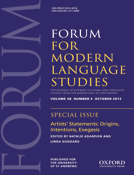
FORUM FOR MODERN LANGUAGE STUDIES
Empowering Voices in Modern Language StudiesFORUM FOR MODERN LANGUAGE STUDIES is a prestigious academic journal published by Oxford University Press that has been serving the fields of literature and linguistics since its inception in 1965. This journal, with an ISSN of 0015-8518 and an E-ISSN of 1471-6860, plays a crucial role in advancing scholarly discourse on modern language studies, including literature and literary theory. With an impactful presence in both the linguistic and literary domains, it has been recognized in 2023 with a category ranking of Q2 in Literature and Literary Theory and Q3 in Linguistics and Language. It stands out in the competitive landscape, holding a notable position within Scopus rankings, including a 70th percentile ranking in Literature & Literary Theory. While the journal currently does not offer open access options, it remains a vital resource for researchers, educators, and students passionate about the transformative power of language and literature. Its commitment to quality research and robust academic discussion underscores its importance, making it a key platform for those aiming to contribute to modern language scholarship.