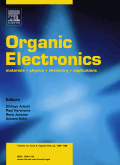
ORGANIC ELECTRONICS
metrics 2024
Pioneering the Future of Organic Materials
Introduction
ORGANIC ELECTRONICS, published by Elsevier, is a premier journal dedicated to the rapidly evolving field of organic electronics, encompassing a spectrum of interdisciplinary research from materials chemistry to electrical engineering. As a crucial resource for researchers, professionals, and students, the journal boasts significant impact, currently ranked in the Q2 category across multiple fields, including Condensed Matter Physics, Materials Chemistry, and Electrical and Electronic Engineering. With a commitment to advancing knowledge and innovation from its base in the Netherlands since its inception in 2000, ORGANIC ELECTRONICS not only provides critical insights into organic materials and their applications but also fosters collaboration among scientists through its comprehensive findings and high-quality articles. The journal does not currently offer open access but provides various access options for subscribers. With its HIndex signaling substantial academic output and engagement, ORGANIC ELECTRONICS remains an essential platform for groundbreaking research that is shaping the future of technology.
Metrics 2024
 0.652.702.50116
Metrics History
Rank 2024
Scopus
IF (Web Of Science)
JCI (Web Of Science)
Quartile History
Similar Journals
Electronic Materials Letters
Advancing the Future of Electronic MaterialsElectronic Materials Letters is a distinguished journal dedicated to the dissemination of research in the field of electronic, optical, and magnetic materials. Published by the Korean Institute of Metals and Materials, this journal has established itself as a critical platform for scholars and practitioners since its inception in 2008, with coverage extending through 2024. With an ISSN of 1738-8090 and an E-ISSN of 2093-6788, it has achieved a commendable Q3 categorization for 2023, ranking 107 out of 284 in the Scopus database's specialized field, reflecting its relevance with a 62nd percentile position among its peers. Although this journal operates under a traditional access model, its rigorous peer-review process ensures that only the most impactful research reaches its audience, thereby maintaining high scholarly standards. Positioned in South Korea at the heart of technological innovation, Electronic Materials Letters plays a vital role in bridging the gap between theoretical investigations and practical applications, making it an essential resource for researchers, industry professionals, and students aiming to thrive in the rapidly evolving materials science landscape.

Frontiers in Electronics
Advancing the Future of Electronic SciencesFrontiers in Electronics is a pioneering open-access journal published by FRONTIERS MEDIA SA, dedicated to advancing the field of electronics and its interdisciplinary applications. Established in 2020, this journal serves as a crucial platform for researchers and professionals to disseminate innovative findings and share advancements in areas such as semiconductor technology, nanotechnology, and circuit design. With ongoing commitment to open access, the journal ensures that cutting-edge research is publicly available, enhancing knowledge dissemination and collaboration among the global scientific community. By encouraging submissions that push the boundaries of electronic sciences, Frontiers in Electronics aspires to shape future trends and foster technological innovations, making it an essential resource for students, researchers, and industry experts alike. For further engagement, the journal can be accessed online under the E-ISSN 2673-5857, providing valuable insights to anyone interested in the fast-evolving landscape of electronics.
Nature Electronics
Transforming Insights into InnovationsNature Electronics is a premier journal in the field of Electrical and Electronic Engineering, published by NATURE PORTFOLIO. Established in 2018 and converging until 2024, it has swiftly positioned itself as a leading platform for groundbreaking research, holding a prestigious Q1 ranking in multiple categories including Electronic, Optical and Magnetic Materials, and Instrumentation according to the latest 2023 evaluations. The journal boasts an impressive Scopus ranking, securing the top position in Instrumentation and showcasing exceptional standings in both Electrical Engineering and Materials Science. With a commitment to disseminating high-quality research, Nature Electronics offers insightful access to the latest innovations and advancements in the electronics domain, making it an essential resource for researchers, professionals, and students alike. Engaging with this journal enables readers to stay at the forefront of technological progress and fosters discussion on the future of electronic materials and devices.
SYNTHETIC METALS
Innovating the World of Synthetic Metals.SYNTHETIC METALS is a leading academic journal published by Elsevier Science SA, focusing on the interdisciplinary field of materials science with an emphasis on the development and application of synthetic metallic materials. Established in 1979, this esteemed journal offers a platform for innovative research that promotes advancements in condensed matter physics, electronic materials, materials chemistry, and mechanical engineering. With an impressive Q1 ranking in Metals and Alloys and Q2 rankings across various other categories, SYNTHETIC METALS serves as a vital resource for researchers, professionals, and students seeking to explore complex material systems and their applications in industry. Although it does not currently offer open access, the journal's impact is highlighted by its robust Scopus rankings, ensuring high visibility and dissemination of meaningful research outcomes. As it progresses through its convergence period to 2024, SYNTHETIC METALS remains dedicated to advancing knowledge and fostering scientific inquiry in the field of materials science.
SEMICONDUCTOR SCIENCE AND TECHNOLOGY
Advancing semiconductor innovation through cutting-edge research.Semiconductor Science and Technology is a pivotal journal in the fields of condensed matter physics, electrical and electronic engineering, and materials science, published by IOP Publishing Ltd. With an ISSN of 0268-1242 and an E-ISSN of 1361-6641, this esteemed journal has been disseminating groundbreaking research since 1986 and is set to continue through 2024. Recognized in the latest categorizations, it holds a notable Q2 ranking in Condensed Matter Physics, Electrical and Electronic Engineering, and Materials Chemistry, alongside a Q3 ranking in Electronic, Optical, and Magnetic Materials, highlighting its significant contribution to the advancement of these disciplines. Although it does not operate under an open access model, the journal provides critical access options for researchers and professionals seeking to foster innovation and collaboration within the semiconductor community. As a vital resource, Semiconductor Science and Technology not only supports the dissemination of high-quality research but also serves as a platform for emerging trends and developments that are shaping the future of semiconductor technology.
DYES AND PIGMENTS
Fostering Innovation in Dyes and Pigments for Diverse Applications.Dyes and Pigments, published by Elsevier Science Ltd, stands as a pivotal journal in the field of chemical engineering, particularly focusing on the realms of dyes and pigments as materials with extensive application across industries. Since its inception in 1980, this journal has evolved to capture cutting-edge research until 2024, making significant contributions to both the Chemical Engineering and Process Chemistry and Technology domains, where it currently ranks in the Q2 category. With an impressive Scopus ranking placing it among the top 82nd percentile in General Chemical Engineering and the top 73rd percentile in Process Chemistry and Technology, it demonstrates a robust commitment to publishing high-quality, impactful research. Although it does not offer an open-access option, its comprehensive content remains accessible to a wide audience of researchers, professionals, and students who are deeply engaged in the study and development of new dye and pigment technologies. Engaging with this journal not only enriches knowledge but also facilitates critical discussions that drive future innovations in chemical material sciences.
CURRENT APPLIED PHYSICS
Transforming Theoretical Concepts into Real-World Solutions.Current Applied Physics is a leading journal published by Elsevier, specializing in the dynamic fields of Physics and Materials Science. With an ISSN of 1567-1739 and an E-ISSN of 1878-1675, this journal focuses on the latest advancements and applications of physics principles in various practical domains. Operating from the innovative hub of Amsterdam, Netherlands, Current Applied Physics occupies a significant niche in the scientific community, evidenced by its Q2 ranking in both the Physics and Astronomy and Materials Science categories for the year 2023, along with impressive Scopus rankings that highlight its relevance in the fields of General Physics and General Materials Science. The journal's scope encompasses a wide range of topics, fostering interdisciplinary collaboration and facilitating the exchange of knowledge among researchers, professionals, and students. Each issue features peer-reviewed articles that contribute to the understanding and application of physical sciences, making it an essential resource for those aiming to stay at the forefront of research and innovation in applied physics.
ACS Applied Electronic Materials
Pioneering Insights in Optical and Magnetic MaterialsACS Applied Electronic Materials, published by the American Chemical Society, is a prominent journal in the field of applied materials science, with a particular focus on electronic, optical, and magnetic materials. Established in 2019, this journal has quickly risen to prominence, achieving a 2023 ranking of Q1 in both Electronic, Optical and Magnetic Materials and Materials Chemistry, as well as Q2 in Electrochemistry, reflective of its high-quality contributions and significant impact within the scholarly community. With an impressive Scopus rank of #22 in Electrochemistry, #59 in Electronic, Optical and Magnetic Materials, and #75 in Materials Chemistry, ACS Applied Electronic Materials serves as an essential resource for researchers, professionals, and students seeking to explore innovative advancements in the field. While the journal is not open access, it offers robust subscription options and aims to foster the dissemination of cutting-edge research articles, reviews, and technical notes that contribute to the understanding and application of electronic materials in various technological contexts. As a platform for pioneering research and cross-disciplinary dialogue, this journal is indispensable for anyone invested in the future of materials science.
SOLID-STATE ELECTRONICS
Advancing the Frontiers of Solid-State PhysicsSOLID-STATE ELECTRONICS, published by Pergamon-Elsevier Science Ltd, is a highly regarded journal committed to advancing the field of solid-state physics and its applications. With an ISSN of 0038-1101 and an E-ISSN of 1879-2405, this journal has been a cornerstone of scholarly communication since its inception in 1960. Covering a rich spectrum of topics, it features in the Q3 category for Condensed Matter Physics, Electrical and Electronic Engineering, and Materials Science, reflecting its robust engagement in these critical fields. Despite not being an open-access journal, it provides valuable insights and research findings accessible to both academia and industry professionals, ensuring the dissemination of cutting-edge knowledge. With a strong focus on empirical research and theoretical developments, SOLID-STATE ELECTRONICS aims to bridge the gap between fundamental science and practical application, making it an essential resource for researchers, professionals, and students alike in the United Kingdom and beyond.
PROGRESS IN PHOTOVOLTAICS
Pioneering the Path of Solar Energy AdvancementsPROGRESS IN PHOTOVOLTAICS, published by Wiley, is a leading scholarly journal dedicated to the advancement of photovoltaic technology and its applications. Since its inception in 1993, this journal has maintained a strong focus on the latest developments in solar energy, addressing both theoretical and practical aspects of photovoltaic systems. With an impressive impact factor and consistently ranked in the Q1 quartile across four key categories—Condensed Matter Physics, Electrical and Electronic Engineering, Electronic, Optical and Magnetic Materials, and Renewable Energy, Sustainability, and the Environment—PROGRESS IN PHOTOVOLTAICS is regarded as a pillar of scholarly excellence. The journal is essential for researchers, professionals, and students who seek to stay at the forefront of innovations and sustainability in the energy sector. Although it does not primarily offer open access, its commitment to advancing the understanding of photovoltaic technologies ensures that readers can expect high-quality, peer-reviewed research that pushes the boundaries of current knowledge.