
PACIFIC NORTHWEST QUARTERLY
Scope & Guideline
Bridging Narratives: Uncovering the Pacific Northwest's Unique Heritage
Introduction
Aims and Scopes
- Regional History and Cultural Studies:
The journal focuses on the historical narratives that shape the Pacific Northwest, including indigenous histories, settler colonialism, and the cultural dynamics of various communities. - Interdisciplinary Approaches:
Utilizing methodologies from history, sociology, anthropology, and environmental studies, the journal emphasizes an interdisciplinary approach to understanding the complexities of the region. - Indigenous Perspectives and Activism:
A significant focus is placed on indigenous histories and contemporary issues, highlighting the voices and experiences of Native American communities in the Pacific Northwest. - Economic and Environmental History:
The journal examines the economic development of the Pacific Northwest, particularly in relation to agriculture, trade, and environmental stewardship. - Social Justice and Marginalized Voices:
A commitment to social justice is evident through research that explores marginalized voices and the impact of historical events on various communities, including women, immigrants, and racial minorities.
Trending and Emerging
- Indigenous Rights and Activism:
Papers discussing indigenous rights, activism, and cultural preservation are increasingly prevalent, reflecting a growing recognition of the importance of these issues in contemporary society. - Environmental Justice and Sustainability:
Emerging themes related to environmental justice, the impact of climate change, and sustainable practices are becoming more prominent, addressing urgent global concerns within the context of the Pacific Northwest. - Cultural and Racial Identities:
There is a notable increase in research that explores cultural and racial identities, particularly regarding the experiences of Asian American, Black, and Latino communities in the region, contributing to a more inclusive historical narrative. - Digital Humanities and Historical Narratives:
The integration of digital humanities methodologies to analyze and present historical narratives is gaining traction, indicating a shift towards innovative forms of scholarship and public engagement.
Declining or Waning
- Traditional Euro-American Settler Narratives:
There appears to be a declining emphasis on traditional narratives centered solely around Euro-American settler experiences, as the journal increasingly prioritizes indigenous and marginalized perspectives. - Focus on Early Colonial History:
Research centered on early colonial history, particularly the initial encounters between settlers and indigenous populations, seems to have diminished as contemporary issues and narratives gain prominence. - Narrowly Defined Economic Studies:
While economic history remains a core focus, studies that narrowly examine economic development without considering social and environmental contexts are less frequently published.
Similar Journals
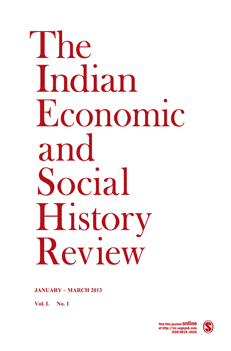
INDIAN ECONOMIC AND SOCIAL HISTORY REVIEW
Documenting India's Journey Through Economics and SocietyINDIAN ECONOMIC AND SOCIAL HISTORY REVIEW, published by SAGE PUBLICATIONS INDIA PVT LTD, stands as a pivotal platform in the fields of economics, history, and social sciences. With an ISSN of 0019-4646 and E-ISSN 0973-0893, this journal has been documenting the evolution of India's socioeconomic landscape since its inception in 1963 and will continue to do so until 2024. Despite its current Q4 ranking in Economics and Econometrics, the journal proudly holds a Q3 ranking in History, emphasizing its enriched content that appeals to a diverse audience of scholars and practitioners. Although not an open-access publication, it provides valuable, peer-reviewed research that contributes significantly to the academic discourse. With its Scopus rankings indicating a respectable 80th percentile in History, the journal is a key resource for understanding the nuanced interplay of economic and social factors throughout India's history. Researchers, students, and professionals alike will find this journal an essential reference point for advancing their understanding of historical economic trends and social dynamics.

Journal of New Zealand Studies
Advancing Interdisciplinary Scholarship on New ZealandJournal of New Zealand Studies, published by Victoria University of Wellington, Faculty of Law, serves as a pivotal platform for exploration and scholarship pertaining to the cultural, social, and historical dimensions of New Zealand. With its ISSN 1176-306X and E-ISSN 2324-3740, this journal emphasizes interdisciplinary research and aims to promote dialogue between various disciplines within the arts and humanities and social sciences. Despite being categorized in the Q4 quartile for both fields, it represents a unique opportunity for researchers and academics to contribute to, and engage with, the evolving narrative of New Zealand’s identity and its global context. This periodical is crucial for those seeking to delve deeper into the local issues, cultural phenomena, and societal changes that shape New Zealand. It welcomes contributions that push the boundaries of conventional research, thereby enhancing scholarly discourse. For researchers, professionals, and students alike, Journal of New Zealand Studies offers a rich resource for advancing knowledge and fostering an appreciation for New Zealand's diverse scholarly landscape.
NAIS-Native American and Indigenous Studies Association
Empowering Indigenous Scholarship for a Changing WorldNAIS-Native American and Indigenous Studies Association is a pivotal journal dedicated to the exploration and advancement of knowledge surrounding Native American and Indigenous studies. Published by University of Minnesota Press, this journal offers a platform for interdisciplinary scholarship that prioritizes Indigenous voices and perspectives across a variety of contexts. Although it operates under a traditional access model, the journal remains committed to disseminating high-quality research that challenges dominant narratives and emphasizes the importance of Indigenous knowledge systems. With a focus on contemporary issues, cultural practices, and historical insights, NAIS serves as an essential resource for researchers, professionals, and students passionate about Indigenous studies. Its aim is to foster critical conversations and promote understanding of Indigenous experiences in a rapidly changing world, thus fulfilling a vital role in academia and beyond.
ETHNOHISTORY
Engaging with the Complex Tapestry of Human ExperienceETHNOHISTORY is a prestigious academic journal published by DUKE UNIVERSITY PRESS, focusing on the interdisciplinary study of historical and anthropological methodologies. With its ISSN 0014-1801 and E-ISSN 1527-5477, the journal has made significant contributions to understanding the complex intersections of culture, history, and social dynamics since its inception in 1970. It holds a Q3 ranking in Anthropology and a Q2 ranking in History, reflecting its relevance in contemporary scholarly discourse, and boasts impressive Scopus rankings, placing it in the 77th percentile in History and the 45th percentile in Anthropology. While it does not operate under an Open Access model, the journal remains vital for researchers seeking comprehensive scholarly insights into the ethnographic historical record. The objective of ETHNOHISTORY is to foster dialogue among historians and anthropologists, ensuring the voices of marginalized communities and overlooked narratives are preserved and acknowledged in historical analyses. Researchers, professionals, and students will find invaluable resources and rigorous scholarship that provoke thought and inspire further exploration in the fields of history and anthropology at ETHNOHISTORY.

Historia-Santiago
Unlocking the Past: Open Access to Innovative HistoriesHistoria-Santiago is an esteemed academic journal published by the Pontificia Universidad Católica de Chile, Instituto de Historia. Since its inception in 2000, the journal has embraced an Open Access model, facilitating broad dissemination of historical research and ensuring that critical scholarly work is freely accessible to researchers, professionals, and students around the globe. With a focus on Latin American history, Historia-Santiago provides a platform for innovative research and contributions that engage with diverse historical narratives and methodologies. The journal aims to foster interdisciplinary dialogue and stimulate scholarly debate, thereby enriching the understanding of historical contexts and their implications in contemporary society. By maintaining high academic standards, Historia-Santiago occupies a vital role in the field of historical studies, encouraging authors to explore new ideas and perspectives that shape the understanding of our past.
JOURNAL OF PACIFIC HISTORY
Connecting Past and Present in the Pacific SphereJOURNAL OF PACIFIC HISTORY, published by Routledge Journals, Taylor & Francis Ltd, is a pivotal platform for advancing scholarship in the fields of cultural studies, history, sociology, and political science. With its comprehensive coverage since 1966, this journal fosters a deeper understanding of Pacific history and its implications on contemporary issues. While it currently operates under traditional access options, it remains committed to disseminating high-quality research that addresses the diverse narratives of the Pacific region. Recognized in the 2023 Scopus rankings, it holds respectable positions in the arts and humanities, alongside cultural studies, ranking within the top 40% of its category, thus affirming its significance to researchers and scholars alike. The journal's interdisciplinary scope encourages contributions that span a variety of themes and methodologies, making it an essential resource for academics, professionals, and students dedicated to the study of the Pacific.

CONTEMPORARY PACIFIC
Unraveling the Complex Tapestry of Pacific StudiesCONTEMPORARY PACIFIC is a prestigious academic journal published by University of Hawaii Press, focusing on interdisciplinary studies within the realms of Geography, Sociology, and Political Science. Since its inception in 1992 and continuing through to 2023, the journal has been a vital platform for researchers and scholars aiming to explore the dynamic and multifaceted issues facing the Pacific region. With an impact factor that places it within the Q3 category for both Geography, Planning and Development, and Sociology and Political Science, it holds an essential role in contributing to the scholarly discourse in these fields. The journal is indexed in Scopus, with rankings that reflect its ongoing relevance and contribution, boasting a 55th percentile rank in Sociology and Political Science and a 39th percentile in Geography, Planning and Development. Although it does not offer Open Access options, the journal remains an invaluable resource for those dedicated to understanding the complex narratives of the Pacific, providing a rich tapestry of articles that are both insightful and impactful for researchers, professionals, and students alike.

NEW MEXICO HISTORICAL REVIEW
Innovating Perspectives on New Mexico's Historical NarrativesWelcome to the New Mexico Historical Review, a premier scholarly journal dedicated to advancing the study of history within the cultural context of New Mexico and beyond. Published by the University of New Mexico, this journal features a wide array of peer-reviewed articles that explore historical narratives, regional studies, and interdisciplinary research in the field of history. With a commitment to scholarly excellence, the journal contributes significantly to the historical dialogue, reflected in its Scopus ranking within the 20th percentile among peers in the Arts and Humanities category. Although it currently does not offer Open Access options, the New Mexico Historical Review aims to engage researchers, professionals, and students alike by providing a platform for critical discourse and innovative perspectives on historical themes. Explore its rich history of publication, with a continuous release since the late 1970s, and discover how it has shaped the understanding of the intricate tapestry of New Mexico's past.
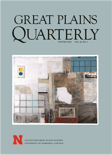
GREAT PLAINS QUARTERLY
Advancing Scholarship in Great Plains StudiesGreat Plains Quarterly is a distinguished academic journal published by the Center for Great Plains Studies at the University of Nebraska-Lincoln. This esteemed journal, with an ISSN of 0275-7664 and an E-ISSN of 2333-5092, has been a prominent platform for fostering scholarly dialogue on the cultural, historical, and environmental dynamics of the Great Plains region since its inception in 1983, with publication resuming in 1995. Although it is categorized in the Q4 quartile of Arts and Humanities (miscellaneous) for 2023, its contributions are essential for researchers, professionals, and students interested in regional studies, interdisciplinary approaches, and the unique narratives that shape the Great Plains. While the journal is not open access, it provides critical insights into the evolution of the area's socio-cultural landscapes, making it a valuable resource for those engaged in the ongoing exploration of the Great Plains and beyond.

Settler Colonial Studies
Transforming Scholarship into Social JusticeSettler Colonial Studies, published by Taylor & Francis Australia, stands as a pivotal journal within the interdisciplinary fields of anthropology, cultural studies, history, law, and sociology. With an ISSN of 2201-473X and an E-ISSN of 1838-0743, this journal has established a significant presence since its inception in 2011, continuing to contribute to thought-provoking discussions through 2024 and beyond. As an open-access platform, it provides an invaluable resource for researchers and practitioners in understanding the complexities of settler colonialism and its enduring effects across societies. The journal boasts impressive Scopus rankings—placing in the top quartiles across multiple categories, including Q1 in both Cultural Studies and History—confirming its status in the academic community. By merging rigorous scholarship with critical inquiry, Settler Colonial Studies invites contributions that explore, challenge, and illuminate the intricate realities of colonial histories, shaping valuable dialogues for a diverse readership committed to social justice and historical comprehension.