
PATHOLOGICA
Scope & Guideline
Advancing the Frontiers of Pathology and Forensic Medicine.
Introduction
Aims and Scopes
- Diagnostic Pathology:
The journal emphasizes the importance of accurate diagnostic techniques, including histopathology and molecular pathology, to improve patient outcomes and guide treatment strategies. - Cancer Pathology:
A significant focus on the pathology of various cancers, including breast, lung, and gastrointestinal cancers, with attention to emerging biomarkers and molecular classifications. - Case Reports and Clinical Correlations:
PATHOLOGICA publishes detailed case reports that illustrate unique or complex pathological findings, offering insights into clinical correlations and diagnostic challenges. - Public Health and Historical Perspectives:
The journal also explores the historical context of pathology and its implications for public health, reflecting on the contributions of notable pathologists. - Innovative Diagnostic Techniques:
There is a consistent interest in innovative methodologies, such as digital pathology and artificial intelligence, to enhance diagnostic accuracy and workflow efficiency. - Vasculitis and Organ Pathology:
A dedicated exploration of vasculitis and its impact on organ pathology, highlighting the need for a multidisciplinary approach to diagnosis and management.
Trending and Emerging
- Precision Medicine and Biomarkers:
There is a growing emphasis on precision medicine, particularly in oncology, focusing on predictive biomarkers and personalized treatment approaches that cater to individual patient profiles. - Impact of COVID-19:
Research related to COVID-19 has surged, exploring its pathological implications, diagnostic challenges, and long-term consequences, reflecting the pandemic's significant impact on public health and pathology. - Digital Pathology and AI Integration:
The integration of digital pathology and artificial intelligence is gaining traction, with studies highlighting their role in improving diagnostic accuracy and efficiency in pathology workflows. - Vasculitis Research:
Research on vasculitis and its various manifestations has become a prominent theme, indicating a recognition of its complexities and the need for a multidisciplinary approach to diagnosis and management. - Molecular Pathology Advances:
There is an increasing focus on molecular pathology, including genetic testing and the characterization of tumors at a molecular level, which is vital for targeted therapies and improving patient outcomes.
Declining or Waning
- Historical Pathology:
Although historical perspectives remain relevant, the frequency of publications focusing on historical case studies or historical figures in pathology has decreased, as the journal shifts toward more contemporary issues. - Non-Oncological Pathology:
There appears to be a reduction in the number of papers dedicated to non-oncological pathology topics, such as benign lesions and general pathology, as the emphasis moves toward cancer-related research. - Traditional Diagnostic Techniques:
As digital pathology and AI technologies advance, traditional diagnostic techniques have received less attention, indicating a potential waning interest in classical methods of diagnosis. - Pediatric Pathology:
The output related to pediatric pathology topics has diminished, reflecting a broader trend towards adult pathology and oncology within the journal's recent publications.
Similar Journals
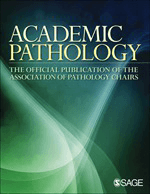
Academic Pathology
Fostering Collaboration for Pathology ProgressAcademic Pathology, published by Elsevier Science Inc, is a prominent open-access journal dedicated to advancing the field of Pathology and Forensic Medicine. Since its inception in 2014, the journal has aimed to provide a platform for high-quality research, fostering collaboration and innovation within the scientific community. With an impact factor that places it in the Q3 category for 2023, it represents a solid resource for researchers, professionals, and students seeking to stay at the forefront of evolving methodologies and practices in pathology. The journal is indexed in Scopus, ranking #117 out of 208 in its category, reflecting its commitment to disseminating valuable findings that enhance clinical and forensic applications. As an accessible source of knowledge, Academic Pathology empowers its readers to refine their studies and contribute novel insights to the ever-growing body of scholarly work in pathology.

Diagnostic Pathology
Advancing Pathology Through Open Access ResearchDiagnostic Pathology is a prominent open-access journal published by BMC, dedicated to advancing the field of pathology by providing a platform for high-quality research findings since its inception in 2006. Based in the United Kingdom, the journal covers a broad spectrum of topics within the realms of histology, pathology, and forensic medicine, facilitating discussions that are crucial for both clinical and laboratory settings. With an impressive impact factor that places it in the Q2 category across multiple categories including Histology and Miscellaneous Medicine, it ranks favorably in Scopus with notable positions in the 71st and 55th percentiles for Pathology and Histology respectively. As a valuable resource for researchers, professionals, and students alike, Diagnostic Pathology promotes the dissemination of cutting-edge studies and findings, thereby contributing significantly to the evolving landscape of medical science. The journal’s commitment to open access enhances its accessibility, ensuring that valuable research is freely available to a global audience.
ANNALES DE PATHOLOGIE
Advancing the Frontiers of Pathology and Forensic MedicineANNALES DE PATHOLOGIE, published by MASSON EDITEUR, stands as a pivotal resource in the field of pathology and forensic medicine, delivering critical insights since its inception in 1981. With an emphasis on advancing understanding and research applications within these domains, the journal is positioned to cater to a diverse audience of researchers, healthcare professionals, and students alike. While currently classified in the Q4 category within the pathway of Pathology and Forensic Medicine, it remains committed to fostering scholarly contributions and innovative research that contribute to the field's growth. Although it does not offer Open Access options, its print and electronic ISSNs (0242-6498 and 2213-008X) ensure availability for readership across global institutions. The Scopus ranking highlights its niche relevance, with a current rank of #189 out of 208 in its category, indicating a promising trajectory for future research endeavors. Published in France, ANNALES DE PATHOLOGIE invites contributions that engage the academic community and advance knowledge in pathology's most pressing matters.
Case Reports in Pathology
Transforming patient outcomes through collaborative learning.Case Reports in Pathology is an influential journal dedicated to the dissemination of open-access case reports across the diverse field of pathology. Published by HINDAWI LTD, this journal provides a crucial platform for sharing unique and clinically significant findings that contribute to advancing medical knowledge and practice. With an emphasis on evidence-based documentation and innovative diagnostic techniques, Case Reports in Pathology supports the research community by enabling healthcare professionals, researchers, and students to access high-quality, peer-reviewed content without restrictions. This emphasis on open access since its inception in 2011 reflects the journal's commitment to enhancing the visibility and impact of scholarly work in pathology. By fostering an engaged community of contributors and readers, the journal plays a vital role in bridging the gap between clinical practice and research, ultimately striving to improve patient outcomes through shared learning.
PATHOLOGY & ONCOLOGY RESEARCH
Illuminating Pathways in Cancer ResearchPATHOLOGY & ONCOLOGY RESEARCH is a prominent international journal published by FRONTIERS MEDIA SA, dedicated to advancing the fields of pathology and oncology. Operating from the Netherlands, with a distinguished address in Switzerland, this journal plays a crucial role in disseminating significant research findings and insights from 1995 to 2024. With an ISSN of 1219-4956 and E-ISSN of 1532-2807, it is indexed in well-respected databases, facilitating access to a global audience of researchers and practitioners. Notably, the journal ranks in the Q3 category for Cancer Research (2023), while being recognized in the Q2 categories for both Medicine (Miscellaneous), Oncology, and Pathology and Forensic Medicine, reflecting its authoritative status in these vital disciplines. Scopus rankings further highlight its influence, with notable percentiles across various fields. Although it follows a subscription model, the journal remains committed to publishing high-quality, peer-reviewed research that bridges conceptual gaps and encourages further exploration in oncology and diagnostic pathology, making it an indispensable resource for academics and professionals engaged in these critical areas of medicine.
JOURNAL OF COMPARATIVE PATHOLOGY
Connecting Research to Clinical Practice in PathologyJOURNAL OF COMPARATIVE PATHOLOGY, published by Elsevier Science Ltd, stands as a significant publication within the fields of pathology and forensic medicine, as well as veterinary studies. With an ISSN of 0021-9975 and an E-ISSN of 1532-3129, this journal has been disseminating critical research since 1950, contributing to the advancement of knowledge through its focus on comparative pathology. The journal's reputable standing is underscored by its Q3 classification in Pathology and Forensic Medicine and Q2 in Veterinary (miscellaneous) for 2023, reflecting its vital role in shaping contemporary discourse in these domains. The Scopus ranks further solidify its presence, placing it at the 51st percentile in general veterinary sciences and the 32nd percentile in pathology—a testament to the quality and relevance of the contributions it publishes. Although it operates under a subscription model, the journal remains accessible to researchers and practitioners who aim to deepen their understanding of pathological phenomena across species, enhance diagnostic accuracy, and improve clinical practices. With a steadfast commitment to rigorous peer review and a global readership, the JOURNAL OF COMPARATIVE PATHOLOGY is an essential resource for those engaged in research and professional practice, fostering collaborations and innovations that bridge complementary areas of study.
Journal of Pathology and Translational Medicine
Exploring Innovations in Clinical and Theoretical PathologyThe Journal of Pathology and Translational Medicine, published by the Korean Society of Pathologists, is a distinguished peer-reviewed Open Access journal that has been at the forefront of advancing the field of pathology and histology since its inception in 1985. With an established ISSN of 2383-7837 and an E-ISSN of 2383-7845, the journal serves as a vital platform for disseminating high-quality research, fostering collaboration among professionals and offering valuable insights into both clinical applications and theoretical advancements. Recognized for its influence in the field, it holds a commendable Q2 ranking in both Histology and Pathology & Forensic Medicine categories in 2023, and ranks #52/208 in Scopus for Medicine – Pathology and Forensic Medicine, demonstrating its impact and reach within the academic community. Located in South Korea at 1209 Gwanghwamun Officia, 92 Saemunan-ro, Jongno-gu, Seoul 03186, this journal not only caters to researchers and professionals but also supports students striving to deepen their understanding of pathology. Join the growing body of knowledge and stay updated with the latest findings in this essential field of study through the journal's open access format, promoting worldwide accessibility and engagement.
JOURNAL OF CLINICAL PATHOLOGY
Empowering Pathologists with Cutting-edge ResearchJOURNAL OF CLINICAL PATHOLOGY, published by BMJ PUBLISHING GROUP, stands at the forefront of advancements in the field of clinical pathology, offering a platform for groundbreaking research and insights from 1948 to the present. With an impressive impact factor and categorized as Q1 in both Medicine (miscellaneous) and Pathology and Forensic Medicine for 2023, the journal holds a distinguished position in the academic community, ranking 22nd out of 208 journals in its category on Scopus and representing the 89th percentile. While the journal does not currently offer open access, it remains a vital resource for researchers, healthcare professionals, and students seeking to stay current with innovative methodologies, clinical techniques, and diagnostic advancements. Located in London, United Kingdom, the journal aims to bridge the gap between laboratory findings and clinical practice, emphasizing the importance of evidence-based pathology in improving patient care and treatment outcomes. Engage with the JOURNAL OF CLINICAL PATHOLOGY to enhance your understanding and contribute to the evolving landscape of clinical pathology research.
HISTOPATHOLOGY
Fostering Excellence in Histopathological ResearchHISTOPATHOLOGY is a premier scholarly journal published by WILEY, targeting the fields of histology, pathology, and forensic medicine. With an ISSN of 0309-0167 and an E-ISSN of 1365-2559, this esteemed journal has maintained a strong academic presence since its inception in 1977. Boasting an impressive Q1 ranking in crucial categories such as Histology and Pathology, it ranks 13th out of 208 in Pathology and Forensic Medicine, and 5th out of 62 in Histology, reflecting its high impact and relevance within the scientific community. HISTOPATHOLOGY serves as a critical platform for disseminating significant research findings, reviews, and advancements in the diagnostic and therapeutic aspects of pathology. Although it does not operate under an open access model, its rigorous peer-review process ensures that published articles uphold the highest standards of scientific integrity. Scholars and practitioners alike benefit from the insights shared in this journal, as it aims to bridge the gap between laboratory science and clinical practice, fostering innovation and enhancing our understanding of disease mechanisms.

Forensic Science Medicine and Pathology
Unveiling New Discoveries in Forensic Medicine and PathologyForensic Science Medicine and Pathology is an esteemed journal published by HUMANA PRESS INC, focusing on the critical intersections of forensic science, medicine, and pathology. Since its inception in 2005, this journal has provided a vital platform for researchers and practitioners to share innovative studies and findings that enhance our understanding of forensic methodologies and their applications in medical contexts. With an impact factor reflecting its significant contribution to the field, it holds a Q3 ranking in Medicine (miscellaneous) and a commendable Q2 ranking in Pathology and Forensic Medicine as of 2023, indicating its growing influence among scholarly circles. The journal is indexed in Scopus, ranking #76 out of 208 in the Medicine – Pathology and Forensic Medicine category, placing it in the 63rd percentile. Despite it not being an Open Access journal, it remains a crucial resource for professionals, students, and researchers dedicated to forensic sciences and related disciplines. For those seeking cutting-edge research and advancements in forensic methodologies, this journal is an essential addition to any academic repertoire.