
VIRCHOWS ARCHIV
Scope & Guideline
Unveiling Innovations in Cell and Molecular Biology
Introduction
Aims and Scopes
- Pathological Mechanisms and Disease Progression:
The journal emphasizes research that elucidates the underlying mechanisms of diseases, including molecular and cellular processes that contribute to pathology. - Diagnostic Techniques and Innovations:
VIRCHOWS ARCHIV publishes studies on novel diagnostic methods, including advancements in imaging, histopathology, and molecular diagnostics, aiming to enhance the accuracy and efficiency of disease identification. - Tumor Microenvironment and Immune Response:
Research on the interactions between tumors and their microenvironment, including immune cell infiltration and the implications for treatment response and prognosis, is a key focus area. - Clinical Correlations and Prognostic Factors:
The journal highlights studies that correlate histopathological findings with clinical outcomes, aiming to identify prognostic markers that can guide treatment decisions. - Emerging Pathological Entities:
VIRCHOWS ARCHIV is committed to documenting and characterizing new and rare pathological entities, contributing to the classification and understanding of these conditions. - Education and Training in Pathology:
The journal also addresses the educational aspects of pathology, providing insights into training, competency assessment, and the integration of digital pathology in educational settings.
Trending and Emerging
- Artificial Intelligence and Machine Learning Applications:
The integration of AI and machine learning in pathology is rapidly growing, with numerous studies focusing on automated diagnostics, image analysis, and personalized medicine. - Liquid Biopsy and Molecular Diagnostics:
There is a marked increase in research surrounding liquid biopsies and their role in cancer diagnosis and monitoring, reflecting advancements in non-invasive testing methods. - Tumor Microenvironment and Immunotherapy:
Research exploring the tumor microenvironment, particularly in relation to immune checkpoint inhibitors and immunotherapy, is becoming increasingly prominent, highlighting its importance in cancer treatment. - Genomic and Epigenomic Profiling:
The trend toward comprehensive genomic and epigenomic profiling of tumors is on the rise, with studies focusing on identifying actionable mutations and therapeutic targets. - Patient-Centric and Outcome-Based Research:
An emerging focus on studies that directly correlate pathological findings with patient outcomes and treatment responses is evident, emphasizing the relevance of pathology in clinical practice.
Declining or Waning
- Traditional Histopathology Techniques:
There has been a noticeable decrease in publications focused solely on traditional histopathological techniques, as the field increasingly embraces digital pathology and molecular diagnostics. - Basic Science Research:
The journal has seen fewer submissions related to fundamental biological research without direct clinical or pathological implications, as the emphasis shifts to translational and applied research. - Single-Institution Studies:
Research limited to single institutions is less prevalent, with a growing preference for multicenter studies that provide broader insights and findings applicable across various settings. - Less Focus on Rare Tumors:
Although rare tumors are still investigated, there is a decreasing trend in studies solely dedicated to these entities, possibly due to their limited clinical relevance compared to more common cancers.
Similar Journals

Diagnostic Pathology
Fostering Innovation in Pathology for Global ImpactDiagnostic Pathology is a prominent open-access journal published by BMC, dedicated to advancing the field of pathology by providing a platform for high-quality research findings since its inception in 2006. Based in the United Kingdom, the journal covers a broad spectrum of topics within the realms of histology, pathology, and forensic medicine, facilitating discussions that are crucial for both clinical and laboratory settings. With an impressive impact factor that places it in the Q2 category across multiple categories including Histology and Miscellaneous Medicine, it ranks favorably in Scopus with notable positions in the 71st and 55th percentiles for Pathology and Histology respectively. As a valuable resource for researchers, professionals, and students alike, Diagnostic Pathology promotes the dissemination of cutting-edge studies and findings, thereby contributing significantly to the evolving landscape of medical science. The journal’s commitment to open access enhances its accessibility, ensuring that valuable research is freely available to a global audience.

AJSP-Reviews and Reports
Connecting Researchers and Professionals in Forensic ScienceAJSP-Reviews and Reports is a peer-reviewed journal dedicated to the advancement of knowledge within the field of pathology and forensic medicine. Published by the renowned Lippincott Williams & Wilkins, this journal plays a vital role in disseminating insightful reviews and reports that contribute to the understanding and application of diagnostic practices and forensic investigations. While currently listed in the fourth quartile (Q4) within its category according to the 2023 metrics, the journal is committed to enhancing its impact and fostering scholarly dialogue among researchers, professionals, and students in the medical community. Despite challenges in Scopus rankings, it provides a platform for significant discourse and innovation in pathology. Operating from the United Kingdom, AJSP-Reviews and Reports is positioned to bridge gaps in knowledge and inspire future research developments. Readers can access valuable findings without open access barriers, allowing for efficient information sharing within the medical field.
CARDIOVASCULAR PATHOLOGY
Bridging the gap between pathology and cardiovascular care.CARDIOVASCULAR PATHOLOGY, published by Elsevier Science Inc, is a distinguished journal dedicated to the dissemination of high-quality research in the fields of cardiology, pathology, and cardiovascular medicine. With an ISSN of 1054-8807 and an E-ISSN of 1879-1336, this journal has established itself as a vital resource for researchers, clinicians, and students alike. It is positioned in the Q2 quartile for both cardiology and pathology, indicating its significant impact and relevance in these disciplines. The journal offers a platform for innovative studies, reviews, and clinical insights, aiming to enhance our understanding of cardiovascular conditions and their pathological underpinnings. With an H-index that showcases its scholarly influence, CARDIOVASCULAR PATHOLOGY is committed to advancing the field through rigorous peer review and open dialogue among professionals. The journal is accessible through institutional subscriptions, making it an essential reference point for ongoing research through its convergence of knowledge from 1992 through 2024.

Turkish Journal of Pathology
Pioneering Knowledge in Pathology Since 2013Turkish Journal of Pathology, published by the Federation Turkish Pathology Society, stands as a vital platform for disseminating high-quality research in the field of pathology and forensic medicine. With an ISSN of 1018-5615 and an E-ISSN of 1309-5730, this journal has been an open-access publication since 2013, ensuring that cutting-edge findings are readily available to the global community. Based in Turkey, it aims to contribute significantly to the advancement of pathology as it converges from 2010 to 2024, currently holding a Q3 quartile ranking in its category according to 2023 metrics. As it ranks #129 out of 208 in the Scopus database for Medicine, Pathology, and Forensic Medicine, it offers researchers, professionals, and students invaluable insights and innovative studies that address critical developments in the field. The Turkish Journal of Pathology fosters collaboration and knowledge-sharing, making it an essential resource for anyone involved in pathology research and practice.
ADVANCES IN ANATOMIC PATHOLOGY
Elevating Standards in Pathological Research.ADVANCES IN ANATOMIC PATHOLOGY is a leading peer-reviewed journal dedicated to the field of anatomical pathology, published by LIPPINCOTT WILLIAMS & WILKINS. With an impressive impact factor and consistent ranking in the Q1 category for both Anatomy and Pathology and Forensic Medicine, it serves as an essential resource for researchers, clinicians, and students alike. The journal has been a critical platform for disseminating significant findings and advancements in the discipline since its inception in 1996, boasting Scopus rankings of #1 in Anatomy and #11 in Pathology. While it does not provide open access, it maintains rigorous standards in the selection of articles, ensuring that published research reflects the latest developments and techniques in the field. As we look toward 2024 and beyond, ADVANCES IN ANATOMIC PATHOLOGY remains committed to advancing the science of pathology, fostering innovation, and enhancing clinical practice through impactful research.
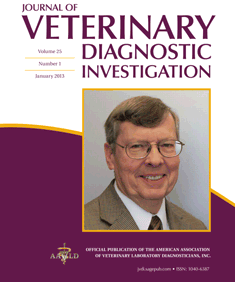
JOURNAL OF VETERINARY DIAGNOSTIC INVESTIGATION
Transforming animal health through rigorous diagnostic research.The JOURNAL OF VETERINARY DIAGNOSTIC INVESTIGATION, published by SAGE PUBLICATIONS INC, stands as a pivotal resource in the field of veterinary medicine, focusing on the latest advancements in diagnostic methodologies and their application in animal health. With an impressive impact factor and ranked in the Q1 category of Veterinary (miscellaneous) for 2023, this journal ensures the dissemination of high-quality research that is critical for veterinarians, researchers, and students alike. Established in 1989 and set to continue through 2024, it encompasses a broad spectrum of topics, vital for professionals committed to enhancing veterinary diagnostics. The journal's rigorous peer-review process guarantees that only the most innovative and thorough research contributions reach its audience, fostering an environment of academic excellence and knowledge transfer in the veterinary diagnostic field.
SEMINARS IN DIAGNOSTIC PATHOLOGY
Advancing knowledge in diagnostic pathology.Seminars in Diagnostic Pathology is a premier journal that has established itself as an essential resource in the field of pathology since its inception in 1984. Published by W B Saunders Co-Elsevier Inc, this journal boasts an impressive Q1 ranking in the pathology category for 2023, placing it in the top tier of medical journals worldwide. With a focus on diagnostic pathology, it offers a platform for groundbreaking research and advancements that bridge the gap between basic science and clinical practice. The journal is committed to publishing high-quality review articles, case reports, and expert opinions that provide valuable insights for professionals, researchers, and students alike. Although it operates on a subscription model, the journal's extensive impact is reflected in its Scopus rank (#56/208), with a remarkable 73rd percentile standing in the pathology and forensic medicine category. The journal's authoritative content not only aids in enhancing knowledge but also fosters an understanding of the evolving challenges and methodologies in diagnostic pathology, making it an indispensable tool for anyone dedicated to excellence in the field.

HISTOLOGY AND HISTOPATHOLOGY
Unlocking the Mysteries of Disease MechanismsHISTOLOGY AND HISTOPATHOLOGY, published by F HERNANDEZ, is an esteemed academic journal dedicated to advancing the fields of histology and pathology. With its ISSN 0213-3911 and E-ISSN 1699-5848, this journal has been a crucial resource for researchers and professionals since its inception in 1986. The journal enjoys a strong reputation, evidenced by its Q2 category rankings in both Histology and Pathology & Forensic Medicine as of 2023, positioning it within the top tier of scholarly publications. With Scopus rankings placing it at Rank #74/208 in Medicine - Pathology and Forensic Medicine and Rank #31/62 in Medicine - Histology, it proves to be an essential platform for disseminating significant research findings and innovations. Although the journal is not open access, it is committed to providing high-quality, peer-reviewed articles that cater to the needs of its academic community. With a focus on fostering a deeper understanding of tissue structure and disease mechanisms, HISTOLOGY AND HISTOPATHOLOGY serves as an indispensable resource for students, researchers, and practitioners alike, facilitating the exchange of knowledge and pioneering research in these vital areas of study.

Oral & Maxillofacial Pathology Journal
Fostering Collaboration for Oral Health ExcellenceOral & Maxillofacial Pathology Journal is a prominent peer-reviewed publication dedicated to advancing the field of oral and maxillofacial pathology. Published by the KAIRALI SOCIETY OF ORAL & MAXILLOFACIAL PATHOLOGISTS, this journal aims to provide a platform for sharing innovative research, clinical practices, and new techniques related to the diagnosis and management of oral diseases. With a commitment to open access, it ensures that valuable knowledge reaches a global audience of researchers, dental professionals, and students alike. Although specific impact metrics such as the HIndex and Scopus ranking are not listed, the journal is regarded as an essential resource for those involved in the oral health community. It plays a crucial role in fostering collaboration and disseminating cutting-edge advancements that can enhance patient care and clinical outcomes in oral pathology. For professionals looking to stay ahead in this dynamic field, Oral & Maxillofacial Pathology Journal serves as an indispensable tool for both foundational learning and advanced research.
PATHOLOGY RESEARCH AND PRACTICE
Pioneering Research for a Healthier TomorrowPATHOLOGY RESEARCH AND PRACTICE is a premier journal in the field of pathology and forensic medicine, published by Elsevier GmbH in Germany. With a rich publication history since 1978 and an impressive convergence period extending to 2024, this journal serves as a vital resource for researchers and professionals dedicated to advancing the understanding of pathological processes. It holds notable rankings, including Q3 in Cell Biology and Q2 in Pathology and Forensic Medicine for 2023, reflecting its significance in the academic community. The journal aims to publish innovative research findings, reviews, and case studies, facilitating a deeper understanding of disease mechanisms and improving diagnostic practices. Authors and readers alike benefit from its reputable platform, noted for its challenging and rigorous peer-review process. By fostering a collaborative environment and providing open access options, PATHOLOGY RESEARCH AND PRACTICE continues to contribute meaningfully to the discourse within its respective fields, thereby appealing to a diverse audience of researchers, professionals, and students.