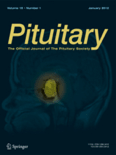
Pituitary
Scope & Guideline
Exploring Hormonal Mysteries and Clinical Advances
Introduction
Aims and Scopes
- Clinical Management of Pituitary Disorders:
The journal emphasizes research on the clinical management of various pituitary disorders including acromegaly, Cushing's syndrome, and prolactinomas, exploring treatment efficacy and safety. - Endocrine and Metabolic Research:
A significant focus is placed on the endocrine implications of pituitary dysfunction, including hormonal therapies and their metabolic effects, with studies often examining the interaction between hormonal levels and systemic health. - Surgical Techniques and Outcomes:
Research on innovative surgical techniques, particularly endoscopic approaches for pituitary tumors, and their outcomes is a core area, aiming to improve patient safety and surgical success rates. - Pathophysiology and Molecular Mechanisms:
The journal includes studies that investigate the underlying pathophysiological mechanisms of pituitary tumors and related disorders, contributing to a better understanding of these complex conditions. - Patient-Centered Outcomes and Quality of Life:
There is a consistent focus on patient-reported outcomes and quality of life assessments, highlighting the psychosocial impact of pituitary disorders and treatments.
Trending and Emerging
- Impact of COVID-19 on Pituitary Disorders:
Recent publications have increasingly addressed the implications of COVID-19 on patients with pituitary disorders, exploring both the direct and indirect effects of the pandemic on management and outcomes. - Integration of Artificial Intelligence in Clinical Practice:
There is a growing interest in the application of artificial intelligence and machine learning models in predicting outcomes and aiding in the clinical decision-making process for pituitary disorders. - Long-term Outcomes of Hormonal Therapies:
Emerging research is focusing on the long-term effects and outcomes of hormonal therapies, particularly in relation to acromegaly and Cushing's syndrome, reflecting a trend towards understanding the chronic implications of these treatments. - Patient-Centered Research and Quality of Life:
A notable increase in studies assessing patient-reported outcomes and quality of life following treatment for pituitary disorders indicates a shift towards more holistic approaches in managing these conditions. - Research on Comorbidities Associated with Pituitary Disorders:
There is an increasing trend in exploring the comorbid conditions associated with pituitary disorders, particularly metabolic and cardiovascular risks, emphasizing the need for comprehensive management strategies.
Declining or Waning
- Historical Perspectives on Pituitary Disorders:
Research that focuses on historical or retrospective analyses of pituitary disorders or treatments has seen a decline, as the field shifts towards more contemporary studies with immediate clinical relevance. - Basic Science and Animal Models:
There is a noticeable decrease in studies involving basic science and animal models of pituitary disorders, as clinical applications and human studies gain more traction. - Epidemiological Studies on Rare Pituitary Tumors:
The frequency of epidemiological studies specifically targeting rare pituitary tumors has diminished, possibly due to the challenges in gathering sufficient data on these less common conditions. - General Reviews on Common Pituitary Disorders:
While systematic reviews remain important, there is less emphasis on general reviews of well-established pituitary disorders, as the focus shifts to more specific and novel research findings.
Similar Journals
JOURNAL OF ENDOCRINOLOGY
Connecting Researchers to the Heart of EndocrinologyJOURNAL OF ENDOCRINOLOGY, established in 1946 and published by BIOSCIENTIFICA LTD, stands as a premier scholarly outlet in the field of endocrinology, diabetes, and metabolism. With an impressive H-Index reflecting its significant contribution to the literature, this journal maintains a strong presence in academic circles, evidenced by its Q1 ranking in the 2023 Scopus categories for both Endocrinology and Diabetes and Metabolism. With its targeted scope serving a global audience of researchers, professionals, and students, it provides a vital platform for disseminating innovative research findings and advancing the scientific understanding of endocrine systems. As we approach its convergence year of 2024, JOURNAL OF ENDOCRINOLOGY remains committed to publishing high-quality, peer-reviewed articles that explore cutting-edge developments in the field, thereby impacting clinical practices and guiding future research directions.

JOURNAL OF PEDIATRIC ENDOCRINOLOGY & METABOLISM
Exploring Breakthroughs in Endocrinology and MetabolismThe JOURNAL OF PEDIATRIC ENDOCRINOLOGY & METABOLISM, published by Walter de Gruyter GmbH, is a reputable peer-reviewed journal dedicated to advancing the field of pediatric endocrinology and metabolism. Since its inception in 1985, this journal has become a vital resource for professionals and researchers, providing insights into the latest advancements, clinical practices, and foundational research in the care of children with endocrine disorders. With a noted Q3 ranking in Endocrinology, Diabetes and Metabolism, and a robust focus on Pediatrics, Perinatology, and Child Health, it addresses important topics such as hormonal imbalances and metabolic syndromes in young populations. Despite its non-open access status, it continues to play an essential role in bridging the knowledge gap within our understanding of children's health and disease, contributing significantly to the progress in this specialized field.

Archives of Endocrinology Metabolism
Connecting researchers and clinicians for a healthier future.Archives of Endocrinology Metabolism is a distinguished open-access journal dedicated to advancing the field of endocrinology and metabolism. Published by SBEM-SOC BRASIL ENDOCRINOLOGIA & METABOLOGIA, this journal has established itself as a vital platform for researchers, clinicians, and scholars since its inception in 2008. With an ISSN of 2359-3997 and E-ISSN of 2359-4292, it aims to disseminate high-quality research articles that explore the latest advancements in endocrinology, diabetes, and metabolism. As of 2023, it has achieved a commendable Q3 ranking in its field, demonstrating its relevancy and increasing visibility among peers. The journal's focus spans various sub-disciplines, including hormonal regulation, metabolic disorders, and innovative therapies, making it an essential resource for both emerging professionals and seasoned experts alike. With a rich repository of research from Brazil and beyond, Archives of Endocrinology Metabolism continuously seeks to contribute to the ongoing dialogue and collaboration within the global scientific community.
Frontiers in Endocrinology
Empowering Science Through Open Access in EndocrinologyFrontiers in Endocrinology, published by FRONTIERS MEDIA SA, is a leading open-access journal dedicated to the advancement of research in the fields of endocrinology, diabetes, and metabolism. Established in 2010, this journal has consistently demonstrated its academic excellence, achieving a prominent Q1 quartile ranking in its category as of 2023, and a commendable Scopus rank of #96 out of 244, placing it within the 60th percentile. The journal is committed to disseminating high-quality research that encompasses a wide range of topics within endocrinology, catering to the needs of a diverse audience that includes researchers, medical professionals, and students alike. With the critical goal of fostering knowledge-sharing and collaboration within the scientific community, Frontiers in Endocrinology is an invaluable resource for anyone looking to stay updated on the latest advancements and insights in endocrinology. It operates under a robust open-access model, ensuring that groundbreaking research is accessible to all, thereby driving innovation and progress in this essential field.
International Journal of Endocrinology
Empowering the future of endocrinology through open access.The International Journal of Endocrinology is a premier peer-reviewed journal, published by HINDAWI LTD, focusing on the rapidly evolving fields of endocrinology, diabetes, and metabolism. Since its establishment in 2009, the journal has embraced an Open Access model, ensuring that cutting-edge research is accessible to a global audience without barriers. With an impressive Scopus rank placing it within the top quartiles of related fields, it ranks #103 in Endocrinology, Diabetes and Metabolism, showcasing its significant contribution to the ongoing discourse in these areas. The journal's scope includes original research, reviews, and clinical studies that advance understanding and treatment strategies for endocrine disorders. By bridging the gap between research, clinical practice, and patient care, the International Journal of Endocrinology serves as an essential resource for researchers, practitioners, and students dedicated to the field of endocrinology. Addressed from its headquarters in the United States, this journal not only contributes to academic advancement but also fosters international collaboration in addressing key challenges in endocrinology.

Journal of the Endocrine Society
Elevating the discourse in endocrinology and metabolic health.Journal of the Endocrine Society, published by the ENDOCRINE SOC, stands as a prominent platform for disseminating significant research and findings within the field of endocrinology, diabetes, and metabolism. Established as an Open Access journal since 2017, it aims to increase the visibility and accessibility of vital scholarly contributions, allowing researchers and professionals from various backgrounds to engage with the latest insights in this rapidly evolving discipline. With an impressive Q2 ranking in Endocrinology, Diabetes and Metabolism, the journal is recognized for its impact, ranking #100 out of 244 in Scopus, highlighting its role in advancing scientific knowledge and fostering innovation. The journal, based in the United States at 2055 L ST NW, SUITE 600, WASHINGTON, DC 20036, continues to enrich the academic landscape by converging state-of-the-art research and clinical applications through its publication cycle from 2017 to 2024. Researchers, students, and healthcare professionals are encouraged to explore this essential resource to stay at the forefront of endocrinological advancements.
AMERICAN JOURNAL OF PHYSIOLOGY-ENDOCRINOLOGY AND METABOLISM
Driving innovation in diabetes and metabolic research.American Journal of Physiology-Endocrinology and Metabolism, published by the American Physiological Society, stands as a leading platform for disseminating high-quality research in the fields of endocrinology, diabetes, and metabolism, as well as general physiology. With an impressive impact factor placing it within the Q1 category across multiple relevant disciplines (Endocrinology, Diabetes and Metabolism; Physiology; and Medical Physiology), this journal reflects its authoritative position in the scientific community. Spanning from 1980 to 2024, the journal consistently publishes groundbreaking studies and significant findings that advance our understanding of hormonal regulation and metabolic processes. Although it does not currently offer open access, it provides valuable resources for researchers, professionals, and students alike, eager to stay at the forefront of advancements in physiological sciences. Addressed in Rockville, Maryland, its commitment to excellence and rigorous peer review ensures that every article contributes essential insights to the field.

Journal of Endocrinology and Metabolism
Transforming insights into action for endocrine and metabolic health.Journal of Endocrinology and Metabolism is a dynamic and essential publication in the field of endocrinology, diabetes, and metabolism, published by ELMER PRESS INC in Canada. With an ISSN of 1923-2861 and E-ISSN 1923-287X, this journal serves as a pivotal platform for sharing innovative research and advancements from 2018 through 2024. Although categorized in the fourth quartile (Q4) for 2023, its commitment to high-quality research is reflected in its ongoing efforts to foster scholarly dialogue and illuminate critical issues within its scope. Targeting primarily researchers, healthcare professionals, and students, the journal aims to disseminate crucial findings that advance our understanding of endocrine functions and metabolic processes. Given its Scopus ranking of #207 out of 244 within its category, the Journal of Endocrinology and Metabolism continues to contribute to the global discourse on these vital health topics.
EXPERIMENTAL AND CLINICAL ENDOCRINOLOGY & DIABETES
Advancing Knowledge in Endocrinology and DiabetesEXPERIMENTAL AND CLINICAL ENDOCRINOLOGY & DIABETES is a distinguished journal published by GEORG THIEME VERLAG KG, dedicated to advancing research and understanding in the fields of endocrinology, diabetes, and metabolism. With an ISSN of 0947-7349 and an E-ISSN of 1439-3646, this journal serves as a critical platform for disseminating high-quality research findings, reviews, and clinical studies from 1983 to 2024. The journal holds an impactful position within its respective categories, notably achieving Q3 in Endocrinology and Diabetes and Metabolism, and Q2 in Internal Medicine as per the 2023 category quartiles. Additionally, it ranks in the 57th and 46th percentiles in the Scopus rankings for Internal Medicine and Endocrinology, Diabetes and Metabolism, respectively. Though not an open-access publication, the journal caters to a global audience of researchers, professionals, and students, facilitating knowledge exchange and fostering collaboration within this vital area of medical science.

Obesity Research & Clinical Practice
Innovating Solutions for Global Obesity ChallengesObesity Research & Clinical Practice is an esteemed journal published by ELSEVIER SCI LTD, focusing on cutting-edge research and clinical practices related to obesity and its multifaceted impact on health and wellness. With an ISSN of 1871-403X and an E-ISSN of 1878-0318, this journal serves as a vital resource for researchers and practitioners in the fields of Endocrinology, Diabetes and Metabolism and Nutrition and Dietetics. Notably, it holds a Q2 ranking in Endocrinology, Diabetes and Metabolism and a prestigious Q1 ranking in Nutrition and Dietetics for 2023, reflecting its influence and quality within the scientific community. The journal features a broad scope of research topics encompassing clinical findings, epidemiological studies, and therapeutic advancements in obesity treatment, aiming to improve health outcomes globally. Submissions are encouraged from diverse disciplines, ensuring a dynamic and multidisciplinary approach to tackling obesity-related challenges. Given its convergence of years from 2007 to 2024, Obesity Research & Clinical Practice stands as a prominent platform for disseminating valuable knowledge, insights, and groundbreaking research in this pressing area of public health.