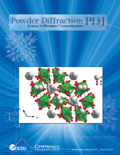
POWDER DIFFRACTION
metrics 2024
Advancing the Frontiers of Powder Diffraction Research
Introduction
POWDER DIFFRACTION, published by Cambridge University Press, is a pivotal journal focused on the evolving field of powder diffraction, which is crucial for researchers in condensed matter physics, materials science, and radiation studies. Established in 1986, this journal emphasizes the latest methodological advancements and applications in powder diffraction techniques, making it a comprehensive resource for professionals and students alike. With an ISSN of 0885-7156 and an E-ISSN of 1945-7413, it offers valuable insights into the characterizations of crystalline materials. Although currently not open access, the journal is highly regarded for maintaining rigorous peer review standards, reflecting in its rankings within the lower quartiles of relevant fields according to Scopus. Positioned within the United States and with distribution through Cambridge University Press, POWDER DIFFRACTION aims to foster innovation and knowledge exchange among the global scientific community, thereby solidifying its role as an essential platform for disseminating research findings from 1986 through to 2024 and beyond.
Metrics 2024
 0.190.301.5050
Metrics History
Rank 2024
Scopus
IF (Web Of Science)
JCI (Web Of Science)
Quartile History
Similar Journals
POWDER METALLURGY AND METAL CERAMICS
Exploring Breakthroughs in Metal CeramicsPOWDER METALLURGY AND METAL CERAMICS is a prestigious journal published by Springer, dedicated to advancing the field of powder metallurgy and the development of metal ceramics. With an ISSN of 1068-1302 and an E-ISSN of 1573-9066, this journal includes significant research contributions that explore innovative developments in materials science and engineering. Since its inception in 1993, it has garnered attention within multiple disciplines, consistently ranking in the Q2 and Q3 quartiles across categories such as Metals and Alloys, Ceramics and Composites, and Mechanics of Materials. The journal offers valuable insights into the synthesis, characterization, and applications of advanced materials, making it an essential platform for researchers, professionals, and students aiming to stay at the forefront of technological advancements in this dynamic field. Although not currently offering open access, the journal remains a critical resource for disseminating high-quality research that influences both academia and industry.

Korean Journal of Materials Research
Shaping the Future of Materials ApplicationsKorean Journal of Materials Research is a pivotal publication in the field of materials science, offering a platform for innovative research and comprehensive reviews in miscellaneous materials applications. Published by the MATERIALS RESEARCH SOC KOREA, this journal has been a valuable resource since its inception in 2007 and continues to disseminate vital findings through 2024. Although currently categorized in Q4 of the Materials Science quartiles, the journal is committed to advancing knowledge and fostering research collaboration within the scientific community. With an ISSN of 1225-0562 and an E-ISSN of 2287-7258, the journal aims to bridge gaps in research and practice, appealing to a diverse audience of researchers, professionals, and students interested in the latest advancements in materials science. While access to content may not be open, the journal's impact in the regional and global research landscape is steadily growing, as indicated by its Scopus ranking in the 7th percentile of General Materials Science. Engage with the Korean Journal of Materials Research to stay at the forefront of materials innovation!

Advanced Powder Materials
Transforming Knowledge into Impactful SolutionsAdvanced Powder Materials, published by KEAI PUBLISHING LTD, stands at the forefront of research in materials science, particularly focusing on the intricate relationships within powder materials and their applications across several domains including catalysis, ceramics, energy, and coatings. With an Open Access policy initiated in 2022, this journal ensures that cutting-edge findings are readily accessible to researchers, professionals, and students globally. Based in Beijing, China, the journal has gained recognition for its exceptional impact, achieving a prestigious Q1 ranking in multiple categories such as Catalysis, Ceramics and Composites, and Materials Science. The journal not only promotes innovative research but also serves as a vital platform for interdisciplinary collaboration, significantly impacting the fields it covers, which also include notable rankings in Metals and Alloys and Surfaces, Coatings, and Films. By fostering an environment of knowledge sharing, Advanced Powder Materials is poised to make substantial contributions to the scientific community over its converged years from 2022 to 2024.
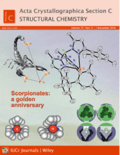
ACTA CRYSTALLOGRAPHICA SECTION C-STRUCTURAL CHEMISTRY
Elevating Research Standards in Structural ChemistryACTA CRYSTALLOGRAPHICA SECTION C-STRUCTURAL CHEMISTRY is a respected journal in the fields of condensed matter physics, inorganic chemistry, and materials chemistry, published by the International Union of Crystallography. With an extensive history dating back to its inception in the late 1980s, this journal serves as a significant platform for researchers to disseminate high-quality research on structural chemistry, focusing on the synthesis and characterization of crystalline materials. Despite currently holding a Q4 ranking across multiple academic categories, it remains an essential resource for those engaged in these scientific disciplines, facilitating dialogue and collaboration among experts. The journal's commitment to publishing innovative studies ensures that it continues to contribute to the advancement of knowledge in its field. Although it does not offer Open Access, the journal is dedicated to maintaining rigorous peer-review standards, making it a reliable source for scholars and practitioners alike. Located in the United States, ACTA CRYSTALLOGRAPHICA SECTION C is a pivotal part of the global crystallography community.
Journal of Surface Investigation
Innovative Insights into Nanoscience and Surface PhenomenaThe Journal of Surface Investigation, published by PLEIADES PUBLISHING INC, is a key platform for scholars and practitioners in the fields of Nanoscience and Nanotechnology as well as Surfaces, Coatings, and Films. With an ISSN of 1027-4510 and an E-ISSN of 1819-7094, this journal serves as a repository for innovative research and comprehensive reviews, contributing significantly to the understanding and development of surface phenomena. Despite its recent Q4 ranking, it remains a crucial resource for emerging research, fostering advancements in material science. Targeting a diverse audience including researchers, professionals, and students, the journal encourages submissions that explore novel methodologies, applications, and theoretical frameworks in surface characterization and modification. It operates without an open access policy, thereby maintaining a focus on rigorous peer review and high-quality scholarly contributions. With research converging over several years, particularly from 1997-2001 and 2007-2024, the journal sustains a vital role in disseminating knowledge and stimulating innovative dialogue within the scientific community.
X-Ray Structure Analysis Online
Bridging Theory and Practice in X-Ray AnalysisX-Ray Structure Analysis Online is a pivotal academic journal dedicated to the field of analytical and materials chemistry, published by the Japan Society for Analytical Chemistry. Established in 2009, this journal serves as a vital platform for researchers and professionals dedicated to advancing the understanding of X-ray structural analysis techniques and their applications. With ISSN 1883-3578, it operates under rigorous peer-review standards, promoting high-quality research contributions. While the journal is currently categorized in the Q4 quartile for both Analytical Chemistry and Materials Chemistry, its focus on cultivating a deeper understanding of material properties through X-ray analysis remains crucial for ongoing developments in these fields. By providing an accessible outlet for innovative studies, X-Ray Structure Analysis Online supports the academic community in overcoming the challenges of a rapidly evolving scientific landscape. It is particularly valuable for those engaged in material and analytical research, offering insights that contribute to both theoretical foundations and practical applications.
IUCrJ
Catalyzing Discoveries in Biochemistry and Materials ScienceIUCrJ, published by the International Union of Crystallography, is a leading open-access journal dedicated to advancing knowledge in the fields of Biochemistry, Chemistry, Condensed Matter Physics, and Materials Science. Since its inception in 2014, IUCrJ has quickly established itself as a prestigious platform for high-quality research, achieving a remarkable record as a Q1 journal across its categories in 2023. With an increasing impact in the scientific community, evidenced by impressive Scopus rankings, IUCrJ offers unparalleled access to groundbreaking discoveries and methodologies that contribute to the understanding and application of crystallography in various disciplines. The journal’s commitment to open access ensures that research is readily available to a global audience, fostering collaboration and innovation in the scientific community. IUCrJ is an essential resource for researchers, professionals, and students aiming to stay at the forefront of crystallographic research and its interdisciplinary applications.
JOURNAL OF CHEMICAL CRYSTALLOGRAPHY
Advancing the frontiers of crystallographic research.Welcome to the Journal of Chemical Crystallography, a prominent publication dedicated to the advancement of knowledge in the fields of chemical crystallography, general chemistry, and condensed matter physics. Published by Springer/Plenum Publishers, this journal provides a critical platform for researchers, professionals, and students to disseminate and access innovative research findings and methodologies from 1994 to 2024. With an ISSN of 1074-1542 and E-ISSN 1572-8854, the journal currently holds a Q4 quartile ranking in both Chemistry and Condensed Matter Physics, reflecting its broadening scope and niche significance within the scientific community. While it operates under a traditional access model, it endeavors to promote high-quality research that advances theoretical and practical aspects of crystallography, making it an essential resource for those involved in these dynamic disciplines. Join us as we explore the intricate world of chemical structures and their properties, bridging gaps between chemistry and physics.
Quantum Beam Science
Connecting Global Researchers in Quantum Beam ScienceQuantum Beam Science, published by MDPI since 2017, is an esteemed open-access journal that occupies a pivotal role in the fields of atomic and molecular physics as well as nuclear and high-energy physics. Based in Switzerland, this journal embraces a global community of researchers dedicated to advancing our understanding of quantum phenomena through innovative experimental and theoretical approaches. With an impactful presence reflected in its category quartiles—ranking Q3 in both the Atomic and Molecular Physics, and Nuclear and High Energy Physics categories—the journal aims to bridge the gap between foundational research and practical applications of quantum technology. Since adopting an open-access model, Quantum Beam Science has fostered greater accessibility to groundbreaking studies, facilitating knowledge dissemination among researchers and professionals alike. This commitment to open science empowers the next generation of physicists to contribute to a rapidly evolving discipline, ensuring that critical advancements reach a diverse audience. Stay informed on the latest developments in quantum research as the journal covers a wide range of topics, making it an essential resource for students, academics, and professionals in the field.
APPLIED PHYSICS A-MATERIALS SCIENCE & PROCESSING
Illuminating the Path of Contemporary Materials ResearchApplied Physics A: Materials Science & Processing, published by Springer Heidelberg, is an esteemed academic journal that has been at the forefront of innovative research since its establishment in 1995. With a strong focus on the intersection of physics, materials science, and engineering, this journal explores cutting-edge developments and applications that influence contemporary materials research. Categorized in the Q2 quartile across both Chemistry and Materials Science, it boasts respectable rankings in Scopus, affirming its influence and reach within the academic community. Although primarily a subscription-based journal, it is dedicated to disseminating high-quality research findings that advance our understanding in these fields. Researchers, professionals, and students alike can benefit from the journal's commitment to publishing comprehensive studies, methodological advancements, and insightful reviews that push the boundaries of knowledge in materials science.