Preventive Medicine
Scope & Guideline
Leading the charge in disease prevention and health promotion.
Introduction
Aims and Scopes
- Health Equity and Social Determinants of Health:
The journal consistently addresses how social determinants impact health outcomes, focusing on disparities across different populations based on socioeconomic status, race, and geographical location. - Chronic Disease Prevention and Management:
Research on the prevention and management of chronic diseases such as diabetes, cardiovascular diseases, and obesity is a core focus, with methodologies ranging from epidemiological studies to intervention trials. - Mental Health and Substance Use:
The journal explores the intersection of mental health and substance use, particularly how these areas affect public health and preventive strategies, including the impact of policies and community interventions. - Vaccination and Infectious Disease Control:
Preventive Medicine publishes studies on vaccination rates, vaccine hesitancy, and the effectiveness of public health campaigns aimed at controlling infectious diseases, especially in the context of recent global health crises. - Health Policy and Community Interventions:
The journal emphasizes research that evaluates health policies and community interventions designed to improve public health outcomes, focusing on their cost-effectiveness and impact on population health.
Trending and Emerging
- Impact of COVID-19 on Health Systems:
Recent publications increasingly focus on the effects of the COVID-19 pandemic on health systems, including vaccination strategies, telehealth adoption, and the long-term consequences of the pandemic on public health. - Mental Health and Well-being:
There is a growing emphasis on mental health, particularly in relation to chronic disease management and social determinants, highlighting the importance of mental well-being in preventive strategies. - Health Equity and Justice:
Research addressing health equity, particularly in marginalized communities and the impact of systemic racism on health outcomes, has become more prominent, reflecting a broader societal focus on social justice. - Digital Health Interventions:
The use of digital health technologies and interventions, including mobile health applications and telemedicine, is on the rise, emphasizing innovative approaches to health promotion and disease prevention. - Substance Use and Addiction Prevention:
Emerging themes related to substance use, including the impact of legalization and public health responses to addiction, are increasingly featured, reflecting the ongoing opioid crisis and changing attitudes towards substances like cannabis.
Declining or Waning
- Traditional Preventive Services:
There has been a noticeable reduction in the publication of studies focusing solely on traditional preventive services like routine screenings, suggesting a shift towards more integrated and holistic approaches to health. - Single-Disease Focus Research:
Research that focuses on single diseases without considering comorbidities or broader public health implications appears to be waning, as the journal increasingly prioritizes studies that consider the complexity of health conditions. - Occupational Health Studies:
The frequency of occupational health studies has decreased, possibly due to a growing emphasis on community-level interventions and public health policies rather than workplace-specific issues. - Environmental Health Research:
Though still relevant, there is a decline in articles specifically addressing environmental health issues as standalone topics, with a trend toward integrating these aspects into broader public health discussions.
Similar Journals

International Journal of Preventive Medicine
Innovating strategies for disease prevention.International Journal of Preventive Medicine is a premier peer-reviewed journal published by Wolters Kluwer Medknow Publications, focusing on innovative research and advancements in the field of preventive medicine. Established in 2010 and embracing the Open Access model since 2011, the journal aims to disseminate high-quality studies that contribute to the understanding and prevention of disease, promoting public health and well-being. With its current ranking in the third quartile (Q3) for Public Health, Environmental and Occupational Health, and a Scopus ranking of #317 out of 665 in its category, the International Journal of Preventive Medicine serves as an essential resource for researchers, professionals, and students alike. Through a global perspective and interdisciplinary collaboration, the journal strives to address critical health challenges, making significant strides towards a healthier society. The journal is accessible online, featuring issues from 2010 to 2024, which allows a comprehensive exploration of preventive approaches and public health strategies.
Lancet Public Health
Exploring the forefront of public health knowledge.The Lancet Public Health is a leading journal in the field of public health, published by Elsevier since 2016. With its prominent Q1 quartile ranking in Public Health, Environmental and Occupational Health according to Scopus for 2023, and an impressive percentile ranking of 99th, the journal has established itself as a vital resource for researchers, professionals, and students committed to advancing public health knowledge and practices. Operating under an Open Access model, this journal ensures that groundbreaking research is readily accessible to all, promoting global collaboration and knowledge sharing. The scope of The Lancet Public Health encompasses diverse aspects of health, including the social determinants of health, epidemiology, health policy, and preventive medicine, making it a cornerstone for addressing contemporary public health challenges. Located in the heart of the United Kingdom, it aims to influence health policies and practices worldwide, showcasing transformative research and fostering vibrant discussions within the field.
JAIDS-JOURNAL OF ACQUIRED IMMUNE DEFICIENCY SYNDROMES
Exploring new frontiers in HIV/AIDS therapies.JAIDS - Journal of Acquired Immune Deficiency Syndromes, is a leading peer-reviewed journal published by Lippincott Williams & Wilkins, focusing on the dynamics of HIV/AIDS and its broader implications in the fields of infectious diseases and pharmacology. With an esteemed impact factor that places it in the prestigious Q1 category for both Infectious Diseases and Pharmacology (medical) as of 2023, this journal aims to provide a platform for groundbreaking research, clinical findings, and innovative therapies relevant to the management and prevention of HIV/AIDS. The journal's rigorous editorial standards and commitment to advancing knowledge make it an essential resource for researchers, healthcare professionals, and students invested in the global response to AIDS. Although the journal does not currently offer open access options, it remains instrumental in disseminating high-quality research that shapes clinical practices and policy developments in the field.
LANCET INFECTIOUS DISEASES
Unraveling Complexities in Infectious Disease ScienceLANCET INFECTIOUS DISEASES is a premier journal published by Elsevier Science Ltd, dedicated to disseminating high-quality research and comprehensive reviews in the field of infectious diseases. Since its inception in 2001, the journal has become a pivotal resource in the medical community, recognized for its rigorous peer-review process and impactful contributions to public health. With an impressive Scopus rank of #2 out of 344 in the category of Medicine - Infectious Diseases, it consistently ranks in the 99th percentile, highlighting its importance and influence in shaping clinical and epidemiological research. The journal's commitment to advancing knowledge in infectious diseases is underscored by its Q1 quartile designation in 2023, affirming its status as a leading academic outlet. Although not an open-access journal, LANCET INFECTIOUS DISEASES provides essential insights for researchers, healthcare professionals, and students, bridging the gap between cutting-edge research and practical application in an increasingly interconnected world.
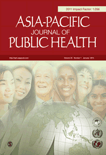
Asia-Pacific Journal of Public Health
Shaping public health policy with evidence-based research.Asia-Pacific Journal of Public Health, published by SAGE Publications Inc, is a leading platform for disseminating scholarly research in the field of public health. With an impressive scope that spans from the late 1980s to the present, the journal offers a wealth of articles that address critical issues faced by diverse populations in the Asia-Pacific region. Categorized in the Q3 quartile for both Medicine (miscellaneous) and Public Health, Environmental and Occupational Health, it holds a significant position within its field, ranked 310 out of 665 in the Scopus database. Researchers and professionals have access to valuable insights that inform public health policy and practice, making this journal an essential resource for those aiming to enhance health outcomes in the region. While not currently open access, the journal's rigorous peer-review process ensures the integrity and relevance of its content. As the landscape of public health continues to evolve, the Asia-Pacific Journal of Public Health remains a vital resource for advancing knowledge, fostering collaboration, and promoting a healthier society.
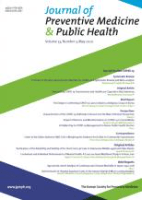
Journal of Preventive Medicine & Public Health
Transforming challenges into solutions for healthier communities.Journal of Preventive Medicine & Public Health is a premier peer-reviewed open-access journal published by the Korean Society for Preventive Medicine, dedicated to advancing the fields of preventive medicine and public health. Established in 1968, this journal has carved out a significant niche in the academic community, reflected in its prestigious Q1 ranking in both Medicine (miscellaneous) and Public Health, Environmental, and Occupational Health as of 2023. With a focus on disseminating high-quality research, the journal serves as an essential platform for researchers, professionals, and students to share innovative findings and discuss contemporary challenges in health prevention strategies. The journal maintains a strong commitment to accessibility, offering open access to its content since inception, ensuring that critical research is readily available to the global community. The Journal of Preventive Medicine & Public Health not only contributes to the scientific discourse but also plays a pivotal role in shaping public health policies, making it an invaluable resource for anyone invested in the health sciences.
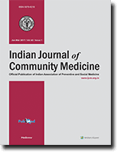
Indian Journal of Community Medicine
Empowering Public Health Solutions for Diverse CommunitiesIndian Journal of Community Medicine, with its ISSN 0970-0218 and E-ISSN 1998-3581, operates under the esteemed Wolters Kluwer Medknow Publications. This peer-reviewed, open access journal, established in 2005, has been at the forefront of disseminating research in the fields of public health, community medicine, and environmental health, forging connections among researchers, practitioners, and policymakers in India and beyond. With a notable impact factor and a Q3 ranking in Public Health, Environmental and Occupational Health for 2023, this journal maintains a commitment to improving community health through empirical research, policy analysis, and best practice sharing. The journal is pivotal not only in addressing prevalent health issues but also in fostering innovative solutions tailored to the unique challenges faced by diverse communities. With publication convergence from 2009 to 2024, the Indian Journal of Community Medicine continues to serve as a vital resource for academics, professionals, and students looking to contribute to and engage with the evolving landscape of community health research.

JAMA Network Open
Connecting researchers to the heart of medical discovery.JAMA Network Open is a premier open-access journal published by the American Medical Association, dedicated to advancing the field of medicine through the dissemination of high-quality research. With an ISSN of 2574-3805, this journal has emerged as a vital platform since its launch in 2018, granting unrestricted access to groundbreaking studies and innovative findings in various areas of medicine. Currently boasting an impressive impact factor and ranking in the top 4% (Q1) of General Medicine, JAMA Network Open holds the 23rd position among 636 journals in the medicine category on Scopus, solidifying its status as an influential contributor to the medical community. Aiming to foster collaborative learning and evidence-based practice, the journal attracts submissions from researchers, healthcare professionals, and students alike. By providing a robust forum for research dissemination and engagement, JAMA Network Open plays a crucial role in shaping contemporary medical discourse and enhancing patient care globally.
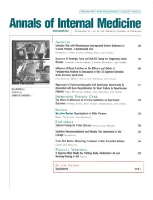
ANNALS OF INTERNAL MEDICINE
Catalyzing Change in Clinical Practice and PolicyANNALS OF INTERNAL MEDICINE, published by the American College of Physicians, stands as one of the leading journals in the field of internal medicine, with an impressive impact factor that underscores its significance in academic discourse. Since its inception in 1945, this esteemed journal has maintained a steadfast commitment to publishing high-quality research that spans a broad spectrum of internal medicine, making substantial contributions to clinical practice and health policy. With a current ranking of #5 out of 167 in the field of Internal Medicine and a remarkable 97th percentile ranking in literature, the ANNALS OF INTERNAL MEDICINE is recognized as a vital resource for researchers, healthcare professionals, and students alike. Although it operates under a traditional subscription model, the journal continually emphasizes the importance of disseminating robust clinical trials, systematic reviews, and expert commentaries that advance medical knowledge and practice. Its quartile rankings in Q1 for both Internal Medicine and Miscellaneous Medicine highlight its role in shaping the future of healthcare through rigorous and impactful scientific inquiry.

Journal of Family and Community Medicine
Empowering healthcare professionals with cutting-edge insights.The Journal of Family and Community Medicine, published by Wolters Kluwer Medknow Publications, serves as a vital resource in the fields of family practice and public health. With an Open Access format established since 2010, this journal is dedicated to advancing knowledge and research that bridges the gap between community health and family medicine. The journal holds a prestigious Q2 ranking in both Family Practice and Public Health categories for 2023, positioning it within the top echelons of academic discourse in these areas. Boasting a significant presence in the Scopus rankings, it is recognized for its contribution to medicine, with notable rankings in Family Practice (#13/56) and Public Health (#252/665). Researchers, professionals, and students can access a wealth of articles aimed at enhancing family and community health outcomes. The Journal of Family and Community Medicine is committed to disseminating impactful research and fostering collaboration among healthcare professionals and academics, ensuring that it remains an indispensable part of the global health conversation.