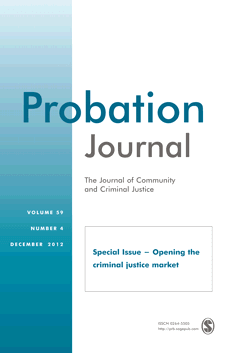
PROBATION JOURNAL
Scope & Guideline
Innovating scholarship in criminal justice since 1929.
Introduction
Aims and Scopes
- Probation Practices and Policies:
The journal examines contemporary probation practices and policies, analyzing their effectiveness, challenges, and the implications for both practitioners and those under supervision. - Health and Social Care Integration:
A significant focus is placed on the intersection of health and social care within probation, exploring how these services can be better integrated to meet the needs of individuals under supervision. - Desistance and Rehabilitation:
Research on desistance—the process by which individuals cease offending—is central to the journal, with studies exploring factors that promote or hinder rehabilitation. - Community Engagement and Inclusion:
The journal emphasizes the role of community involvement and support systems in probation, particularly how they can facilitate reintegration and reduce recidivism. - Gender and Diversity in Probation:
There is a consistent focus on gender dynamics, race, and the experiences of marginalized groups within the probation system, highlighting the need for culturally competent practices. - Innovative Technologies in Probation:
The use of technology, such as electronic monitoring and mobile applications, is explored as a means to enhance probation practices and promote accountability.
Trending and Emerging
- Mental Health and Probation:
An emerging area of focus is the intersection of mental health and probation, highlighting the need for tailored support for individuals with mental health issues within the criminal justice system. - Technology-Enhanced Supervision:
There is a growing interest in the use of technology, such as wearable devices and mobile applications, to improve monitoring and support for individuals on probation, reflecting broader trends in digital justice. - Trauma-Informed Practices:
A trend towards adopting trauma-informed approaches within probation is evident, recognizing the impact of past trauma on individuals' behavior and the importance of addressing these issues in supervision. - Cultural Competence in Probation:
Increasing attention is being paid to the need for cultural competence in probation practices, particularly in relation to race, ethnicity, and gender dynamics in the supervision process. - Community-Based Rehabilitation Initiatives:
Emerging themes include a focus on community-based rehabilitation initiatives that leverage local resources and networks to support individuals in their reintegration efforts.
Declining or Waning
- Traditional Punishment Models:
There appears to be a decreasing emphasis on punitive models of probation, as the focus shifts towards rehabilitation and restorative justice approaches that prioritize offender reintegration. - Overemphasis on Risk Management:
While risk assessment remains important, there is a waning interest in purely risk-focused approaches, as new research emphasizes the need for holistic, person-centered practices in probation. - Static Theoretical Frameworks:
The journal has seen a decline in papers that rely heavily on traditional criminological theories, with more emphasis now placed on interdisciplinary approaches that incorporate social work, psychology, and public health. - Exploration of Incarceration Effects:
There is a noticeable reduction in studies specifically focused on the effects of incarceration itself, as the journal pivots towards examining post-incarceration support and probation experiences. - Generalized Studies on Offender Populations:
The journal is moving away from broad studies that do not consider specific demographics, favoring more nuanced explorations of particular groups, such as youth or women in the probation system.
Similar Journals
RESEARCH ON SOCIAL WORK PRACTICE
Empowering Evidence-Based Practices for a Better TomorrowResearch on Social Work Practice, published by SAGE Publications Inc., stands as a leading journal in the field of social work and related disciplines. With an impressive impact factor and categorized within the Q1 and Q2 quartiles in various categories, including Psychology, Sociology, and Social Sciences, the journal has established itself as an essential resource for academics and practitioners alike. Originally launched in 1991 and set to continue to 2024, it offers a comprehensive forum for the dissemination of impactful research, evaluations, and advancements in social work practices. The journal invites contributions that address contemporary challenges and innovations in the field, aiming to shape effective social policies and practices through rigorous analysis and evidence-based research. Although currently not open access, its scholarly significance and rank in Scopus make it a compelling choice for researchers, professionals, and students who are dedicated to enhancing their understanding and practice within the social work milieu.

Acciones e Investigaciones Sociales
Fostering Insight, Advancing Social Science ResearchAcciones e Investigaciones Sociales is a prominent journal dedicated to the field of social sciences, published by the UNIV ZARAGOZA, ESCUELA UNIV ESTUDIOS SOCIALES. Since its inception in 1991, this open access journal has fostered scholarly exchange by making research widely accessible, ensuring that insights into social issues reach a broad audience of researchers, professionals, and students. With the ISSN 1132-192X and E-ISSN 2340-4507, the journal aims to publish high-quality research articles, reviews, and case studies that contribute to the understanding and advancement of social sciences. The journal is housed in Zaragoza, Spain, and serves as a key resource for those interested in innovative research methodologies and interdisciplinary collaboration within the social sciences. By emphasizing quality and accessibility, Acciones e Investigaciones Sociales stands as a vital platform for cutting-edge research and meaningful dialogue in the field.
BRITISH JOURNAL OF SOCIAL WORK
Innovating Social Work for a Better TomorrowThe British Journal of Social Work, published by Oxford University Press, is a premier academic journal dedicated to the field of social work and its interdisciplinary connections. With an impressive history dating back to 1971, this journal has established itself as a leading forum for innovative research and critical discourse in social sciences, where it holds a distinguished ranking in the Q1 category for Social Sciences (miscellaneous) and Q2 for Health (social science) and Social Work as of 2023. Readers can expect to engage with high-impact articles that span a variety of topics including but not limited to social policy, mental health, and community practice. Although it currently does not offer open access, the British Journal of Social Work remains a key resource for professionals, researchers, and students aiming to deepen their understanding and contribute to the evolving landscape of social work practice and theory. The journal continues to foster a vibrant academic community, supporting ongoing dialogue and collaboration in the pursuit of social justice and effective welfare practices.
CANADIAN JOURNAL OF SOCIOLOGY-CAHIERS CANADIENS DE SOCIOLOGIE
Connecting Ideas, Cultures, and CommunitiesCanadian Journal of Sociology - Cahiers Canadiens de Sociologie (ISSN: 0318-6431, E-ISSN: 0318-6431) is a leading academic journal published by the University of Alberta, dedicated to advancing knowledge in the fields of sociology and political science. With a notable Q2 ranking in these disciplines, the journal provides a vital platform for scholars to share innovative research and theoretical developments. Since its inception in 1977, the journal has witnessed several converged years and has consistently published high-quality articles until its recent volume in 2023, reflecting the evolving landscape of sociological inquiry and discourse. Although it is not an open-access journal, it continues to serve as an important resource for researchers, professionals, and students alike, ensuring that critical societal issues are examined and discussed. The Canadian Journal of Sociology is crucial for fostering a robust scholarly community, enhancing both the understanding of sociological phenomena and the application of sociological thought to real-world challenges.
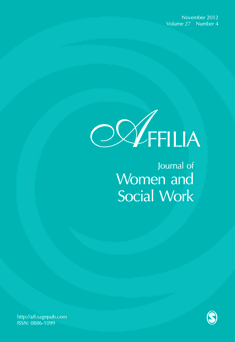
Affilia-Feminist Inquiry in Social Work
Transforming Social Work Through Feminist Lens.Affilia - Feminist Inquiry in Social Work, published by SAGE Publications Inc, stands as a critical scholarly platform dedicated to advancing feminist perspectives and social justice within the realm of social work. Since its inception in 1986, this prestigious journal has contributed significantly to the fields of Gender Studies, Social Sciences, and Social Work, consistently earning a Q1 ranking in these categories as of 2023. With a commendable Scopus ranking placing it among the top tiers of its field—ranked 28th in Gender Studies and 81st in the broader Social Sciences—the journal aims to foster an engaging discourse around the intersection of gender, social inequalities, and community practices. Although it does not operate under an Open Access model, its insights are invaluable to researchers, professionals, and students eager to explore and contribute to feminist scholarship and evidence-based practices in social work. As we approach its convergence period concluding in 2024, Affilia continues to challenge existing paradigms and empower voices within social work, making it an essential resource for those committed to progressive change.
SOCIAL WORK
Fostering Dialogue Across DisciplinesSOCIAL WORK, published by Oxford University Press Inc, stands as a leading journal in the fields of social work, sociology, and political science, underscoring its vital role in advancing research and practice methodologies since its inception in 1956. The journal, with its ISSN 0037-8046 and E-ISSN 1545-6846, consistently showcases high-impact research, holding a Q2 ranking in both Medicine (miscellaneous) and Social Work categories, along with an impressive Q1 designation in Sociology and Political Science. This underscores its importance in the academic landscape, ranking #299 out of 1466 in Scopus for Social Sciences, marking it in the 79th percentile for its scholarly contribution. Although not an open-access journal, it provides a wealth of resources for researchers, practitioners, and students aiming to stay at the forefront of social work innovations, policies, and community practices. By publishing rigorous studies and critical analyses, SOCIAL WORK promotes dialogue and collaboration across disciplines, making it an essential resource for those dedicated to enhancing societal wellbeing.
Journal of Experimental Criminology
Shaping the Future of Criminological StudiesThe Journal of Experimental Criminology, published by Springer, stands as a beacon of innovation within the realm of criminology and legal studies. With an ISSN of 1573-3750 and E-ISSN 1572-8315, this esteemed journal, based in the Netherlands, explores groundbreaking research and experimental approaches to understanding criminal behavior and justice systems. It proudly resides in the elite Q1 quartile of the law category for 2023, ranking an impressive #37 out of 1025 in Scopus within the Social Sciences _ Law domains, placing it in the 96th percentile among its peers. The journal's objectives are aimed at disseminating high-quality empirical research that informs policy and practice, making it an essential resource for scholars, practitioners, and students who strive to enhance the efficacy of crime prevention and criminal justice interventions. With coverage spanning from 2005 to 2024, the Journal of Experimental Criminology invites contributors from diverse backgrounds to engage in the interdisciplinary dialogue that shapes the future of criminological research.
Journal of Contemporary Criminal Justice
Exploring the Intersection of Law and Society.Journal of Contemporary Criminal Justice is a leading academic publication within the field of criminal justice, published by SAGE Publications Inc. This esteemed journal, bearing the ISSN 1043-9862 and E-ISSN 1552-5406, has been contributing significantly to the discourse on contemporary issues in justice systems since its inception in 1978. Renowned for its rigorous peer-reviewed articles, the journal holds an impressive 2023 ranking within the Q1 quartile in Law, further affirmed by its Scopus rank of #110 out of 1025 in the field of Social Sciences - Law, placing it in the 89th percentile. Though not an open access journal, it provides a vital platform for scholars, practitioners, and students seeking to explore and disseminate pioneering research and practical insights into the evolving criminal justice landscape. The journal covers a wide array of topics, from policy analysis to sociological perspectives, ensuring its relevance across multiple disciplines. With a commitment to advancing the understanding of justice in contemporary society, the Journal of Contemporary Criminal Justice is an essential resource for anyone engaged in the fields of criminology, criminal law, and social policy.
South African Crime Quarterly-SACQ
Exploring the complexities of crime and justice in South Africa.South African Crime Quarterly (SACQ) is an esteemed open-access journal dedicated to the comprehensive examination of crime and justice issues in South Africa. Published by the Institute for Security Studies, SACQ aims to provide a platform for researchers, practitioners, and policymakers to disseminate innovative research, case studies, and theoretical discussions that address the complexities of crime in the region. Since its transition to open access in 2015, the journal has fostered a wider dissemination of knowledge, promoting accessibility for students and professionals alike. With an ISSN of 1991-3877, SACQ stands out as an essential resource, driving informed dialogue and enhancing the understanding of security challenges in South Africa. The journal encourages submissions that contribute to evidence-based practices and policies, making it a vital tool for those committed to addressing crime and improving safety within communities.
American Journal of Criminal Justice
Bridging Theory and Practice in Criminal JusticeAmerican Journal of Criminal Justice is an esteemed publication within the realm of law and criminal justice, recognized for its significant contributions to the understanding and advancement of this vital field. Published by Springer, the journal has established itself as a leading platform for rigorous academic research and scholarly discourse since its inception in 1975. With its impressive 2023 Q1 ranking in the Law category and its 98th percentile ranking in Scopus among social sciences, the journal showcases cutting-edge research that addresses pivotal issues in criminal justice. Though it does not offer open access, its wealth of content is accessible to academic institutions and professionals seeking to deepen their knowledge. The journal aims to foster interdisciplinary collaboration and to provide a forum for innovative methodologies, policy evaluations, and theoretical perspectives, making it a critical resource for researchers, practitioners, and students dedicated to the evolution of criminal justice.