
Progress in Disaster Science
metrics 2024
Unlocking Insights for Effective Disaster Recovery
Introduction
Progress in Disaster Science, published by ELSEVIER, is a prestigious open-access journal that has been advancing the field of disaster research since its inception in 2019. With an ISSN of 2590-0617, the journal has quickly established itself as a leading resource, recognized for its impact across various related disciplines, as evidenced by its impressive Q1 rankings in 2023 in categories such as Earth and Planetary Sciences, Environmental Science, Geography, Planning and Development, and Safety Research. This journal publishes cutting-edge research that aims to enhance understanding and management of disaster risks, resilience, and recovery processes. Additionally, the journal's accessibility ensures that important findings are disseminated widely, fostering collaboration among researchers, professionals, and students globally. Positioned under the umbrella of critical environmental and safety insights, Progress in Disaster Science plays a pivotal role in shaping the discourse surrounding disaster management and preparedness in today's rapidly changing world.
Metrics 2024
 0.932.604.3029
Metrics History
Rank 2024
Scopus
IF (Web Of Science)
JCI (Web Of Science)
Quartile History
Similar Journals
International Journal of Disaster Risk Reduction
Fostering collaboration for a disaster-resilient world.The International Journal of Disaster Risk Reduction is a leading academic publication dedicated to advancing the understanding and management of disaster risks, promoting innovative solutions and effective strategies for risk reduction. Published by ELSEVIER, this journal serves as a critical platform for researchers, professionals, and students in the fields of Geology, Geotechnical Engineering, and Safety Research. With an impressive impact factor and ranked in the top quartile (Q1) across its various categories as of 2023, it demonstrates exceptional quality and relevance in its contributions to science and engineering disciplines. The journal has been committed to disseminating high-quality research since its inception in 2012 and remains open for new submissions through 2024. The Scopus rankings reflect its prestigious position, with notable placements in Earth and Planetary Sciences and Social Sciences, highlighting its influence in shaping best practices for disaster risk governance. As an essential resource for anyone involved in disaster preparedness and mitigation, the International Journal of Disaster Risk Reduction fosters knowledge exchange and collaboration among stakeholders in the global community.
Geomatics Natural Hazards & Risk
Exploring Geospatial Innovations in Hazard ManagementGeomatics Natural Hazards & Risk, published by TAYLOR & FRANCIS LTD, is a premier open-access journal that has been at the forefront of interdisciplinary research since 2010, addressing critical issues related to natural hazards and environmental risk management. With an impressive impact factor and ranking in the Q1 quartile in both Earth and Planetary Sciences and Environmental Science categories, this journal serves as a vital platform for researchers, professionals, and students dedicated to advancing knowledge in these fields. The journal's commitment to open access since 2016 ensures that its high-quality research is readily available to a global audience, fostering collaboration and innovation. Located in the United Kingdom, Geomatics Natural Hazards & Risk encompasses a broad scope of studies including geospatial technologies, risk assessment methodologies, and the societal impacts of natural disasters, making it an essential resource for anyone involved in the investigation and mitigation of natural hazards.

Australian Journal of Emergency Management
Empowering communities with essential knowledge.The Australian Journal of Emergency Management, published by the Australian Emergency Management Institute, is a pivotal resource in the field of emergency management, public health, and safety research. With a history dating back to 1998 and a convergence period extending to 2024, this journal actively contributes to advancing knowledge and practice in emergency medical services and related areas. Holding strong positions in both the Q2 and Q3 quartiles of 2023 rankings, it stands out within its categories, particularly in Health Professions and Safety Research. While it is not an open-access journal, it provides essential insights and empirical research that are invaluable for researchers, professionals, and students alike. Located in East Melbourne, Australia, the journal ensures that critical advancements in emergency management and health are highly accessible to its global audience, fulfilling its mission to promote informed decision-making and improve community resilience during crises.

Logistics-Basel
Innovating Transportation Research for Tomorrow's ChallengesLogistics-Basel, an esteemed academic journal published by MDPI, is a pivotal platform dedicated to advancing knowledge in the fields of logistics, supply chain management, and transportation. As a fully Open Access journal since 2017, it promotes the free dissemination of research findings, ensuring that crucial insights are accessible to a global audience. With its headquarters in Switzerland, the journal operates in a competitive landscape and has achieved significant recognition, evidenced by its Q2 ranking across multiple categories in the 2023 metrics, including Information Systems and Management, Management Science and Operations Research, and Transportation. The journal has been consistently contributing to its field since its inception, and its inclusion in esteemed databases like Scopus further highlights its relevance and impact. With an emphasis on fostering interdisciplinary research, Logistics-Basel serves as a vital resource for researchers, practitioners, and students alike, providing a forum for innovative studies that address contemporary challenges in logistics and operations.
Journal of Homeland Security and Emergency Management
Advancing Security Through Scholarly InsightsJournal of Homeland Security and Emergency Management, published by Walter de Gruyter GmbH in Germany, is a leading platform for scholarly research dedicated to the critical fields of security and emergency management. With an impressive impact factor reflecting its high-quality publications, this journal plays an essential role in advancing knowledge within its scope that covers vital issues such as disaster preparedness, risk assessment, and organizational resilience. The journal's Scopus rankings highlight its distinguished standing, being in the top quartile for Safety Research and demonstrating significant impact across various fields including Business Management and Safety, Risk, Reliability, and Quality. Researchers, professionals, and students alike can access a wealth of information as this open-access journal from 2004 to 2024 is committed to disseminating critical insights and innovative practices essential for effective homeland security and emergency management strategies.
JOURNAL OF RISK RESEARCH
Shaping the Future of Risk Research and Decision-MakingJOURNAL OF RISK RESEARCH, published by Routledge Journals, Taylor & Francis Ltd, is a prestigious academic journal dedicated to advancing the understanding of risk across diverse fields, including engineering, safety, social sciences, and management. With its impact reflected in its Q1 quartile rankings in multiple categories and a solid standing in Scopus rankings, this journal serves as an essential resource for researchers, professionals, and students aiming to explore the complexities of risk analysis and its implications in real-world scenarios. The journal has been consistently publishing high-quality research since 1998, contributing to both theoretical frameworks and practical applications. While not open access, the content of the journal is invaluable for those keen on staying at the forefront of risk research. By addressing the multifaceted nature of risk, including safety, reliability, and strategic management, the JOURNAL OF RISK RESEARCH plays a vital role in shaping contemporary discussions and innovations in risk management and decision-making.
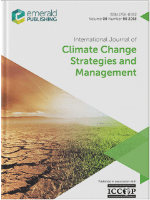
International Journal of Climate Change Strategies and Management
Connecting global minds for impactful climate action.Introducing the International Journal of Climate Change Strategies and Management, a premier publication dedicated to advancing the understanding and development of innovative strategies addressing climate change. Published by Emerald Group Publishing Ltd in the United Kingdom, this journal has established itself as a trusted source within the realms of development, geography, and environmental science. With an impressive 2023 impact factor reflecting its high citation rates and a Q1 classification in pivotal categories such as Development and Geography, the journal stands at the forefront of climate change discourse. Since adopting an Open Access model in 2018, it has broadened its reach, making cutting-edge research accessible to a global audience. The journal encompasses a wide array of topics essential for academics and practitioners alike, focusing on management, policy-making, and methods for effective monitoring of environmental strategies. By fostering interdisciplinary dialogue, the International Journal of Climate Change Strategies and Management is essential for those aiming to contribute to sustainable solutions in our rapidly changing world.

Geofizika
Innovating Earth Sciences with Every IssueGeofizika, an esteemed journal published by the Andrija Mohorovičić Geophysical Institute at the University of Zagreb, presents a significant platform for research in the fields of geophysics and Earth sciences. With an Open Access model established since 1984, this journal ensures that scientific knowledge is accessible to a broad audience, encouraging collaborations and the free exchange of ideas. Geofizika has steadily evolved through its converging years from 1989 to 1999 and has been active from 2003 to the present, reflecting its commitment to advancing geophysical research. The journal has been recognized for its contributions to Earth and Planetary Sciences and has acquired respectable ranks in various categories; notably, it holds a Q4 status in Geophysics as of 2023. Researchers, professionals, and students will find Geofizika a valuable resource for the latest discoveries and methodologies in geophysics, supporting the academic community in expanding the frontiers of knowledge in these vital scientific domains.
Jamba-Journal of Disaster Risk Studies
Transforming Insights into Actionable Strategies.Jamba-Journal of Disaster Risk Studies, published by AOSIS, serves as a vital resource in the fields of management, monitoring, policy, law, and safety research, with an ISSN of 1996-1421 and an E-ISSN of 2072-845X. Since its establishment as an Open Access journal in 2006, Jamba has dedicated itself to disseminating high-quality research that informs and enhances disaster risk management practices, particularly within the South African context and beyond. With a robust Impact Factor and acknowledgement in the Q2 and Q3 quartiles across critical categories in 2023, Jamba ranks favorably in Scopus, notably Rank #50/109 in Social Sciences (Safety Research) and Rank #218/399 in Environmental Science (Management, Monitoring, Policy and Law). The journal's convergence over the years—from 2013 to 2024—signals its commitment to adapting contemporary challenges in disaster risk studies. Scholars and practitioners are encouraged to explore Jamba as a go-to platform for innovative insights and collaborative discussions that impact policy-making and practical applications in disaster risk reduction.
DISASTERS
Transforming disaster understanding through academic collaboration.DISASTERS, published by WILEY, is a premier academic journal dedicated to advancing the understanding of disasters across multiple disciplines, including Earth and Planetary Sciences and Social Sciences. With a historical publication span from 1977 to 2024, this journal has established itself as a vital resource within the academic community, boasting a Q1 category ranking in both fields, indicating its high impact and relevance. DISASTERS ranks impressively in Scopus, holding the #27 position in General Social Sciences and #36 in General Earth and Planetary Sciences, reflecting its influence in shaping disaster research and policy. The journal serves as a platform for interdisciplinary collaboration, offering researchers, professionals, and students critical insights into disaster management, response strategies, and risk reduction measures. Although it is not an Open Access journal, DISASTERS remains a cornerstone for those looking to contribute to and stay informed about the evolving landscape of disaster studies.