
RENAISSANCE AND REFORMATION
Scope & Guideline
Illuminating the Path from Renaissance to Reformation
Introduction
Aims and Scopes
- Interdisciplinary Approaches:
The journal encourages contributions that integrate various disciplines such as literature, history, art, theology, and philosophy, reflecting the interconnectedness of Renaissance and Reformation studies. - Cultural and Political Dynamics:
It examines the cultural and political shifts during the Renaissance and Reformation, focusing on how these changes influenced societal structures and individual identities. - Religious Transformations:
The journal addresses the profound religious transformations of the period, including the rise of Protestantism, Catholic reformations, and the impact of these movements on European society. - Literary and Artistic Analysis:
Research that analyzes literature and art from the Renaissance and Reformation is central to the journal, exploring how these forms reflect and shape contemporary thought. - Historical Contextualization:
The journal emphasizes the importance of situating Renaissance and Reformation developments within their historical contexts, fostering a deeper understanding of their significance and legacy.
Trending and Emerging
- Digital Humanities:
There is a growing trend towards incorporating digital humanities methodologies, including digital archives, textual analysis, and data visualization, which allow for innovative approaches to studying early modern texts and artifacts. - Intersectionality in Gender Studies:
Recent publications increasingly explore intersectionality within gender studies, examining how gender interacts with other social categories such as race, class, and sexuality, thereby enriching the discourse on women's roles in the Renaissance and Reformation. - Environmental Humanities:
Emerging interest in environmental humanities reflects a trend towards understanding the Renaissance and Reformation in relation to environmental issues, exploring how early modern thought engaged with nature and ecological concerns. - Global Perspectives:
There is a notable increase in research that takes a global perspective, examining the Renaissance and Reformation in a broader context that includes non-European cultures and their interactions with Europe. - Material Culture Studies:
The analysis of material culture, including objects, texts, and art, is gaining traction, focusing on how materiality informs our understanding of social practices and cultural identities during the Renaissance and Reformation.
Declining or Waning
- Traditional Historiography:
There seems to be a decrease in papers solely focused on traditional historiographical narratives of the Renaissance and Reformation, as scholars increasingly seek to challenge and reinterpret established historical frameworks. - Nationalistic Perspectives:
Papers that adopt a strictly nationalistic lens are becoming less common, as there is a growing recognition of the transnational and global dimensions of the Renaissance and Reformation. - Focus on Canonical Texts:
The emphasis on canonical texts and authors, such as Shakespeare and Erasmus, is waning, with more research being directed towards marginalized voices and lesser-known figures in the early modern period. - Static Cultural Studies:
Research that treats cultural studies as static or monolithic is declining, as contemporary scholarship increasingly emphasizes the dynamic and evolving nature of cultural practices. - Gendered Studies in Isolation:
While gender studies remain important, there is a noticeable decline in papers that treat gender issues in isolation, with a shift towards more intersectional approaches that consider race, class, and sexuality alongside gender.
Similar Journals

Seizieme Siecle
Delving into History: Insights from the Heart of the 16th CenturySeizieme Siecle is a distinguished journal published by LIBRAIRIE DROZ SA, focusing on the rich tapestry of the 16th century—a pivotal period that shaped the arts, literature, and cultural studies. As a publication dedicated to bringing scholarly discourse to the forefront, it features a range of critical analyses and interdisciplinary studies that examine the multifaceted influences of the era. While the journal currently does not operate under an Open Access model, its commitment to quality research is reflected in its inclusion in Scopus, albeit with limited convergence years and relatively low rankings across various relevant fields in the Arts and Humanities. Researchers, professionals, and students interested in deepening their understanding of historical contexts and their artistic expressions will find valuable insights within the pages of Seizieme Siecle. With its base in Geneva, Switzerland, the journal offers a unique perspective, contributing significantly to the ongoing academic conversations surrounding the Renaissance and its lasting impact.
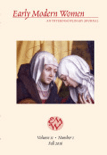
Early Modern Women-An Interdisciplinary Journal
Connecting Literature, History, and Women's ContributionsEarly Modern Women: An Interdisciplinary Journal, published by the University of Chicago Press, serves as a vital platform for exploring the diverse experiences and contributions of women during the early modern period. With an ISSN of 1933-0065 and an E-ISSN of 2378-4776, this journal aims to enrich the discourse in gender studies by presenting interdisciplinary research that spans literature, history, and cultural studies. Although currently categorized in the Q4 quartile within Gender Studies and ranking in the 5th percentile, it plays an essential role in nurturing upcoming scholarship in a field marked by ongoing exploration and debate. Aimed at researchers, professionals, and students alike, the journal not only provides critical insights but also fosters dialogue about gender dynamics in historical contexts. By focusing on the convergence of scholarly efforts from 2010 to 2011 and 2015 to 2024, the journal ensures a comprehensive examination of its evolving scope, inviting contributions that will shape understanding of women's roles in early modern societies.
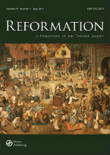
Reformation
Illuminating the Path of Faith Through HistoryReformation is an esteemed journal published by ROUTLEDGE JOURNALS, TAYLOR & FRANCIS LTD, dedicated to the field of Religious Studies. With its ISSN of 1357-4175 and E-ISSN 1752-0738, the journal serves as a vital platform for comprehensive research and scholarly discussions surrounding the Reformation period and its enduring impact on contemporary society. Although the journal currently holds a Q4 classification in the 2023 quartiles, it offers a unique opportunity for emerging voices and seasoned scholars alike to contribute to a richer understanding of religious transformations. With a Scopus ranking of #412 out of 644 in the Arts and Humanities category for Religious Studies, this journal is positioned to attract a diverse audience of researchers, professionals, and students. The journal has converged over the years from 2013 to 2024, providing a consistent outlet for innovative research while fostering robust academic discourse. Although open access options are not available, its rigorous editorial process ensures that published works maintain high academic integrity and contribute valuable insights to the field.
TRADITIO-STUDIES IN ANCIENT AND MEDIEVAL HISTORY THOUGHT AND RELIGION
Illuminating the Intersection of History, Philosophy, and ReligionTRADITIO - Studies in Ancient and Medieval History, Thought and Religion is a distinguished academic journal published by Cambridge University Press, dedicated to the exploration and analysis of historical, philosophical, and religious narratives from ancient and medieval periods. The journal's ISSN is 0362-1529 and its E-ISSN is 2166-5508. Renowned for its rigorous scholarship, it enjoys a notable standing in the academic community, reflected in its 2023 category quartiles which place it in the second and third tiers across critical fields such as Literature and Literary Theory, Philosophy, Religious Studies, and Visual Arts and Performing Arts. With its comprehensive scope that encompasses multidisciplinary approaches, TRADITIO provides an essential platform for researchers, academics, and students alike to engage deeply with the complexities of historical thought and cultural practices. Although the journal operates within the traditional subscription model, its significance is underscored by impressive Scopus rankings, indicating its high visibility and impact within the arts and humanities sectors. We invite you to discover the richness of ancient and medieval studies through the pages of TRADITIO.

Artibus et Historiae
Innovating Perspectives on Visual CultureArtibus et Historiae is a distinguished academic journal published by IRSA PUBLISHING HOUSE, focusing on the fields of Visual Arts and Performing Arts within the broader scope of Arts and Humanities. With an ISSN of 0391-9064, this journal has become a crucial platform for the dissemination of scholarly research, critical discourse, and innovative ideas in art history and visual culture. Though its coverage in Scopus was discontinued in 2018, it maintained a respectable ranking of #279 out of 502 in its category, placing it in the 44th percentile. This positions Artibus et Historiae as a respected contributor to scholarly conversations in its field. Researchers, professionals, and students will find valuable insights and analyses that deepen their understanding of artistic practices and historical contexts. While not an open-access journal, it aims to bridge the gap between academia and broader audiences interested in the dynamic interplay of art and history.

Ben Jonson Journal
Unraveling the Mastery of a Literary TitanBen Jonson Journal, published by Edinburgh University Press, is a distinguished academic periodical dedicated to the examination of the works and contributions of the esteemed playwright and poet, Ben Jonson. Since its inception in 1996, this journal has served as a vital platform for interdisciplinary research in the fields of literature and literary theory, fostering a deeper understanding of Jonson’s impact on the literary canon and cultural discourse. With an ISSN of 1079-3453 and an E-ISSN of 1755-165X, the journal occupies a notable position in the academic landscape, currently ranked in the Q4 category of the Scopus Arts and Humanities Literature and Literary Theory metrics and holding a percentile rank of 77th. Although it does not offer open access, the journal is committed to embracing rigorous scholarly standards and advancing critical dialogue among researchers, professionals, and students alike. Its geographical roots in the United Kingdom only amplify its relevance in the global literary community, making the Ben Jonson Journal an essential resource for those seeking to explore the complexities of early modern literature.

PROSPETTIVA-RIVISTA DI STORIA DELL ARTE ANTICA E MODERNA
Charting the Course of Artistic Innovation and TraditionPROSPETTIVA-RIVISTA DI STORIA DELL ARTE ANTICA E MODERNA is a distinguished academic journal devoted to the study of ancient and modern art history, published by CENTRO DI. With roots tracing back to 2002, this journal has established itself as a significant resource for researchers, professionals, and students in the fields of art and archeology. While currently classified in the Q4 quartile in categories such as Archeology and Visual Arts, it offers a platform for innovative scholarship, inviting contributions that explore the intricate dynamics between various art movements and cultural shifts. Although open access options are not available, the journal strives to provide high-quality research through a selective peer-review process, fostering insightful discussions that push the boundaries of art history. Our address in the picturesque city of Florence, Italy, serves as a reminder of the journal's commitment to the rich heritage and continuing evolution of artistic expression.

INFINI
Enhancing Understanding Through Rigorous ScholarshipINFINI is a distinguished academic journal published by EDITIONS GALLIMARD, focused on the fields of Literature and Literary Theory. With a commitment to advancing scholarship, INFINI provides a platform for innovative research and critical discourse, contributing significantly to the literary discourse landscape since its inception. The journal, which has achieved a Q3 ranking in the 2023 category of Literature and Literary Theory, aims to foster a deeper understanding of literary texts, contexts, and theories through rigorous analysis and scholarly dialogue. Though it currently does not offer open access, INFINI remains an essential resource for researchers, professionals, and students dedicated to exploring the complexities of literature. By continuously publishing thought-provoking articles, INFINI plays a crucial role in shaping the future of literary studies. For more information or to submit your work, you can reach out to them at their address in Paris, France: 5 RUE SEBASTIEN-BOTTIN, 75328 PARIS, CEDEX 07, FRANCE.
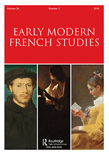
Early Modern French Studies
Advancing Interdisciplinary Insights into French HeritageEarly Modern French Studies (ISSN: 2056-3035; E-ISSN: 2056-3043), published by Routledge Journals, Taylor & Francis Ltd, is an essential academic journal that delves into the complexities of early modern French culture, literature, and history. With a focus on interdisciplinary approaches, this journal offers scholars a platform to engage with the evolving dynamics of French studies from 2015 to 2024. Despite its current Q4 ranking in the categories of Cultural Studies, History, and Literature and Literary Theory, Early Modern French Studies seeks to elevate discussions and research that illuminate the richness of the early modern period. While offering traditional subscription options, the journal encourages submissions that challenge prevailing narratives and foster innovative dialogues within the field. This journal is crucial for anyone looking to contribute to or gain insights into the intricate tapestry of early modern French scholarship.
Croatian Journal of Philosophy
Connecting Ideas, Shaping Philosophical InquiryCroatian Journal of Philosophy is a distinguished academic platform dedicated to the advancement of philosophical discourse, published by KRUZAK D O O. With an ISSN of 1333-1108 and an E-ISSN of 1847-6139, this journal has been a key player in the field since its inception in 2008, continuing to progress through its converged years until 2024. Recognized for its scholarly contributions, it holds a prestigious placement in Q3 within the philosophy category for 2023 and ranks #571 out of 806 in Scopus, reflecting its engagement with a broad spectrum of scholarly discussions and ideas. Though it operates without an Open Access model, the journal remains a vital resource for researchers, professionals, and students who are keen to explore contemporary and traditional philosophical issues from diverse perspectives. The journal's commitment to expanding the boundaries of philosophical inquiry emphasizes the significance of interdisciplinary dialogue, making it a reputable choice for those seeking to deepen their understanding of philosophical thought.