Revolutionary Russia
Scope & Guideline
Exploring the Echoes of Revolution.
Introduction
Aims and Scopes
- Historical Analysis of Revolutionary Movements:
The journal emphasizes rigorous historical research on various revolutionary movements, with a strong focus on the Russian Revolution of 1917 and its aftermath. It explores the causes, processes, and consequences of revolutions, shedding light on both well-known and lesser-known events. - Interdisciplinary Approaches:
The journal encourages interdisciplinary methodologies, integrating perspectives from history, sociology, political science, and cultural studies. This approach enriches the analysis of revolutions, allowing for a deeper understanding of their complexities and implications. - Focus on Marginalized Voices and Groups:
A key aim is to highlight the experiences and contributions of marginalized groups during revolutionary periods, such as women, ethnic minorities, and the working class. This focus aims to provide a more inclusive narrative of revolutionary history. - Contemporary Relevance of Historical Events:
The journal seeks to connect historical revolutions with contemporary issues, examining how past events influence current political and social dynamics in Russia and its neighboring regions. This relevance is crucial for understanding the ongoing impacts of revolutionary ideologies. - Legacy and Memory of Revolutions:
A significant theme is the exploration of how revolutions are remembered and commemorated in society. The journal analyzes the narratives constructed around these events and their implications for national identity and collective memory.
Trending and Emerging
- Impact of Contemporary Conflicts on Historical Research:
Recent publications have increasingly addressed how contemporary conflicts, such as the war in Ukraine, influence historical research and narratives. This theme showcases the relevance of historical scholarship in understanding modern geopolitical tensions. - Postcolonial Perspectives on Revolutionary Movements:
There is a growing trend towards incorporating postcolonial perspectives into the analysis of revolutionary movements. This emerging theme emphasizes the interconnectedness of revolutions in a global context and explores the legacies of colonialism in shaping revolutionary ideologies. - Environmental History and Political Ecologies:
Recent articles are beginning to explore the intersections of environmental history and revolutionary movements. This emerging scope highlights the significance of ecological factors in shaping political and social dynamics during revolutionary periods. - Gender Studies and Revolutionary Narratives:
The journal is increasingly featuring research that examines the role of gender in revolutionary movements. This focus on gender studies seeks to uncover the experiences and contributions of women and gender minorities within revolutionary contexts. - Memory Studies and Commemoration Practices:
An emerging theme is the study of memory and commemoration practices related to revolutions. Scholars are investigating how societies remember and interpret revolutionary events, contributing to ongoing discussions about historical narratives and national identity.
Declining or Waning
- Traditional Narratives of the Russian Revolution:
There has been a noticeable decrease in articles adhering strictly to traditional narratives of the Russian Revolution. Instead, newer publications are increasingly exploring alternative perspectives and lesser-known events, indicating a shift away from established historical frameworks. - Focus on Early Soviet Policies:
Research centered on early Soviet policies and their immediate impacts has become less prevalent. As the journal expands its scope to include broader historical analyses and contemporary connections, the specific focus on early Soviet governance and ideology appears to be waning. - Biographical Studies of Prominent Figures:
The frequency of biographical studies focusing on major revolutionary figures such as Lenin and Trotsky is declining. There seems to be a growing interest in collective movements and the roles of lesser-known actors in the revolutionary process, leading to fewer individual biographies. - Regional Studies of the Russian Empire:
While regional studies of the Russian Empire were once a significant area of interest, there is now a trend towards more global and comparative approaches. This shift suggests a diminishing focus on localized narratives in favor of broader, transnational analyses. - Simplistic Dichotomies of Reds vs. Whites:
The simplistic dichotomy of Reds versus Whites in the context of the Russian Civil War is receiving less attention. Scholars are increasingly exploring the complexities of alliances, conflicts, and identities that transcend this binary opposition.
Similar Journals
KRITIKA-EXPLORATIONS IN RUSSIAN AND EURASIAN HISTORY
Engaging Scholars in the Quest for Historical UnderstandingKRITIKA-EXPLORATIONS IN RUSSIAN AND EURASIAN HISTORY is a premier academic journal published by SLAVICA PUBLISHERS, specializing in the rich and complex narratives of Russian and Eurasian history. With its Open Access model since 2020, the journal aims to democratize knowledge and facilitate comprehensive research sharing among scholars, professionals, and students. The journal boasts an impressive ISSN of 1531-023X and an E-ISSN of 1538-5000, highlighting its commitment to accessible scholarship. Recognized within the Q2 category for both Cultural Studies and History in 2023, it ranks in the top quartile of its field on platforms like Scopus, underscoring its influential contribution to the academic discourse. Covering a wide array of topics from the early 2000s through 2024, KRITIKA serves as a vital platform for critical debate and research, engaging scholars in exploration and inquiry about the past's impact on contemporary issues in Russia and Eurasia. Home to a diverse array of articles, the journal invites submissions that push the boundaries of understanding in these pivotal areas of study, making it an essential resource for those dedicated to advancing knowledge in the human narrative.

Cuadernos de Historia Contemporanea
Bridging Cultures through Historical DiscourseCuadernos de Historia Contemporanea is a prominent academic journal published by the UNIV COMPLUTENSE MADRID, SERVICIO PUBLICACIONES, dedicated to the field of contemporary history. Since its inception in 1988 as an Open Access publication, it has fostered a rich dialogue among historians, researchers, and students by providing a platform for the dissemination of high-quality scholarship across diverse topics in socio-political and cultural history. With an ISSN of 0214-400X and an E-ISSN of 1988-2734, this journal aims to enhance accessibility to research outputs and encourages scholarly contributions that advance understanding of contemporary historical processes. Located in Madrid, Spain, it plays a vital role in academic discourse within the European and global context, making it an essential resource for anyone seeking to deepen their knowledge in modern historical studies.

Tomsk State University Journal
Exploring the Frontiers of Natural and Social SciencesTomsk State University Journal is a prestigious academic publication dedicated to advancing knowledge across various fields of study, with a particular emphasis on natural and social sciences. Published by TOMSK STATE UNIV, this journal serves as a vital platform for researchers and scholars to disseminate innovative findings, contributing to the global academic community. Although specific metrics such as the impact factor are not currently listed, its rigorous peer-review process ensures the high quality and relevance of the research it publishes. The journal is committed to open discourse and is accessible to a diverse audience of professionals, students, and academics alike. With its base in Tomsk, Russia, the journal embodies a rich tradition of scholarly excellence, making it an invaluable resource for anyone looking to engage deeply with contemporary research trends.

HISTORY WORKSHOP JOURNAL
Unveiling the complexities of history through scholarly engagement.Welcome to the History Workshop Journal, a premier academic publication housed under the esteemed Oxford University Press. With a rich history dating back to 1976 and converging through 2024, this journal is dedicated to enhancing discourse in the field of history, featuring cutting-edge research that offers fresh perspectives and innovative methodologies. Recognized for its exceptional quality, the journal is ranked in the Q1 category for History and Q2 for History and Philosophy of Science as of 2023, making it a vital resource for scholars aiming to explore interdisciplinary connections within the humanities. The Scopus rankings reinforce its significance, with a notable 88th percentile placement in History. By publishing rigorous peer-reviewed articles, the History Workshop Journal aims to foster scholarly engagement and critical dialogue, making it an indispensable tool for researchers, professionals, and students seeking profound insights into historical narratives and methodologies.
Ab Imperio-Studies of New Imperial History and Nationalism in the Post-Soviet Space
Engaging with the Dynamics of Imperial HistoryAb Imperio - Studies of New Imperial History and Nationalism in the Post-Soviet Space is a distinguished academic journal dedicated to exploring the complexities of imperial history and nationalism in the post-Soviet context. Published by AB IMPERIO INC, this journal, with ISSN 2166-4072 and E-ISSN 2164-9731, serves as a crucial platform for interdisciplinary research, inviting scholars to engage with the evolving narratives of the former Soviet territories. With its convergence from 2013 to 2024, the journal has established a significant presence in the academic community, earning a Q2 ranking in History and a Q3 ranking in Sociology and Political Science for 2023. The journal's commitment to scholarly rigor is evidenced by its Scopus rankings, placing it among the noteworthy publications in the arts and humanities as well as the social sciences. Although it operates without open access, Ab Imperio provides essential insights for researchers, professionals, and students alike, who are keen to comprehend the intricate dynamics of nationalism and imperial legacies in contemporary society.
Experiment-A Journal of Russian Culture
Illuminating the Spectrum of Russian Artistic ExpressionExperiment-A Journal of Russian Culture is a distinctive publication dedicated to exploring the multifaceted dimensions of Russian culture, encompassing literature, art, and social history. Published by BRILL, a respected name in academic publishing, this journal provides a platform for original research and insightful discourse, fostering a deeper understanding of Russia's rich cultural heritage. With an ISSN of 1084-4945 and an E-ISSN of 2211-730X, the journal is organized in a quarterly format, although it has seen varied publication years from 1996 through 2023. While it currently holds a Q4 ranking in both Cultural Studies and Visual Arts and Performing Arts, its commitment to interdisciplinary inquiry makes it a vital resource for researchers, professionals, and students interested in contemporary and historical Russian cultural phenomena. Despite its modest impact factors, the journal remains an essential platform for the dissemination of critical perspectives and theoretical frameworks, contributing to the ongoing dialogue about Russian identity and its artistic representations. The journal is available in print and may have limited digital access options, making it all the more precious for collectors and libraries committed to cultural studies.
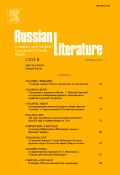
RUSSIAN LITERATURE
Unveiling the Complexity of Russian Literary TheoryRUSSIAN LITERATURE is a premier academic journal published by ELSEVIER, dedicated to advancing the study of Russian literary traditions, critical theory, and cultural contexts. With an ISSN of 0304-3479 and an E-ISSN of 1878-3678, this journal has firmly established itself as a vital resource in the field, achieving a commendable Q1 ranking in Literature and Literary Theory as of 2023. The journal benefits from a strong impact factor and ranks #178 out of 1106 in the Scopus database, placing it in the 83rd percentile of arts and humanities research. RUSSIAN LITERATURE covers an extensive timeline, converging years from 1971 to 1974 and from 1976 to 2023, reflecting its rich academic lineage. Although not an open-access publication, the journal remains influential among scholars, professionals, and students seeking in-depth analyses and critical insights into Russian literature and literary theory. Its commitment to scholarly rigor makes it an essential read for anyone engaging with the complexities of literary studies.
Journal of Modern Russian History and Historiography
Navigating the Nuances of Modern Russian HistoryJournal of Modern Russian History and Historiography, published by BRILL, serves as a vital platform for scholars engaging with contemporary topics in Russian history and historiographical methodologies. With an ISSN of 1947-9956 and E-ISSN of 2210-2388, this esteemed journal is indexed in fields that reflect the evolving landscape of historical research. Based in Germany and recognized for its academic rigor, the journal stands in the Q4 quartile in both the Arts and Humanities and History categories as of 2023. Despite its challenges in SCOPUS rankings, the Journal of Modern Russian History and Historiography continues to be essential for researchers, professionals, and students alike, fostering critical discourse on modern Russian narratives and historiographical practices. The journal seeks to publish innovative articles that enhance understanding of Russia's historical context and the dynamics of its historiography, making it a valuable resource for those studying or working in this field.

Quaestio Rossica
Exploring the Depths of Human CultureQuaestio Rossica is a prestigious academic journal published by URAL FEDERAL UNIVERSITY that focuses on a broad spectrum of the humanities, encompassing cultural studies, history, linguistics, literature and literary theory, as well as visual and performing arts. With an Open Access model since 2021, it provides unrestricted access to high-quality research articles, fostering a more inclusive platform for scholarly discourse. The journal has notably achieved Q1 rankings in key categories such as Cultural Studies and Literature and Literary Theory, highlighting its impact and relevance. With a commitment to advancing interdisciplinary dialogue, Quaestio Rossica serves as an essential resource for researchers, professionals, and students interested in exploring the rich complexities of human culture and expression. Based in the Russian Federation, it aims to bridge gaps in knowledge across various linguistic and cultural contexts, making its contribution invaluable in today's increasingly globalized academic landscape.
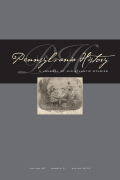
Pennsylvania History-A Journal of Mid-Atlantic Studies
Connecting the Dots of Pennsylvania's Historical JourneyPennsylvania History: A Journal of Mid-Atlantic Studies is a prestigious academic journal published by Penn State University Press, dedicated to advancing the scholarship of historical studies in the Mid-Atlantic region of the United States. With an ISSN of 0031-4528 and an E-ISSN of 2153-2109, this journal has been a vital resource since its inception, providing critical insights into the cultural, social, and political landscapes of Pennsylvania and its neighboring states. Ranking in the Q2 category of the 2023 history quartiles, it plays an essential role in fostering dialogue among historians, researchers, and students alike, attempting to elevate the discussion surrounding Mid-Atlantic history. Notable for its consistent publication across multiple decades—specifically from 1971 and its converged years—it has established a legacy of scholarly excellence. While access options remain non-open, the journal curates comprehensive scholarly articles and contemporary research that collectively situate Pennsylvania within the broader narratives of American history. Engage with the robust academic contributions of Pennsylvania History to explore rich historical themes and narratives that shape our understanding of the Mid-Atlantic region.