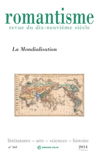
ROMANTISME
Scope & Guideline
Connecting Ideas Across Time and Space
Introduction
Aims and Scopes
- Exploration of 19th Century Literature:
The journal emphasizes the analysis of literary works from the 19th century, particularly focusing on Romanticism, realism, and naturalism, examining their stylistic, thematic, and cultural dimensions. - Interdisciplinary Approaches:
Publications integrate various disciplines such as history, philosophy, art, and sociology, allowing for a comprehensive understanding of the Romantic era and its impact on subsequent literary movements. - Cultural Contextualization:
The journal places significant importance on contextualizing literary works within their historical and cultural frameworks, addressing how socio-political changes influenced literary expression. - Thematic Studies on Gender and Identity:
A consistent focus on gender studies, particularly how women's contributions and representations in literature reflect broader societal issues during the Romantic period. - Dialogue and Narrative Structures:
Research often delves into the narrative techniques and dialogic structures within texts, analyzing how these elements shape reader engagement and thematic development. - Impact of Visual Arts and Performance:
There is a notable interest in the intersections between literature and other art forms, including visual arts and theater, exploring how these mediums influence literary creation and reception.
Trending and Emerging
- Interdisciplinary Studies:
There is an increasing trend towards interdisciplinary research that combines literature with fields such as visual arts, music, and cultural studies, highlighting the interconnectedness of artistic expressions. - Digital Humanities and New Media:
Emerging themes related to digital humanities and the impact of new media on the study of 19th-century literature are gaining importance, as scholars explore how technology reshapes literary analysis and accessibility. - Environmental Literature:
A growing interest in the representation of nature and environmental concerns within Romantic literature is evident, reflecting broader societal discussions regarding ecology and sustainability. - Global Perspectives on Romanticism:
Research is increasingly embracing global perspectives, exploring how Romantic themes resonate across different cultures and contexts, thereby enriching the understanding of the movement's universality. - Feminist and Queer Readings:
There is a notable rise in feminist and queer analyses of Romantic literature, focusing on the complexities of gender and sexuality, and how these aspects are represented in literary texts.
Declining or Waning
- Traditional Literary Criticism:
There appears to be a decreasing focus on conventional literary criticism methods, as scholars increasingly favor interdisciplinary approaches that incorporate historical, sociopolitical, and cultural analyses. - Historical Biographies of Authors:
Research centered on detailed biographical studies of individual authors has diminished, possibly due to a shift towards broader themes that connect literary works to larger societal movements. - Fixed Genre Definitions:
The rigid categorization of literary genres is becoming less prevalent, with more scholars favoring hybrid and fluid interpretations of texts that challenge traditional genre boundaries. - Local and Nationalistic Studies:
There is a waning interest in narrowly focused studies that concentrate solely on national literary canons, as global and transnational perspectives gain traction. - Focus on Canonical Texts:
The emphasis on canonical texts, such as works by major authors like Hugo or Balzac, is declining in favor of exploring lesser-known works and diverse voices within the Romantic tradition.
Similar Journals

EUROPE-REVUE LITTERAIRE MENSUELLE
Advancing Critical Insights in LiteratureEUROPE-REVUE LITTERAIRE MENSUELLE, published by REVUE EUROPE, is a distinguished monthly journal centered on the exploration of literature and literary theory. Established in 1974 and continuing its dissemination of scholarly content through 2022, this journal delivers critical insights and analyses relevant to both contemporary and historical literary studies. With an ISSN of 0014-2751, it serves as an essential resource for researchers, professionals, and students interested in the evolving landscapes of literature. Although positioned in the Q4 category within literature and literary theory, as indicated by its 2023 Scopus rankings, the journal contributes significantly to the field through diverse scholarly articles, critiques, and thematic discussions, while also engaging with a broad spectrum of literary expressions across Europe. Despite the absence of open access, the journal’s commitment to fostering intellectual discourse in literature remains steadfast, making it a pivotal platform for diving into the depths of literary exploration.

DIX-SEPTIEME SIECLE
Showcasing Innovative Research in 17th-Century StudiesDIX-SEPTIEME SIECLE is a prominent academic journal published by the SOCIETE D'ETUDES DU XVIIe SIECLE, focusing on the intricate nuances of literature and literary theory from the 17th century. With a commitment to advancing scholarly discourse, this esteemed journal has maintained its influence in the field, reflected in its Q3 ranking for 2023 in the Literature and Literary Theory category and its Scopus Rank of #923 out of 1106, placing it in the 16th percentile. Although it does not currently offer open access options, DIX-SEPTIEME SIECLE ensures that its curation of rigorous, innovative research is accessible to a global academic audience dedicated to exploring the historical, aesthetic, and cultural dimensions of 17th-century literature. With publication coverage spanning from 2001 to 2024, the journal aims to foster scholarly collaboration and critical engagement within this specialized field. The journal is based in France and accepts contributions that illuminate the legacy and relevance of 17th-century works in contemporary contexts, making it a vital resource for researchers, professionals, and students alike.
INTERNATIONAL JOURNAL OF FRANCOPHONE STUDIES
Diving into the Multifaceted World of Francophone StudiesThe INTERNATIONAL JOURNAL OF FRANCOPHONE STUDIES, published by INTELLECT LTD, serves as a significant platform for exploring the multifaceted dimensions of Francophone culture and its impact across various disciplines. With an ISSN of 1368-2679 and E-ISSN 1758-9142, this journal supports a diverse scholarly discourse in areas such as Cultural Studies, Gender Studies, History, Linguistics, Literature, and Sociology, among others. As of 2023, it is categorized in Q4 for multiple fields and Q3 for Literature and Literary Theory, underscoring its evolving academic presence. Researchers, professionals, and students can benefit from its rich repository of critical analyses and innovative perspectives that foster an understanding of the Francophone world from a global viewpoint. Although it does not offer open access options, its rigorous peer-review process ensures high-quality contributions that are essential for anyone engaged in Francophone studies. Situated in the United Kingdom, the journal has forged an academic legacy since its inception and continues to be a vital resource for those studying the intersections of language, culture, and identity.
European Romantic Review
Unveiling the Cultural Impact of the Romantic EraEuropean Romantic Review is a distinguished journal published by Routledge Journals, Taylor & Francis Ltd, focusing on the critical exploration of Romantic literature and its cultural impact. Since its inception in 1990, the journal has been a vital platform for scholarly discourse in the fields of Cultural Studies and Literature and Literary Theory, with an esteemed ranking in the 61st percentile for its contributions to the literature domain. Despite not being open access, European Romantic Review provides valuable insights to researchers, offering a rich repository of articles that engage with the complexities of Romantic thought, authorship, and aesthetics. The journal's commitment to advancing academic knowledge makes it an essential read for scholars, professionals, and students interested in the nuances of the Romantic era and its lasting influence on contemporary discourse.
Explorations in Renaissance Culture
Unraveling the Tapestry of Renaissance ThoughtExplorations in Renaissance Culture, published by BRILL, is a pivotal academic journal that delves into the multifaceted aspects of Renaissance studies, encompassing Cultural Studies, History, Literature and Literary Theory, Music, Philosophy, and the Visual Arts. Established in 1976 and operating without an open access model, the journal has evolved as a critical platform for scholars and enthusiasts alike, providing rigorous analysis and innovative perspectives on the cultural currents of the Renaissance era. With an ISSN of 0098-2474 and an E-ISSN of 2352-6963, it has garnered a respectable standing among academic peers, evidenced by its quartile ranking in the Q4 category across multiple fields as of 2023 and its Scopus rankings, which acknowledge its role within the broader arts and humanities disciplines. Based in the Netherlands, the journal plays a vital role in fostering scholarly dialogue and advancing research, making it an essential resource for researchers, professionals, and students committed to expanding their understanding of this transformative period in history.

Universum-Revista de Humanidades y Ciencias Sociales
Fostering Scholarly Discourse for Global ImpactUniversum - Revista de Humanidades y Ciencias Sociales is a pivotal academic journal published by UNIV TALCA, INST ESTUDIOS HUMANISTICOS JUAN IGNACIO MOLINA in Chile, dedicated to advancing scholarly discourse in the fields of humanities and social sciences. With an Open Access model implemented since 1986, the journal facilitates widespread access to research outputs, enabling greater engagement from researchers, students, and professionals alike. As of 2023, Universum holds a Q2 classification in the Arts and Humanities and a Q3 classification in Social Sciences, showcasing its commitment to excellence in scholarly contributions. The journal ranks #74/173 in General Arts and Humanities and #212/275 in General Social Sciences within Scopus, reflecting its impact and relevance in these disciplines. With a publication scope converging from 2008 to 2024, Universum is an essential resource for those seeking to explore innovative ideas and the latest research trends in the human and social sciences.
EIGHTEENTH-CENTURY LIFE
Bridging Disciplines to Understand a Transformative EraEIGHTEENTH-CENTURY LIFE is a prominent academic journal published by DUKE UNIVERSITY PRESS, focusing on the interdisciplinary study of the 18th century through the lenses of Cultural Studies, History, Literature, and the Visual Arts and Performing Arts. With an established history since 1977, this journal serves as a vital platform for scholars and students to publish innovative research and critical discourse, shedding light on the complex social, political, and artistic currents of the 18th century. Despite its current ranking in the lower quartiles according to Scopus, the journal continues to foster scholarly dialogue and contribute to the understanding of this pivotal era in Western history. Its accessible yet scholarly articles make it a valuable resource for researchers, educators, and students alike, facilitating engagement with 18th-century studies from various disciplinary perspectives.

World Literature Studies
Elevating Voices in the Realm of Literary TheoryWorld Literature Studies is a leading academic journal published by the Institute of World Literature at the Slovak Academy of Sciences, dedicated to advancing the field of literary studies. With an ISSN of 1337-9275 and an E-ISSN of 1337-9690, this journal has established itself as a prominent platform for scholarly research and discourse, earning a prestigious Q1 ranking in the Literature and Literary Theory category as of 2023, placing it in the top 25% of journals in its field according to Scopus metrics. Operating from Slovakia, the journal caters to a global audience, highlighting diverse perspectives in world literature and fostering interdisciplinary collaboration. Though it currently offers no Open Access option, it maintains a rigorous peer-review process that ensures the quality and integrity of published works. Researchers, students, and literary professionals alike will find the journal's comprehensive articles and critical analyses essential for staying informed about the latest developments and trends in literature and literary theory.

Verbum
Fostering Interdisciplinary Dialogue in HumanitiesVerbum is a distinguished academic journal published by the Pazmany Peter Catholic University, Faculty of Humanities, focusing on the realms of linguistic studies, literature, and cultural discourse. With its ISSN 1585-079X and E-ISSN 1588-4309, Verbum serves as a vital platform for researchers and scholars to disseminate their findings and engage in interdisciplinary conversations. Although currently not available as an open-access journal, its rigorous peer-review process and commitment to scholarly excellence have solidified its importance within the humanities field. Based in Piliscsaba, Hungary, this journal has previously been indexed in Scopus and continues to offer valuable insights into themes relevant to linguistics and cultural studies. Verbum invites contributions that explore transformative ideas, fostering a deeper understanding of language and identity in contemporary society, making it an essential read for academics, professionals, and students alike.

Cuadernos de Ilustracion y Romanticismo
Unveiling Cultural Narratives of Enlightenment and Romantic ThoughtCuadernos de Ilustracion y Romanticismo is an esteemed open-access journal published by UNIV CADIZ, SERV PUBLICACIONES, dedicated to the exploration of the cultural, literary, and philosophical dimensions of the Enlightenment and Romantic eras. With its ISSN of 2173-0687, this journal aims to foster a deeper understanding of historical narratives and their impact on contemporary thought, making it an essential resource for researchers and students alike. Since its inception in 1991, Cuadernos de Ilustracion y Romanticismo has encouraged scholarly dialogue across various fields, as evidenced by its categorical placements in the Q4 quartile rankings across History, Philosophy, Linguistics, and Literature. Despite its emerging status, the journal holds a significant presence within the academic community, ranked within the 50th to 25th percentile across multiple Scopus categories. With its convergence covering the years from 2019 to 2024, this publication remains committed to the rigor of scholarly research while facilitating access to its rich, insightful content, essential for nurturing the future of humanities scholarship.