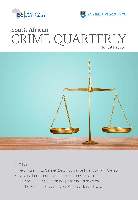
South African Crime Quarterly-SACQ
Scope & Guideline
Driving evidence-based practices for a more secure future.
Introduction
Aims and Scopes
- Criminological Research and Analysis:
The journal emphasizes empirical research that explores various aspects of crime, criminal behavior, and law enforcement practices in South Africa, contributing to a deeper understanding of the socio-legal context. - Community Safety and Crime Prevention:
SACQ investigates community-based approaches to safety and crime prevention, highlighting local initiatives and their effectiveness in addressing crime-related issues. - Policy Evaluation and Legal Reform:
The journal includes critical evaluations of existing laws and policies, assessing their impacts on crime rates and societal wellbeing, and advocating for necessary reforms. - Impact of Social Issues on Crime:
Exploring how broader social issues, such as domestic violence, disability, and mental health, influence crime dynamics and law enforcement responses in South Africa. - Restorative Justice Practices:
SACQ promotes discussions around restorative justice and rehabilitation initiatives within the criminal justice system, aiming to reduce recidivism and support reintegration efforts.
Trending and Emerging
- Impact of the COVID-19 Pandemic on Crime:
Recent publications have increasingly focused on how the COVID-19 pandemic has affected crime rates, policing practices, and community safety, highlighting the need for adaptive responses in crisis situations. - Gang Violence and Community Responses:
There is a growing emphasis on evaluating the effectiveness of interventions against gang violence, particularly military deployments and community safety initiatives, indicating a need for innovative solutions to ongoing violence. - Legal Protections for Vulnerable Populations:
The journal has seen an uptick in discussions surrounding legal reforms aimed at protecting vulnerable groups, such as victims of domestic violence and individuals with disabilities, reflecting a broader societal push for inclusivity and justice. - Restorative Justice and Rehabilitation:
Emerging themes around restorative justice practices and educational interventions for inmates highlight a shift towards rehabilitative approaches within the criminal justice system. - Protests and Civil Unrest:
An increasing focus on the dynamics of protests, including injurious protests and prison protests, underscores the importance of understanding public dissent and its implications for law enforcement.
Declining or Waning
- Traditional Crime Categories:
There seems to be a decline in papers focusing on traditional crime categories, such as property crime or theft, possibly overshadowed by more complex social issues and systemic challenges. - Historical Perspectives on Crime:
Research that examines historical crime trends or analyses past criminal justice policies appears to be less prevalent, indicating a shift toward current and pressing issues in crime and justice. - Focus on Juvenile Delinquency:
There is a noticeable decrease in studies specifically addressing juvenile delinquency, which may suggest a broader focus on adult crime and systemic factors affecting the criminal justice system.
Similar Journals
CRIMINOLOGY
Pioneering Research at the Intersection of Law and Medicine.CRIMINOLOGY, published by WILEY, stands as a leading journal in the fields of Law and Forensic Medicine, with an impressive impact factor that places it in the Q1 quartile for both categories. With its ISSN 0011-1384 and E-ISSN 1745-9125, this esteemed journal has been at the forefront of advancing knowledge and understanding in criminological theories and practices since its inception in 1963, and continues to be relevant through 2024. As of 2023, CRIMINOLOGY is ranked #19 in Social Sciences_ Law and #19 in Medicine_ Pathology and Forensic Medicine, positioning it within the top 2% of its field, making it an essential resource for researchers and professionals alike. Despite not offering open access, it provides invaluable insights into the complexities of crime, law enforcement, and societal impacts, thus shaping the future of criminological research and policy.

Journal of Penal Law and Criminology-Ceza Hukuku ve Kriminoloji Dergisi
Bridging Theory and Practice in Penal LawThe Journal of Penal Law and Criminology-Ceza Hukuku ve Kriminoloji Dergisi, published by ISTANBUL UNIV, is a prestigious platform dedicated to the advancement of knowledge in the fields of criminal law and criminology. With its Open Access policy adopted since 2017, it aims to promote the dissemination of research findings and theoretical discussions, ensuring that vital insights in criminal justice, legal reforms, and criminological studies are accessible to a global audience. This journal serves as a vital resource for academics, legal practitioners, and students alike, fostering interdisciplinary dialogue and encouraging innovative research. By focusing on contemporary issues in penal law and criminology, the journal enhances understanding and addresses the complexities of justice in a rapidly changing society. With an ISSN of 2148-6646 and an E-ISSN of 2602-3911, it continuously strives to maintain high scholarly standards and relevance in its contributions to the field.

Revista Criminalidad
Connecting Theory and Practice in Criminal StudiesRevista Criminalidad, published by POLICIA NAC COLOMBIA, is a distinguished academic journal that has been open access since 1958, making critical research in the field of criminology readily available to the global scholarly community. Based in Colombia, this journal serves as a prominent platform for the dissemination of high-quality research on crime, law, and social sciences. Notably categorized in various quartiles for 2023, including Q2 in Arts and Humanities (miscellaneous) and Q3 in Law, it holds respectable rankings in the Scopus database, reflecting its significance and contribution to both academic and practical discourse. The journal invites researchers, professionals, and students to explore its comprehensive scope, spanning vital themes relevant to criminology and public safety, making it an essential resource for those invested in the interplay between society, law, and criminal behavior. For up-to-date research and insights, the journal is accessible at the CENTRO INVESTIGACIONES CRIMINOLOGICAS DIJIN, AVE EL DORADO 75-25, BOGOTA.

Revija za Kriminalistiko in Kriminologijo
Exploring the Intersection of Crime and JusticeRevija za Kriminalistiko in Kriminologijo is a prominent academic journal dedicated to the fields of criminalistics, criminology, law, and forensic medicine, published by the Ministry of Interior Republic Slovenia. With its inception in 1981, the journal has served as a pivotal platform for disseminating research findings and innovative ideas relevant to crime and justice issues, particularly in the context of Slovenia and the wider region. Despite its current Q4 ranking in various categories, including Law and Pathology & Forensic Medicine, Revija za Kriminalistiko in Kriminologijo remains essential for emerging scholars and professionals seeking to contribute to the discourse in forensic science and social psychology. Although the journal does not offer open access options, it continues to publish rigorous peer-reviewed articles that significantly impact the field, making it a valuable resource for researchers, practitioners, and students alike. Scholars can access the research at the journal's address in Ljubljana, Slovenia, thereby fostering interdisciplinary collaboration and knowledge sharing.
Criminology & Public Policy
Bridging Theory and Practice for a Safer SocietyCriminology & Public Policy, published by Wiley, is an esteemed journal that plays a pivotal role in the interdisciplinary fields of law, public administration, and literature. With a focus on innovation and empirical research, this journal addresses critical issues surrounding crime and justice while influencing policy decisions globally. The journal boasts a prestigious impact factor, reflecting its significant contribution to academic discourse, particularly noted for its top quartile rankings in the fields of Law, Literature and Literary Theory, and Public Administration in 2023. As a resource for researchers, practitioners, and policymakers, Criminology & Public Policy aims to bridge the gap between theory and practical application, presenting cutting-edge analyses and insights that are vital for addressing contemporary societal challenges. By providing a platform for rigorous scholarship, this journal supports the advancement of knowledge and fosters informed discussions that shape effective public policies.

Trends and Issues in Crime and Criminal Justice
Charting new territories in criminology.Trends and Issues in Crime and Criminal Justice is a leading journal in the field of criminology, published by the Australian Institute of Criminology. This esteemed journal, recognized with an H-index that reflects its influence and contribution to the social sciences, particularly law, spans from 2011 to 2024 and is ranked in the Q1 category within its discipline according to the 2023 data. With a Scopus ranking of #123 out of 1025 in the Social Sciences - Law category, placing it in the 88th percentile, it serves as a critical resource for researchers, practitioners, and students alike.
Focused on innovative research and emerging issues within crime and criminal justice, the journal seeks to foster scholarly collaboration and discourse, making it an essential hub for new ideas and evidence-based practices in the field. The journal’s commitment to advancing knowledge and influencing policy ensures that it remains an influential voice in criminological studies, aiming to address pressing issues facing societies globally.
Global Crime
Advancing Global Perspectives on Justice and CrimeGlobal Crime is a leading scholarly journal published by Routledge Journals, Taylor & Francis Ltd, focusing on the multifaceted dimensions of crime and justice on a global scale. With an ISSN of 1744-0572 and E-ISSN of 1744-0580, this journal serves as a critical platform for researchers, practitioners, and policymakers interested in the intersection of legal studies, political science, and sociological perspectives. The journal boasts a prestigious Q1 ranking in Law and notable Q2 rankings in Political Science and International Relations, as well as Sociology, highlighting its influential role in shaping academic discourse. In 2023, it ranked #88 out of 1025 journals in Law, placing it in the 91st percentile, thus ensuring its status as an essential resource for those engaged in advanced research. While it does not currently offer open access options, Global Crime continuously seeks to illuminate the complexities of crime, fostering a better understanding through comprehensive studies, critical analyses, and innovative approaches. By converging insights from various disciplines, the journal aims to facilitate dialogue among academics and practitioners alike, ultimately advancing the field of criminal justice globally.
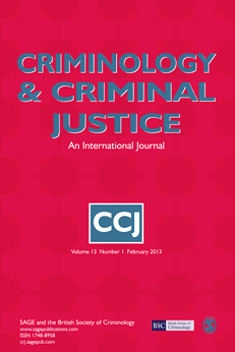
Criminology & Criminal Justice
Exploring Innovative Solutions in Crime and JusticeCriminology & Criminal Justice is a leading academic journal published by SAGE Publications Ltd that serves as an essential resource for scholars, practitioners, and students in the field of criminology and legal studies. With its ISSN 1748-8958 and E-ISSN 1748-8966, this journal has established itself as a crucial platform for innovative research, analysis, and discourse, consistently maintaining a prestigious Q1 ranking in Law. Spanning a diverse range of topics within criminology and criminal justice, it promotes interdisciplinary perspectives that reflect current trends and challenges within the domain. With a notable 93rd percentile ranking in Scopus, the journal ensures that its publications meet rigorous academic standards, fostering the advancement of knowledge and practice in the field. Based in the United Kingdom and catering to a global audience, this journal enhances scholarly communication and collaboration, making it an indispensable tool for those dedicated to unraveling the complexities of crime and justice.

Crime Science
Innovating solutions for a safer society through research.Crime Science, published by BMC, is a pioneering open access journal that has been at the forefront of interdisciplinary research since its inception in 2012. With its E-ISSN 2193-7680, this journal plays a crucial role in advancing knowledge across several vital domains including Cultural Studies, Law, Safety Research, and Urban Studies, with a remarkable Q1 ranking across all its categories in 2023. Situated in the United Kingdom, the journal boasts impressive Scopus rankings, placing it in the top 99th percentile for Cultural Studies and 95th percentile for Safety Research, among others. This strategic focus provides a platform for researchers, professionals, and students to explore the complexities of crime and its impact on society, aiming to foster informed discussions and innovative solutions. With a commitment to accessibility and a convergence period extending from 2013 to 2024, Crime Science not only promotes scholarly debate but also seeks to bridge theoretical insights and practical applications, making it an invaluable resource for anyone interested in the multifaceted aspects of crime and safety.

International E-Journal of Criminal Sciences
Connecting Global Minds in Criminal SciencesWelcome to the International E-Journal of Criminal Sciences, a distinguished platform dedicated to the rigorous exploration of contemporary issues within the field of criminal sciences. Published by the DMS INT RESEARCH CENTRE, this journal aims to disseminate high-quality research and critical analyses that foster a deeper understanding of criminal behavior, law enforcement strategies, justice systems, and related societal impacts. With its commitment to open access, it ensures that knowledge is readily available to a global audience, promoting inclusivity and academic collaboration across borders. Although specific metrics like impact factor and H-index have yet to be established, its relevance and contribution to the discourse on criminal sciences remain significant. Researchers, professionals, and students are invited to engage with the journal’s valuable insights, as it strives to become a leading resource for innovative thought and evidence-based solutions in the evolving landscape of criminal science.