
Sains Malaysiana
Scope & Guideline
Fostering Collaborative Research for Global Impact
Introduction
Aims and Scopes
- Environmental Science and Sustainability:
Research focusing on ecological impacts, conservation strategies, and the sustainability of natural resources, particularly in tropical ecosystems. - Biomedical and Health Sciences:
Studies that explore human health, disease prevention, and therapeutic interventions, including pharmacological research and clinical trials. - Agricultural and Food Sciences:
Research on crop improvement, food safety, and agricultural practices, aiming to enhance food security and agricultural sustainability in Malaysia. - Material Science and Nanotechnology:
Innovations in material properties and applications, particularly in the development of nanomaterials for environmental and biomedical applications. - Social Sciences and Economics:
Interdisciplinary studies that analyze social behaviors, economic trends, and public health issues, particularly in the context of Malaysian society. - Mathematics and Statistical Analysis:
Research that applies mathematical models and statistical methods to analyze data across various disciplines, enhancing the understanding of complex systems.
Trending and Emerging
- Climate Change and Environmental Impact:
Increasing emphasis on research that explores the effects of climate change on biodiversity, ecosystems, and human health, showcasing a proactive approach to environmental issues. - Public Health and Infectious Diseases:
Growing focus on public health studies, especially in the context of pandemics like COVID-19, with research addressing disease transmission, prevention strategies, and health system responses. - Food Security and Nutrition:
Emerging studies that investigate the nutritional aspects of food systems, food safety, and agricultural sustainability, reflecting global concerns over food security. - Advanced Material Development:
A surge in research related to the development of advanced materials, particularly nanomaterials, for applications in health, energy, and environmental remediation. - Data Science and Machine Learning Applications:
An increase in the application of data science and machine learning techniques across various fields, underscoring the importance of computational methods in modern research.
Declining or Waning
- Traditional Agricultural Practices:
Research focused on conventional farming techniques is declining as interest shifts towards sustainable and innovative agricultural practices that address climate change. - Basic Natural Sciences:
While foundational studies in biology, chemistry, and physics remain important, there is a noticeable decline in standalone basic science papers as interdisciplinary and applied research gains momentum. - Local Flora and Fauna Studies:
Research focused on specific local species is waning as broader ecological and environmental studies take precedence, emphasizing ecosystem-level analyses over species-specific investigations.
Similar Journals

CienciaUat
Elevating scholarly communication across diverse disciplines.CienciaUat is a distinguished academic journal published by the Universidad Autónoma de Tamaulipas, dedicated to fostering innovative research across various scientific disciplines. With an ISSN of 2007-7521 and an E-ISSN of 2007-7858, this journal serves as a platform for the dissemination of high-quality research findings that contribute to the advancement of science and technology within both local and international contexts. The journal aims to promote scholarly communication among researchers, professionals, and students, emphasizing the importance of empirical evidence and interdisciplinary approaches. Though specific metrics like H-Index and Scopus rankings are currently not provided, CienciaUat is committed to maintaining rigorous peer-review standards. The journal’s open-access model facilitates wide accessibility, ensuring that pivotal research reaches a global audience. The editorial team encourages submissions that adhere to the highest academic standards, reflecting innovation and relevance in today’s scientific landscape.
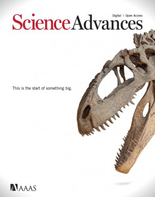
Science Advances
Unleashing Multidisciplinary InnovationsScience Advances, published by the American Association for the Advancement of Science, is a leading open-access journal in the field of multidisciplinary sciences. Since its inception in 2015, it has rapidly gained prominence, achieving a remarkable Q1 ranking in both Medicine (miscellaneous) and Multidisciplinary categories, underlining its impact and relevance in contemporary research. With an impressive Scopus ranking of #7 out of 171 in the Multidisciplinary field, it proudly sits in the 96th percentile, showcasing its dedication to disseminating high-quality research across various scientific domains. This journal not only provides open access to innovative findings but also aims to foster collaboration and maintain a high standard of scholarly communication among researchers, professionals, and students globally. Stay updated with some of the most groundbreaking advancements and contribute to the collective pursuit of scientific knowledge through Science Advances.

JOURNAL OF THE NATIONAL SCIENCE FOUNDATION OF SRI LANKA
Empowering Scholars to Illuminate Scientific PathsJOURNAL OF THE NATIONAL SCIENCE FOUNDATION OF SRI LANKA, with ISSN 1391-4588 and E-ISSN 2362-0161, is a respected academic publication disseminated by the National Science Foundation of Sri Lanka. Operating since 1999, this journal encompasses a broad spectrum of multidisciplinary research, currently positioned in the Q3 category and ranking #101 out of 171 in its field, indicating its significant contribution to advancing knowledge across various scientific domains. With an ambition to foster local and international scholarly dialogue, the journal encourages submissions that address fundamental and applied aspects of science pertinent to Sri Lanka and beyond. Though it operates under a conventional access model, the journal is committed to promoting high-quality, peer-reviewed articles that are vital for researchers, professionals, and students aiming to stay at the forefront of scientific advancements in the region.

Suranaree Journal of Science and Technology
Elevating Research Standards, Enhancing InnovationSuranaree Journal of Science and Technology is an esteemed academic publication dedicated to fostering innovation and research in the interdisciplinary fields of engineering and technology. Published by Suranaree University of Technology in Thailand, this journal aims to disseminate high-quality research findings that contribute to the ongoing dialogue within the scientific community. With an ISSN of 0858-849X and an E-ISSN of 0858-849X, it provides an essential platform for researchers to share their work, though it is currently not open access. The journal's ranking in the bottom quartile (Q4) for Engineering (miscellaneous) as of 2023 highlights the competitive landscape it operates in, with Scopus rankings placing it at the 287th position out of 307 in the General Engineering category, indicating both the challenges and opportunities for growth within its network. As the journal converges from 2018 to 2024, it invites scholars, professionals, and students to contribute, ensuring the ongoing exchange of knowledge and advancements in the field.

Bioscience Journal
Fostering collaboration for a sustainable bioscience future.Bioscience Journal is a premier open-access publication dedicated to advancing research in the field of agricultural and biological sciences. Published by the Universidade Federal de Uberlândia, this journal has been a vital resource for the academic community since its transition to open access in 2001. With the ISSN 1981-3163, it serves as an essential platform for disseminating innovative research findings and methodologies that contribute to the sustainable development of biological resources. As of 2023, it has been categorized in the Q4 quartile in Agricultural and Biological Sciences (miscellaneous) and ranks 152 out of 221 in Scopus, placing it in the 31st percentile. The journal's scope encompasses a wide array of topics that stimulate interdisciplinary discourse and collaboration among researchers, professionals, and students alike. With engaging content and a commitment to accessibility, Bioscience Journal plays a crucial role in fostering scholarly communication and enriching the academic landscape in Brazil and beyond.

Beni-Suef University Journal of Basic and Applied Sciences
Unlocking the potential of interdisciplinary research.Beni-Suef University Journal of Basic and Applied Sciences, published by SpringerNature, is a premier open-access journal that has been disseminating significant scientific research since 2013. With an E-ISSN of 2314-8543, this journal is situated in Germany and plays a crucial role in fostering scholarly communication across various disciplines, particularly focusing on Agricultural and Biological Sciences, Medicine, and Pharmaceutical Science. As of 2023, it holds notable rankings in Scopus—ranked #41 in Agricultural and Biological Sciences, #135 in Medicine, and #80 in Pharmaceutical Science—emphasizing its reputation and impact in these fields. With a Q2 classification in both Agricultural and Biological Sciences and Pharmaceutical Science, as well as a Q3 designation in Medicine, the journal is positioned as a valuable resource for researchers, professionals, and students seeking to explore the latest advancements and applications in basic and applied sciences. The journal’s commitment to open access ensures that groundbreaking research is accessible to a global audience, thereby fostering innovation and collaboration in the scientific community.

Gazi University Journal of Science
Exploring the frontiers of knowledge in a dynamic academic landscape.Gazi University Journal of Science, published by GAZI UNIV in Turkey, stands as a pivotal platform for scholarly communication in the fields of engineering and multidisciplinary research. With an ISSN of 2147-1762, this journal has been a significant contributor to the academic landscape since its establishment, converging insights from diverse scholarly traditions and fostering interdisciplinary innovation from 2009 to 2024. Holding a respectable Q3 ranking in both Engineering (miscellaneous) and Multidisciplinary categories for 2023, it signifies an increasing influence in the scientific community, evidenced by its Scopus ranks, including a notable position of 65th out of 171 in Multidisciplinary and 190th out of 307 in General Engineering. The journal's commitment to advancing knowledge, promoting research excellence, and supporting the academic community makes it an essential resource for researchers, professionals, and students eager to stay at the forefront of science and engineering developments.

Journal of Agricultural Sciences-Tarim Bilimleri Dergisi
Pioneering Research for the Future of FarmingJournal of Agricultural Sciences - Tarim Bilimleri Dergisi, published by Ankara University, Faculty of Agriculture, is a prominent open-access journal that has been fostering academic dialogue in the field of agricultural studies since 2010. With ISSN 1300-7580 and E-ISSN 2148-9297, this journal contributes significantly to the scientific community, particularly within the realms of agronomy, crop science, animal science, and plant science. As of 2023, it holds a Q3 classification in Agronomy and Crop Science, and Q4 in both Animal Science and Zoology and Plant Science, indicating its growing influence and dedication to advancing research in these areas. Situated in Turkey, this journal serves as a vital platform for scholars, professionals, and students, inviting submissions that enhance our understanding of agricultural innovation and sustainability. With a commitment to disseminating high-quality research, Journal of Agricultural Sciences ranks favorably within Scopus, providing an invaluable resource for exploring evolving agricultural paradigms.
Journal of Taibah University for Science
Unveiling Breakthroughs in Chemistry and BiochemistryJournal of Taibah University for Science, published by TAYLOR & FRANCIS LTD, is an esteemed Open Access journal that has been contributing to the fields of Agricultural and Biological Sciences, Biochemistry, Molecular Biology, Chemistry, Earth and Planetary Sciences, Environmental Science, Mathematics, and Physics and Astronomy since 2006. With a commendable impact reflected in its Scopus rankings—standing as high as #10 in Mathematics and #27 in Agricultural and Biological Sciences—the journal maintains a robust reputation in scholarly communication. It processes the latest advancements in multidisciplinary research, shedding light on pressing global challenges, while fostering a dynamic academic exchange. Researchers and professionals looking to stay at the forefront of scientific discourse will find valuable insights and innovative findings in this well-respected publication. The journal is converging its content from 2008-2024, ensuring a rich repository of knowledge that is vital to ongoing and future research efforts.

JOURNAL OF SCIENTIFIC & INDUSTRIAL RESEARCH
Empowering Innovation Through ResearchJOURNAL OF SCIENTIFIC & INDUSTRIAL RESEARCH, published by the NATL INST SCIENCE COMMUNICATION-NISCAIR in India, serves as a prominent multidisciplinary platform for disseminating impactful research since its establishment in 1969. With an Open Access model adopted in 1999, the journal ensures wide visibility and accessibility of innovative findings across various scientific disciplines. The journal, indexed with an ISSN of 0022-4456 and an E-ISSN of 0975-1084, offers researchers, professionals, and students an opportunity to engage with a diverse body of work, ranking in Q3 of the Scopus categories for 2023. Its scope spans an extensive timeline, accommodating submissions across a wide array of industrial and scientific advancements, promoting collaboration and knowledge sharing. By adhering to rigorous academic standards, the JOURNAL OF SCIENTIFIC & INDUSTRIAL RESEARCH plays a critical role in shaping the future of science and industry, drawing contributors and readers eager to contribute to and understand the latest trends and discoveries in this dynamic field.