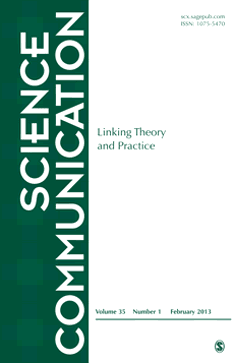
SCIENCE COMMUNICATION
metrics 2024
Empowering Voices: Transforming Scientific Discourse
Introduction
SCIENCE COMMUNICATION is a premier journal that has established itself as a vital platform for the exploration of the intersection between science, society, and communication practices. Published by SAGE Publications Inc, this journal boasts a commendable impact within the field, evidenced by its 2023 ranking as Q1 in Sociology and Political Science, placing it in the top percentile of its category. With an impressive Scopus rank of 14 out of 1466 in the social sciences domain, it serves as an essential resource for researchers, professionals, and students dedicated to understanding how scientific information is communicated and perceived across various platforms and audiences. Spanning a rich publication history from 1979 to 2024, SCIENCE COMMUNICATION publishes original research, case studies, and reviews that contribute to the development of effective communication strategies in science. Although the journal does not currently offer open access options, its content remains pivotal for fostering informed discourse within academia and beyond. Engaging with this journal is invaluable for anyone interested in enhancing science literacy and engagement in contemporary issues.
Metrics 2024
 1.834.606.9074
Metrics History
Rank 2024
Scopus
IF (Web Of Science)
JCI (Web Of Science)
Quartile History
Similar Journals

Communitas
Navigating the Intersection of Language and SocietyCommunitas, published by the University of the Free State, is an esteemed open-access journal that has been a gateway for innovative research and discourse in the fields of communication, linguistics, and language since its inception in 2017. With an ISSN of 1023-0556 and E-ISSN of 2415-0525, the journal aims to foster scholarly exchange by providing a platform for critical analysis and interdisciplinary collaboration. Although it currently falls into Q4 in Communication and Q3 in Linguistics and Language, *Communitas* has made significant strides in establishing its presence in Scopus rankings—ranking 567 out of 1088 in Arts and Humanities and 397 out of 511 in Communication—and sources for researchers at varying stages of their careers. Addressed to a global readership, the journal invites contributions that enhance understanding and generate new perspectives on socio-linguistic issues and communicative practices, making it a pivotal resource for researchers, academics, and students committed to advancing knowledge in these dynamic fields.
Palabra Clave
Democratizing Knowledge for Global ImpactPalabra Clave is a leading open-access journal published by the UNIV SABANA, FAC COMUNICACION in Colombia, dedicated to advancing the fields of Arts and Humanities as well as Communication. Since its inception in 2001, the journal has committed to providing a platform for innovative research and critical discourse, garnering an impressive Q2 classification in both respective fields. The journal is indexed in Scopus, with a commendable ranking of #26 out of 173 in Arts and Humanities, representing the 85th percentile, and #263 out of 511 in the Communication category, indicating its significant impact within the academic community. With its converged years from 2012 to 2024, Palabra Clave encourages scholars, professionals, and students to engage with contemporary issues through a lens of interdisciplinary scholarship. Accessible through its open-access model, this journal fosters the democratization of knowledge and aims to connect researchers across the globe.
International Journal of Science Education Part B-Communication and Public Engagement
Advancing science communication for a brighter future.The International Journal of Science Education Part B: Communication and Public Engagement, published by Routledge Journals, Taylor & Francis Ltd, is a leading peer-reviewed journal dedicated to advancing research in the evolving fields of science communication and public engagement in education. With an ISSN of 2154-8455 and E-ISSN of 2154-8463, the journal has established itself as a key resource for researchers, educators, and practitioners interested in innovative communication strategies and engagement practices that enhance public understanding of science. It holds a commendable Q2 ranking in both the Communication and Education categories for 2023, reflecting its significant impact within academia—ranked 139th in Social Sciences Communication and 515th in Social Sciences Education based on Scopus metrics. Over its publication years from 2011 to 2024, the journal has provided a platform for scholars to share their insights and empirical findings, fostering dialogue and collaboration among professionals. Although it does not offer open access, it remains a vital source of knowledge, keeping stakeholders informed about the latest developments in science education and public outreach.

International Journal of Communication
Fostering innovation in communication research and practice.International Journal of Communication, published by USC Annenberg Press, is a premier open access journal dedicated to advancing the field of communication studies. Since its inception in 2007, the journal has provided a vital platform for researchers, professionals, and students to engage with cutting-edge research, theoretical frameworks, and empirical studies. With an impressive Q1 quartile ranking in Communication for 2023 and a notable Scopus rank of 156 out of 511 in the Social Sciences Communication category, the journal consistently contributes to high-quality scholarly discourse. It covers a wide array of topics, making it a crucial resource for those looking to stay informed about the latest developments in communication research. The journal's commitment to open access enhances its reach and impact, fostering a global community of academics and practitioners dedicated to exploring the complexities of communication in contemporary society. This makes the International Journal of Communication an essential read for anyone interested in understanding the dynamics of communication today.

Metode Science Studies Journal
Fostering Innovative Research in Science StudiesMetode Science Studies Journal, published by UNIV VALENCIA, BOTANICAL GARDEN UV, is an esteemed open-access journal dedicated to advancing scholarly discourse in the fields of history and philosophy of science and multidisciplinary studies. Since its inception in 2013, the journal has positioned itself as a vital resource for researchers, professionals, and students, fostering an environment for innovative research and cross-disciplinary dialogue. Based in the vibrant city of Valencia, Spain, this journal aims to publish high-quality articles that explore the intricate relationships between scientific practices and philosophical inquiries. With a current impact factor demonstrating its relevance in the academic community, the journal is indexed in Scopus, ranking in the 52nd percentile for history and philosophy of science and the 33rd percentile for multidisciplinary studies. Scholars can access a breadth of research outputs that span from 2015 to 2024, thereby contributing significantly to the intellectual landscape of the respective fields.
Psychological Science in the Public Interest
Exploring the intersection of psychology and public policy.Psychological Science in the Public Interest is a premier academic journal dedicated to advancing the understanding of psychological science and its application in societal contexts. Published by SAGE Publications Ltd, this influential journal boasts an impressive impact factor and consistently ranks in the top tier, currently categorized as Q1 in Psychology (miscellaneous) and holding a remarkable Scopus rank of #2 out of 216 in the General Psychology category, placing it in the 99th percentile for its field. The journal spans a comprehensive range of topics, focusing on key issues at the intersection of psychology and public policy, making it an essential resource for researchers, professionals, and students alike. With articles that synthesize empirical research and offer actionable insights, Psychological Science in the Public Interest plays a critical role in bridging the gap between academic research and real-world applications, encouraging informed policy-making and public discourse in the United States and beyond.

Canadian Journal of Communication
Shaping the Future of Communication ResearchCanadian Journal of Communication, published by University of Toronto Press Inc., serves as a vital conduit for scholarly discourse within the field of communication studies. With an ISSN of 0705-3657 and an E-ISSN of 1499-6642, this esteemed journal holds a Q2 ranking in the category of Communication according to 2023 metrics, reflecting its commitment to high-quality research and innovation. Located in Canada and covering converged years from 2016 to 2024, the journal provides a comprehensive platform for the exchange of ideas, critical analyses, and theoretical advancements that shape our understanding of communication in contemporary society. Although it does not currently offer open access, the journal’s influence is demonstrated by its position in Scopus, ranking #332 out of 511 in the Social Sciences Communication category. This publication is essential for researchers, professionals, and students seeking to deepen their knowledge in communication contexts and explore the intricate dynamics that define human interaction.
JCOM-Journal of Science Communication
Empowering Dialogue: Transforming Science CommunicationJCOM - Journal of Science Communication is a premier, peer-reviewed journal dedicated to enhancing the dialogue between science and society. Established in 2002 by the Scuola Internazionale Superiore di Studi Avanzati in Italy, it has become an essential platform for research in the field of science communication, reflecting the growing importance of effective communication in the advancement of scientific knowledge. The journal boasts an impressive Open Access model, encouraging widespread dissemination of critical research findings. With a notable impact in the Communication category, ranking in the Q2 quartile, and achieving a remarkable 77th percentile in Scopus ranks, JCOM positions itself as a crucial resource for scholars, professionals, and students alike. With a broad scope covering interdisciplinary aspects of science communication, the journal aims to foster innovative research and discussions that bridge the gap between scientific communities and the public. Located in Trieste, Italy, JCOM invites contributions that elevate the standards and practices of communicating science in an increasingly complex world.
SCIENTIFIC AMERICAN
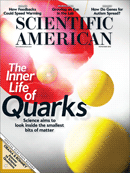
Empowering Knowledge Through Multidisciplinary InsightsSCIENTIFIC AMERICAN, published by Springer, stands as a prestigious multidisciplinary journal dedicated to disseminating cutting-edge scientific knowledge across a range of fields. Established in 1947, this journal has been integral in bridging the gap between scientific research and public understanding, making complex ideas accessible to a broader audience. With an ISSN of 0036-8733 and E-ISSN of 1946-7087, it maintains a strong standing within the academic community, currently ranked in the Q3 category for its multidisciplinarity, and is positioned at #93 out of 120 in its Scopus ranking, reflecting its valuable contribution to scientific discourse. While the journal is not open access, its long history and commitment to knowledge sharing ensure it remains a vital resource for researchers, professionals, and students alike, fostering a deeper appreciation of science in society.

Sociologia Nauki i Tehnologij-Sociology of Science & Technology
Fostering Dialogue on the Societal Dimensions of Scientific ProgressSociologia Nauki i Tehnologij-Sociology of Science & Technology is a distinguished journal dedicated to exploring the intricate relationships between science, technology, and society. Published by the Institute of History of Science and Technology, Saint Petersburg Branch, Russian Academy of Sciences, this journal serves as a vital platform for interdisciplinary research and discourse within the fields of sociology, science studies, and technology assessment. The journal encourages contributions that delve into the societal implications of scientific advancements and technological innovations, making it essential reading for researchers, professionals, and students alike. Although specific impact factors and access options are currently not provided, the journal is committed to maintaining high academic standards and fostering a rich scholarly community. Join us in advancing the understanding of how science and technology shape human experiences across diverse contexts.