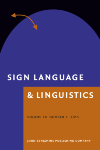
Sign Language & Linguistics
metrics 2024
Celebrating Two Decades of Linguistic Excellence
Introduction
Sign Language & Linguistics is an esteemed academic journal published by John Benjamins Publishing Co, dedicated to advancing the field of sign language studies and linguistics. With an ISSN of 1387-9316 and an E-ISSN of 1569-996X, this journal has earned a prominent place in the linguistic community, achieving a Q1 ranking in both the Linguistics and Language category, and standing out within the Scopus rankings, placing in the 77th percentile among the Arts and Humanities and 75th percentile in the Social Sciences categories. Sign Language & Linguistics spans over two decades of research, offering comprehensive insights and analyses from 1998 to 2024, promoting high-quality scholarly communication. Aimed at researchers, professionals, and students alike, this journal is essential for those exploring the intersection of sign languages, linguistics, and cultural studies, facilitating progressive discourse and fostering an understanding of this vital mode of human communication.
Metrics 2024
 0.580.400.5029
Metrics History
Rank 2024
Scopus
IF (Web Of Science)
JCI (Web Of Science)
Quartile History
Similar Journals
Corpus Linguistics and Linguistic Theory
Advancing linguistic insights through empirical exploration.Corpus Linguistics and Linguistic Theory, published by DE GRUYTER MOUTON, is a premier academic journal dedicated to advancing the interdisciplinary field of linguistics through the lens of corpus-based research methodologies. With an ISSN of 1613-7027 and E-ISSN 1613-7035, this journal is a valuable resource for linguists, researchers, and students who aim to investigate language structures, usage, and their theoretical implications. Recognized as a Q1 journal in the realm of Linguistics and Language, it boasts impressive Scopus rankings, positioning it within the top 7% and 8% of its categories in the Arts and Humanities and Social Sciences, respectively. Its relevance is underscored by a commitment to publishing rigorous research from 2005 to 2024, addressing contemporary advancements in linguistic theory fueled by empirical data. While the journal is not open access, it remains an essential platform for disseminating high-quality scholarship that informs both theoretical perspectives and practical applications in linguistics. As such, Corpus Linguistics and Linguistic Theory plays a crucial role in shaping the future of linguistic studies, making it indispensable for anyone engaged in this dynamic field.

RLA-Revista de Linguistica Teorica y Aplicada
Cultivating interdisciplinary insights in the study of language.RLA-Revista de Linguística Teórica y Aplicada, published by Universidad de Concepción, Facultad de Humanidades y Arte, stands as a vital resource in the field of linguistics, delivering cutting-edge research and scholarly articles that contribute to both theoretical and applied linguistics. With its ISSN 0718-4883, this journal aims to foster robust discussions and innovations in linguistic theory, language acquisition, sociolinguistics, and applied linguistics methodologies. Although the journal currently does not provide open access options, it endeavors to reach a diverse audience, including researchers, professionals, and students, who are keen to explore the rich tapestry of language studies. By offering insights from both local and global perspectives, RLA does not only advance linguistic discourse but also encourages interdisciplinary collaboration, thereby solidifying its role as a pivotal publication in the linguistic academic community.
WORD-JOURNAL OF THE INTERNATIONAL LINGUISTIC ASSOCIATION
Exploring the depths of language and its complexities.WORD-JOURNAL OF THE INTERNATIONAL LINGUISTIC ASSOCIATION is a leading peer-reviewed journal dedicated to advancing the field of linguistics and language studies. Published by Routledge Journals, Taylor & Francis Ltd, this esteemed journal has earned a reputation for its rigorous scholarship, reflected in its 2023 Q2 ranking in Linguistics and Language and its solid performance in Scopus Ranks. Encompassing a wide range of topics—from theoretical frameworks to empirical research—WORD serves as an essential resource for linguistics researchers, educators, and students alike. While currently not operating under an open access model, the journal is committed to providing high-quality, impactful research articles that contribute significantly to the linguistic community. With its convergence periods from 1998 to 2009 and 2015 to 2024, WORD continuously fosters the discourse of language studies, ensuring that critical insights and discussions are accessible for ongoing academic exploration.

Jezikoslovlje
Elevating Understanding Through Rigorous Linguistic InquiryJezikoslovlje, published by the Josip Juraj Strossmayer University, Faculty of Philosophy in Croatia, is an essential publication in the field of Linguistics and Language Studies. Launched in 2008 and extending its contributions to the academic community through 2024, this journal addresses a spectrum of linguistic research, facilitating scholarly dialogue around both theoretical and applied aspects of language. With a current Scopus ranking placing it in the 54th percentile in the Arts and Humanities and the 50th percentile in Social Sciences, Jezikoslovlje serves as a vital resource for researchers and students looking to engage with contemporary linguistic issues. Although it operates under a traditional access model, its indexed presence and rigorous peer-review process ensure that published works maintain a high scholarly standard, inviting contributions that advance understanding in this dynamic discipline. The journal's commitment to fostering knowledge in linguistics makes it a significant platform for academics in Croatia and beyond.
STUDIES IN LANGUAGE
Illuminating the Pathways of Language ResearchSTUDIES IN LANGUAGE is a distinguished academic journal published by John Benjamins Publishing Co, focusing on the dynamic fields of Linguistics and Communication. With an ISBN of 0378-4177 and E-ISSN 1569-9978, this journal has become an essential platform for researchers, professionals, and students seeking to advance their understanding of language and its multifaceted dimensions. The journal has been recognized in 2023 with a prestigious Q1 categorization in Linguistics and Language and a Q2 ranking in Communication, reflecting its vital contributions to these fields. Its Scopus rankings further emphasize its relevance, ranking 299 out of 1088 in Language and Linguistics, positioning it within the 72nd percentile. Published continuously since its inception in 1977, STUDIES IN LANGUAGE plays a pivotal role in disseminating cutting-edge research and fostering academic dialogue around contemporary linguistic theories and communication practices. While it is not an open-access journal, it offers valuable insights that make it a must-read for anyone committed to exploring the intricate relationships between language, culture, and society.
CANADIAN JOURNAL OF LINGUISTICS-REVUE CANADIENNE DE LINGUISTIQUE
Exploring the nuances of language and communication.The Canadian Journal of Linguistics - Revue canadienne de linguistique is a prestigious peer-reviewed publication dedicated to advancing the field of linguistics. Published by Cambridge University Press, this journal has firmly established itself as a vital resource for researchers, professionals, and students alike, offering insights into a diverse range of linguistic studies and theories. With an impressive impact factor reflecting its academic rigor, the journal is ranked Q2 in the categorization of linguistics and language as of 2023, and holds commendable positions in both Scopus ranks for Arts and Humanities as well as Social Sciences. The journal's converged years span from 1996 to 2024, showcasing a rich history of contributions to the discipline. Although it currently does not offer open access, it remains highly influential. Located in Canada, the journal plays a crucial role in fostering scholarly communication within the linguistic community, making it an essential outlet for disseminating groundbreaking research and engaging discussions.
Australian Journal of Linguistics
Innovating Linguistic Theory for a Global AudienceThe Australian Journal of Linguistics, published by Routledge Journals, Taylor & Francis Ltd, stands as a distinguished platform in the field of linguistics, fostering rigorous academic discourse since its inception in 1981. With an ISSN of 0726-8602 and an E-ISSN of 1469-2996, the journal has achieved a notable Q2 ranking in the linguistics and language category for 2023, indicating its quality and relevance within the academic community. With a Scopus ranking of #316 in Arts & Humanities and #373 in Social Sciences, it sits in the 71st and 68th percentiles respectively, underscoring its impact in the fields it encompasses. The journal aims to publish high-quality research articles that contribute to the understanding of linguistic theory, sociolinguistics, and applied linguistics, making it an essential resource for researchers, professionals, and students alike. The journal is based in the United Kingdom, at 2-4 Park Square, Milton Park, Abingdon OX14 4RN, Oxon, England, and actively encourages contributions that can expand the current linguistic discourse, reinforcing its commitment to highlighting diverse perspectives in language research.
English Language & Linguistics
Exploring the Depths of Language and LinguisticsEnglish Language & Linguistics is a prestigious journal published by Cambridge University Press, specializing in the dynamic fields of linguistics and language studies. With an impressive Q1 ranking in both Linguistics and Language categories for 2023 and a notable placement in the Scopus metrics, where it ranks #142 out of 1088 in Arts and Humanities, the journal is recognized for its high-quality research contributions and robust impact in the scholarly community. Since its inception in 1997, English Language & Linguistics has provided a forum for researchers to explore various aspects of language, facilitating the dissemination of innovative ideas and empirical studies. With no open access options currently available, the journal remains a valuable resource within the United Kingdom and beyond, fostering a deeper understanding of language intricacies and their broader societal implications. For practitioners and academicians alike, this journal is a critical resource for keeping abreast of the latest advancements in linguistics.

Italian Journal of Linguistics
Navigating the evolving field of linguistics with authority.Italian Journal of Linguistics is a prominent academic journal published by PACINI EDITORE, dedicated to advancing the understanding of linguistic theory and application. With its inception in 1996, the journal has fostered scholarly discourse and continues to contribute to the field through rigorous peer-reviewed articles. Operating under the prestigious field of linguistics, the journal currently holds a respectable Q3 quartile ranking as of 2023, showcasing its relevance in the academic community. It also ranks in the top 30% of journals in both Arts and Humanities and Social Sciences disciplines, reflecting its impactful contributions documented in Scopus rankings. While the Italian Journal of Linguistics is not an open-access journal, it offers invaluable insights and innovative research findings, making it an essential resource for researchers, professionals, and students keen on exploring the nuances of language and linguistics. Based in Pisa, Italy, the journal serves as a significant platform for both contemporary studies and classic investigations in linguistics, appealing to an international audience devoted to this ever-evolving field.
Revista de Linguistica y Lenguas Aplicadas
Exploring the Dynamics of Language and CommunicationRevista de Linguistica y Lenguas Aplicadas, an esteemed journal published by UNIV POLITECNICA VALENCIA, EDITORIAL UPV, is a pivotal resource in the field of linguistics and applied languages. Since its inception, the journal has embraced Open Access publishing since 2006, ensuring that its rich repository of research is readily available to a global audience of researchers, academics, and language professionals. Headquartered in Valencia, Spain, the journal contributes significantly to the advancement of linguistics knowledge, boasting a respectable ranking within the Q3 quartile for Linguistics and Language (2023) according to Scopus metrics. It covers a diverse range of topics and methodologies, engaging readers through its commitment to scholarly rigor and innovation. The journal is uniquely positioned to inform and inspire essential discussions from 2015 to 2024, making it a vital platform for emerging linguists and seasoned scholars alike, as they explore the evolving landscapes of language and communication.