
SOCIETES
metrics 2024
Enriching academic discourse since 1996.
Introduction
SOCIETES, published by DE BOECK UNIV in Belgium, serves as a vital platform for researchers, professionals, and students within the fields of Arts and Humanities, Demography, and Sociology and Political Science. The journal, bearing the ISSN 0765-3697 and E-ISSN 1782-155X, is recognized for its scholarly contributions since its inception in 1996 and anticipates continued relevance through 2024. As a distinguished publication in the Q3 and Q4 category quartiles, SOCIETES ranks within the 20th percentile in Arts and Humanities, as well as the 6th percentile in Demography and Sociology and Political Science, reflecting its position among emerging voices in these disciplines. Despite its current classification, the journal aims to enhance interdisciplinary dialogue and enrich academic discourse through its carefully curated articles. Although it does not currently offer open access, SOCIETES remains committed to bridging gaps in research and fostering rigorous academic inquiry amidst evolving societal landscapes.
Metrics 2024
 0.12-0.107
Metrics History
Rank 2024
Scopus
JCI (Web Of Science)
Quartile History
Similar Journals

POETICS
Innovating Perspectives on Language and SocietyPOETICS is a leading academic journal published by Elsevier, focusing on the multidisciplinary fields of Communication, Cultural Studies, Linguistics, Literature and Literary Theory, and Sociology and Political Science. With its esteemed Q1 category rankings across several domains, POETICS showcases cutting-edge research that fosters dialogue and innovation within the arts and social sciences. The journal's commitment to advancing theoretical and empirical understanding of the dynamics between language, culture, and society is evidenced by its impressive Scopus rankings, placing it in the top percentiles among its peers. Covering a wide array of topics, from narrative theory to sociolinguistic analysis, POETICS serves as an indispensable resource for researchers, academics, and students eager to explore the intersection of literature and societal discourse. Situated in the Netherlands, the journal benefits from a rich tradition of scholarly excellence and aims to contribute significantly to the evolving landscape of contemporary research through its ongoing publications until 2024.

Social Analysis
Charting New Territories in Social AnalysisSocial Analysis, an esteemed academic journal published by BERGHAHN JOURNALS, is at the forefront of interdisciplinary research, focusing on the dynamic intersections of anthropology, cultural studies, sociology, and the arts and humanities. Since its inception in 2002 and having transitioned to an Open Access model in 2020, the journal ensures that critical social research is widely accessible to scholars and the public alike. With an impressive Q1 ranking in Anthropology and cultural studies and holding a notable Q2 in Sociology and Political Science, it garners attention from a large academic audience, as evidenced by its high Scopus rankings: 10th in general arts and humanities and 153rd in cultural studies. This signifies its influential role in shaping contemporary discourse and providing a platform for innovative ideas and methodologies in understanding social phenomena. Based in Brooklyn, NY, the journal is dedicated to fostering scholarly dialogue and advancing the field, making it an essential resource for researchers, professionals, and students eager to engage with and contribute to the field of social analysis.
REPRESENTATIONS
Challenging Norms, Shaping FuturesREPRESENTATIONS, published by University of California Press, is a prominent academic journal that has made significant contributions to the fields of Arts and Humanities, Cultural Studies, Gender Studies, and Sociology and Political Science since its inception in 1983. With an ISSN of 0734-6018 and E-ISSN of 1533-855X, REPRESENTATIONS is recognized for its rigorous scholarship and critical discourse, currently positioned in Q2 within its primary categories and holding respectable ranks in Scopus, reflecting its influence and relevance in contemporary academic conversations. Designed for a diverse audience including researchers, educators, and students, this journal facilitates an interdisciplinary dialogue that addresses pressing societal issues through various scholarly lenses. While not openly accessible, its articles are invaluable for those seeking in-depth analysis and innovative perspectives. For continued engagement with critical scholarship through 2024 and beyond, REPRESENTATIONS serves as an essential platform for enriching the discourse surrounding cultural and social inquiries.

SocietaMutamentoPolitica-Rivista Italiana di Sociologia
Connecting Scholars to the Pulse of Contemporary Sociology.SocietaMutamentoPolitica-Rivista Italiana di Sociologia is a prominent open access journal dedicated to the field of sociology, published by FIRENZE UNIV PRESS. Since its inception in 2010, this journal has provided a dynamic platform for scholars to disseminate groundbreaking research and critical discussions on social change and political dynamics within the Italian context and beyond. With its commitment to accessibility, it fosters a rich dialogue among researchers, professionals, and students, making significant contributions to the understanding of contemporary sociological issues. Although the journal's H-index and Scopus rankings are currently unavailable, its targeted scope on socio-political transformations ensures it remains an invaluable resource for anyone interested in the intersection of society and politics. With its headquarters in Florence, Italy, the journal is well-positioned at the heart of European sociological discourse, encouraging a diverse range of voices and perspectives.

Annual Review of Sociology
Pioneering Scholarly Reviews for Social ChangeAnnual Review of Sociology, published by Annual Reviews, is a premier academic journal that plays a critical role in advancing the field of sociology. Established as a leading publication since its inception in 1975, the journal brings together the highest quality scholarly reviews, summarizing key developments and trends within the discipline. With a notable Q1 ranking in both Sociology and Political Science and a remarkable 99th percentile Scopus rank among over 1400 journals, it consistently showcases cutting-edge research and invites contributions from preeminent scholars. The journal's rigorous review process ensures that articles provide comprehensive insights and critical analyses, making it an essential resource for researchers, professionals, and students alike. Although it is not an open-access publication, its influential content is crucial for anyone looking to deepen their understanding of social structures, relationships, and dynamics. Located in the heart of Palo Alto, California, the Annual Review of Sociology continues to be a cornerstone in the academic fabric of the social sciences.
SOCIOLOGICAL SPECTRUM
Illuminating contemporary sociopolitical landscapes.Sociological Spectrum is a prestigious journal published by Taylor & Francis Inc, dedicated to advancing scholarship in the fields of sociology and political science. With a notable impact factor and ranked in the Q1 category for both disciplines, this journal stands out as a vital resource for researchers, professionals, and students seeking to engage with cutting-edge research and theoretical developments from 1981 through 2024. The journal’s Scopus rank places it in the top 78th percentile within the social sciences community, reflecting its significant contribution to the field. While the journal is not open access, it provides comprehensive insights and fosters critical discussions around contemporary sociopolitical issues, making it an essential avenue for scholarly communication. Published in the United Kingdom, the ISSN 0273-2173 and E-ISSN 1521-0707 editions ensure broad accessibility, serving an international audience dedicated to the complexities of societal structures.
ADMINISTRATIVE SCIENCE QUARTERLY
Unveiling High-Impact Research in Administration and SocietyADMINISTRATIVE SCIENCE QUARTERLY, published by SAGE Publications Inc, is a prestigious journal in the fields of Public Administration, Sociology, Political Science, and Arts and Humanities. Established in 1975, this quarterly journal has maintained a reputation for excellence, as reflected in its 2023 Q1 category rankings, where it stands at the forefront of associated disciplines, holding the 1st rank in Arts and Humanities (miscellaneous), Public Administration, and 2nd in Sociology and Political Science. With an impressive Scopus ranking, particularly a 99th percentile in both Sociology and Public Administration, the journal serves as an essential platform for researchers and practitioners looking to advance theoretical and practical knowledge in administrative science. Although not open access, the journal provides exclusive access to a wealth of high-impact research, making it an invaluable resource for those in academia and beyond. The journal's commitment to scholarly rigor and its extensive coverage from 1975 to 2024 underscore its significance in shaping contemporary discourse and policy in the administrative domain.
RUDN Journal of Sociology-Vestnik Rossiiskogo Universiteta Druzhby Narodov Seriya Sotsiologiya
Illuminating the complexities of human interactions.RUDN Journal of Sociology, published by Peoples Friendship University of Russia, stands as a pivotal resource in the field of social sciences. As an open-access journal since 2008, it provides unrestricted access to high-quality, peer-reviewed research that addresses contemporary issues, theories, and methodologies in sociology. With an ISSN 2313-2272 and E-ISSN 2408-8897, the journal has established its presence internationally, based in the dynamic academic environment of Moscow, Russian Federation. Ranking in the Q3 category of the 2023 Scopus analysis within the social sciences niche, the journal currently holds a position of #179 out of 275 in its category, highlighting its contributive role amidst a competitive academic landscape. The RUDN Journal aims to foster a deeper understanding of sociological phenomena while serving as a platform for emerging voices alongside established scholars. Researchers, professionals, and students alike will find a treasure trove of innovative insights and diverse perspectives, making it an essential read for anyone committed to the advancement of sociological inquiry.
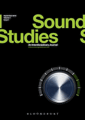
Sound Studies
Fostering Dialogue in the World of Sound StudiesSound Studies is a leading journal in the interdisciplinary field of sound research, embracing diverse aspects ranging from acoustic ecology to sound art and auditory culture. Published by Taylor & Francis Ltd, this journal boasts a significant impact within its scope, particularly in the Arts and Humanities, Cultural Studies, and Communication disciplines. With a Scopus ranking that places it in the top quartiles of its categories—ranking #24 out of 173 in General Arts and Humanities and #260 out of 1304 in Cultural Studies—it offers a robust platform for scholars and practitioners alike. The journal focuses on advancing theoretical and empirical knowledge, fostering dialogue across various domains of sound studies, and encouraging innovative research practices. Although it currently does not provide Open Access options, the journal remains a vital repository of cutting-edge scholarship from 2015 to 2024, making it an essential resource for researchers, professionals, and students seeking to deepen their understanding of the complex role that sound plays in human experience and society.
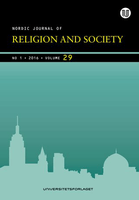
Nordic Journal of Religion and Society
Bridging Disciplines to Illuminate Nordic Religious LandscapesThe Nordic Journal of Religion and Society is a leading academic journal dedicated to the interdisciplinary study of religion within societal contexts, published by Scandinavian University Press - Universitetsforlaget AS. With its ISSN 0809-7291 and E-ISSN 1890-7008, this journal proudly occupies a significant position in the field, reflected by its Q2 ranking in Religious Studies (2023) and a commendable Scopus percentile of 77, ranking 147 out of 644 in its category. The Nordic Journal of Religion and Society aims to publish high-quality, original research that explores how religious beliefs and practices intersect with societal transformations across the Nordic context. The journal emphasizes the importance of diverse methodological approaches and theoretical frameworks, fostering scholarly dialogue that enhances understanding of contemporary socio-religious phenomena. Though it operates under a subscription model, the journal’s commitment to academic excellence makes it an essential resource for researchers, professionals, and students keen on advancing knowledge within this dynamic and evolving field.