
South African Journal of Cultural History
Scope & Guideline
Fostering Dialogue on South Africa's Diverse Cultural Identities
Introduction
Aims and Scopes
- Cultural Representation and Identity:
The journal focuses on the complexities of cultural representation, particularly in relation to marginalized communities and identities, exploring themes of race, ethnicity, and socio-economic status. - Historical Narratives and Memory:
It emphasizes the importance of historical narratives and collective memory, examining how past events shape contemporary cultural identities and societal structures. - Interdisciplinary Methodologies:
The journal employs a variety of interdisciplinary methodologies, integrating perspectives from anthropology, sociology, and cultural studies to enrich historical discourse. - Heritage and Conservation:
It addresses issues of heritage conservation, exploring the intersections of culture, history, and community engagement in preserving cultural legacies. - Colonial and Post-Colonial Studies:
The journal critically engages with colonial and post-colonial studies, analyzing the legacies of colonialism and the ongoing impacts on contemporary South African society. - Art and Cultural Production:
It explores the role of art and cultural production in shaping societal values and identities, focusing on various forms of artistic expression as vehicles for cultural critique.
Trending and Emerging
- Post-Apartheid Cultural Analysis:
There is an increasing focus on post-apartheid cultural dynamics, examining how historical events influence contemporary cultural expressions and identities in South Africa. - Environmental and Cultural Intersections:
Emerging themes highlight the relationship between culture and environmental issues, such as water conservation and sustainable practices within indigenous communities. - Digital Humanities and Cultural Memory:
The integration of digital humanities into cultural history research is gaining traction, with scholars exploring how digital tools can enhance the understanding of cultural memory and historical narratives. - Community Engagement and Heritage:
A growing emphasis on community responsibility in heritage conservation reflects a trend towards inclusive practices that engage local communities in preserving their cultural heritage. - Globalization and Cultural Exchange:
The journal is increasingly addressing themes of globalization and cultural exchange, exploring how South African culture interacts with global trends and influences.
Declining or Waning
- Military History Focus:
Although military history, particularly related to the Anglo-Boer War, was once a significant theme, recent publications indicate a shift towards broader cultural studies, resulting in fewer military-focused articles. - Traditional Leadership Studies:
The exploration of traditional leadership and its historical significance appears to be declining, with fewer articles addressing this theme compared to previous years. - Narrow Ethnographic Studies:
There has been a noticeable reduction in narrowly focused ethnographic studies that concentrate on specific communities or practices, as the journal increasingly embraces broader cultural analyses. - Colonial Artifact Studies:
Research focused solely on colonial artifacts and their historical contexts has diminished, reflecting a shift towards more contemporary analyses of culture and identity. - Gender Studies in Historical Contexts:
While gender studies remain relevant, the specific focus on gender within historical contexts has become less pronounced, as the journal expands its scope to include a wider array of cultural issues.
Similar Journals
Tydskrif Vir Geesteswetenskappe
Exploring the Depths of Human ExperienceTydskrif Vir Geesteswetenskappe, published by the SUID-AFRIKAANSE AKAD VIR WETENSKAP EN KUNS, serves as a significant platform for scholarly discourse in the fields of Arts, Humanities, and Social Sciences. With an ISSN of 0041-4751, this journal is recognized for its contribution to understanding the complexities of human society and culture within a South African context. Acknowledged in the Q2 category for Arts and Humanities and Q3 for Social Sciences as of 2023, it fosters rigorous academic dialogue and dissemination of innovative research findings. Despite the absence of open access options, the journal maintains a committed readership and citation impact within its nuanced arenas, having navigated a converged publication cycle from 2009 to 2024. Researchers, professionals, and students seeking to deepen their insight into the intertwined layers of the human experience will find valuable resources and critical perspectives within its pages, reinforcing the importance of scholarly inquiry in these vital areas of study.

Heranca-Revista de Historia Patrimonio e Cultura
Connecting Past and Present through Scholarly InsightHerança - Revista de História, Patrimonio e Cultura is a distinguished academic journal published by Ponteditora in Portugal, dedicated to the exploration and preservation of history, heritage, and culture. Since its inception in 2018, this open-access journal has established a strong foothold in the academic community, becoming a valuable resource for researchers, professionals, and students alike. With an impressive presence in the Scopus rankings—ranking Q3 in multiple categories such as *Arts and Humanities (Miscellaneous)* and *Cultural Studies*—the journal demonstrates its commitment to advancing interdisciplinary dialogue and fostering innovation in the humanities. By offering unrestricted access to its rich array of scholarly articles, Herança plays a vital role in disseminating knowledge and promoting further research in the fields of history, museology, and the arts. With an aim to bridge theoretical insights and practical applications, this journal stands as an essential contributor to the cultural landscape and heritage studies, making it a pivotal platform for contemporary issues in our understanding of cultural identity and heritage conservation.
Safundi
Unveiling the Threads of Culture and HistorySafundi, published by Routledge Journals, Taylor & Francis Ltd, is a distinguished peer-reviewed journal dedicated to exploring the intersections of culture, history, and political science. Since its inception in 2000, Safundi has contributed significantly to the discourse on cultural studies, positioning itself as a vital resource for researchers and professionals alike. With an Impact Factor reflective of its rigorous scholarship, the journal is ranked in the top quartiles for cultural studies and history, showcasing its influence and authority within these fields. The journal addresses critical contemporary issues, aiming to foster a nuanced understanding of cultural dynamics and historical contexts. While access options are traditional, Safundi remains committed to disseminating pivotal research that resonates with academics and policymakers. As it continues to evolve through to 2024, Safundi serves as an indispensable platform for students and scholars seeking to contribute to the vibrant dialogue surrounding culture and its implications in our global society.

Revista Tefros
Championing Accessible Research for AllRevista Tefros is a premier academic journal published by UNIV NACL RIO CUARTO and TALLER ETNOHISTORIA FRONTERA SUR, focusing on the interdisciplinary fields of social sciences and humanities with a particular emphasis on ethnography and cultural studies. Since its launch in 2005, this Open Access journal has provided an invaluable platform for researchers, professionals, and students to disseminate their findings and engage with innovative scholarship. With an ISSN of 1669-726X and an E-ISSN of 1667-9229, Revista Tefros invites contributions that explore diverse cultural narratives and social dynamics, thereby enriching the academic dialogue. The journal is dedicated to promoting accessibility in research publication, ensuring that valuable insights are available to a broader audience. As part of its commitment to excellence, the journal strives to uphold high standards of scholarship and aims to contribute meaningfully to the academic community in Argentina and beyond.

Culture & History Digital Journal
Exploring the Intersections of Culture and History.Culture & History Digital Journal, published by CONSEJO SUPERIOR INVESTIGACIONES CIENTIFICAS-CSIC, is a distinguished Open Access journal dedicated to advancing the study of cultural phenomena and historical narratives. Recognized for its scholarly contributions, this journal boasts an impressive ranking within the Q2 category of both Cultural Studies and History for 2023, further supplemented by its notable standings in Scopus, where it ranks #533 out of 1760 in Arts and Humanities (History) and #544 out of 1304 in Social Sciences (Cultural Studies), reflecting its commitment to high-quality research dissemination. The journal has been embracing Open Access since 2012, making a wide array of interdisciplinary content freely available to researchers, professionals, and students worldwide. With a focus on promoting innovative scholarship and critical analysis within the digital humanities landscape, Culture & History Digital Journal serves as an essential platform for those engaged in the exploration of the interplay between culture and history in the contemporary context.

Memoria y Civilizacion-Anuario de Historia
Championing Quality Research in HistoryMemoria y Civilizacion-Anuario de Historia, published by UNIV NAVARRA, SERVICIO PUBLICACIONES, is a prestigious open-access journal that has been serving the academic community since 1998. With a focus on historical research, this journal contributes significantly to the field by offering a platform for scholars to disseminate their findings and engage in critical discussions. With its Q1 ranking in History for 2023 and a solid position in the Scopus listings (Rank #905/1760), it underscores its importance in the humanities, ensuring that quality research reaches a wide audience. The journal is based in Spain and is committed to open access, providing free availability of its content to promote wider dissemination of knowledge. Researchers, professionals, and students alike will find Memoria y Civilizacion-Anuario de Historia to be an indispensable resource for historical inquiry and scholarship.
SOUTH AFRICAN HISTORICAL JOURNAL
Illuminating South Africa's Rich Historical TapestryThe SOUTH AFRICAN HISTORICAL JOURNAL, published by ROUTLEDGE JOURNALS, TAYLOR & FRANCIS LTD, serves as a vital platform for the dissemination of historical research focusing on South Africa and the broader African continent. Established in 1969, this esteemed journal has evolved to showcase high-quality scholarly articles and original research that contribute significantly to the field of history, achieving a commendable Q2 ranking within the History category as of 2023. With an impressive Scopus rank of #424 out of 1760, positioned in the 75th percentile of its category, the journal attracts contributions from a diverse array of historians and social scientists. Although not an open-access publication, it remains accessible to academia through institutional subscriptions, promoting critical discourse among researchers, students, and professionals. The SOUTH AFRICAN HISTORICAL JOURNAL is not only a repository of knowledge but also a catalyst for groundbreaking discussions and insights into the rich tapestry of South African history.

INTERNATIONAL JOURNAL OF AFRICAN HISTORICAL STUDIES
Celebrating the Depth of African Histories and CulturesInternational Journal of African Historical Studies is a leading academic journal published by the African Studies Center at Boston University. With its ISSN 0361-7882 and E-ISSN 2326-3016, this journal serves as a vital platform for scholarly discourse in the fields of History, Cultural Studies, and Sociology. Renowned for its rigorous peer-reviewed research, the journal holds a commendable Q1 ranking in History and Q2 in Cultural Studies as of 2023, highlighting its influence and contribution to African historical scholarship. The journal has been published since 1976, consistently providing insightful analyses and critical research that engage with Africa's past and present, thereby enriching our understanding of global histories. Although it does not offer an open-access model, the journal is accessible through various academic databases and institutions. Its mission is to foster a deeper understanding of African histories by publishing high-quality, innovative research that reflects diverse perspectives, making it an essential resource for researchers, professionals, and students dedicated to the study of African history and cultural dynamics.
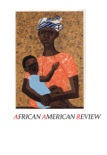
AFRICAN AMERICAN REVIEW
Unpacking the Layers of African American ExperienceAFRICAN AMERICAN REVIEW, published by the Johns Hopkins University Press, stands as a pivotal journal since its inception, dedicated to exploring the multifaceted aspects of African American literature, culture, and artistic expression. With an ISSN of 1062-4783 and an E-ISSN of 1945-6182, this journal provides a critical platform that delves into the rich tapestry of African American experiences, bridging gaps across literary, cultural, and visual arts disciplines. Its latest impact metrics position it in esteemed quartiles, achieving Q2 rank in both Literature and Literary Theory and Visual Arts and Performing Arts, alongside a strong presence in Cultural Studies with a Q3 classification. The journal’s commitment to high-quality scholarship is reflected in its Scopus rankings, drawing attention from researchers and scholars invested in cultural narratives and historical contexts. Although not currently open access, the journal's comprehensive analyses contribute significantly to discussions in academia and beyond, making it an essential resource for researchers, educators, and students alike looking to deepen their understanding of African American contributions to the arts and humanities.
Studies in Peoples History
Advancing Understanding of Societal TransformationsStudies in Peoples History is a noteworthy academic journal published by SAGE Publications India Pvt Ltd, dedicated to the exploration and analysis of historical narratives, social dynamics, and cultural transformations. With its ISSN 2348-4489 and E-ISSN 2349-7718, this journal serves as an essential platform for scholars and practitioners in the field of history and social sciences, fostering interdisciplinary dialogue and innovative research. Established in 2014, its relevance continues to grow, evident through its classification in category quartiles for 2023, ranking Q3 in History and Q4 in Social Sciences (miscellaneous), and Scopus rankings reflecting its emerging influence. Although the journal offers no open access option, it remains a critical resource for understanding people's history within the broader contexts of cultural and societal developments across the globe. The journal’s convergence of diverse methodologies promises to enrich scholarly discourse and supports the endeavors of researchers, students, and professionals alike throughout its projected run until 2024.