
Studien zur Deutschen Sprache und Literatur-Alman Dili ve Edebiyati Dergisi
Scope & Guideline
Cultivating knowledge in German language and cultural contexts.
Introduction
Aims and Scopes
- Interdisciplinary Literary Studies:
The journal promotes research that intersects various fields, including literary theory, cultural studies, and linguistics, allowing for a multifaceted exploration of texts. - Cultural and Political Contexts:
A significant emphasis is placed on understanding literature within its socio-political environments, particularly in the context of German history and its cultural relations with other nations, such as Turkey. - Linguistic Analysis:
The journal includes studies that analyze language use in literary texts, focusing on aspects like metaphor, lexical choices, and the impact of language in shaping narratives. - Comparative Literature:
There is a consistent focus on comparative studies that examine different literary works across cultures, particularly between German and Turkish literature, revealing cross-cultural influences and dialogues. - Thematic Exploration of Identity and Society:
Research often delves into themes of identity, social issues, and the human condition, drawing connections between literary representation and broader societal concerns.
Trending and Emerging
- Intercultural Dialogue and Relations:
There is a noticeable increase in research exploring Turkish-German cultural relations, indicating a growing interest in intercultural dialogue and its representation in literature. - The Role of the Body and Corporeality in Literature:
Recent works emphasize the significance of corporeal themes, examining how bodies and physicality are represented in literature, which aligns with contemporary discussions in feminist and queer theories. - Narrative Strategies and Hybrid Forms:
Emerging studies are focusing on the hybridization of narrative forms, combining fact and fiction, and exploring non-traditional storytelling methods, reflecting broader trends in contemporary literature. - Socio-political Themes in Literature:
A trend towards examining socio-political issues, such as collective identity and trauma, is evident, reflecting the journal's responsiveness to current global challenges and their literary representations. - Digital Humanities and Language Use:
Research into digital approaches and language use in contemporary contexts, such as social media, is gaining traction, indicating an adaptation to modern communication forms and their implications for language and literature.
Declining or Waning
- Traditional Historical Narratives:
Research focused solely on historical narratives without a contemporary or comparative lens appears to be waning, as scholars increasingly seek connections to modern issues and interdisciplinary approaches. - Language Pedagogy and Basic Linguistic Studies:
Papers dedicated to basic language teaching methodologies or simple linguistic structures have diminished, indicating a shift toward more complex and contextually rich analyses. - Purely Theoretical Literary Criticism:
There seems to be a decline in articles that engage exclusively with theoretical frameworks without applying them to specific texts or cultural contexts, suggesting a move toward more applied literary studies.
Similar Journals
STUDIES IN PHILOLOGY
Illuminating Connections Between Text and TheoryStudies in Philology is a distinguished peer-reviewed journal published by University of North Carolina Press, focusing on the fields of linguistics, literature, and literary theory. Established in 1972, the journal has consistently contributed to the scholarly discourse in its domains, showcasing a rich repository of research that meets the evolving needs of academic inquiry. With an ISSN of 0039-3738 and an E-ISSN of 1543-0383, it provides a platform for innovative studies that enhance understanding and foster critical engagement with texts and language. The journal is currently placed in the Q4 tier within linguistics and language and Q2 in literature and literary theory, reflecting its diverse and significant contributions to the arts and humanities. Although not an open-access journal, it continues to attract submissions from globally recognized scholars, making it a valuable resource for researchers, professionals, and students seeking to deepen their expertise and advance their studies. For more than four decades, Studies in Philology has played an integral role in fostering scholarly communication, and it remains committed to publishing pioneering articles that challenge conventional thinking and broaden the horizons of philological exploration.
ZEITSCHRIFT FUR SLAWISTIK
Fostering Cross-Disciplinary Dialogue in Slavic ResearchZEITSCHRIFT FUR SLAWISTIK, published by WALTER DE GRUYTER GMBH, is a renowned journal focusing on Slavic studies, encompassing various fields such as cultural studies, linguistics, and literary theory. With its ISSN 0044-3506, this distinguished journal has been a significant contribution to the academic community since its inception in 1956, continuing to disseminate valuable research until 2024. While maintaining a strong reputation within several academic categories, ZEITSCHRIFT FUR SLAWISTIK holds a Q3 ranking in Cultural Studies and Linguistics and Language, and a Q2 ranking in Literature and Literary Theory as of 2023. This positioning underscores the journal’s impact, particularly as it caters to an audience of researchers, professionals, and students invested in the rich tapestry of Slavic culture and language. Access to this journal is not open; however, its comprehensive articles are crucial for anyone aiming to explore and deepen their understanding of Slavic linguistic and literary traditions. The journal's work is essential in fostering cross-disciplinary dialogue and advancing scholarship in these vital areas.

Archivum
Unlocking Knowledge in Language and Literary TheoryArchivum, published by UNIV OVIEDO in Spain, stands as a vital resource in the fields of Linguistics and Language as well as Literature and Literary Theory. With an impact factor reflective of its commitment to scholarly excellence, this journal has proudly maintained an Open Access model since 1951, ensuring that its rich repository of knowledge is freely available to researchers, professionals, and students alike. Covering a converged span from 2019 to 2023, Archivum has strategically positioned itself within the academic milieu, currently categorized in the Q4 for Linguistics and Language and Q3 for Literature and Literary Theory as of 2023. The journal is indexed in Scopus, with rankings that reflect its growing influence, such as #690 in Literature and Literary Theory and #887 in Language and Linguistics. Despite its challenges in visibility, Archivum remains essential for those seeking to engage with contemporary discussions and research within the humanities. Located in the heart of Asturias, it embodies the scholarly spirit of Spain, fostering a collaborative environment for innovation and inquiry in linguistic and literary studies.

Jordan Journal of Modern Languages & Literature
Bridging Theory and Practice in Modern LanguagesJordan Journal of Modern Languages & Literature is a prestigious academic journal published by Yarmouk University, Deanship of Research & Graduate Studies. This journal serves as a vital platform for scholars and researchers in the fields of linguistics and literature, offering a well-rounded examination of modern languages and literary theory. With an impressive Q2 ranking in Linguistics and Language and a Q1 distinction in Literature and Literary Theory as of 2023, it consistently features high-quality research that contributes to the advancement of knowledge in these domains. The Scopus rankings further reflect its academic rigor, placing it in the 79th percentile for Literature and Literary Theory and maintaining significant influence in related fields, making it an essential resource for researchers, professionals, and students alike. Although it does not operate under an open-access model, the journal's commitment to publishing groundbreaking studies can significantly aid in the understanding and progression of modern linguistic and literary practices. The Jordan Journal of Modern Languages & Literature continues to be an influential voice in fostering scholarly dialogue and advancing research in the humanities.
Monatshefte
Exploring the Depths of German StudiesMonatshefte is a prestigious academic journal published by the University of Wisconsin Press, dedicated to fostering scholarly discourse in the field of German Studies. With its ISSN 0026-9271 and E-ISSN 1934-2810, Monatshefte serves as a vital platform for researchers and students, offering peer-reviewed articles that delve into literature, culture, and linguistics. The journal plays an essential role in advancing knowledge and understanding of German intellectual traditions, making it indispensable for anyone interested in the dynamics of German culture. Although it is not an Open Access publication, its rigorous selection of high-quality research articles ensures its impact within the academic community. For researchers aiming to stay at the forefront of German Studies, Monatshefte provides a wealth of insights and critical analyses, fostering enhanced academic dialogue and innovation.
JAHRBUCH FUR INTERNATIONALE GERMANISTIK
Exploring the Depths of German Literature and LinguisticsJAHRBUCH FUR INTERNATIONALE GERMANISTIK is a prominent academic journal published by VERLAG PETER LANG AG, dedicated to advancing research in the fields of German studies, literature, and linguistics. With its ISSN 0449-5233 and E-ISSN 2235-1280, this journal provides a platform for scholarly discourse, critical analysis, and innovative studies related to German language and literary theory. Although its coverage in Scopus was discontinued in 2014, the journal continues to be influential within the academic community, evidenced by its rankings in the Arts and Humanities and Social Sciences categories. Specifically, it holds a rank of #397 in Literature and Literary Theory and #477 in Language and Linguistics, reflecting a solid presence among peers. Researchers and students alike can benefit from its insightful articles that delve into various dimensions of Germanistik, thereby fostering a greater understanding of language and cultural contexts. For those interested in contributing to this field of study, JAHRBUCH FUR INTERNATIONALE GERMANISTIK serves as an essential resource for high-quality scholarly content.
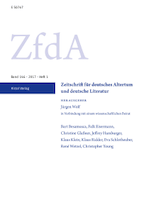
ZEITSCHRIFT FUR DEUTSCHES ALTERTUM UND DEUTSCHE LITERATUR
Navigating the Intricacies of German Literary TraditionZeitschrift für deutsches Altertum und deutsche Literatur is a pivotal academic journal dedicated to the exploration and analysis of German-language antiquity and literature. Published by S Hirzel Verlag, this esteemed journal is based in Germany and has been contributing to the fields of Linguistics, Language, and Literary Theory since its inception. With a history spanning from 1979 to the present, the journal showcases rigorous research and critical studies that enhance our understanding of both historical and contemporary literary landscapes. Although currently not an open-access publication, Zeitschrift für deutsches Altertum und deutsche Literatur operates within the Q4 quartile in its respective categories, reflecting a unique niche within the academic community. As a valuable resource for researchers, professionals, and students alike, it fosters a deeper appreciation for the intricacies of German literature and its evolution, serving as an essential platform for scholarly discourse.

Revista de Filologia Alemana
Fostering Critical Insights in German StudiesRevista de Filologia Alemana, published by Universidad Complutense de Madrid, serves as a vital platform for scholarly dialogue in the fields of Linguistics and Literature. With its origins dating back to 1996, this peer-reviewed journal provides insights and critical analyses that foster a deeper understanding of German philology and its broader implications. Although categorized in Q4 across both Linguistics and Literary Theory as of 2023, the journal represents a growing contribution to academic discourse, aiming to enhance knowledge and promote research within these domains. Although it does not currently offer open access, the journal continues to attract submissions from both established scholars and emerging researchers, thereby ensuring a diverse range of perspectives. With Scopus rankings highlighting its position within the academic landscape, Revista de Filologia Alemana is essential for anyone looking to delve into the intricate relationships between language and literature.
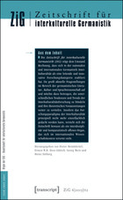
Zeitschrift fur Interkulturelle Germanistik
Bridging Cultures Through Critical ScholarshipZeitschrift für Interkulturelle Germanistik is a leading academic journal specializing in the field of intercultural studies and German linguistics. Published by TRANSCRIPT VERLAG, this journal serves as a platform for innovative research, critical essays, and interdisciplinary discussions that explore the complexities of cultural interactions within the German-speaking world and beyond. With a commitment to fostering scholarly exchange, the journal invites contributions that delve into themes such as language, identity, migration, and cultural dialogue. Although the journal does not currently offer open access, its robust editorial standards are aimed at providing readers with high-quality, peer-reviewed content. Researchers, professionals, and students engaged in German studies will find this journal an invaluable resource for the latest findings and theoretical advancements in intercultural communication and Germanistik. For more information, visit TRANSCRIPT VERLAG's official page.
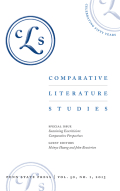
COMPARATIVE LITERATURE STUDIES
Exploring the Intersections of Cultures and TextsComparative Literature Studies is a distinguished journal published by Penn State University Press, focusing on the diverse and evolving field of comparative literature. With an ISSN of 0010-4132 and an E-ISSN of 1528-4212, this quarterly journal has been a critical platform for scholarly dialogue and interdisciplinary research since its inception in 2000. The journal proudly ranks in the Q3 category for Cultural Studies and Q2 for Literature and Literary Theory (2023), showcasing its significant impact within these domains. Notably, it ranks #214/1106 in Literature and Literary Theory according to Scopus, placing it in the 80th percentile—highlighting its relevance and quality in the global academic landscape. Despite its traditional subscription model, the journal remains a crucial resource for researchers, professionals, and students keen on exploring the intersections of cultures, texts, and histories. By publishing cutting-edge research and critical essays, Comparative Literature Studies aims to expand the horizons of literary analysis and foster innovative scholarly exchanges.