
SURFACE COATINGS INTERNATIONAL
Scope & Guideline
Bridging Research and Real-World Coating Applications
Introduction
Aims and Scopes
- Innovative Coating Technologies:
The journal emphasizes research and development in novel coating technologies, including UV-cured coatings, waterborne systems, and non-isocyanate formulations, reflecting a commitment to advancing the industry. - Sustainability in Coatings:
A significant focus on sustainable practices, including the use of bio-based materials, recycling initiatives, and strategies for reducing the environmental impact of coatings, is evident. - Industrial Applications and Performance:
The journal covers a wide range of industrial applications, from automotive to architectural coatings, highlighting performance improvements and new product launches. - Regulatory and Safety Standards:
It addresses compliance with regulations affecting the coatings industry, including safety standards and environmental directives, ensuring that stakeholders are informed of relevant legal developments. - Market Trends and Economic Impact:
The journal reports on market trends, economic impacts, and industry movements, providing insights into the business side of the coatings sector.
Trending and Emerging
- Sustainable Coating Innovations:
An increasing number of papers are dedicated to innovations in sustainable coatings, including bio-based materials and recycling initiatives, aligning with global sustainability goals. - Smart Coatings and Functional Surfaces:
Research on smart coatings that respond to environmental stimuli, such as self-healing and antimicrobial properties, is on the rise, indicating a trend towards multifunctional applications. - Advanced Pigment Technologies:
Emerging technologies related to pigments, including nanotechnology and AI-driven color science, are becoming prominent as they enhance performance and reduce environmental impact. - Digitalization and Industry 4.0:
There is a growing interest in how digital technologies and Industry 4.0 concepts are transforming the coatings industry, particularly in manufacturing processes and product development. - Health and Safety Regulations:
With increasing scrutiny on chemical safety, there is a heightened focus on health and safety regulations affecting coatings, reflecting industry concerns and compliance needs.
Declining or Waning
- Traditional Solvent-Based Coatings:
There is a noticeable decrease in discussions surrounding traditional solvent-based coatings, likely due to a shift towards more environmentally friendly alternatives. - Conventional Pigment Technologies:
Research related to conventional pigment technologies appears to be waning as the industry increasingly focuses on innovative colorant solutions and sustainable alternatives. - Static Coating Applications:
The exploration of static coating applications has decreased, possibly due to the growing interest in dynamic and multifunctional coatings that offer enhanced performance. - Basic Coating Formulations:
Basic formulations are receiving less attention as the industry moves towards more complex formulations that incorporate advanced materials and technologies. - Non-Functional Aesthetics:
Topics focused solely on aesthetic properties without functional benefits are declining, as there is a stronger emphasis on coatings that provide both visual appeal and performance benefits.
Similar Journals

Frontiers of Materials Science
Pioneering Discoveries in Advanced Materials and ApplicationsFrontiers of Materials Science is a groundbreaking journal dedicated to exploring advanced materials and their applications within the ever-evolving landscape of materials science. Published by HIGHER EDUCATION PRESS, this journal offers a crucial platform for scholars and practitioners seeking to disseminate innovative research findings that foster interdisciplinary collaboration. Since its inception in 2011, the journal has enjoyed a notable Q2 ranking in the category of Materials Science (miscellaneous) as of 2023, positioning it among the noteworthy publications in the field with a Scopus rank of #222 out of 463. While predominantly published in China, the journal is committed to open access principles, allowing global accessibility to cutting-edge research. With its comprehensive coverage spanning materials synthesis, characterization, properties, and applications, Frontiers of Materials Science not only serves as a repository for academia but also bridges the gap between research and industry, making it an indispensable resource for researchers, professionals, and students alike.

Korean Journal of Metals and Materials
Exploring the Intersection of Metals and TechnologyWelcome to the Korean Journal of Metals and Materials, a premier publication dedicated to advancing research in the interdisciplinary fields of metals and materials science. Published by the Korean Institute of Metals and Materials, this journal aims to foster the dissemination of innovative findings and significant developments across various domains, including electronic, optical, and magnetic materials, metals and alloys, as well as modeling, simulation, and surface coatings. With a commendable Q3 quartile ranking in several relevant categories as of 2023, it serves as a vital resource for researchers, professionals, and students interested in the latest scientific trends and technological applications. The journal has successfully converged from 2007 to 2024, showcasing a rich archive of knowledge. Engaging with this publication gives readers the opportunity to stay updated with critical advancements and enhances collaboration within the vibrant materials science community. Access is available through various platforms, ensuring that our content is widely accessible to all those striving for excellence in the field.

SURFACE REVIEW AND LETTERS
Fostering Collaboration in Materials ChemistrySURFACE REVIEW AND LETTERS, published by WORLD SCIENTIFIC PUBL CO PTE LTD, is a pivotal journal in the fields of condensed matter physics, materials chemistry, and surfaces and interfaces. With an ISSN of 0218-625X and an E-ISSN of 1793-6667, this journal serves as a platform for cutting-edge research and innovative developments from 1996 to 2024. Despite its classification in the Q4 and Q3 quartiles for various categories in 2023, SURFACE REVIEW AND LETTERS emphasizes the importance of inter-disciplinary collaboration and the rapid dissemination of valuable insights, making it an essential resource for researchers and professionals eager to stay at the forefront of material science. Although currently lacking an open access option, the journal invites a wide range of submissions—fostering knowledge sharing among scholars and contributing to the advancement of the scientific community. Aspiring authors and readers will benefit from the opportunity to engage with diverse studies and methodologies, underscoring the journal's commitment to excellence in materials research.
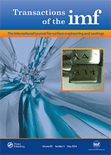
TRANSACTIONS OF THE INSTITUTE OF METAL FINISHING
Elevating Standards in Metal Finishing Research and PracticeTRANSACTIONS OF THE INSTITUTE OF METAL FINISHING, published by Taylor & Francis Ltd, is a premier journal dedicated to the field of metal finishing and surface engineering. With an ISSN of 0020-2967 and E-ISSN of 1745-9192, this journal has been a critical resource for researchers and practitioners since its inception in 1969. Covering a broad scope that includes condensed matter physics, mechanics of materials, and the intricate science of metals and alloys, TRANSACTIONS OF THE INSTITUTE OF METAL FINISHING has established itself within the academic community, currently holding Q2 and Q3 rankings across multiple relevant categories in 2023. While not openly accessible, the journal remains a vital compendium of innovative research findings and advancements, attracting contributors and readers eager to explore cutting-edge developments in metal finishing techniques and applications. The insightful articles published here cater to a wide audience, including industry professionals, academic researchers, and students, who seek to improve their understanding of materials science and engineering practices.
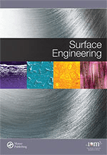
SURFACE ENGINEERING
Pioneering Research in Coatings and Materials ChemistrySURFACE ENGINEERING, published by SAGE Publications Inc, is a premier international journal dedicated to the advancement of knowledge in the fields of material surface science and engineering. With an ISSN of 0267-0844 and E-ISSN 1743-2944, this esteemed journal has been a critical resource since its inception in 1985, and continues to thrive through 2024. Recognized for its impactful contributions, SURFACE ENGINEERING achieves notable rankings in several categories including Q1 in Conservation and Q2 in key areas such as Condensed Matter Physics and Materials Chemistry. The journal serves a diverse audience of researchers, professionals, and students, providing them with insightful research articles, reviews, and technological developments that drive innovation in surface coatings, materials chemistry, and related disciplines. Although the journal follows a traditional subscription model, it remains an essential platform for disseminating crucial findings and fostering collaborations within the scientific community.
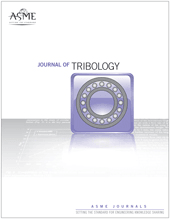
JOURNAL OF TRIBOLOGY-TRANSACTIONS OF THE ASME
Driving Innovation in Mechanical EngineeringJOURNAL OF TRIBOLOGY-TRANSACTIONS OF THE ASME, published by the esteemed American Society of Mechanical Engineers (ASME), is a prominent peer-reviewed journal dedicated to the intricate study of tribological phenomena and their impact on mechanical systems. With an ISSN of 0742-4787 and an E-ISSN of 1528-8897, this journal has been a vital resource since its inception in 1967, covering significant developments in mechanical engineering, mechanics of materials, surfaces, and interfaces. Ranked in the Q2 quartile across multiple categories for 2023, including Mechanical Engineering and Surfaces and Interfaces, it reflects a respectable impact within the research community, with Scopus rankings highlighting its stature in various related fields. While it does not offer open access, its contributions to the understanding of wear, lubrication, and surface engineering are invaluable for researchers, professionals, and students alike, fostering advancements in both academic and industrial applications. With a commitment to disseminating high-quality research, this journal continues to be an essential platform for those seeking to push the boundaries of tribology and its applications.

Surfaces is an esteemed academic journal published by MDPI in Switzerland, operating as an open access platform since 2018. With an E-ISSN of 2571-9637, this journal focuses on the interdisciplinary advancements in the fields of chemistry, materials science, and physics, particularly in the domain of surfaces and interfaces. As a testament to its scholarly impact, Surfaces is ranked in the second quartile for multiple categories as of 2023, including Chemistry (miscellaneous), Materials Science (miscellaneous), Surfaces and Interfaces, as well as Surfaces, Coatings and Films, showcasing its relevance within these disciplines. Researchers and professionals seeking to disseminate and acquire knowledge on the latest innovations can benefit from the journal's rigorous peer-review process and commitment to quality, ensuring visibility and accessibility for current developments in surface technology and material interactions. With a growing archive from 2019 to 2024, Surfaces stands out as a vital resource for the academic community.

China Surface Engineering
Connecting researchers for global surface solutions.China Surface Engineering is a prominent academic journal dedicated to the field of materials science, with a specific emphasis on surfaces, coatings, and films. Published by the Chinese Association of Science and Technology (CAST), this journal serves as an essential platform for researchers, professionals, and students seeking to disseminate knowledge and advancements in surface engineering technologies and innovative applications. With its ISSN 1007-9289 and E-ISSN 1007-9289, it has established a distinct presence since its convergence in 2016, and continues to evolve in the rapidly advancing materials science landscape through to 2024. Although currently categorized in the Q4 quartile of its field, with a Scopus ranking of #103 out of 132 in Surfaces, Coatings and Films, the journal plays a critical role in contributing to the discourse surrounding surface treatment and modification, fostering advancements that are pivotal for industrial applications. As an avenue not only for knowledge transfer but also for collaboration among scientists worldwide, China Surface Engineering is crucial for anyone engaged in research or practical applications in this domain.
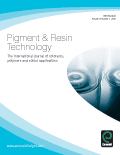
Pigment & Resin Technology
Transforming Ideas into Advanced Material SolutionsPigment & Resin Technology is an esteemed journal published by Emerald Group Publishing Ltd, focusing on the interdisciplinary fields of materials chemistry and coatings science. With a history spanning from 1972 to 2024, the journal serves as a vital platform for disseminating innovative research and developments concerning pigments, resins, and related materials technologies. Holding a respectable position in the Q3 category for both Materials Chemistry and Surfaces, Coatings, and Films as of 2023, it ranks within the 40th percentile among its peers, underscoring its relevance and impact within these domains. Although it does not currently offer open access, the journal remains a key resource for researchers, professionals, and students aiming to stay abreast of cutting-edge findings and practical applications in materials science. As such, Pigment & Resin Technology is essential reading for those engaged in the innovation and application of advanced materials in various industries.
Surface Innovations
Pioneering Research in Process Chemistry and SurfacesSurface Innovations, an esteemed journal published by Emerald Group Publishing Ltd, serves as a crucial platform for researchers and professionals working within the fields of Materials Chemistry, Process Chemistry and Technology, and Surfaces, Coatings and Films. Launched in 2013, this journal has garnered attention for its commitment to advancing knowledge and innovation, holding a distinguished Q3 ranking in multiple categories as of 2023. With a focus on the latest methodologies and applications in surface science, Surface Innovations not only facilitates the dissemination of cutting-edge research but also encourages interdisciplinary collaboration among scientists and engineers. While not an open-access journal, it offers numerous options for accessibility to engage a wide array of audiences, making it a valuable resource for those looking to expand their understanding and expertise in this rapidly evolving field. The journal's consistent inclusion in high-ranking Scopus categories further underscores its academic impact and relevance.