TRANSPORT IN POROUS MEDIA
metrics 2024
Pioneering Research in Porous Structures
Introduction
TRANSPORT IN POROUS MEDIA is a prominent peer-reviewed journal published by Springer, dedicated to advancing the understanding of fluid and energy transport processes in porous structures. With an ISSN of 0169-3913 and an E-ISSN of 1573-1634, this journal has established itself as a leading platform in the realms of chemical engineering and catalysis, achieving a ranking of Q2 in Chemical Engineering and Q3 in Catalysis as of 2023. The journal encompasses a wide scope, covering theoretical, experimental, and applied research that explores the complexities of porous media transport phenomena, thus catering to a diverse audience of researchers, professionals, and students in related fields. Although open access options are not offered, TRANSPORT IN POROUS MEDIA remains an excellent resource for those seeking to stay at the forefront of advancements and challenges in porous media transport. With a publication history dating back to 1986 and ongoing contributions expected until 2024, this journal continues to play a crucial role in fostering knowledge and innovation within the discipline.
Metrics 2024
 0.592.702.80107
Metrics History
Rank 2024
Scopus
IF (Web Of Science)
JCI (Web Of Science)
Quartile History
Similar Journals

Journal of Hydrology and Hydromechanics
Bridging science and engineering for a sustainable water future.Journal of Hydrology and Hydromechanics, published by SCIENDO, is a prominent open access journal that has been disseminating crucial research findings in the fields of fluid flow, mechanical engineering, and water science since its inception in 1973. With its open access model established in 2009, the journal ensures that innovative research is available to a global audience, enhancing the visibility and impact of studies related to hydrological systems and their applications. The journal holds a commendable position within the academic community, reflected in its category quartiles, achieving Q2 rankings in 2023 across key areas such as Fluid Flow and Transfer Processes, Mechanical Engineering, and Water Science and Technology. Its Scopus rankings further highlight its relevance, placing it among the top journals in its categories. The Journal of Hydrology and Hydromechanics not only serves as a vital resource for researchers and professionals aiming to advance hydrological knowledge but also provides students with a wealth of information to better understand the complexities of water dynamics and associated engineering challenges.
PROGRESS IN COMPUTATIONAL FLUID DYNAMICS
Exploring New Horizons in Numerical Methods and SimulationsPROGRESS IN COMPUTATIONAL FLUID DYNAMICS, published by InderScience Enterprises Ltd, is a vital journal in the realms of Computer Science Applications and Condensed Matter Physics. Established in 2001, this journal serves as a platform for disseminating innovative research findings and technological advancements in computational fluid dynamics, targeting both theoretical and applied aspects. With a current impact factor positioning it in the Q4 quartile for its fields, it captures a wide array of topics including numerical methods, simulation techniques, and real-world fluid dynamics applications, fostering dialogue among researchers, practitioners, and educators alike. Although it does not provide Open Access options, it remains an important resource for those investigating fluid dynamics phenomena. As it continues to evolve through 2024, PROGRESS IN COMPUTATIONAL FLUID DYNAMICS is positioned to contribute significantly to the scientific community, addressing core challenges while promoting collaboration and knowledge exchange.
International Journal of Computational Materials Science and Engineering
Elevating interdisciplinary collaboration through cutting-edge research.International Journal of Computational Materials Science and Engineering (ISSN: 2047-6841; E-ISSN: 2047-685X) is a pioneering academic journal published by World Scientific Publishing Co. Pte Ltd, based in Singapore. With a dedicated focus on the intersection of computational techniques and materials science, the journal serves as a crucial platform for disseminating cutting-edge research and developments from both theoretical and practical perspectives. The journal's rigorous peer-review process and commitment to high-quality submissions ensure the publication of influential articles that can significantly impact their fields of study. As of 2023, the journal holds a Q4 ranking in Computer Science Applications and Q3 in Materials Science (miscellaneous), along with notable rankings in other categories such as Mechanics of Materials and Numerical Analysis. Although not Open Access, it facilitates a rich repository of knowledge essential for researchers and professionals aiming to advance their work in computational methods and materials engineering. With converged years from 2012 to 2024, the journal continues to build on its reputation by fostering interdisciplinary collaborations and innovations.
EXPERIMENTAL THERMAL AND FLUID SCIENCE
Transforming experimental insights into engineering excellence.EXPERIMENTAL THERMAL AND FLUID SCIENCE is a prestigious academic journal published by Elsevier Science Inc, dedicated to advancing the fields of thermal and fluid sciences. With a strong focus on innovative experimental research, it plays a crucial role in disseminating new knowledge and techniques across multiple domains, including Aerospace Engineering, Chemical Engineering, Fluid Flow and Transfer Processes, Mechanical Engineering, and Nuclear Engineering. Holding a notable impact factor and ranking in the Q1 quartile across these categories since 2023, the journal is recognized for its high-quality contributions, which appeal to a diverse audience of researchers, industry professionals, and students alike. Additionally, with dedicated coverage from its inception in 1988 to projections extending through 2025, EXPERIMENTAL THERMAL AND FLUID SCIENCE provides a vital platform for sharing advancements in experimental techniques and findings that shape the future of engineering and applied sciences.
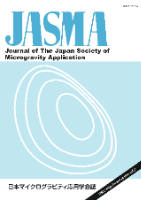
International Journal of Microgravity Science and Application
Charting New Territories in Microgravity StudiesInternational Journal of Microgravity Science and Application is a pivotal academic publication dedicated to advancing the understanding and applications of microgravity phenomena across a plethora of scientific disciplines. Published by the Japan Society for Microgravity Application, this journal serves as a vital platform for researchers and practitioners aiming to explore the complexities and unique opportunities presented by microgravity environments. While primarily focused on the fields of materials science, fluid dynamics, and biological studies under microgravity conditions, the journal fosters interdisciplinary discussions and innovative research endeavors that can translate into real-world applications and technological advancements. Despite its non-open access model, the journal continues to be an invaluable resource for those engaged in space research and microgravity applications, thus contributing significantly to the scientific community's understanding of these essential topics.
EUROPEAN JOURNAL OF MECHANICS B-FLUIDS
Charting New Frontiers in Fluid BehaviorThe EUROPEAN JOURNAL OF MECHANICS B-FLUIDS, published by Elsevier, is a prominent journal in the field of fluid mechanics, addressing the theoretical and experimental aspects of fluid behavior. Since its inception in 1990, this journal has consistently fostered a robust academic dialogue, maintaining a significant impact evidenced by its Q2 ranking in both Mathematical Physics and Physics and Astronomy categories as of 2023, placing it among the top publications in these disciplines. Researchers and professionals focusing on fluid dynamics will find a wealth of knowledge in its articles, which span broad topics pertinent to real-world applications as well as fundamental theories. While the journal is not open access, it offers critical insights that shape ongoing studies in fluid mechanics, making it an invaluable resource for anyone looking to deepen their understanding of the field. Located in the innovative environment of Amsterdam, Netherlands, the journal serves as a nexus for cutting-edge research and collaboration globally.
JOURNAL OF FLUIDS ENGINEERING-TRANSACTIONS OF THE ASME
Pioneering Innovations in Fluid MechanicsJOURNAL OF FLUIDS ENGINEERING-TRANSACTIONS OF THE ASME, published by the renowned American Society of Mechanical Engineers (ASME), stands as a pivotal platform for disseminating cutting-edge research in the field of mechanical engineering, specifically focusing on fluid mechanics and its diverse applications. With an established history dating back to 1897, this journal features research that pushes the boundaries of knowledge and technology in areas such as fluid dynamics, thermal engineering, and hydrodynamics. Although it is not an open-access journal, it maintains rigorous peer-review standards, ensuring the publication of high-quality scholarly articles that contribute to the academic and professional community. In the latest rankings, it holds a respectable position within the Q2 category of mechanical engineering journals, reflecting its significant impact, as evidenced by its Scopus rank of #204 out of 672, placing it in the 69th percentile. Researchers, professionals, and students alike will find this journal to be a vital resource for the latest developments and innovative insights in fluids engineering.

GEOLOGICA ACTA
Pioneering research in the heart of the Earth.GEOLOGICA ACTA is a distinguished open-access journal dedicated to the field of geology, published by Universitat de Barcelona since its inception in 2003. With an impact factor that reflects its relevance in the academic community and a commendable Q2 ranking within the Earth and Planetary Sciences category, this journal is committed to disseminating high-quality research that spans various aspects of geological sciences. The journal's broad scope encompasses both theoretical and applied research, making it a vital platform for researchers, professionals, and students alike to share their findings with a global audience. With its Open Access policy, GEOLOGICA ACTA ensures that all published articles are freely accessible, fostering collaboration and innovation in the geological community. Based in Barcelona, Spain, at the Geociences Barcelona (CSIC), it plays a pivotal role in connecting scholars from diverse backgrounds and advancing the field of geology through rigorous peer-reviewed articles.
BRAZILIAN JOURNAL OF CHEMICAL ENGINEERING
Empowering Knowledge Exchange in Chemical EngineeringThe Brazilian Journal of Chemical Engineering (ISSN: 0104-6632, E-ISSN: 1678-4383), published by Springer Heidelberg, stands as a prominent open-access journal dedicated to disseminating innovative research and advancements in chemical engineering since its inception in 1997. With a commitment to enhancing knowledge exchange within the field, this journal is indexed in Scopus, earning a respectable Q3 rank in the category of General Chemical Engineering as of 2023. It provides a platform for researchers, professionals, and students to explore a diverse range of topics, fostering collaboration and innovation from its base in Brazil. The journal has converged its operations from 1995 and will continue to push the boundaries of chemical engineering research until 2024 and beyond. As a critical resource for up-to-date methodologies and emerging trends, the Brazilian Journal of Chemical Engineering is essential for those aiming to make impactful contributions in this dynamic and evolving field.
Fluid Dynamics
Connecting engineers and scientists through fluid dynamics.Fluid Dynamics is a distinguished journal that has been at the forefront of research in the field of fluid flow and transfer processes since its inception in 1966. Published by MAIK NAUKA/INTERPERIODICA/SPRINGER, this journal serves as a valuable platform for engineers, scientists, and researchers dedicated to advancing the understanding of mechanical and fluid dynamic phenomena. With a Q3 ranking in key categories such as Fluid Flow and Transfer Processes, Mechanical Engineering, and Physics and Astronomy, Fluid Dynamics holds a significant position in the academic community, attracting submissions that push the boundaries of knowledge and application. Although it does not currently offer open access options, the journal is recognized for its robust editorial standards and impactful contributions to the field, making it essential reading for anyone involved in fluid dynamics research. Given its consistent publication through to 2024, Fluid Dynamics continues to inspire innovation and collaboration in an ever-evolving scientific landscape.