
Turk Dili ve Edebiyati Dergisi-Journal of Turkish Language and Literature
metrics 2024
Exploring the Depths of Turkish Literary Heritage
Introduction
Turk Dili ve Edebiyati Dergisi-Journal of Turkish Language and Literature, published by ISTANBUL UNIVERSITY, is an esteemed open-access journal dedicated to the exploration and advancement of Turkish language and literature. With a commitment to disseminating high-quality research and critical analysis since its transition to open access in 2020, this journal serves as a vital resource for scholars, educators, and students alike, facilitating the exchange of ideas and promoting greater understanding of Turkish literary heritage. By featuring peer-reviewed articles and original research, the journal aims to stimulate scholarly dialogue and inspire future studies in the field. Located in Istanbul, the journal not only showcases contributions from regional academics but also invites international submissions, thereby enriching the global discourse on Turkish linguistic and literary studies.
Metrics 2024
 ----
----Metrics History
Rank 2024
JCI (Web Of Science)
Quartile History
Similar Journals

Caplletra
Empowering Research and Discourse in Language StudiesCaplletra is a distinguished open-access journal dedicated to the field of linguistics and language studies, published by PUBL ABADIA MONTSERRAT since its inception. Based in Barcelona, Spain, this journal has been a vital resource for researchers, professionals, and students engaged in the intricate explorations of language and its applications since its transition to open access in 2005. Despite its current quartile ranking of Q4 within the Linguistics and Language category as of 2023, Caplletra continues to serve as an inclusive platform, fostering a dialogue that encourages a diverse range of scholarly contributions. Covering an expansive scope in the converged years from 2018 to 2024, it plays a crucial role in disseminating innovative research and insights. With its ISSN 0214-8188 and E-ISSN 2386-7159, Caplletra is committed to making academic work accessible to all, enhancing the landscape of linguistic scholarship and reflecting the evolving nature of language studies.

Romanica Olomucensia
Cultivating a Global Community of Literary ScholarsRomanica Olomucensia is a distinguished open-access academic journal published by Palacky University, Department of Romance Philosophical Faculty in the Czech Republic. With its commitment to fostering advanced research in the fields of Literature and Literary Theory as well as Linguistics and Language, this journal aims to provide a platform for scholars, researchers, and students to share their findings and insights. Since its inception, Romanica Olomucensia has consistently been recognized for its quality, securing a position in the Q2 category in the literature domain and achieving a Q3 ranking in linguistics per the 2023 category quartiles. The journal is indexed in Scopus, reflecting its standing in the academic community, with impressive ranks in various arts and humanities disciplines. It has been an open-access journal since 2018, promoting unrestricted access to all its publications, thus enhancing global academic outreach. With a focus on innovation and interdisciplinary studies, Romanica Olomucensia serves as an essential resource for anyone interested in the dynamic interplay of language and literature.
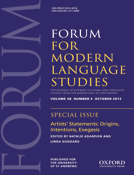
FORUM FOR MODERN LANGUAGE STUDIES
Nurturing Innovation in Language ScholarshipFORUM FOR MODERN LANGUAGE STUDIES is a prestigious academic journal published by Oxford University Press that has been serving the fields of literature and linguistics since its inception in 1965. This journal, with an ISSN of 0015-8518 and an E-ISSN of 1471-6860, plays a crucial role in advancing scholarly discourse on modern language studies, including literature and literary theory. With an impactful presence in both the linguistic and literary domains, it has been recognized in 2023 with a category ranking of Q2 in Literature and Literary Theory and Q3 in Linguistics and Language. It stands out in the competitive landscape, holding a notable position within Scopus rankings, including a 70th percentile ranking in Literature & Literary Theory. While the journal currently does not offer open access options, it remains a vital resource for researchers, educators, and students passionate about the transformative power of language and literature. Its commitment to quality research and robust academic discussion underscores its importance, making it a key platform for those aiming to contribute to modern language scholarship.
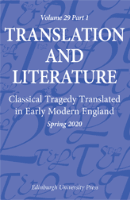
Translation and Literature
Bridging Cultures Through Literary TranslationTranslation and Literature is a leading academic journal published by Edinburgh University Press, focusing on the intricate relationship between language and literature within the realms of translation studies. With an ISSN of 0968-1361 and an E-ISSN of 1750-0214, this journal provides a crucial platform for scholars and practitioners to explore and disseminate research that addresses both the theoretical and practical aspects of translation. Since its inception in 1996, Translation and Literature has established itself as an essential resource, particularly noted for its contributions to the fields of linguistics and literary theory, as indicated by its Q4 ranking in both categories in 2023. The journal's articles are designed to foster dialogue across disciplines, encouraging innovative thinking and collaboration among researchers, professionals, and students alike. Access to this valuable resource is currently available through subscription, ensuring high-quality scholarship reaches a diverse audience dedicated to advancing the understanding of translation's role in literature.

Studia Litterarum
Illuminating the Intersections of Literature and CultureStudia Litterarum, published by the esteemed Russian Academy of Sciences at the A.M. Gorky Institute of World Literature, serves as a vital platform for the exploration and analysis of literature and cultural studies. With an ISSN of 2500-4247 and an E-ISSN of 2541-8564, this open access journal has been disseminating valuable research since 2016, reaching a global audience keen on advancing the understanding of literary theory and cultural narratives. Based in Moscow, Russia, the journal has achieved remarkable academic recognition, holding a Q2 classification in Cultural Studies and a prestigious Q1 tier in Literature and Literary Theory, as of 2023. Its Scopus rankings underscore its relevance, with a notable placement in the 51st percentile for literature and literary theory and 27th percentile for cultural studies. Studia Litterarum not only opens doors to scholarly dialogue but also enhances the visibility of contemporary literary scholarship, making it an essential read for researchers, professionals, and students alike seeking to deepen their understanding of the intricate dynamics within literature and cultural studies.

Jordan Journal of Modern Languages & Literature
Cultivating Knowledge in Linguistics and LiteratureJordan Journal of Modern Languages & Literature is a prestigious academic journal published by Yarmouk University, Deanship of Research & Graduate Studies. This journal serves as a vital platform for scholars and researchers in the fields of linguistics and literature, offering a well-rounded examination of modern languages and literary theory. With an impressive Q2 ranking in Linguistics and Language and a Q1 distinction in Literature and Literary Theory as of 2023, it consistently features high-quality research that contributes to the advancement of knowledge in these domains. The Scopus rankings further reflect its academic rigor, placing it in the 79th percentile for Literature and Literary Theory and maintaining significant influence in related fields, making it an essential resource for researchers, professionals, and students alike. Although it does not operate under an open-access model, the journal's commitment to publishing groundbreaking studies can significantly aid in the understanding and progression of modern linguistic and literary practices. The Jordan Journal of Modern Languages & Literature continues to be an influential voice in fostering scholarly dialogue and advancing research in the humanities.
TEXAS STUDIES IN LITERATURE AND LANGUAGE
Navigating the Depths of Texas's Linguistic LandscapeTEXAS STUDIES IN LITERATURE AND LANGUAGE, published by University of Texas Press, is a distinguished scholarly journal dedicated to the exploration of the rich tapestry of literature and language from Texas and its encompassing regions. With its ISSN 0040-4691 and E-ISSN 1534-7303, this journal serves as a vital platform for researchers, educators, and students interested in the intersection of cultural studies, literary analysis, and linguistic inquiry. Despite the absence of Open Access, the journal remains an essential resource for those seeking rigorous academic discourse within the humanities. The journal, established in 1974, has published influential articles that contribute to a deeper understanding of Texas's unique literary heritage, making it a beacon of scholarship in American literature. The impact factor reflects its relevance and engagement in ongoing literary dialogues. We invite scholars and students alike to engage with the rich content provided, ensuring that Texas's literary legacy continues to be studied and celebrated.

Remate de Males
Championing Open Access in Linguistic ResearchRemate de Males is a distinguished academic journal that has been enriching the field of linguistics and language studies since its inception by the UNIV ESTADUAL CAMPINAS, INST ESTUDOS LINGUAGEM in Brazil. With an ISSN of 0103-183X and an E-ISSN of 2316-5758, this journal has embraced the Open Access model since 1980, allowing greater accessibility and dissemination of research findings to a global audience. It plays a crucial role in fostering scholarly dialogue and advancing knowledge in linguistic theory, language acquisition, and related disciplines. The journal welcomes contributions from researchers, professionals, and students, aiming to provide a platform for innovative ideas and discussions that push the boundaries of language studies. By continually prioritizing high-quality peer-reviewed content, Remate de Males remains a vital resource for anyone interested in the complexities of language and communication.

Philologica Canariensia
Advancing interdisciplinary dialogue in literature and linguistics.Philologica Canariensia is a distinguished academic journal published by the University of Las Palmas de Gran Canaria, focusing on the vibrant fields of Literature and Literary Theory as well as Linguistics and Language. With an impact factor that positions it in the Q1 and Q2 quartiles in its respective categories as of 2023, the journal has established itself as an important platform for scholarly communication and research. Since transitioning to Open Access in 2014, it has broadened its reach, allowing researchers, professionals, and students from around the globe to access high-quality publications without barriers. With a commendable presence in Scopus rankings, including a rank of #309 out of 1106 in Literature and Literary Theory, Philologica Canariensia aims to foster an interdisciplinary dialogue and advance knowledge in the humanities. The journal's commitment to publishing innovative research makes it an essential resource for anyone engaged in exploring linguistic and literary phenomena.

Francofonia-Studi e Ricerche sulle Letterature di Lingua Francese
Engaging with Innovative Theories in Francophone StudiesFrancofonia-Studi e Ricerche sulle Letterature di Lingua Francese is a distinguished academic journal dedicated to the exploration of French language literature, published by CASA EDITRICE LEO S OLSCHKI. Located in Florence, Italy, this journal provides a scholarly platform for addressing contemporary issues, critical theories, and advancements in the fields of linguistics and literary studies. With an ISSN of 1121-953X and an E-ISSN of 2036-5659, it operates within the competitive framework of academia, currently positioned in the Q4 quartile for both Linguistics and Language, as well as Literature and Literary Theory, according to 2023 rankings. Although the journal does not offer open access, it is vital for researchers and students seeking to deepen their understanding of francophone literary traditions. Additionally, the journal's engagement in relevant discourses positions it uniquely, making it an essential resource for scholars interested in the nuances of linguistic and literary developments affecting French-language literature over converged years of publication (2020 to 2022). Explore this journal to connect with the vibrant community dedicated to francophone studies and contribute to the discourse in these intertwined fields.