
Vascular Health and Risk Management
Scope & Guideline
Innovative insights for managing vascular risks effectively.
Introduction
Aims and Scopes
- Cardiovascular Risk Assessment:
The journal emphasizes studies on identifying and quantifying cardiovascular risk factors, including traditional and emerging biomarkers, to improve prevention strategies. - Innovative Therapeutic Approaches:
A core area of focus is the exploration of novel treatments and therapeutic strategies for managing cardiovascular diseases, including pharmacological interventions and lifestyle modifications. - Patient-Centered Care:
Research highlighting the importance of patient experiences, quality of life, and self-management in the context of vascular health is prioritized, aiming to bridge clinical practice with patient outcomes. - Epidemiological Studies:
The journal publishes epidemiological research that examines the prevalence, incidence, and determinants of vascular diseases across diverse populations, contributing to global health knowledge. - Technological Advances in Vascular Medicine:
An area of unique contribution includes the integration of new technologies and methodologies in vascular assessment and treatment, such as imaging techniques and wearable health technologies.
Trending and Emerging
- Mental Health and Cardiovascular Risk:
There is an increasing focus on the interplay between mental health conditions, such as anxiety and depression, and their impact on cardiovascular risk factors, indicating a holistic approach to patient care. - Diversity in Patient Populations:
Emerging studies are increasingly exploring cardiovascular health across diverse populations, including ethnic minorities and different geographic regions, to better understand health disparities and tailor interventions. - Digital Health and Telemedicine:
The integration of digital health technologies, including telehealth and mobile health applications, is gaining traction as a means to improve patient engagement and monitoring in cardiovascular care. - Chronic Disease Management:
Research is trending towards understanding the management of chronic conditions, such as diabetes and hypertension, in relation to cardiovascular health, emphasizing the need for comprehensive care strategies. - Role of Inflammation in Cardiovascular Disease:
An emerging theme is the investigation of inflammatory markers and their role in the pathophysiology of cardiovascular diseases, which may open new avenues for therapeutic interventions.
Declining or Waning
- Surgical Interventions:
There has been a noticeable decrease in studies focusing exclusively on surgical techniques for vascular diseases, suggesting a shift towards non-invasive and pharmacological management strategies. - Traditional Risk Factor Studies:
Research centered solely on classical cardiovascular risk factors, such as cholesterol and blood pressure, is becoming less frequent as the field moves towards a more integrated approach that includes psychosocial and environmental factors. - Basic Science Research:
Papers that delve into the basic science of vascular biology without direct clinical implications seem to be less common, indicating a potential preference for translational research that connects basic findings to clinical practice.
Similar Journals
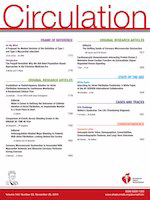
CIRCULATION
Elevating Cardiology: Where Innovation Meets Excellence.CIRCULATION is a premier journal in the field of cardiology and cardiovascular medicine, published by Lippincott Williams & Wilkins. With a distinguished history dating back to 1950, the journal has consistently been at the forefront of critical research, showcasing significant advancements and discoveries in cardiovascular health. It holds a remarkable Q1 ranking in both the fields of Cardiology and Physiology (medical) according to the 2023 category quartiles, demonstrating its influential role among the top publications in these disciplines. With an impressive Scopus ranking, placed 3rd out of 387 in Cardiology and 2nd out of 113 in Physiology, CIRCULATION is essential reading for researchers, practitioners, and students passionate about advancing their understanding of heart health and related medical sciences. Although the journal is not open access, it continues to foster scholarly exchange and innovation in cardiovascular research, making it an indispensable resource for quality insights and groundbreaking studies.
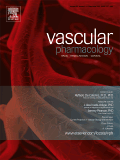
VASCULAR PHARMACOLOGY
Exploring the frontiers of vascular pharmacotherapy.Vascular Pharmacology, published by Elsevier Science Inc, is a leading journal in the fields of pharmacology and molecular medicine, dedicated to advancing our understanding of vascular biology and therapeutic interventions. With an impressive impact factor reflecting its significant contribution to the scientific community, this journal seeks to publish ground-breaking research that elucidates the molecular mechanisms underlying vascular function and disease, as well as the pharmacological impact of new therapeutic agents. The journal operates under a dual access model, allowing for both subscription and open access options, ensuring that vital research is accessible to a wide audience. As of 2023, it holds a prestigious position in the Q1 category for pharmacology and ranks well in molecular medicine and physiology, reflecting its high quality and relevance. Whether you are a researcher, clinician, or student, Vascular Pharmacology serves as an essential resource to stay at the forefront of cardiovascular pharmacotherapy and vascular biology.

Cardiology Journal
Advancing cardiovascular knowledge without barriers.Cardiology Journal, published by VIA MEDICA, stands as a prominent resource in the field of cardiology and cardiovascular medicine, with an ISSN of 1897-5593 and an E-ISSN of 1898-018X. Recognized for its Open Access model established since 1994, this journal facilitates widespread dissemination of critical research findings, allowing practitioners and researchers globally to access valuable insights without barriers. Based in Poland, with an address at UL SWIETOKRZYSKA 73, 80-180 GDANSK, it has achieved a respectable Q2 classification in 2023 for both Cardiology and Miscellaneous Medicine categories, reflecting its influence and quality within the scholarly community. With a Scopus ranking placing it at #117 out of 387 in Cardiology, it lies within the 69th percentile, underpinning its commitment to advancing knowledge in cardiovascular health. The journal’s converged years extending from 2006 to 2024 ensure it captures ongoing developments in a rapidly evolving field. As such, the Cardiology Journal serves as an indispensable platform for researchers, professionals, and students dedicated to exploring the frontiers of cardiac science and improving patient care.
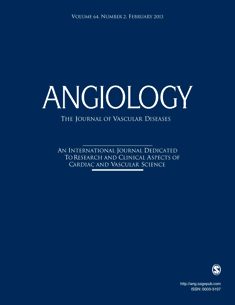
ANGIOLOGY
Leading the Way in Cardiovascular DiscoveriesANGIOLOGY is a leading journal dedicated to the field of cardiology and cardiovascular medicine, published by SAGE Publications Inc. With a distinguished history dating back to 1950, this journal serves as an essential platform for the dissemination of cutting-edge research, innovative clinical practices, and emerging trends in cardiovascular health. Holding a respected Q2 ranking in the 2023 Scopus category for Cardiology and Cardiovascular Medicine, and positioned within the 74th percentile of its field, ANGIOLOGY is an invaluable resource for researchers, healthcare professionals, and students alike. While currently not an open-access journal, it offers subscription options to access comprehensive articles that aim to advance knowledge and improve patient care across various cardiovascular disciplines. The journal's commitment to fostering dialogue and sharing groundbreaking findings underscores its importance in the ongoing pursuit of cardiovascular excellence.

VASCULAR MEDICINE
Connecting research excellence with clinical innovation in vascular medicine.Vascular Medicine is a premier academic journal for researchers and practitioners in the field of cardiovascular health, published by SAGE Publications Ltd. With an ISSN of 1358-863X and E-ISSN 1477-0377, this esteemed journal has been at the forefront of publishing quality research since its inception in 1992, with convergence extending to 2024. Ranked in the Q2 category for both Cardiology and Cardiovascular Medicine as well as for miscellaneous Medicine in 2023, it is recognized for its significant contributions to advancing knowledge and clinical practice within these domains. Its Scopus ranking situates it at #91 out of 387 in the field, reflecting its high impact and the relevance of its published research, which is crucial for addressing the challenges in vascular health today. Although it is not an open-access journal, Vascular Medicine remains dedicated to disseminating vital findings that bridge the gap between research and clinical application, making it an essential resource for medical researchers, healthcare professionals, and students alike.
Current Atherosclerosis Reports
Transforming cardiovascular care through rigorous research.Current Atherosclerosis Reports, published by CURRENT MEDICINE GROUP, is a leading scientific journal in the field of Cardiology and Cardiovascular Medicine, boasting an impressive Q1 ranking in its category as of 2023. This esteemed journal, with an ISSN of 1523-3804 and an E-ISSN of 1534-6242, has been a cornerstone of cardiovascular research since its inception in 1999, continuing to publish cutting-edge studies through 2024. With unparalleled insights into the mechanisms, prevention, and treatment of atherosclerosis, it serves as an essential resource for researchers, healthcare professionals, and students alike. Although not an open-access journal, it is highly regarded within the academic community, highlighted by its Scopus rank of #54 out of 387 in its field, placing it in the 86th percentile. The journal's commitment to advancing knowledge in cardiovascular health underscores its integral role in guiding clinical practices and influencing future research directions.

Stroke and Vascular Neurology
Pioneering research for a healthier tomorrow.Stroke and Vascular Neurology is a premier open access journal published by BMJ PUBLISHING GROUP, dedicated to advancing the field of vascular neurology and cardiology. With an ISSN of 2059-8688 and an E-ISSN of 2059-8696, the journal has established itself as a leading platform for disseminating cutting-edge research since its transition to open access in 2016. Based in the United Kingdom, at BRITISH MED ASSOC HOUSE, TAVISTOCK SQUARE, LONDON WC1H 9JR, ENGLAND, the journal's outstanding reputation is reflected in its Q1 rankings in both Cardiology and Cardiovascular Medicine and Neurology (clinical) for 2023, placing it in the top tier of its categories. With Scopus rankings of 28 out of 387 in Cardiology and 30 out of 400 in Neurology (clinical), both within the 92nd percentile, Stroke and Vascular Neurology serves as an essential resource for researchers, clinicians, and students looking to stay at the forefront of advancements in the management and understanding of stroke-related disorders. The journal's commitment to high-quality research contributes significantly to improving patient outcomes and shaping the future of vascular health.

EJVES Vascular Forum
Your Premier Source for Vascular Research ExcellenceEJVES Vascular Forum, published by Elsevier, is a premier open access journal focusing on the interdisciplinary field of vascular surgery and cardiovascular medicine. Since its inception in 2001, the journal has provided a vital platform for the dissemination of high-quality research and innovative clinical practices, addressing critical issues in vascular health. With an ISSN of 2666-688X, it has gained recognition within its community, attaining a Q3 quartile ranking in both cardiology and surgery categories as of 2023, and showcasing its relevance and impact within the medical research landscape. Situated in the United Kingdom and accessible globally, the EJVES Vascular Forum invites contributions that foster collaboration and enhance knowledge in vascular surgery, making it an essential resource for researchers, professionals, and students alike. The journal's ranking within Scopus highlights its position among peers, adding further credence to its objectives of advancing science and improving patient care in the cardiovascular realm. By publishing rigorously peer-reviewed articles, the journal aims to be the go-to source of information and innovation for those dedicated to the progress of vascular health.
Artery Research
Advancing vascular knowledge for a healthier tomorrow.Artery Research is an esteemed open access journal published by BMC in the United Kingdom, dedicated to advancing the field of vascular biology and cardiovascular medicine. Since its inception in 2006 and transitioning to an open access format in 2019, the journal has become a pivotal platform for disseminating high-quality research on arterial health, pathology, and the latest clinical advancements. With an impactful focus on anatomy, cardiology, and physiology, Artery Research holds a notable reputation within the global research community, ranked in the Q3 and Q4 category quartiles in its respective fields and reflected in its Scopus ranks. The journal aims to foster collaborations and discussions among researchers and practitioners by providing an accessible avenue for publishing pivotal findings and insights. As it continues to evolve through 2024 and beyond, Artery Research remains committed to enriching cardiovascular research and driving innovations toward better health outcomes.
International Heart Journal
Transforming Heart Health Through Open Access ResearchInternational Heart Journal, published by INT HEART JOURNAL ASSOC, serves as a pivotal platform for research and discourse in the fields of cardiology and cardiovascular medicine. With its ISSN 1349-2365 and E-ISSN 1349-3299, this esteemed journal is based in Japan and is located at the University of Tokyo, Graduate School of Medicine, Department of Cardiovascular Medicine. Since its inception in 2005, International Heart Journal has blossomed into a respected publication with an impact factor that signifies its growing relevance, ranking in the Q3 category of both cardiology and miscellaneous medicine as of 2023. This journal not only disseminates vital research findings but also fosters collaboration among researchers and healthcare professionals. Notable for its Open Access options, it ensures the availability of its content to a broader audience, thereby enhancing knowledge transfer and innovation in cardiovascular care. With an ongoing commitment to improve clinical practice and patient outcomes, the journal continues to be an essential resource for those dedicated to advancing the understanding of heart health and disease.