
Vjesnik Arheoloskog Muzeja u Zagrebu
Scope & Guideline
Advancing Knowledge in Archaeological Heritage
Introduction
Aims and Scopes
- Archaeological Research and Excavations:
The journal publishes original research derived from archaeological excavations, providing insights into various historical periods, particularly in Croatia. - Material Culture Analysis:
There is a consistent focus on the analysis of artifacts, including ceramics, metal finds, and other material culture, contributing to a deeper understanding of historical lifestyles. - Interdisciplinary Approaches:
The journal often incorporates methodologies from related fields such as geoarchaeology, archaeometry, and anthropology to enrich archaeological interpretations. - Cultural Heritage Studies:
A significant aim is to explore and protect cultural heritage, with discussions on preservation and the significance of archaeological finds within their historical context. - Historical Contextualization:
The journal emphasizes the importance of situating archaeological findings within the broader historical narrative of the region, including discussions on migration, trade, and cultural exchanges.
Trending and Emerging
- Prehistoric Archaeology:
There is a notable increase in studies focusing on prehistoric periods, particularly related to Neanderthal artifacts and Bronze Age ceramics, indicating a renewed interest in early human history. - Geoarchaeology and Environmental Contexts:
Research incorporating geoarchaeological methods has gained traction, highlighting the importance of environmental factors in understanding archaeological sites and human activity. - Cultural Identity and Material Culture:
Emerging themes include the exploration of cultural identities through material culture, with studies reflecting on how artifacts contribute to understanding social structures and cultural exchanges. - Interdisciplinary Research:
A growing trend towards interdisciplinary approaches is evident, with collaborations that incorporate methodologies from history, anthropology, and natural sciences, enriching archaeological narratives. - Digital Archaeology:
The integration of digital tools and techniques for analysis and presentation of archaeological data is becoming more common, reflecting broader trends in the field.
Declining or Waning
- Medieval Studies:
Research specifically focused on the medieval period has seen a decline, with fewer articles dedicated to this era compared to previous years. - Roman Archaeology:
Although Roman artifacts and studies were once a staple, recent publications indicate a reduced emphasis on Roman archaeology, possibly due to a shift towards more localized prehistoric studies. - Traditional Artifact Cataloging:
The straightforward cataloging of artifacts is less prevalent now, as the journal appears to be moving towards more interpretative and analytical studies rather than mere documentation.
Similar Journals

OLBA
Reviving Interest in Archaeological NarrativesOLBA is a distinguished journal in the field of archaeology, published by Mersin University Publications Research Center Cilician Archaeology in Turkey. With an ISSN of 1301-7667, this academic journal has been a platform for scholarly discourse from 2009 to 2014 and again from 2016 to 2019, with a recent volume published in 2022. Although it is currently categorized in the fourth quartile (Q4) for both Arts and Humanities and Social Sciences within archaeology, OLBA continues to contribute significantly to the global archaeology community. It serves as an essential resource for researchers, professionals, and students interested in the diverse aspects of archaeological studies and cultural heritage. Despite not being an open-access journal, OLBA strives to disseminate knowledge effectively, aiding in the exploration of ancient civilizations and the rich tapestry of human history. Its Scopus rankings, placing it in the bottom percentiles, demonstrate the ongoing need for the community to support and engage with the journal to enhance its visibility and impact in the archaeological domain.

Prilozi Instituta za Arheologiju u Zagrebu
Connecting scholars to the rich tapestry of Croatia's archaeological heritage.Prilozi Instituta za Arheologiju u Zagrebu is a prominent academic journal published by INST ARHEOLOGIJU, dedicated to advancing the field of archaeology and related historical studies. Operating in Croatia, this journal serves as a vital platform for scholars, researchers, and students to disseminate innovative research and insights within the realm of archaeology, with a focus on the rich cultural heritage of the region. The journal spans contributions from 2002 to 2011 and has ongoing publication since 2013, reflecting its commitment to contemporary archaeological discourse. With a growing reputation, it has achieved a Q3 ranking in the fields of Archaeology and Arts and Humanities, and a Q2 ranking in History, signifying its impact and relevance in the academic community. Although Open Access options are not available, the journal remains an essential resource for those pursuing in-depth knowledge and research in archaeology. Researchers can harness the journal's extensive scope to explore critical historical narratives and archaeological findings, solidifying its importance in both local and global contexts.

Studijne Zvesti Archeologickeho Ustavu Slovenskej Akademie Vied
Illuminating the archaeological landscape of Slovakia and beyond.Studijne Zvesti Archeologickeho Ustavu Slovenskej Akademie Vied is a leading journal in the field of archaeology, published by the SLOVENSKA AKAD VIED, ARCHEOLOGICKY USTAV, based in Nitra, Slovakia. This esteemed journal, with the ISSN 0560-2793, has established itself as a vital resource for scholars and researchers, reflecting significant academic contributions in both the arts and humanities as well as social sciences. With a 2023 Scopus ranking placing it in the second quartile (Q2) for archaeology, it showcases rigorous research and innovative methodologies, essential for advancing archaeological studies. While it is not an Open Access journal, it continues to offer valuable insights into archaeological findings, theoretical frameworks, and interdisciplinary approaches. The journal serves as a bridge, connecting local Slovak archaeology with international discourse, making it an indispensable tool for students, professionals, and academics striving for a deeper understanding of the archaeological heritage of Slovakia and beyond.

JOURNAL OF EGYPTIAN ARCHAEOLOGY
Delving into the Legacy of Ancient CivilizationsJOURNAL OF EGYPTIAN ARCHAEOLOGY is a premier publication dedicated to advancing the study of ancient Egyptian culture, artifacts, and historical contexts. Published by SAGE PUBLICATIONS LTD in the United Kingdom, this journal has been an authoritative source of archaeological scholarship since its inception in 1964. It boasts an impressive reputation, currently holding a Q3 ranking in Archeology and Q2 rankings in both Archeology (arts and humanities) and History for 2023, underlining its importance in its field. With a focus on interdisciplinary research, the journal provides a platform for in-depth analysis and discussion among scholars, researchers, and students alike. The journal is also indexed in Scopus, with notable rankings that reflect its influence and reach within the academic community, especially among arts and humanities disciplines. Although it is not an Open Access publication, the insights offered through its meticulously curated articles are invaluable for anyone looking to deepen their understanding of Egyptology and archaeological practices. For scholars seeking to engage with contemporary discussions in this fascinating field, the JOURNAL OF EGYPTIAN ARCHAEOLOGY serves as an essential resource.
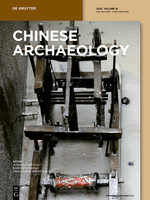
Chinese Archaeology
Advancing Insights into Ancient CivilizationsChinese Archaeology, published by WALTER DE GRUYTER GMBH, is a leading journal dedicated to the exploration and study of China's rich archaeological heritage. With an ISSN of 2160-5025 and an E-ISSN of 2160-5068, this journal serves as an essential platform for scholars, researchers, and enthusiasts in the field of archaeology, offering a blend of original research articles, reviews, and critical essays that address both contemporary issues and historical narratives. While it currently operates under a conventional access model, making cutting-edge research available to a select audience, it plays a crucial role in advancing knowledge about China's archaeological sites, artifacts, and past civilizations. Given the increasing interest in Eastern archaeology and its significance in a global context, Chinese Archaeology is positioned as a pivotal resource for understanding and interpreting the complexities of China’s historical evolution. Researchers and academics are encouraged to contribute and engage with this vital field of study to foster greater insights and innovations.

Spal
Bridging Time: Where Archaeology Meets History.Spal is a distinguished academic journal dedicated to the fields of Archaeology and History, published by the University of Seville, Editorial. With an ISSN of 1133-4525 and an E-ISSN of 2255-3924, it has established a prominent reputation within the scholarly community, currently enjoying an impressive Q1 ranking in Archeology (Arts and Humanities) and History, alongside a Q2 ranking in Archeology for 2023. The journal serves as a critical platform for researchers, professionals, and students alike, promoting the dissemination of cutting-edge research and innovative methodologies in these vital disciplines. Spal's Scopus Ranks place it in the 84th percentile for Arts and Humanities - History and the 72nd for Archeology within the field, emphasizing its impact and relevance in contemporary scholarship. Although it operates under a traditional access model, its commitment to advancing knowledge and discourse in archaeological and historical studies remains unwavering. The journal's coverage spans from 2015 to 2024, positioning it well to contribute to ongoing academic conversations and foster collaborations within the global research community.

Azania-Archaeological Research in Africa
Unearthing Africa's Rich Heritage.Azania-Archaeological Research in Africa, published by Routledge Journals, Taylor & Francis Ltd, stands as a premier academic resource in the field of archaeology, specifically focusing on African archaeological research. With a remarkable tradition dating back to 1966, the journal spans over half a century of rigorous scholarship, aiming to enrich our understanding of Africa's diverse cultural and historical narratives. Currently indexed in the prestigious Q1 category for both Archaeology and Arts and Humanities, it ranks impressively in the Scopus database, placing within the top 12% of journals in its field. This commitment to excellence facilitates the dissemination of innovative and insightful research, catering to a broad audience of researchers, professionals, and students alike. While the journal is not open access, its impactful contributions continue to shape contemporary archaeological discourse, making it an essential resource for anyone passionate about the study of Africa's archaeological heritage.
Archaeological Journal
Elevating Scholarship, Connecting People with HistoryArchaeological Journal, published by Taylor & Francis Ltd, stands as a leading voice in the field of archaeology, with a remarkable distinction in the Q1 category for both arts and humanities as well as conservation, underscoring its critical role in advancing scholarly dialogue and research. With an ISSN of 0066-5983 and E-ISSN of 2373-2288, this journal provides a platform for innovative research from 1977, now offering insights up to 2024. The United Kingdom-based journal is highly regarded, being within the top 81st percentile in archaeology and conservation according to Scopus rankings. Essential for researchers, professionals, and students, the journal's content spans rigorous archaeological studies, theoretical advancements, and discussions on conservation practices, ultimately aimed at fostering a deeper understanding of humanity's past. Notably, with no open access option, it maintains a traditional publishing approach, thereby ensuring curated and high-quality contributions to the academic community.
Kiva-Journal of Southwestern Anthropology and History
Charting New Territories in Archaeological ResearchKiva - Journal of Southwestern Anthropology and History is a distinguished academic journal published by Routledge Journals, Taylor & Francis Ltd, that serves as a vital resource for scholars in the fields of anthropology, archaeology, and history. With an ISSN of 0023-1940 and an E-ISSN of 2051-6177, this journal has established itself as a significant avenue for scholarly communication since its inception in 1964. It consistently ranks in the top quartiles, including Q1 in Archaeology and Q2 in Anthropology, reflecting its high impact and rigorous peer-review process. Covering a wide array of topics pertinent to the Southwestern United States, Kiva invites original research articles, reviews, and methodological papers that advance understanding of the region's rich cultural heritage and historical narratives. While currently not open access, its commitment to disseminating quality research makes it an essential reading for researchers, professionals, and students aiming to explore the multifaceted dimensions of southwestern studies.

Annales Instituti Archaeologici
Fostering Scholarly Dialogue in the Archaeological CommunityAnnales Instituti Archaeologici is a distinguished journal published by INST ARHEOLOGIJU, dedicated to advancing research in the field of archaeology. With an ISSN of 1845-4046 and an E-ISSN of 1848-6363, this journal serves as a vital platform for the dissemination of innovative archaeological studies and findings, reflecting the evolving trends and methodologies in this fascinating discipline. Based in Croatia, the journal captures a global audience, emphasized by its Q3 ranking in both Archaeology categories as per the latest 2023 metrics, indicating a solid presence in the academic landscape. Although it does not currently offer Open Access options, its impactful contributions are recognized through its Scopus ranks, where it stands at #137/413 in Archaeology related to Arts and Humanities and #135/354 in Social Sciences. Researchers, professionals, and students interested in the latest archaeological research and its applications will find Annales Instituti Archaeologici to be an invaluable resource, promoting knowledge and fostering scholarly communication within the archaeological community.