Zeitschrift fur Evidenz Fortbildung und Qualitaet im Gesundheitswesen
Scope & Guideline
Empowering practitioners with cutting-edge research.
Introduction
Aims and Scopes
- Evidence-Based Health Care:
The journal promotes research that emphasizes the importance of evidence-based practices in healthcare, facilitating the integration of clinical expertise with the best available research evidence. - Quality Improvement in Healthcare:
There is a strong emphasis on studies that evaluate and enhance the quality of care delivered in various healthcare settings, including hospitals, outpatient services, and long-term care facilities. - Interdisciplinary Approaches:
Research published in the journal often highlights the value of collaboration among healthcare professionals across different disciplines to improve patient outcomes and care delivery. - Patient-Centered Care:
The journal aims to address topics related to patient involvement in decision-making, shared decision-making, and the overall patient experience within the healthcare system. - Healthcare Policy and Management:
The journal also covers studies that explore healthcare policies, management strategies, and their implications for practice, ensuring that research is relevant to current healthcare challenges. - Innovations in Health Technology:
The integration of technology in healthcare delivery, including telemedicine, mobile health applications, and digital health solutions, is a core focus area, reflecting the journal's commitment to modernizing healthcare practices.
Trending and Emerging
- Telemedicine and Digital Health:
With the rise of telehealth solutions, there is an increasing focus on research related to the implementation and effectiveness of telemedicine and digital health interventions, particularly in response to the COVID-19 pandemic. - Patient Involvement and Shared Decision-Making:
There is a growing emphasis on exploring how patients can be more actively involved in their care decisions, reflecting a shift towards more collaborative and personalized healthcare. - Long COVID and Post-Acute Sequelae:
Research addressing the long-term effects of COVID-19, including 'long COVID', has surged, highlighting the ongoing need for understanding and managing post-acute sequelae. - Interprofessional Collaboration:
Emerging studies focus on the benefits of interprofessional collaboration in healthcare settings, emphasizing how diverse teams can enhance patient care and safety. - Sustainable Healthcare Practices:
A new trend is the exploration of sustainability in healthcare, including the environmental impact of health practices and the incorporation of planetary health principles into medical education and practice. - Quality of Care in Vulnerable Populations:
There is an increasing focus on researching the quality of care provided to vulnerable and marginalized populations, ensuring that their specific needs are addressed in the healthcare system.
Declining or Waning
- Traditional Medical Education Approaches:
Research focusing on conventional medical education practices has seen a decline, possibly due to a shift towards innovative and technology-driven educational methodologies. - Non-Evidence-Based Practices:
There is a noticeable reduction in studies that promote or analyze non-evidence-based practices, reflecting a growing consensus on the importance of evidence in guiding healthcare decisions. - General Studies on Healthcare Inequalities:
While healthcare inequalities remain a significant issue, the journal has shifted focus from broad studies to more targeted interventions and solutions, indicating a move towards actionable research. - Single-Disease Focused Research:
Research centered on single diseases or conditions is less frequent, suggesting a trend towards more integrated and holistic approaches to patient care that consider comorbidities and overall health.
Similar Journals
FAMILY MEDICINE
Connecting Professionals for Better Family Health SolutionsFAMILY MEDICINE is a prestigious peer-reviewed journal published by the SOC TEACHERS FAMILY MEDICINE, dedicated to advancing the field of family practice. With an ISSN of 0742-3225 and an E-ISSN of 1938-3800, this journal serves as a vital resource for researchers, healthcare professionals, and students involved in family medicine. Founded in 1985, it has consistently contributed to the growth of knowledge in this critical area, showcasing a wide range of original research, reviews, and practical applications. Recognized for its impact, the journal holds a Q2 quartile ranking in Family Practice, placing it in the top tier within its category, and ranks 22nd out of 56 in the Scopus database, reflecting its influence and relevance. While the journal operates under a subscription model, it remains committed to providing high-quality discourse and insights that shape the practice of family medicine. With a focus on current issues and evidence-based practices, FAMILY MEDICINE continues to be an essential publication for those dedicated to improving patient outcomes and advancing the field.
Gesundheitsoekonomie und Qualitaetsmanagement
Transforming Healthcare through Economic Understanding and Quality FocusGesundheitsoekonomie und Qualitaetsmanagement, published by THIEME MEDICAL PUBL INC, serves as a vital resource in the field of health policy, particularly within the context of Germany. Since its inception in 1999, this journal has been committed to advancing the discourse on health economics and quality management, making significant contributions to understanding the complexities of healthcare systems. With an impact factor that reflects its ongoing importance, the journal is categorized in the Q4 quartile for Health Policy as of 2023, indicating its role in serving a niche yet crucial space in medical literature. Although currently not an open access journal, it remains accessible through various academic platforms, making its content available to a diverse audience of researchers, healthcare professionals, and students eager to engage with contemporary issues in health economics. With its publication continuing through 2024, Gesundheitsoekonomie und Qualitaetsmanagement is essential for anyone looking to deepen their understanding of the economic aspects of healthcare and ensure quality management in health services.

AMERICAN JOURNAL OF MANAGED CARE
Navigating the complexities of healthcare management together.AMERICAN JOURNAL OF MANAGED CARE is a premier peer-reviewed journal dedicated to the dissemination of research and insights in the fields of health policy and managed care. Published by Managed Care & Healthcare Communications LLC, this esteemed journal has been instrumental in shaping discussions on healthcare management and policy since its inception in 1996. With a 2023 classification in the first quartile (Q1) for both Health Policy and Medicine (miscellaneous), it stands as a significant resource for researchers, professionals, and students seeking to stay at the forefront of healthcare advancements. While this journal does not offer open access, it provides essential content that influences policy formulation and clinical practices across the United States and beyond. With a robust impact factor and a strategic focus on evidence-based methodologies, the AMERICAN JOURNAL OF MANAGED CARE remains committed to fostering a deeper understanding of managed care systems and improving healthcare delivery.
Journal for Healthcare Quality
Shaping the future of healthcare quality and policy.Journal for Healthcare Quality, published by Lippincott Williams & Wilkins, serves as a vital platform for disseminating innovative research and insights in the fields of health policy, public health, and medicine. With an ISSN of 1062-2551 and an E-ISSN of 1945-1474, this esteemed journal has been contributing to the improvement of healthcare practices since its inception in 1992. Positioned in the Q3 quartile across its relevant categories as of 2023, it addresses critical issues affecting healthcare quality and policy, demonstrating its commitment to advancing the field. Although it does not currently offer open access, the journal provides researchers and practitioners with an invaluable resource for enhancing their knowledge and practice through peer-reviewed articles aimed at an audience dedicated to improving health outcomes. Located in Philadelphia, the journal continually strives to bridge the gap between research and practical application, making it a cornerstone for those looking to impact healthcare quality.
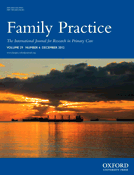
FAMILY PRACTICE
Pioneering knowledge in the realm of family practice.FAMILY PRACTICE is a premier peer-reviewed journal dedicated to advancing the field of family medicine, published by Oxford University Press. Established in 1984 and continuing its influential discourse into 2024, the journal holds an esteemed position in the academic community, as evidenced by its classification in the Q1 quartile for Family Practice, ranking 10th out of 56 in this category according to Scopus. With an impressive impact factor and a commitment to disseminating high-quality research, FAMILY PRACTICE serves as an essential resource for researchers, clinicians, and students alike, striving to enhance practice and education in family medicine through evidence-based insights and innovative practices. While the journal maintains a traditional subscription model, it supports broad dissemination of knowledge that contributes significantly to the evolving landscape of healthcare in the United Kingdom and beyond.
JOURNAL OF GENERAL INTERNAL MEDICINE
Shaping the Landscape of Internal Medicine, One Study at a TimeJOURNAL OF GENERAL INTERNAL MEDICINE, a leading publication in the field of internal medicine, is published by Springer and boasts an impressive Q1 rank in internal medicine as of 2023, situating itself prominently at Rank #28 out of 167 in Scopus with an 83rd percentile. Since its inception in 1986, this esteemed journal has been at the forefront of disseminating high-quality research, clinical practices, and healthcare innovations that shape the landscape of internal medicine. The journal is recognized for its original research, systematic reviews, and practice guidelines that are essential for professionals navigating the complexities of patient care and clinical decision-making. With access options available, it serves as a critical resource for researchers, healthcare practitioners, and students alike, facilitating the enhancement of medical knowledge and evidence-based practice globally. The Journal's commitment to excellence is reflected in its ongoing contribution to advancing the field and ensuring that the latest findings reach those who need them most.
Journal of Health Organization and Management
Fostering scholarly dialogue to enhance global health care systems.The Journal of Health Organization and Management, published by Emerald Group Publishing Ltd, serves as a pivotal resource for professionals, researchers, and students interested in the intersection of health policy and organizational effectiveness. With an ISSN of 1477-7266 and an E-ISSN of 1758-7247, this esteemed journal has been charting advancements in health management since 2003, showcasing articles that reflect rigorous research and the latest trends in the field. Hailing from the United Kingdom, the journal has established itself within the upper echelons of academic literature, currently enjoying a Q2 classification in notable categories, including Business, Management, and Accounting, Health Policy, and Organizational Behavior and Human Resource Management, as of 2023. With impressive rankings in Scopus, including a percentile rank in the 62nd for Business and Management, it is an essential platform for disseminating innovative ideas and evidence-based findings crucial for enhancing health care systems globally. While it operates under a conventional access model, the journal remains dedicated to fostering scholarly dialogue and advancing the understanding of health organization complexities.
Australian Health Review
Connecting Research and Practice in Health PolicyAustralian Health Review is a prestigious peer-reviewed journal published by CSIRO PUBLISHING, focusing on the dynamic field of health policy. Established in 1980, this journal has continuously evolved to address contemporary health challenges in Australia and beyond, showcasing research that informs policy decisions and enhances health care delivery. With an impressive Q2 ranking in the sector of Health Policy and a Scopus rank of #162 out of 310, it holds a significant position in the academic community, offering vital insights to researchers, practitioners, and educators alike. Although not an open-access journal, it provides valuable research contributions that advance the discourse in health policy and practice. Located at UNIPARK, BUILDING 1, LEVEL 1, 195 WELLINGTON RD, LOCKED BAG 10, CLAYTON, VIC 3168, AUSTRALIA, the journal's comprehensive scope spans from 1980 to 2024, reflecting on the evolving landscape of health research. By disseminating high-quality studies, the Australian Health Review continues to play an essential role in shaping health policy and improving health outcomes.
Quality Management in Health Care
Empowering healthcare professionals with innovative insights.Quality Management in Health Care is a revered peer-reviewed journal published by Lippincott Williams & Wilkins, dedicated to advancing the understanding and implementation of quality management principles within the healthcare sector. With an ISSN of 1063-8628 and E-ISSN 1550-5154, this journal has established its reputation through the dissemination of rigorous research and innovative practices that address critical issues in care planning, health policy, and leadership management. The journal is ranked in the Q3 quartile across multiple categories, including Care Planning and Health Policy, demonstrating its significance in the evolving landscape of health management. Although it does not currently offer Open Access options, its blend of theoretical and practical insights makes it an essential resource for researchers, healthcare professionals, and students keen on enhancing quality and effectiveness in health services. This journal continues to play a vital role in shaping best practices and fostering a culture of quality excellence in healthcare, aligning with its objective to refine organizational practices and improve patient outcomes.
INTERNATIONAL JOURNAL OF HEALTH CARE QUALITY ASSURANCE
Empowering Research for a Healthier TomorrowINTERNATIONAL JOURNAL OF HEALTH CARE QUALITY ASSURANCE is a leading academic journal published by Emerald Group Publishing Ltd, dedicated to advancing the fields of health care quality and health policy. Established in 1988, this esteemed journal addresses critical issues in health care management, offering insights into best practices and innovative strategies to enhance quality assurance in diverse health care settings. With an impact factor that places it in the Q3 tier across both health policy and business management categories, the journal serves as a valuable resource for researchers, practitioners, and students seeking to contribute to the conversation on health care quality improvement. Although currently not an Open Access journal, it remains accessible through various academic databases, facilitating a wide reach of its scholarly contributions. The journal's mission is to foster interdisciplinary dialogue and share evidence-based research that can inform policies and practices aimed at improving health care delivery globally.