ACCREDITATION AND QUALITY ASSURANCE
Scope & Guideline
Advancing Quality in Every Discipline.
Introduction
Aims and Scopes
- Metrology and Traceability:
The journal emphasizes the importance of metrological traceability in measurement processes, providing insights into the development and validation of certified reference materials and measurement procedures. - Quality Assurance and Accreditation Standards:
It covers the implementation and interpretation of various accreditation standards, such as ISO/IEC 17025, and their implications for laboratory practices, ensuring compliance and quality in testing and calibration. - Proficiency Testing:
The journal presents methodologies and frameworks for proficiency testing, including statistical evaluations and performance assessments, to enhance the reliability of laboratory results across different fields. - Measurement Uncertainty:
A significant focus is placed on the evaluation and reporting of measurement uncertainty, discussing different approaches and their relevance in ensuring accurate and reliable measurements. - Risk Management in Laboratories:
The journal explores strategies for risk management in laboratory settings, addressing challenges faced by laboratories in maintaining quality control and compliance with accreditation requirements.
Trending and Emerging
- Advanced Statistical Techniques for Quality Assessment:
There is a growing emphasis on sophisticated statistical frameworks for evaluating laboratory performance and proficiency testing, indicating a trend towards data-driven decision-making. - Integration of Digital Technologies in Quality Assurance:
Emerging themes include the application of digital tools and methodologies, such as Monte Carlo simulations and electronic reference material systems, which enhance the efficiency and accuracy of quality assurance processes. - Focus on Environmental and Health Safety:
Recent publications indicate an increasing trend towards addressing quality assurance in environmental testing and health-related measurements, reflecting a broader societal focus on safety and compliance. - Collaborative Proficiency Testing Initiatives:
The journal has seen a rise in discussions around collaborative approaches to proficiency testing, highlighting the importance of interlaboratory comparisons and shared standards across different regions. - Sustainability and Green Chemistry Practices:
Emerging research topics include the incorporation of sustainability principles and green chemistry practices in laboratory settings, aligning with global trends towards environmental responsibility.
Declining or Waning
- General Laboratory Practices:
There appears to be a waning interest in broad discussions of laboratory practices that do not directly tie into specific standards or metrology, suggesting a shift towards more specialized topics. - Historical Perspectives on Quality Assurance:
Research focusing on historical analyses or retrospective studies of quality assurance practices has decreased, indicating a possible preference for contemporary issues and practical applications. - Basic Statistical Methods:
Basic statistical methodologies that were previously a staple of quality assurance discussions seem to be less frequently addressed, with a shift towards more advanced or specialized statistical techniques.
Similar Journals
Journal of Analytical Science and Technology
Fostering Collaboration in the Heart of Analytical ScienceJournal of Analytical Science and Technology, published by SPRINGER INT PUBL AG, stands as a pioneering platform in the fields of Analytical Chemistry and Environmental Science. With an ISSN of 2093-3134 and E-ISSN 2093-3371, this Open Access journal, available since 2013, provides esteemed researchers with an opportunity to disseminate innovative research across a broad spectrum of applied science disciplines. The journal features a comprehensive range of studies addressing pivotal issues within Biochemistry, Genetics, Molecular Biology, Materials Science, and Physics, demonstrated by its impressive 2023 Scopus rankings in multiple categories, including Q2 in Chemistry and Environmental Science. Positioned within the UK and served from Switzerland, the journal actively encourages contributions that contribute to both practical applications and theoretical advancements, playing a vital role in fostering knowledge and collaboration among professionals, researchers, and students alike. Engage with the Journal of Analytical Science and Technology to contribute to and explore groundbreaking advancements within the analytical sciences.
QUALITY AND RELIABILITY ENGINEERING INTERNATIONAL
Pioneering Insights in Quality Management and EngineeringQUALITY AND RELIABILITY ENGINEERING INTERNATIONAL is a prestigious journal published by WILEY, dedicated to advancing the fields of quality, reliability, and engineering. With an ISSN of 0748-8017 and an E-ISSN of 1099-1638, this journal provides a platform for scholarly articles that delve into the intricacies of management science, operations research, safety, risk, reliability, and quality, as evidenced by its strong ranking in the Q2 category for both Management Science and Operations Research, as well as Safety, Risk, Reliability, and Quality. Established in 1985 and continuing through 2024, the journal has garnered a solid reputation in the academic community, achieving a Scopus ranking in the 70th and 64th percentiles for its respective categories. Although it does not offer open access, its authoritative content is essential for researchers, professionals, and students seeking to deepen their understanding of quality and reliability principles. With its UK-based publishing address ensuring global reach, this journal remains at the forefront of discussions surrounding engineering quality and reliability methodologies.
PROCESS SAFETY AND ENVIRONMENTAL PROTECTION
Pioneering research that protects our planet and its people.PROCESS SAFETY AND ENVIRONMENTAL PROTECTION, published by Elsevier, is a premier academic journal dedicated to advancing the fields of chemical engineering, environmental science, and safety management. With an impressive impact factor, this esteemed journal undergoes a meticulous peer-review process and serves as a vital platform for researchers, professionals, and students seeking to disseminate cutting-edge research and innovative practices. Submissions are welcome in a wide scope of topics related to safety, risk, reliability, and environmental engineering, demonstrating its influence as a Q1 journal across multiple categories, including Environmental Chemistry and Safety, Risk, Reliability and Quality. By providing a rigorous analysis of current challenges and solutions in the domain since its inception in 1990, it continues to foster interdisciplinary collaboration and practical applications in the United Kingdom and beyond. With the journal not currently offering Open Access options, subscribers gain exclusive access to pivotal insights that shape industry standards and drive advancements in sustainable practices.

Practical Laboratory Medicine
Empowering Professionals with Open Access InsightsPractical Laboratory Medicine is a distinguished peer-reviewed journal published by Elsevier, focusing on the essential advances in the fields of clinical biochemistry and radiological technology. Begun in 2015, this Open Access journal fosters an environment of scholarly communication, ensuring that valuable research is freely available to a global audience. With a current impact factor placing it in the Q3 quartile in both clinical biochemistry and radiological and ultrasound technology, the journal serves as a vital platform for researchers and professionals to disseminate innovative findings and foster interdisciplinary collaboration. The journal’s commitment to covering a broad spectrum of laboratory medicine topics, from clinical practice improvements to technological developments, underlines its importance in enhancing laboratory standards and patient care. Based in Amsterdam, Netherlands, Practical Laboratory Medicine not only contributes to the academic community but also influences practical applications in healthcare settings.
tm-Technisches Messen
Unveiling Breakthroughs in Measurement and Instrumentationtm-Technisches Messen is a reputable academic journal published by WALTER DE GRUYTER GMBH, focusing on the field of engineering, specifically in Electrical and Electronic Engineering and Instrumentation. With a rich history dating back to 1931, this journal serves as a critical platform for disseminating research, innovations, and developments relevant to measurement and instrumentation technologies. Despite its current quartile rankings of Q3 in Electrical and Electronic Engineering and Q4 in Instrumentation for 2023, the journal continues to attract submissions from leading researchers, offering insights that drive advancements within these fields. Researchers and practitioners can access a wealth of knowledge through this publication, fostering collaboration and sparking new ideas. Located in Berlin, Germany, the journal operates without an open-access model, making it essential for universities and institutions to play an integral role in supporting their library access to this valuable resource. As the journal continues to evolve through 2024 and beyond, it remains a significant contributor to the global discourse in measurement technologies, making it a must-read for anyone involved in these dynamic areas of study.
MEASUREMENT SCIENCE and TECHNOLOGY
Transforming Data into Knowledge through Measurement ExcellenceMEASUREMENT SCIENCE and TECHNOLOGY is a premier journal published by IOP Publishing Ltd that delves into the critical intersection of measurement science and engineering applications. With a robust focus on innovative measurement techniques, instrumentation, and applied mathematics, this journal has established itself as a vital resource for researchers and professionals striving to advance the field. Recognized for its scholarly impact, it maintains an impressive impact factor and is categorized in the Q2 quartile across Applied Mathematics, Engineering (miscellaneous), and Instrumentation, demonstrating its significant contribution to these disciplines. The journal is indexed in prominent databases, including Scopus, where it ranks 122 out of 635 in Applied Mathematics and holds the 56th position in Engineering (miscellaneous). Spanning from 1990 to 2024, MEASUREMENT SCIENCE and TECHNOLOGY offers a wealth of rigorous peer-reviewed articles that not only support academic inquiry but also inform practical applications in measurement technology. Located in the United Kingdom, the journal serves as a collaborative platform for the global research community, inviting contributions that shape the future of measurement science.
International Journal of System Assurance Engineering and Management
Empowering Excellence in System Assurance EngineeringThe International Journal of System Assurance Engineering and Management, endorsed by SPRINGER INDIA, stands as a pivotal platform in the field of Safety, Risk, Reliability, Quality, Strategy, and Management. Established in 2010, this peer-reviewed journal offers a rich repository of innovative research and practical insights that address contemporary challenges in system assurance across various sectors. With a commendable Q2 category ranking in both Safety, Risk, Reliability, and Quality, as well as in Strategy and Management for 2023, the journal is recognized for its rigorous standards and significant contribution to the academic community. Although it operates under a subscription model, the journal ensures wide dissemination of critical findings to its readership, which includes researchers, industry professionals, and students. With its Scopus rankings affirming its impact—ranked #71/207 in Safety, Risk, Reliability and Quality, and #198/478 in Strategy and Management—the journal is a must-read for those seeking to enhance their knowledge and application of engineering and management principles in real-world settings.
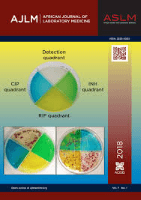
African Journal of Laboratory Medicine
Exploring breakthroughs in clinical biochemistry and technology.The African Journal of Laboratory Medicine, ISSN 2225-2002, e-ISSN 2225-2010, is a premier publication dedicated to advancing the field of laboratory medicine within the African context. Published by AOSIS since 2012, this Open Access journal aims to disseminate influential research findings, clinical studies, and innovative techniques in the realms of Clinical Biochemistry, Medical Laboratory Technology, and Public Health. Based in South Africa, the journal not only serves as a critical platform for sharing knowledge and best practices but also plays a significant role in fostering public health discussions relevant to the continent. Over the years, it has established itself with impactful rankings in various categories, including a Q4 in Clinical Biochemistry and Q3 in both Medical Laboratory Technology and Public Health. As such, it caters to a diverse audience of researchers, professionals, and students eager to stay at the forefront of laboratory medicine research and its applications. The journal’s commitment to quality and accessibility positions it as an essential resource for those looking to make a significant impact in their respective fields.

Journal of Chemical Metrology
Pioneering Research in Spectroscopy and ElectrochemistryJournal of Chemical Metrology is a vital resource in the evolving fields of Analytical Chemistry, Electrochemistry, Spectroscopy, and Toxicology, published by ACG PUBLICATIONS in Turkey. With a focus on advancing the understanding and application of chemical metrology, this journal aims to bridge gaps in quantitative analysis, offering researchers and professionals a platform to disseminate groundbreaking studies and methodologies. Although it operates under a traditional access model, readers can benefit from its insights as the journal continues to gain recognition with its 2023 rankings placing it in the Q3 and Q4 categories across various scientific disciplines. From its inception in 2019 to its projected convergence in 2024, the journal has been instrumental in fostering collaboration and innovation in chemical sciences, making it an essential tool for students and researchers dedicated to enhancing analytical techniques and ensuring safety through effective toxicological assessments.
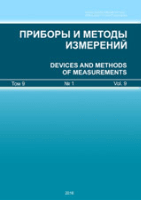
Devices and Methods of Measurements
Connecting global minds in the pursuit of measurement excellence.Devices and Methods of Measurements is an esteemed open-access journal published by the Belarusian National Technical University, focusing on innovative research in measurement technologies and methodologies. Since its inception in 2010, this journal has committed to fostering knowledge dissemination in the interdisciplinary fields of engineering science, physics, and applied technology, offering a platform for researchers and practitioners to share their groundbreaking findings. With the ISSN 2220-9506 and E-ISSN 2414-0473, the journal aims to facilitate the advancement of measurement techniques that enhance accuracy and reliability across diverse applications. Free for readers and contributors alike, Devices and Methods of Measurements caters to a global audience, promoting collaboration and the sharing of new ideas among professionals, academics, and students in the measurement field. Whether you are involved in experimental research or theoretical exploration, this journal provides valuable insights into the tools and practices that drive modern measurement innovations.