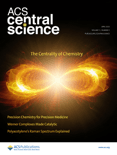
ACS Central Science
Scope & Guideline
Empowering Research, Inspiring Collaboration
Introduction
Aims and Scopes
- Interdisciplinary Research:
The journal emphasizes research that bridges multiple disciplines within chemistry and related fields, fostering collaborations across traditional boundaries. - Innovative Methodologies:
ACS Central Science publishes studies that introduce novel methodologies, particularly those that enhance experimental techniques, computational modeling, and data analysis. - Sustainability and Green Chemistry:
There is a strong emphasis on research that addresses sustainability challenges, including the development of green chemistry practices and materials that minimize environmental impact. - Biochemistry and Chemical Biology:
The journal features research in biochemistry and chemical biology, focusing on the molecular mechanisms of biological processes and the development of new therapeutic strategies. - Materials Science and Nanotechnology:
Research in materials science, particularly on nanomaterials and their applications in various fields, is a core focus area, highlighting advancements in material design and functionality. - Electrochemistry and Energy Systems:
The journal includes studies on electrochemical systems, energy storage, and conversion technologies, reflecting the growing importance of these fields in addressing global energy challenges.
Trending and Emerging
- Machine Learning and AI in Chemistry:
The integration of machine learning and artificial intelligence into chemical research is gaining momentum, with studies focusing on predictive modeling, data analysis, and automation. - COVID-19 Related Research:
In response to the pandemic, there has been a significant increase in research focused on SARS-CoV-2, vaccine development, and therapeutic strategies, reflecting the urgent need for solutions. - Sustainable and Green Chemistry Innovations:
Research dedicated to sustainable chemistry practices, including the development of biodegradable materials and eco-friendly synthetic routes, is increasingly prominent. - Nanotechnology and Advanced Materials:
The trend towards nanotechnology is strong, with a focus on the development of novel nanomaterials for applications in medicine, electronics, and environmental remediation. - Bioorthogonal Chemistry:
There is a rising interest in bioorthogonal reactions, which facilitate the development of new therapeutic agents and imaging techniques, particularly in biomedical applications. - Electrochemical Energy Conversion and Storage:
Publications focusing on electrochemical technologies, such as batteries and fuel cells, are trending due to the growing emphasis on renewable energy solutions.
Declining or Waning
- Traditional Organic Synthesis:
Research centered around traditional organic synthesis methods has diminished as newer, more efficient synthetic approaches and technologies gain traction. - Inorganic Chemistry without Biological Relevance:
There is a noticeable decrease in the publication of studies that focus solely on inorganic chemistry without direct applications or implications for biological systems. - Basic Polymer Science:
Publications focused on fundamental aspects of polymer science, without application to advanced materials or functionalities, have become less prominent as applied research takes precedence. - Classical Analytical Techniques:
Research centered on classical analytical chemistry methods is declining, as advancements in high-throughput and automated techniques take their place. - Theoretical Chemistry without Experimental Correlation:
Papers that focus solely on theoretical aspects of chemistry without strong connections to experimental validation are less frequently published.
Similar Journals
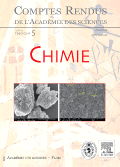
COMPTES RENDUS CHIMIE
Advancing Chemical Knowledge, One Article at a Time.COMPTES RENDUS CHIMIE, published by the prestigious Académie des Sciences in France, stands as a significant journal in the fields of chemistry and chemical engineering. With an ISSN of 1631-0748 and an E-ISSN of 1878-1543, this open-access journal has been committed to disseminating high-quality research since its transition to open access in 2020. Featuring a diverse array of studies, the journal covers innovative research trends and applications, while maintaining a Q3 category ranking in both Chemical Engineering (miscellaneous) and Chemistry (miscellaneous) as of 2023. Its Scopus rankings, positioning at #251 out of 408 in general chemistry and #169 out of 273 in general chemical engineering, highlight its growing impact within the scientific community. Authored by a global cohort of scientists and researchers, COMPTES RENDUS CHIMIE is dedicated to the advancement of knowledge and sharing insights that are vital for ongoing research and development in the chemical sciences. Located in the heart of Paris at 23 Quai de Conti, 75006, France, the journal is an essential resource for those passionate about chemistry and engineering disciplines, fostering collaboration and innovation across the world.
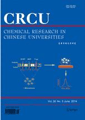
CHEMICAL RESEARCH IN CHINESE UNIVERSITIES
Navigating the Landscape of Chemistry ResearchCHEMICAL RESEARCH IN CHINESE UNIVERSITIES is a prominent academic journal dedicated to the dissemination of high-quality research in the field of chemistry and related educational methodologies. Published by HIGHER EDUCATION PRESS, this journal has established itself as a vital resource for researchers and professionals looking to stay at the forefront of chemical sciences. With an impressive impact factor and ranked in the Q2 quartile for both Chemistry and Education categories, it highlights significant advancements while maintaining rigorous peer-review standards. The journal's ISSN is 1005-9040 and its E-ISSN is 2210-3171, ensuring broad accessibility to its global readership. Although it does not offer open access, its contributions are vital to understanding the dynamics of chemistry research and education within and beyond China. With converged publication years from 1999 through to 2024, CHEMICAL RESEARCH IN CHINESE UNIVERSITIES continues to be an essential platform for innovative studies and critical discussions in the expanding realm of chemistry.

ACS ES&T Engineering
Connecting Scholars to Shape the Future of Engineering and Environmental Practices.ACS ES&T Engineering, published by the American Chemical Society, stands as a leading journal in the realm of Chemical Engineering, Environmental Chemistry, and related fields, with a notable Impact Factor indicative of its scholarly influence. Emerging from 2021 with a vision to address contemporary challenges in engineering and environmental health, this Journal not only covers critical studies in Chemical Engineering but also excels in areas such as Process Chemistry and Technology, aligning with its Q1 status across several categories in 2023. With exceptional rankings in Scopus, including a percentile rank in the 90th for Chemical Health and Safety, it offers a significant platform for researchers, educators, and practitioners to disseminate innovative research and practices. Although the journal maintains a subscription model, its commitment to rigorous peer review and high-quality content ensures that readers gain access to pivotal findings essential for advancing knowledge and practice in a rapidly evolving scientific landscape. For those dedicated to tackling global engineering challenges, ACS ES&T Engineering is an invaluable resource.
ACS Omega
Unlocking Knowledge, Fueling Innovation in Chemistry.ACS Omega is a prominent open-access journal published by the American Chemical Society that has been serving the global research community since its inception in 2016. With ISSN 2470-1343, it focuses on a wide array of topics within the realm of Chemistry and Chemical Engineering, making it a crucial platform for researchers and practitioners aiming to disseminate significant findings across these disciplines. The journal maintains an impressive standing, ranking in the Q2 quartile for both Chemical Engineering and Chemistry categories, highlighting its impact and relevance in contemporary research. Additionally, with its Scopus ranks placing it within the top 24% and 27% of General Chemistry and General Chemical Engineering respectively, ACS Omega continues to foster innovation and facilitate collaboration among scientists. As an Open Access journal, it ensures that research outputs are freely available to all, enhancing the accessibility and visibility of contributors’ work, thus playing a critical role in advancing scientific knowledge globally from its headquarters in Washington, D.C.
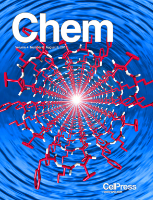
Chem
Exploring the Depths of Biochemistry and BeyondChem, published by CELL PRESS, is a renowned academic journal that has rapidly established itself as a leading platform for cutting-edge research in diverse areas such as biochemistry, chemical engineering, materials chemistry, and environmental chemistry. Released under the ISSN 2451-9294, this esteemed journal has achieved an impressive Q1 category ranking across multiple disciplines in 2023, highlighting its significant impact and prominence within the academic community. With a strong focus on innovative studies and interdisciplinary approaches, Chem fosters a vibrant dialogue among researchers, professionals, and students, making it an indispensable resource for those seeking to advance their knowledge and contribute to the evolving field of chemistry. As an open access journal, it aims to democratize knowledge, ensuring that critical research is accessible to a global audience. With its headquarters based in Cambridge, MA, it continues to lead the charge in the dissemination of pivotal findings that shape our understanding of chemical sciences.
JOURNAL OF THE CHINESE CHEMICAL SOCIETY
Enriching the Global Dialogue in ChemistryJOURNAL OF THE CHINESE CHEMICAL SOCIETY, published by WILEY-V C H VERLAG GMBH, is a vital resource in the field of chemistry, focusing on a broad array of topics pertinent to general chemistry and its advancing sub-disciplines. Established in 1954 and running through 2024, this journal serves as a significant platform for the dissemination of high-quality research, showcasing innovative findings and developments within the chemical sciences. With its Q3 category ranking and positioning at Rank #203 in General Chemistry per Scopus, it reflects the journal's commitment to research excellence and impact. While not an open-access publication, it ensures accessibility to a global audience, making it an essential tool for researchers, professionals, and students alike seeking to stay informed and engaged in the evolving landscape of chemistry.
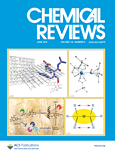
CHEMICAL REVIEWS
Charting the Course for Future Chemical Discoveries.Chemical Reviews, published by the American Chemical Society, is a leading journal in the field of chemistry, renowned for its comprehensive and authoritative reviews on a wide range of chemical topics. With its ISSN 0009-2665 and E-ISSN 1520-6890, this prestigious journal has maintained a remarkable trajectory since its inception in 1924, continuously contributing to advancements in the chemical sciences. As a Q1 journal in the Chemistry (miscellaneous) category, it stands at the forefront of research, boasting an impressive Scopus rank of #1 out of 408 in the field of General Chemistry, positioning it within the top 1% of the field. Chemical Reviews offers invaluable insights and serves as a critical resource for researchers, professionals, and students alike, facilitating knowledge exchange and fostering innovation in chemistry. While currently not open access, it remains a vital component of the scientific community, gathering an extensive readership base eager for the latest developments, methodologies, and theoretical frameworks in this dynamic discipline.

JOURNAL OF THE CHEMICAL SOCIETY OF PAKISTAN
Pioneering Research for Tomorrow’s Chemical Challenges.JOURNAL OF THE CHEMICAL SOCIETY OF PAKISTAN is a premier academic journal published by the Chemical Society of Pakistan, focusing on advancing the field of chemistry through rigorous research and scholarship. Established in 1996, this journal aims to disseminate high-quality research articles, reviews, and insights pertaining to various subfields of chemistry, making substantial contributions to both local and international scientific communities. With a current impact factor placing it in the Q4 category, the journal continues to foster discussions on emerging trends and innovations within the discipline. Additionally, it holds a Scopus rank of #305 out of 408, highlighting its growing influence despite being positioned in the 25th percentile. Although it is not an open-access journal, it provides a crucial platform for researchers and professionals in Pakistan and worldwide. The JOURNAL OF THE CHEMICAL SOCIETY OF PAKISTAN serves as a valuable resource for students, educators, and industry professionals alike, facilitating the exchange of knowledge and promoting advancements in chemical sciences.
Canadian Journal of Chemistry
Elevating Chemical Research to New HeightsWelcome to the Canadian Journal of Chemistry, a prominent publication dedicated to advancing the study of chemistry through original research and critical reviews. Published by Canadian Science Publishing, this journal has been a cornerstone of chemical research since its inception, covering a broad spectrum of topics within the field, including catalysis, organic chemistry, and general chemistry. With an ISSN of 0008-4042 and E-ISSN of 1480-3291, it provides a vital platform for researchers, professionals, and students to disseminate their findings and engage in scholarly discourse. Impact Factor is currently in development, with the journal classified in the Q4 category for catalysis and Q3 for miscellaneous chemistry fields, signifying its evolving contributions to the scientific community. The journal operates without an open access model, which ensures a rigorous peer-review process while maintaining subscription access for institutions and libraries. Located in Ottawa, Canada, the Canadian Journal of Chemistry continues to provide an invaluable resource for those dedicated to the scientific pursuit of chemistry, making significant strides in fostering interdisciplinary approaches and innovative research methodologies.
FARADAY DISCUSSIONS
Pioneering Research, Inspiring InnovationFARADAY DISCUSSIONS, published by the prestigious Royal Society of Chemistry, serves as a premier platform for scholarly discourse in the realms of both Physical and Theoretical Chemistry and Medicine. With its ISSN 1359-6640 and E-ISSN 1364-5498, this journal has a rich history dating back to 1947, evolving through significant periods of scientific advancement, with engaging discussions scheduled through to 2024. Recognized for its impact, FARADAY DISCUSSIONS ranks in the Q1 category for Physical and Theoretical Chemistry and Q2 for miscellaneous Medicine in 2023, affirming its role in pioneering research and innovative thought leadership. Researchers and professionals alike benefit from this journal’s commitment to open, critical dialogue on current trends and breakthroughs in chemistry, making it an essential resource for anyone looking to stay at the forefront of these dynamic fields.